Omega Seamaster 166.067: What to Know Before Buying
Buy the Omega Seamaster 166.067 for its honest silver dial, defined tonneau case and correct automatic Caliber 565, not for surface shine.
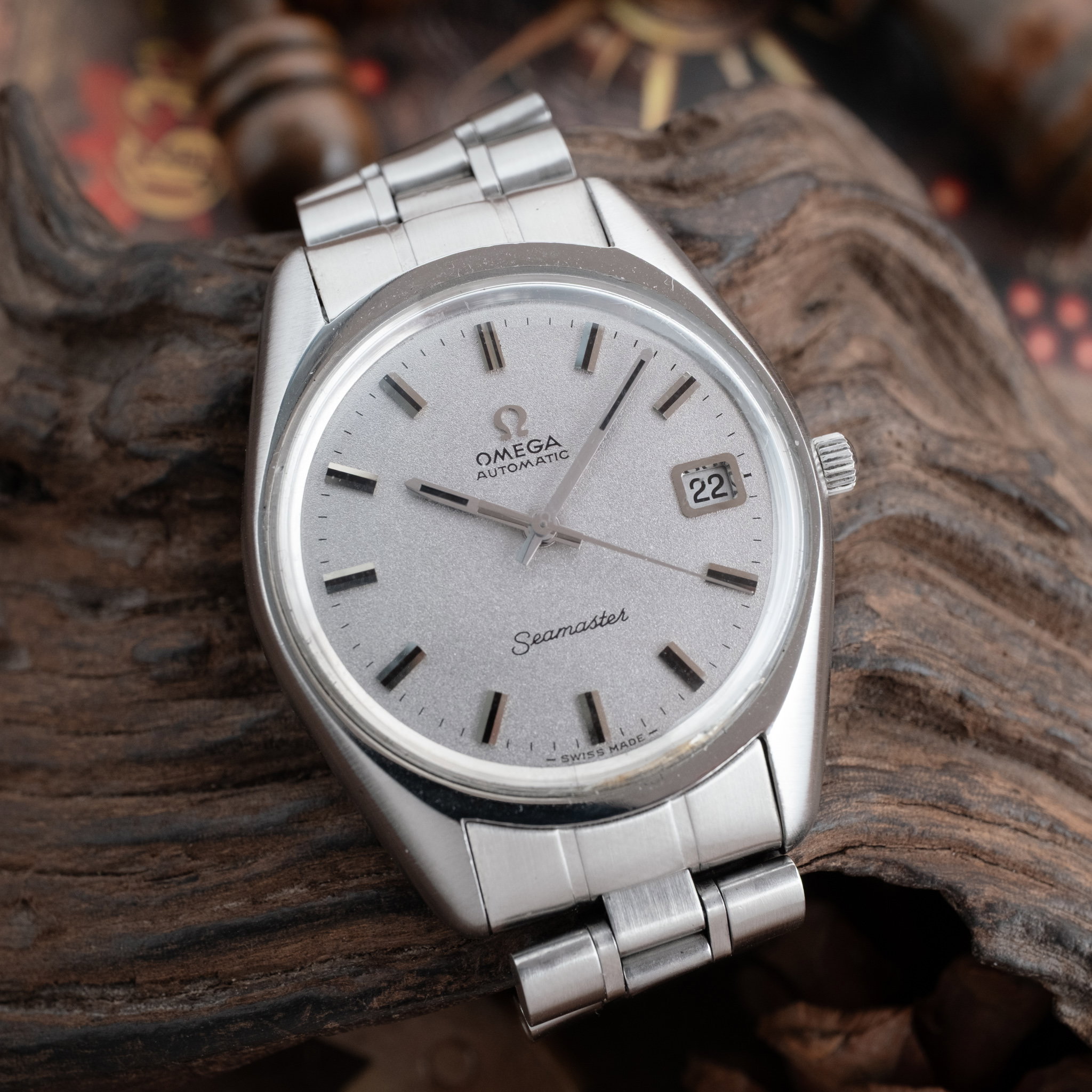
Reference 166.067 belongs to a narrow Seamaster period from 1969 to 1972, when Omega paired a stainless steel tonneau case with automatic Caliber 565. The date window is framed, the hour markers are applied batons with dark inserts, and the silver dial gives the watch more wrist presence than its 35 to 36 mm case suggests.
The version to buy has an honest silver sunburst or stardust-textured dial, coherent hands and well-defined case lines. Dial ageing ranges from light wear to even frosting and isolated spotting near the upper markers, so the label matters less than the location and severity of the damage. Between a glossy redial and an evenly aged original dial, take the aged watch.
Brand
Omega
Model
Seamaster
Reference
166.067
Known production years
1969-1972
| Case material | Stainless steel |
| Case size | 35-36 mm excluding the crown |
| Movement | Automatic Omega Caliber 565 |
| Jewel count | 24 |
| Dial variants | Silver sunburst or silver stardust texture |
| Dial furniture | Applied faceted baton indices with dark inserts and framed date window |
The model landscape
The 166.067 is less a collection of sub-references than a choice between dial surfaces and states of preservation. Silver sunburst dials reflect in broad rays, while the stardust examples carry a fine sparkle or frosted texture. Both use applied faceted baton markers with dark inserts and a framed date window. Neither finish deserves an automatic premium: even texture is attractive ageing, but distinct spots near the upper hour markers are damage and should be priced that way.
Case measurements fall between 35 and 36 mm excluding the crown. That one-millimetre spread may reflect measuring practice as much as a meaningful case variation, and the evidence does not establish separate case types. The steel tonneau profile is the constant. Caliber 565 with 24 jewels is also consistent across the watches handled, making a different movement the clearest warning that parts may have been married.
Where the value sits
The largest value spread sits between an honest dial and a redial, followed by the survival of the tonneau case geometry. Sunburst brushing should still respond directionally to light, while a stardust surface should read as fine, coherent texture rather than random moisture damage. Applied markers, dark inserts and the framed date opening need to belong together. A service dial can be genuine Omega, but it remains a replacement and should not be sold as the dial fitted when the watch left production.
Sharp case lines carry a premium because repeated polishing softens the transitions around a tonneau case quickly. A beads-of-rice bracelet can complete the period look, but its value depends on fit and stretch rather than the bracelet name alone. Surface scratches matter less than rounded case edges, dial spotting or mismatched hands. Service history is often unknown, and without receipts the movement's appearance cannot establish when it was last serviced.
What goes wrong
Dial damage is the costliest fault. Silver surfaces can frost evenly, develop isolated spots or lose their original finish beneath a redial, while hands may acquire ageing that no longer matches the dial furniture. The case suffers differently: polishing makes the tonneau outline soft, and wear can blur the defined lines that give this reference its shape. Bracelet stretch is another separate fault, particularly when a beads-of-rice bracelet hangs loosely or its end fit no longer looks coherent.
Movement swaps create the most consequential franken risk. Reference 166.067 is consistently associated here with automatic Caliber 565 and 24 jewels, so another caliber needs an explanation that the available evidence cannot supply. A serial can support an approximate period, but it cannot prove that case, dial and movement left the factory together. The correct buying order is dial first, case geometry second and mechanical condition third.
Dating this watch
| Serial range / caliber | Year | Note |
|---|---|---|
| 28000000 | 1969 | approximate, ±1-3 years |
| 31000000 | 1970 | approximate, ±1-3 years |
| 32000000 | 1971 | approximate, ±1-3 years |
| 33000000 | 1972 | approximate, ±1-3 years |
Dating data comes from our decoder tables; treat years as approximate.
What to check before you buy
- Dial layout and surface: A coherent 166.067 dial combines a silver sunburst or fine stardust texture with applied faceted baton indices, dark inserts and a framed date window. Random spotting is damage, not evidence of a special dial variant.
- Hands and dial relationship: The hands should age convincingly beside the applied markers and any surviving lume. Patinated hands against a clinically renewed dial, or fresh hands over a heavily frosted surface, can indicate replacement parts or a redial.
- Case geometry: The stainless steel case should retain a recognisable tonneau outline and defined transitions. Soft edges and blurred lines diagnose polishing, while measurements outside the known 35 to 36 mm span require caution.
- Movement specification: The movement should be automatic Omega Caliber 565 with 24 jewels. Another caliber is not supported by the handled examples and raises the possibility of a franken watch or a movement married to the case.
- Serial and period fit: Serial guidance should place the movement broadly within the 1969 to 1972 reference window, allowing one to three years of uncertainty. A period fit supports consistency but does not prove that the components left production together.
- Caseback and crown limits: The available evidence does not establish one definitive crown or caseback detail for this reference. Without documentation, those parts should be described as period-correct only when independently supported, never assumed original.
Other 166.067 examples we auctioned
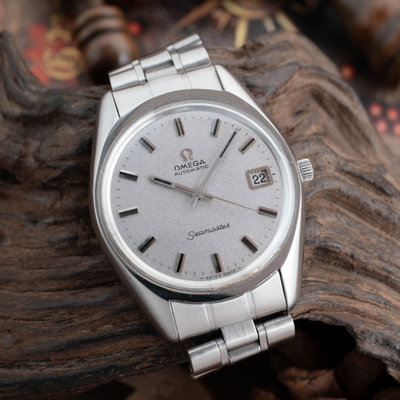
Omega · Seamaster · 166.067 · 1970
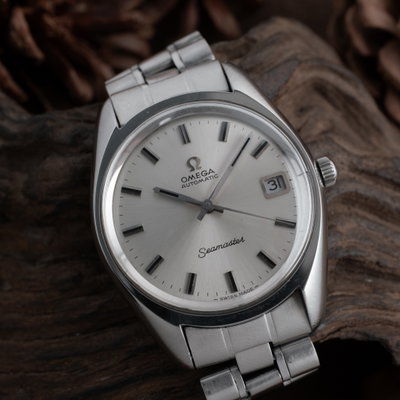
Omega · Seamaster · 166.067 · 1970
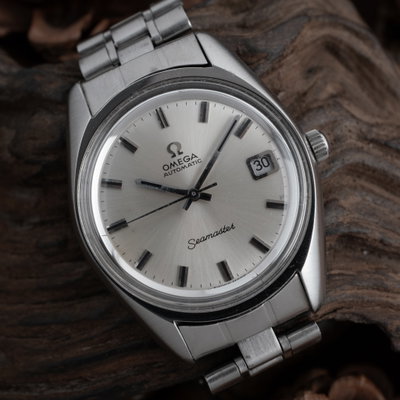
Omega · Seamaster · 166.067 · 1970
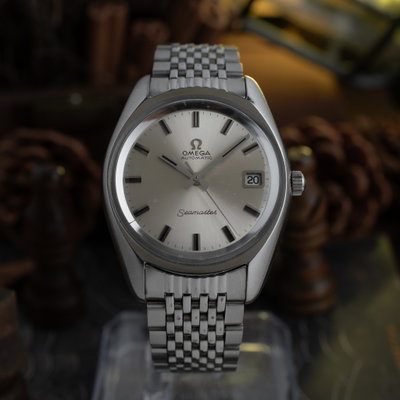
Omega · Seamaster · 166.067 · 1971
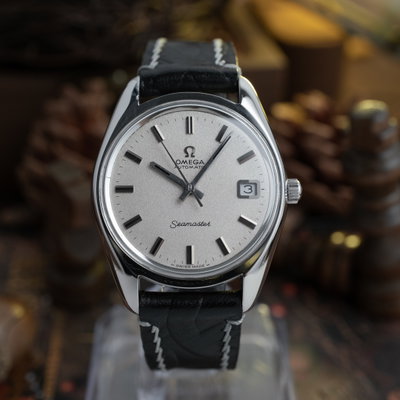
Omega · Seamaster · 166.067 · 1970
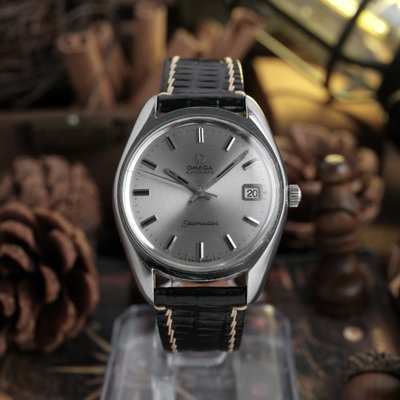
Omega · Seamaster · 166.067 · 1970
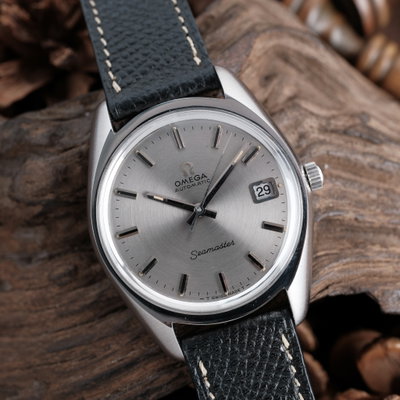
Omega · Seamaster · 166.067 · 1970
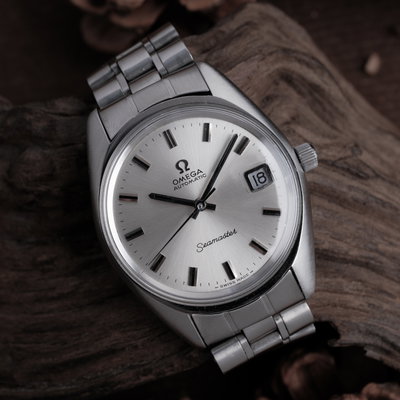
Omega · Seamaster · 166.067 · 1970
More Omega references
Related pages
Frequently asked questions
Ready to hunt for your own?
More than 100 vintage watches go under the hammer every week.