Omega 166.020 Seamaster De Ville Buying Guide
The Omega 166.020 is a compact automatic Seamaster De Ville whose value depends chiefly on an honest sunburst dial, coherent parts and a sharp steel case.
We auction more than 100 vintage watches a week.
Get first access: new Omega 166.020 drops and alerts before auctions end.
Browse 60 live Omega auctionsThe Seamaster De Ville 166.020 belongs to Omega's early 1960s meeting point between a water-resistant Seamaster and a restrained dress watch. Its front-loading monocoque case gave the watch a clean profile, while the automatic caliber 565 and date display made it practical for daily use. Known examples run from 1961 through 1967.
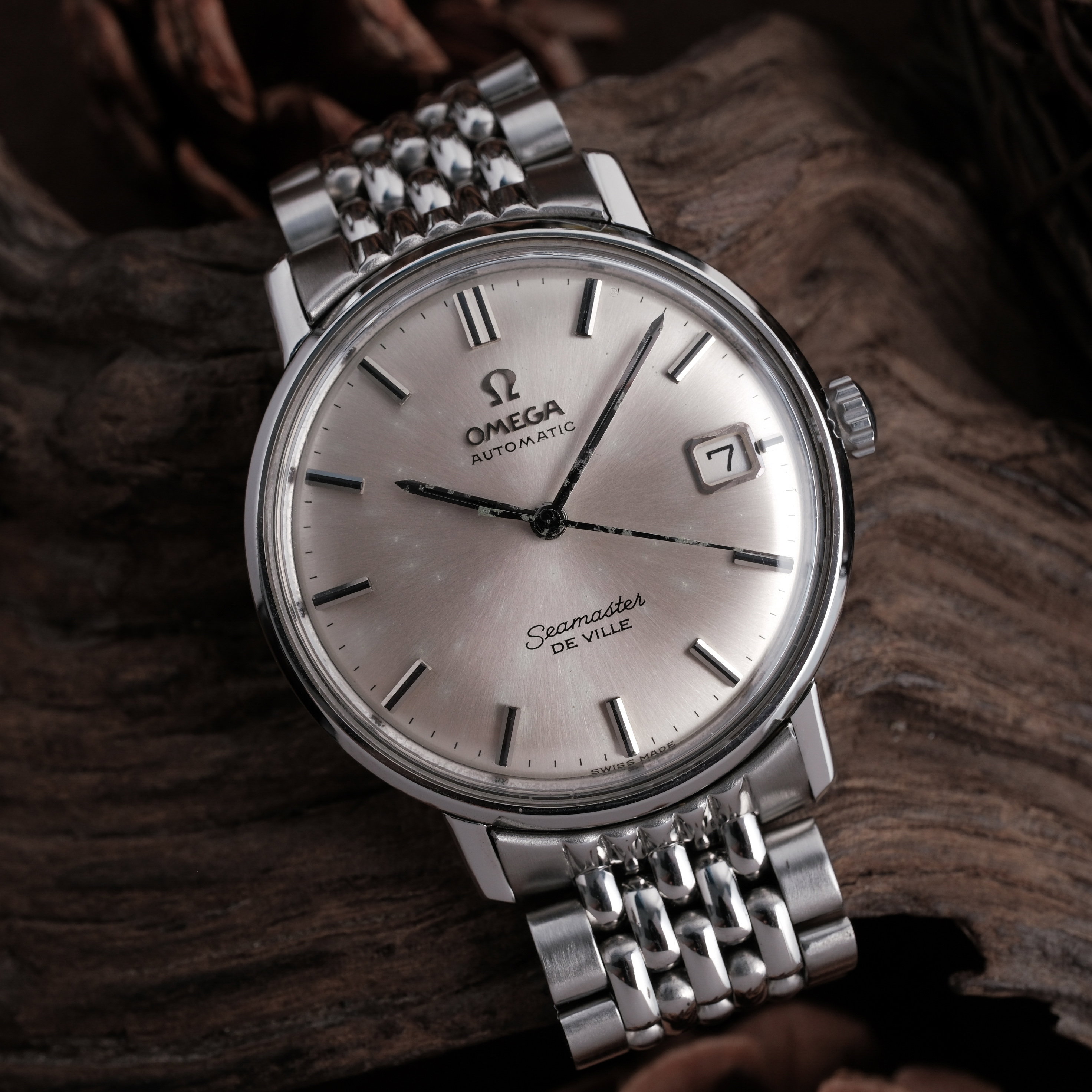
The version to want is straightforward: a stainless-steel case with legible lines, a silver sunburst dial with applied faceted indices, and the correct caliber 565. A 34 mm diameter gives the vintage Omega 166.020 its period proportion. Dial spotting and oxidized hands occur, but honest ageing is preferable to a redial paired with freshly treated hands.
Reference
166.020
Model
Seamaster De Ville
Known production years
1961-1967
Case diameter
34 mm excluding the crown
| Case material | Stainless steel |
| Movement | Omega caliber 565 automatic |
| Jewel count | 24 jewels |
| Case construction | Front-loading monocoque |
| Dial configuration | Silver sunburst with applied faceted indices and date display |
On the wrist
At 34 mm excluding the crown, the 166.020 wears compactly and leaves more bracelet or strap visible than a modern dress watch. The silver sunburst surface changes with the light, while applied faceted indices supply enough contrast to keep the dial readable. It suits a cuff without pretending to be a larger sports watch.
The front-loading monocoque case keeps the silhouette visually simple because the rear is not constructed like a conventional removable caseback. On a beads of rice bracelet, the small steel head retains its mid-century character. A leather strap makes the same watch read more formally without changing the proportions that define the reference.
Where the value sits
Most of the value sits in the dial. An honest silver sunburst finish, intact printing and correctly placed applied faceted indices deserve a premium over a brighter redial, even when the honest dial has scattered spotting. Heavy hand oxidation is easier to accept than refinished printing because hands can be assessed separately from the surface carrying the watch's identity.
Case definition comes next. Sharp case lines command more than softened edges because polishing cannot be reversed, and the compact 34 mm case loses presence quickly when its geometry becomes rounded. Caliber 565 is the required movement, while a beads of rice bracelet is a useful addition rather than a substitute for the right dial and case.
What goes wrong
A redial is the costliest condition fault because it replaces the factory surface rather than preserving its ageing. Silver sunburst dials can show scattered spotting, and that damage should be described by location and extent rather than hidden behind the word patina. A genuine factory service dial is different from a redial, but it is still a replacement and should be sold as one.
Over-polishing softens the case lines, while hand oxidation can become heavy enough to disrupt the otherwise restrained dial. The steel case avoids plating wear, but that does not protect its geometry from repeated refinishing. A watch combining a bright case, heavily oxidized hands and an unusually clean dial deserves a coherence check rather than an automatic assumption of originality.
Caliber 565 establishes the correct movement type, not its present mechanical condition. Without a dated service receipt, the service history is unknown, and labels claiming a service do not resolve that gap. Between a bright redial in a rounded case and an honestly spotted dial in a sharper case at the same level, take the honest dial and sharper steel case.
Dating this watch
| Serial range / caliber | Year | Note |
|---|---|---|
| 18,000,000 | 1961 | approximate, ±1-3 years |
| 19,000,000 | 1962 | approximate, ±1-3 years |
| 20,000,000 | 1963 | approximate, ±1-3 years |
| 21,000,000 | 1964 | approximate, ±1-3 years |
| 22,000,000 | 1965 | approximate, ±1-3 years |
| 24,000,000 | 1966 | approximate, ±1-3 years |
| 25,000,000 | 1967 | approximate, ±1-3 years |
Dating data comes from our decoder tables; treat years as approximate.
What to check before you buy
- Dial and furniture: The expected handled configuration is a silver sunburst dial with applied faceted indices and a date display. Flat paint, renewed printing or furniture that does not sit coherently should be treated as possible redial or franken evidence.
- Movement: The movement should be Omega caliber 565 automatic with 24 jewels. The correct caliber is necessary but not sufficient, since a correct movement can still be married to a case from another watch.
- Case construction and size: The stainless-steel case should measure 34 mm excluding the crown and use front-loading monocoque construction. A conventional removable rear caseback conflicts with the construction established for 166.020.
- Case geometry: Assess whether the case lines remain defined or have become soft through polishing. Rounded geometry cannot be reversed, and an unusually bright case should not distract from softened edges.
- Hands and dial ageing: Compare heavy hand oxidation with spotting on the silver dial. A large mismatch does not prove replacement, but bright hands over a visibly aged dial, or the reverse, requires a coherence check for service parts or a franken assembly.
Other 166.020 examples we auctioned
13 Omega 166.020 auctioned
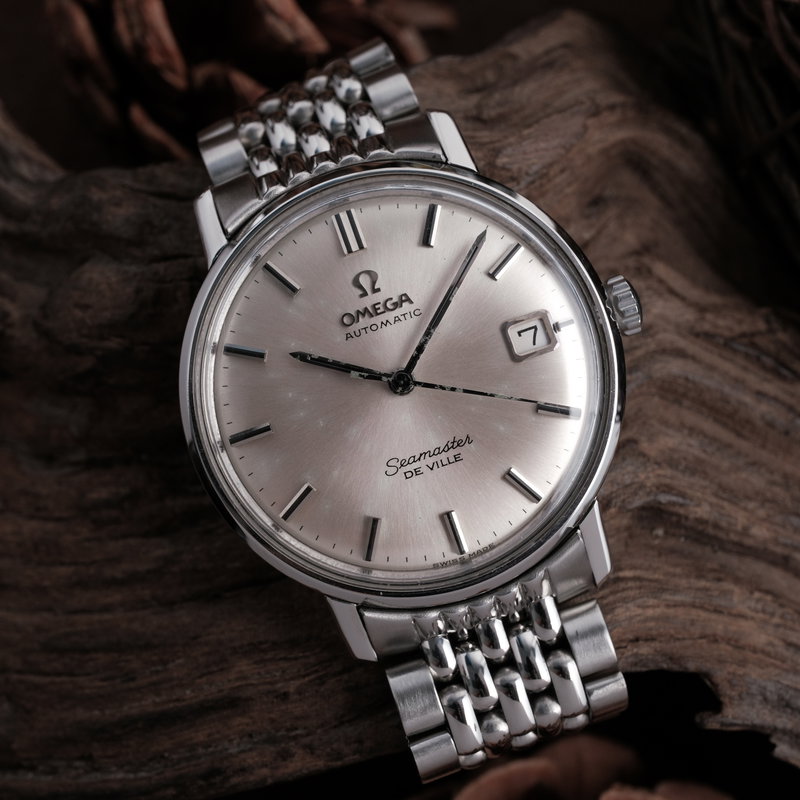
Omega · Seamaster De Ville · 166.020 · 1966
Omega · Seamaster De Ville · 166.020
Omega · Seamaster De Ville · 166.020 · 1966
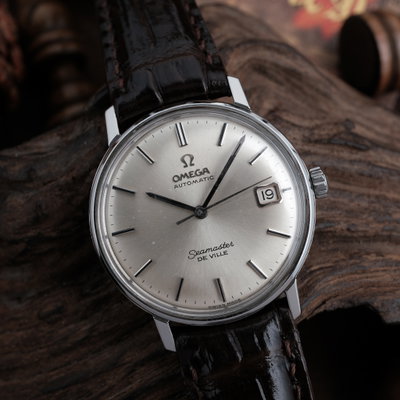
Omega · Seamaster De Ville · 166.020 · 1966
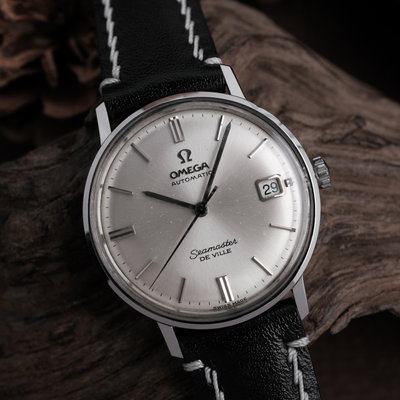
Omega · Seamaster De Ville · 166.020 · 1966
More Omega references
Related pages
Frequently asked questions
Ready to hunt for your own?
More than 100 vintage watches go under the hammer every week.