Omega De Ville 166.033: What to Know Before You Buy
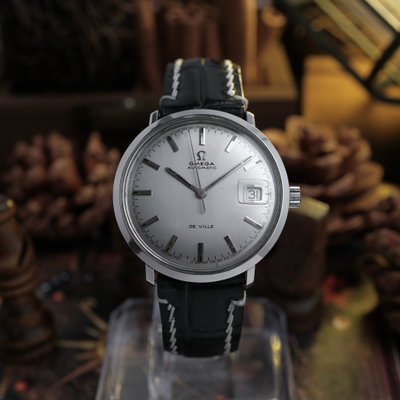
The Omega De Ville 166.033 to buy has a clean silver sunburst dial, coherent Caliber 565 movement, and either a sharp steel case or honest gold plating.
We auction more than 100 vintage watches a week.
Get first access: new Omega 166.033 drops and alerts before auctions end.
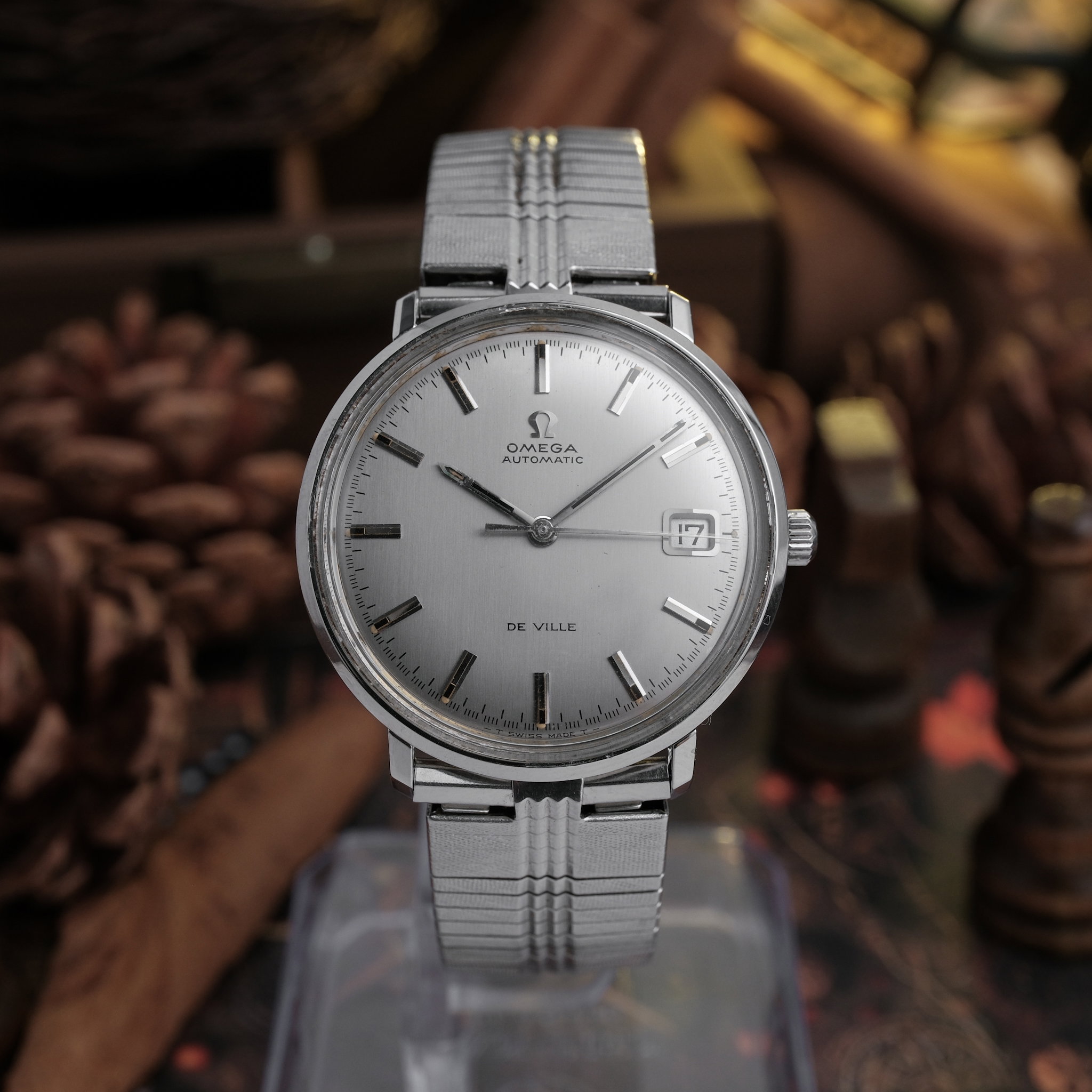
Browse 60 live Omega auctionsThe De Ville 166.033 is a compact automatic dress watch from 1969-1970, built around a 34 mm case and Omega Caliber 565. Its silver sunburst dial, applied faceted indices and restrained proportions put the emphasis on a clean face rather than case bulk.
Steel is the safer version when two examples are otherwise equal. Gold-plated cases can look warmer, but wear-through at the lugs cannot be reversed by routine service. On either version, the dial carries the decision: a clean original dial is worth prioritising over a sharper-looking case with refinished printing.
Reference
166.033
Model
De Ville
Known production years
1969-1970
Case diameter
34 mm excluding the crown
| Movement | Automatic Omega Caliber 565 |
| Jewel count | 24 jewels on disclosed examples |
| Dial configuration | Silver sunburst with applied faceted, black-accented indices |
| Known case materials | Stainless steel, or gold-plated with stainless steel caseback |
What it was built for
The De Ville 166.033 belongs to Omega's 1969-1970 dress-watch output, with a 34 mm case designed to sit discreetly rather than dominate the wrist. The automatic Caliber 565 and silver sunburst dial give it more everyday practicality than a purely decorative dress watch, while the applied black-accented indices keep the face legible without making it sporty.
Case choice changes the character. Stainless steel keeps the watch visually cool and tolerates ordinary wear without exposing another metal beneath. The gold-plated version uses a stainless steel caseback, but worn plating around the lugs or case edges remains visible after mechanical work. Between equal dials, steel is the less complicated buy.
On the wrist
At 34 mm excluding the crown, the 166.033 wears as a compact late-1960s watch rather than a reduced modern one. The broad silver dial and narrow applied indices preserve visual space, so the watch reads clearly despite its diameter. It slips naturally under a cuff and suits a leather strap, while a period beads-of-rice bracelet gives the steel case more presence.
The sunburst finish changes noticeably with light, and that movement is part of the reference's appeal. Dark inserts in the faceted indices sharpen the hour markers against silver. A local dial spot, such as staining between 10 and 11 o'clock, remains easier to notice in angled light than in a straight-on photograph, so its position and extent matter.
What goes wrong
Dial damage is the costliest fault. Uneven spotting, oil staining and a redial all matter more than routine case scratches, while a genuine service dial is a factory replacement rather than a refinished original. Applied indices should belong coherently with the silver sunburst surface and black accents; mismatched furniture can indicate a franken assembly even when every individual part is genuine.
Gold plating wears through first at exposed edges and lugs, and no movement service replaces it. Repeated polishing softens the lugs and removes crisp case geometry, while bracelet links can develop stretch and poor end-link fit. Crowns and crystals are consumable parts, so a period-correct replacement is not proof that the complete watch remains as delivered.
Caliber 565 is the expected automatic movement, with 24 jewels in the examples that disclose the count. A clean dial does not establish mechanical health, and a service claim without a receipt does not establish what work was completed. The service history is often unknown; without documentation, the watch itself supports no stronger conclusion.
Dating this watch
| Serial range / caliber | Year | Note |
|---|---|---|
| 28,000,000 | 1969 | approximate, ±1-3 years |
| 31,000,000 | 1970 | approximate, ±1-3 years |
Dating data comes from our decoder tables; treat years as approximate.
What to check before you buy
- Dial configuration: The established 166.033 configuration uses a silver sunburst surface with applied faceted indices and dark accents. Flat paint, crude printing or furniture that does not sit coherently may indicate a redial or mixed parts.
- Movement caliber: The movement should be Omega Caliber 565, with 24 jewels where the jewel count is disclosed. A different caliber makes the watch inconsistent with the handled 166.033 examples and may indicate a married or franken watch.
- Case and caseback pairing: Known examples use either stainless steel or a gold-plated case with a stainless steel caseback. On plated watches, inspect the lug edges for exposed base metal rather than treating surface shine as evidence of preservation.
- Case geometry: Steel examples can retain sharp case lines, while repeated polishing rounds the lugs and softens their transitions. Compare the geometry on both sides because uneven metal removal is more informative than general brightness.
Other 166.033 examples we auctioned
14 Omega 166.033 auctioned
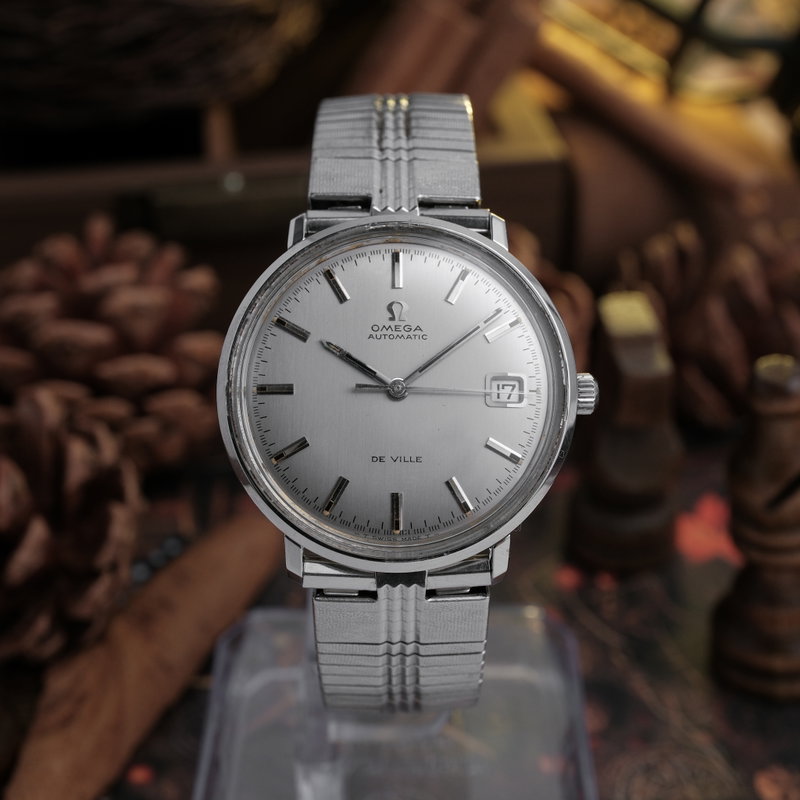
Omega · De Ville · 166.033 · 1969
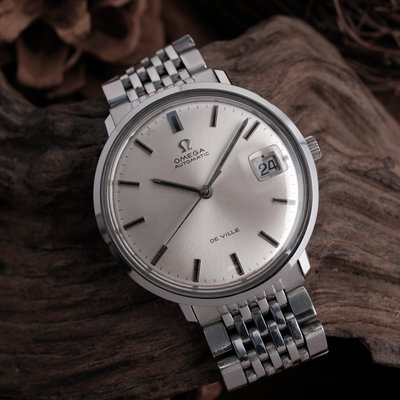
Omega · De Ville · 166.033 · 1969
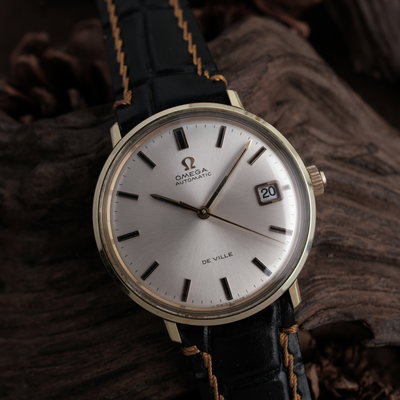
Omega · De Ville · 166.033
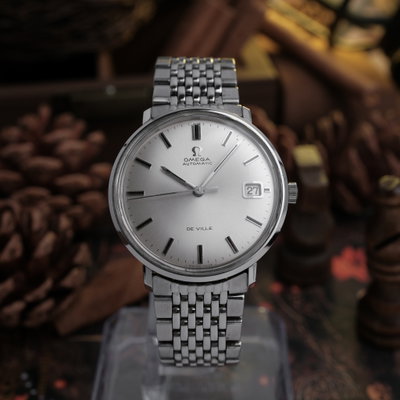
Omega · De Ville · 166.033 · 1969
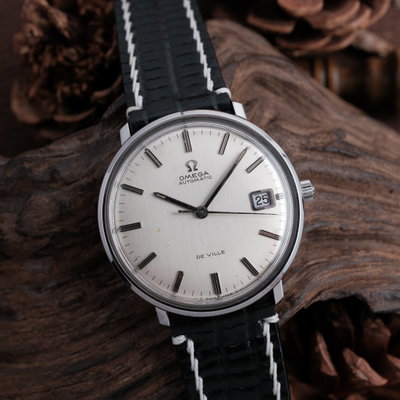
Omega · De Ville · 166033
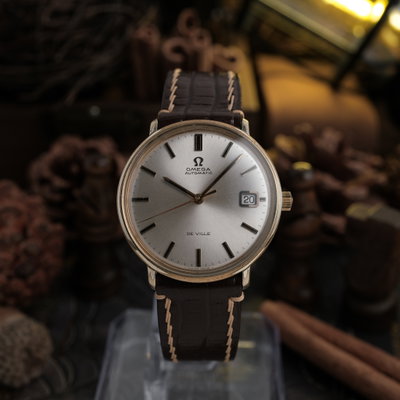
Omega · De Ville · 166033
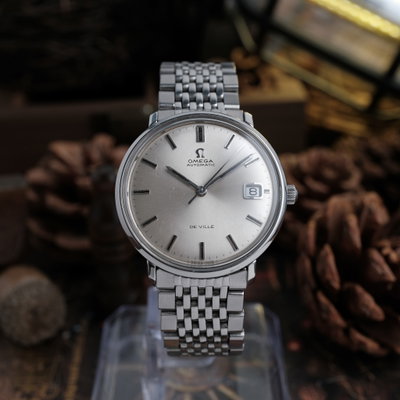
Omega · De Ville · 166.033
Omega · De Ville · 166.033 · 1969
More Omega references
Related pages
Frequently asked questions
Ready to hunt for your own?
More than 100 vintage watches go under the hammer every week.