Omega Seamaster 166.0167: what to know before buying
The Omega Seamaster 166.0167 is a 1972-1973 automatic in stainless steel, best bought with a clean silver sunburst dial and firm case geometry.
We auction more than 100 vintage watches a week.
Get first access: new Omega 166.0167 drops and alerts before auctions end.
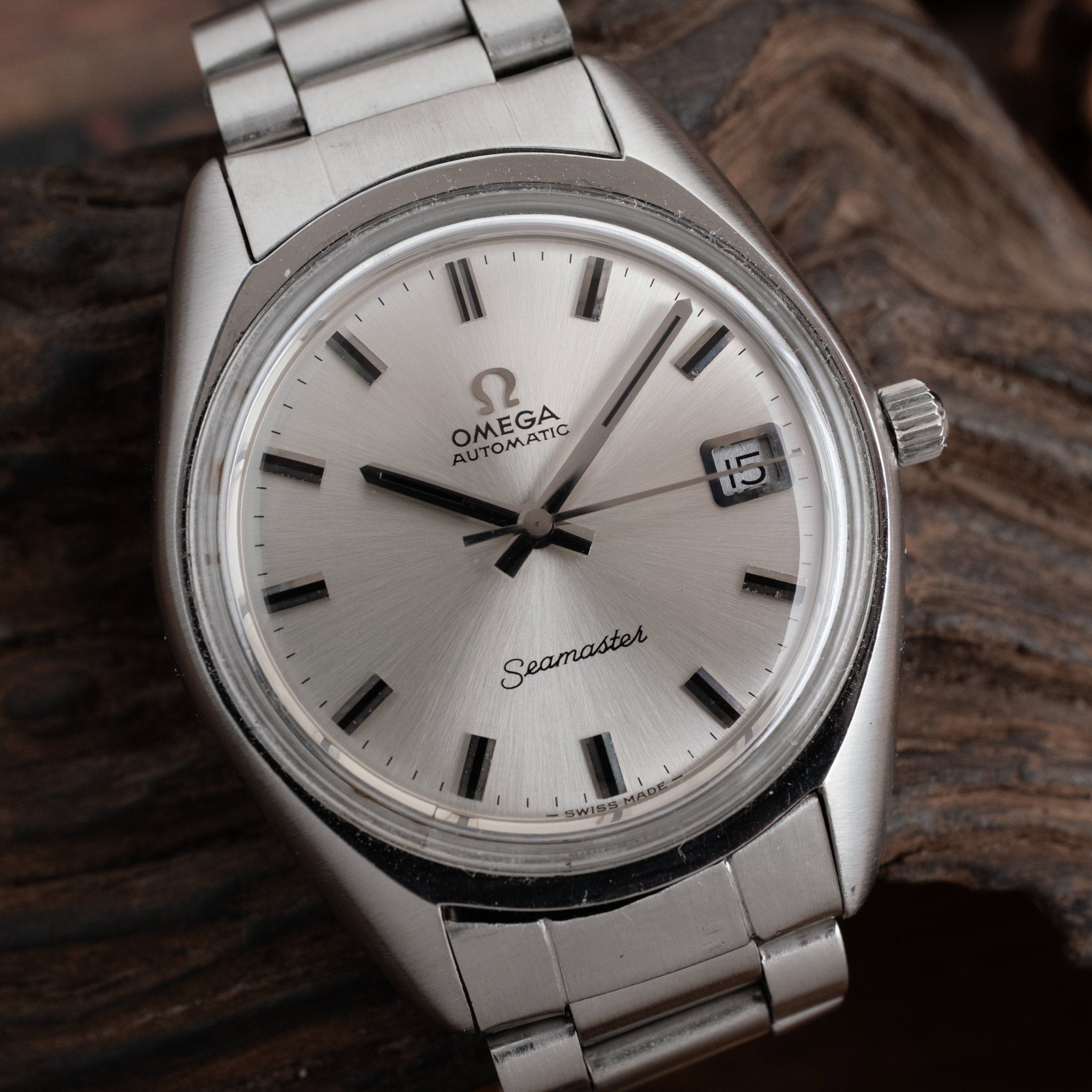
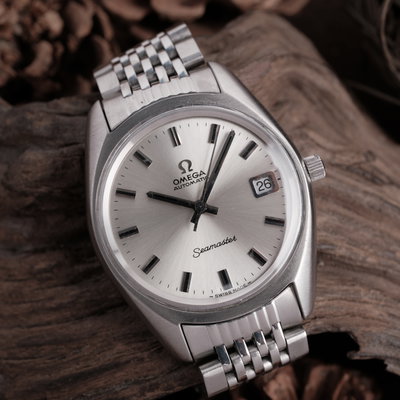
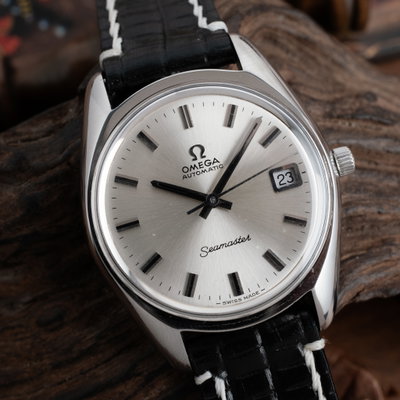
Browse 29 live Omega auctionsThe Seamaster 166.0167 belongs to 1972-1973 and pairs a stainless steel tonneau case with Omega's automatic caliber 1012. Its silver sunburst dial, black-insert baton markers and framed date at three give it stronger contrast than many dress-led watches of the period. The reference works best when that graphic dial remains clean and the case still carries its intended geometry.
Handled examples measure 35-36 mm without the crown, a difference most likely caused by measurement rather than a documented case variant. The tonneau outline gives the watch more wrist presence than the diameter alone suggests, while the black hands and markers keep the silver dial readable. Examples also exist on a signed bracelet, although the evidence does not establish that every watch left the factory with one.
Brand
Omega
Model
Seamaster
Reference
166.0167
Known production years
1972-1973
| Movement | Automatic Omega caliber 1012 |
| Case material | Stainless steel |
| Handled case measurements | 35-36 mm excluding the crown |
| Dial | Silver sunburst with applied black-insert baton markers |
| Date display | Framed window at three o'clock |
What it was built for
The Seamaster 166.0167 was built as an automatic date watch rather than a specialist timing instrument. Caliber 1012 drives central seconds and the framed date display, while the stainless steel case suits regular wear better than a plated alternative would. The 1972-1973 production window places its tonneau shape and integrated-style bracelet presence firmly in Omega's early 1970s design language.
At 35-36 mm without the crown, the case remains discreet under a cuff, but the broad tonneau outline occupies more space than a round case of equal diameter. Black inserts in the baton hands and applied markers sharpen legibility against the silver sunburst finish. The date at three slightly weights the dial to the right, balanced visually by the applied Omega logo above centre.
Where the value sits
Value concentrates in the dial before the movement or bracelet. A clean silver sunburst surface with intact printing, black-insert markers and a properly framed date is the version to buy; a refinished dial costs more in lost appeal than ordinary case scratches. The black inserts matter because missing or mismatched sections weaken the reference's defining contrast.
A signed bracelet adds period character when its fit is convincing and its links are not heavily stretched, but it should not rescue a weak dial or softened case. Caliber 1012 is correct for the reference, and a movement from another caliber creates a franken or married-watch concern even when the exterior looks coherent. Between a clean watch on a later strap and a compromised watch on a signed bracelet, take the clean watch.
What goes wrong
The most expensive fault is a redial, especially where the silver sunburst finish has been replaced by a flat surface or the black accents no longer agree across hands and markers. Over-polishing is next: the tonneau case loses definition as its edges soften, and no service can put removed steel back. Bracelet stretch, corrosion on the hands and damaged dial furniture are separate faults, not patina.
Caliber 1012 condition cannot be established from appearance or a brief rate reading alone. The service history is unknown unless invoices accompany the watch, and without documentation it is safer not to speculate. A replacement crown or crystal may be period-correct without being original, while a service dial is a genuine factory replacement and should not be described as a redial.
Start with the dial, then choose the case with the clearest remaining tonneau geometry. Confirm caliber 1012 and treat the bracelet as a secondary benefit rather than the basis of the purchase. A vintage Omega Seamaster 166.0167 with an honest dial on a later strap is the stronger buy than a polished, refinished example assembled around a signed bracelet.
Dating this watch
| Serial range / caliber | Year | Note |
|---|---|---|
| 33000000 | 1972 | approximate, ±1-3 years |
| 35000000 | 1973 | approximate, ±1-3 years |
Dating data comes from our decoder tables; treat years as approximate.
What to check before you buy
- Dial configuration: The known dial is silver sunburst with an applied Omega logo, applied baton markers containing black inserts, matching black-accented hands and a framed date window at three.
- Movement caliber: The movement should be Omega caliber 1012. A different caliber is not supported for 166.0167 and raises the possibility of a franken watch or a case and movement married from separate watches.
- Case form: The stainless steel case has a tonneau outline and handled examples measure 35-36 mm without the crown. Soft, poorly defined edges indicate polishing rather than a separate documented case version.
- Serial coherence: Serial dating should align broadly with the known 1972-1973 production window, allowing the stated tolerance of plus or minus one to three years. It cannot establish an exact production date.
- Parts consistency: Black inserts should agree across the applied baton markers and hands, and the date opening should retain its applied frame. Mismatched furniture can indicate replacement parts even when each part is genuine Omega.
Other 166.0167 examples we auctioned
5 Omega 166.0167 auctioned
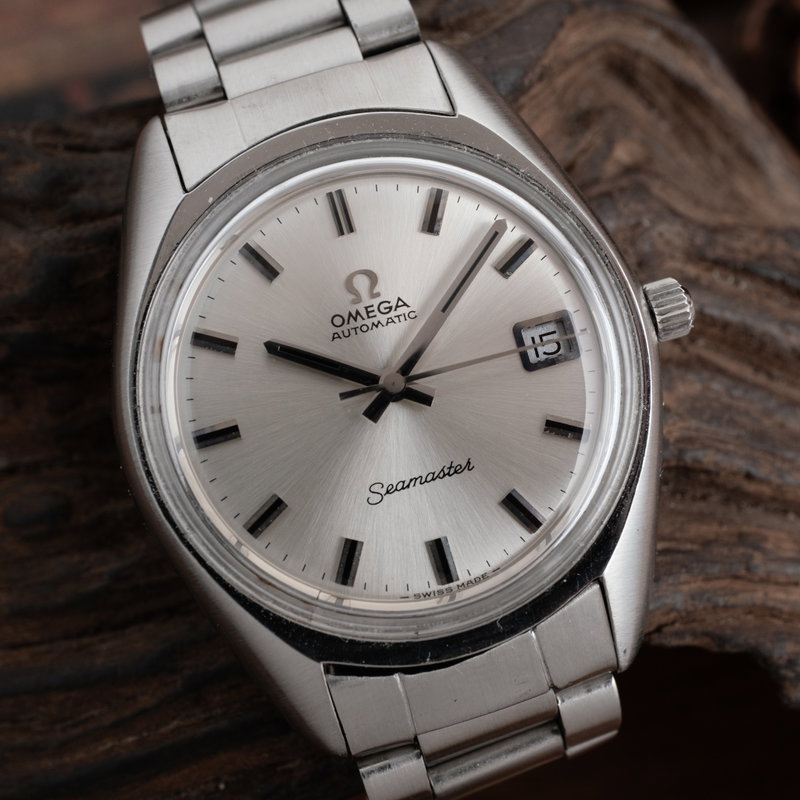
Omega · Seamaster · 166.0167 · 1973
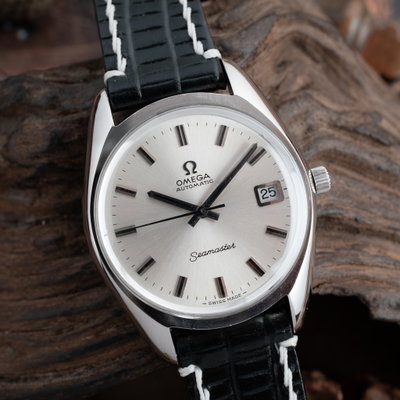
Omega · Seamaster · 166.0167 · 1972
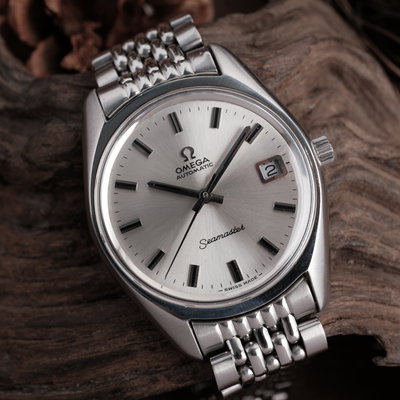
Omega · Seamaster · 166.0167 · 1973
Omega · Seamaster · 166.0167 · 1973
Omega · Seamaster · 166.0167
More Omega references
Related pages
Frequently asked questions
Ready to hunt for your own?
More than 100 vintage watches go under the hammer every week.