Vintage Omega De Ville: What to Buy and What to Avoid
A vintage Omega De Ville is a compact dress watch best bought for its dial, case geometry and correctly matched movement, not for surface shine.
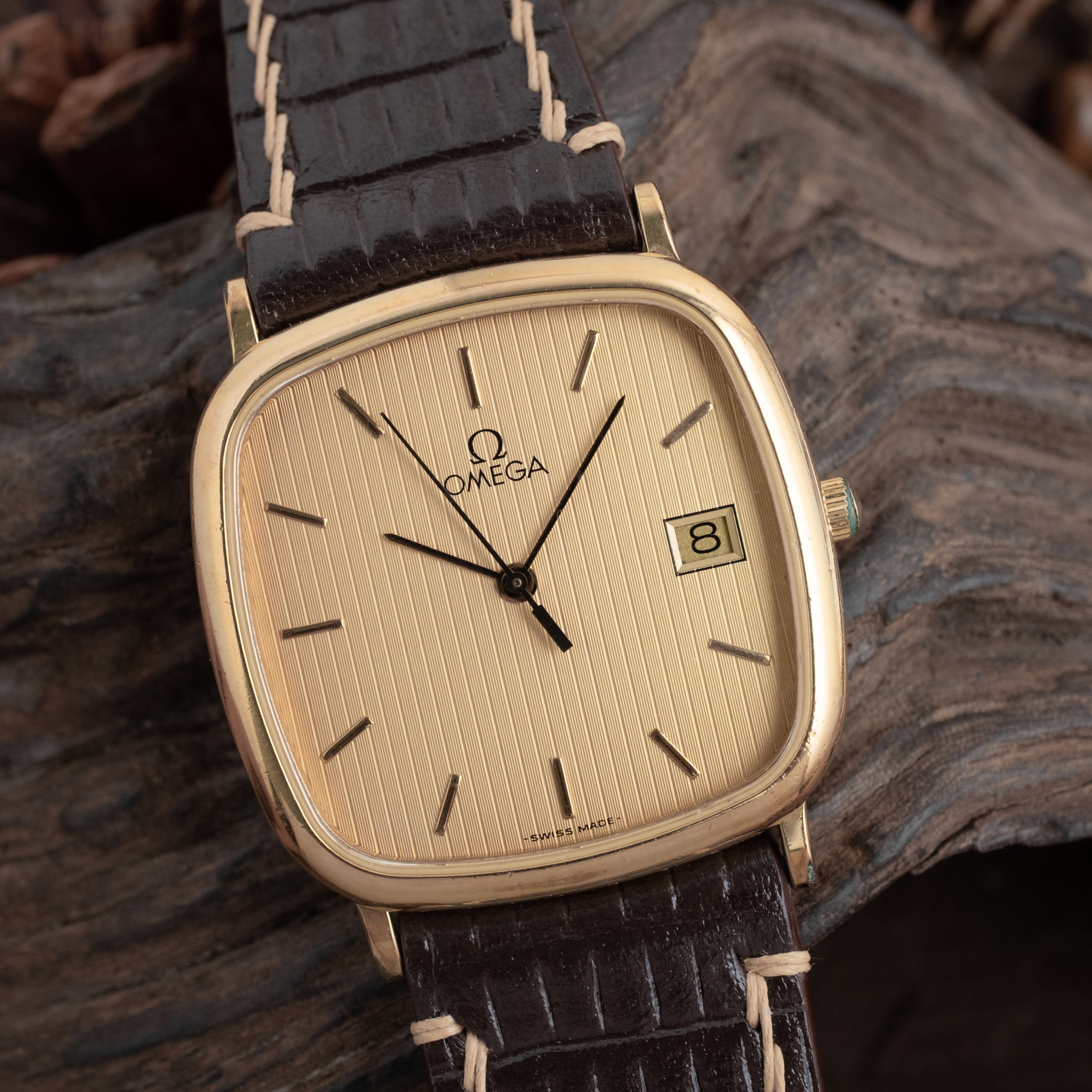
Live now
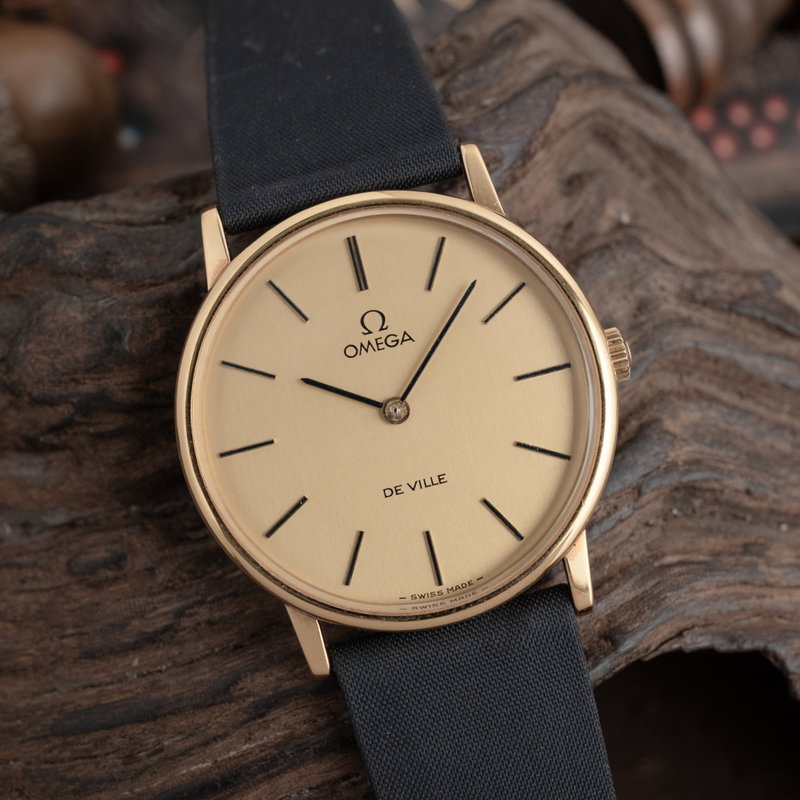
Omega - De Ville - No reserve price - 111 0140 - Men - 1979
Omega - De Ville - No reserve price - MD 1960312.1 - Men - 1980-1989
Omega - De Ville - No reserve price - 111.0118 - Men - 1975
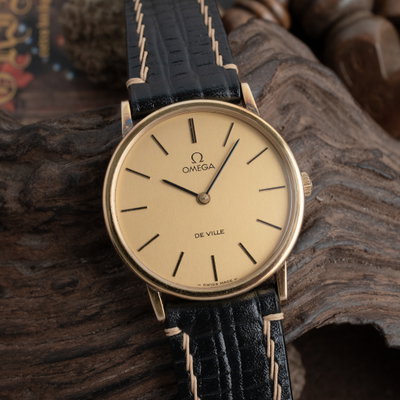
Omega - De Ville - No reserve price - 111.140 - Men - 1977
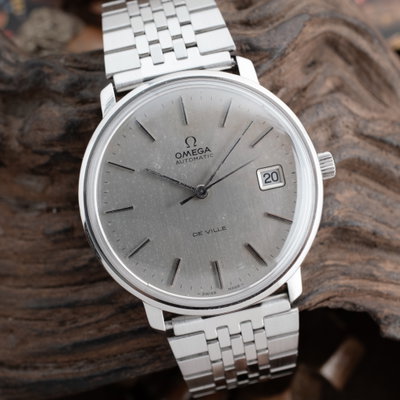
Omega - De Ville - No reserve price - Men - 1970-1979
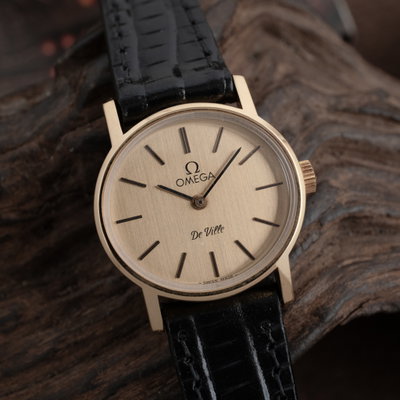
Omega - De Ville - No reserve price - 511 0503 - Women - 1979
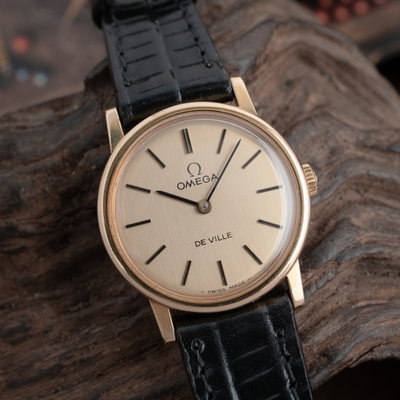
Omega - De Ville - No reserve price - 511 0532 - Women - 1979
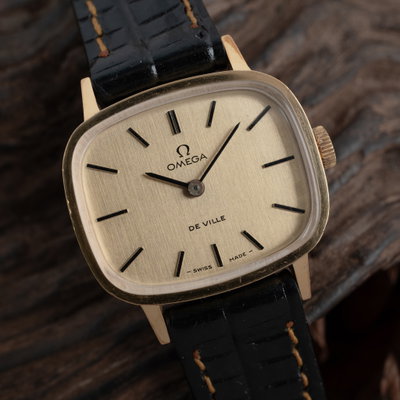
Omega - De Ville - No reserve price - 5110413 - Women - 1979
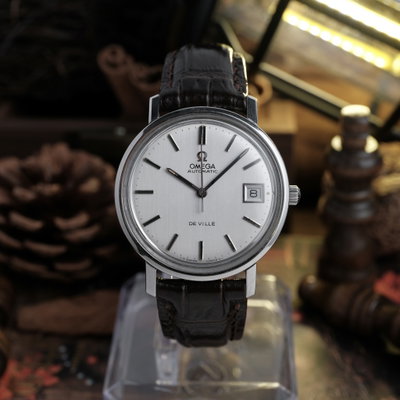
The vintage Omega De Ville is not one fixed design. From 1958 to 1997, the name covered round, square, cushion and tonneau dress watches, with manual-wind, automatic and later women's configurations. The De Ville shown here makes most sense as a formal watch: restrained dials, compact cases and proportions intended to sit neatly rather than dominate the wrist.
Reference 166.033 is the safest starting point against the more stylised alternatives. Its 34 mm steel case, silver sunburst dial and caliber 565 automatic movement make it easier to wear and easier to assess than a plated cushion case or a small square watch. If geometric design matters more than versatility, reference 161.022 pairs a 30 mm square steel case with the thin caliber 711 automatic movement.
Known production span
1958-1997
Case sizes handled
21 mm, 30 mm, 32 mm and 34 mm
Case shapes handled
Round, square, cushion and tonneau
Case materials handled
Stainless steel and 20-micron gold-plated cases with stainless steel casebacks
| Movement types handled | Manual-wind and automatic |
| Named calibers handled | 565, 625, 711 and 1002 |
| Dial treatments handled | Silver sunburst, vertically brushed silver, vertically brushed champagne and satin gold |
The model landscape
Round steel watches anchor the range, but they do not describe it completely. Reference 166.033 is a 1969 automatic with caliber 565, while reference 161.022 is a 1968 square automatic with caliber 711. Reference 111.0133 moves in another direction: a 1975 cushion case, manual-wind caliber 625 and 20-micron gold plating over a stainless steel caseback.
The choice should follow the case before the movement. A 34 mm round De Ville gives you conventional dress-watch proportions, while a 30 mm square case carries more visual width than its measurement suggests. The 32 mm cushion case sits between them but introduces plating wear as a permanent condition issue. Against an equally clean plated example, steel is the more forgiving purchase.
Women's De Ville watches extend the scale downward. Reference 595.0097.2 is a 21 mm gold-plated watch from the 1990s with a satin gold dial and cabochon-set crown. It works as jewellery first and a legibility-led watch second. That distinction matters because its market does not overlap neatly with the larger steel automatics.
What goes wrong
The costliest fault is a refinished dial. Sunburst brushing, vertically brushed surfaces and printed Roman numerals are distinct factory treatments within the model, so a generic repaint can erase the character that separates one De Ville from another. A genuine service dial is different from a redial, but it is still a replacement and should be described as such.
Gold plating fails at exposed edges, especially lugs and case corners, and no mechanical service puts those missing microns back. Polishing then compounds the problem by softening cushion edges, square corners and tonneau transitions. On steel cases, crisp lines matter more than mirror brightness. A local dial mark, such as the spot between 10 and 11 o'clock found on a reference 166.033, is preferable to an evenly repainted surface when the printing remains original.
Movements also need exact identification. The known automatic choices include calibers 565, 711 and 1002, while caliber 625 is manual-wind. A movement from another De Ville is not automatically correct for the case, and a case-movement mismatch makes the watch married. Service history is unknown without dated documentation, regardless of how well the watch runs during a short inspection.
Dating this watch
| Serial range / caliber | Year | Note |
|---|---|---|
| 16000000 | 1958 | approximate, ±1-3 years |
| 18000000 | 1961 | approximate, ±1-3 years |
| 20000000 | 1963 | approximate, ±1-3 years |
| 24000000 | 1966 | approximate, ±1-3 years |
| 28000000 | 1969 | approximate, ±1-3 years |
| 31000000 | 1970 | approximate, ±1-3 years |
| 39000000 | 1975 | approximate, ±1-3 years |
| 44000000 | 1980 | approximate, ±1-3 years |
| 50000000 | 1990 | approximate, ±1-3 years |
| 54000000 | 1995 | approximate, ±1-3 years |
| 56000000 | 1996 | approximate, ±1-3 years |
Dating data comes from our decoder tables; treat years as approximate.
What to check before you buy
- Dial treatment and printing: Reference 166.033 should retain a silver sunburst surface, while 161.022 uses a silver sunburst dial with printed Roman numerals. Flat paint, lost brushing or newly uniform printing indicates a redial.
- Case shape and edge definition: Square, cushion and tonneau De Ville cases rely on defined corners and transitions. Soft edges indicate polishing, while plating loss on reference 111.0133 is most consequential at the lugs and case corners.
- Movement and reference pairing: Confirm the stated caliber matches the known configuration: 565 for 166.033, 711 for 161.022, 625 for 111.0133 and 1002 for 166.051. A genuine but mismatched Omega movement can make the watch franken or married.
- Crown and replacement status: A cabochon crown is recorded on references 111.0133 and 595.0097.2, but crown originality cannot be assumed because crowns are consumable parts. A period-correct replacement is not the original crown.
Recent Omega results
237 Omega watches auctioned
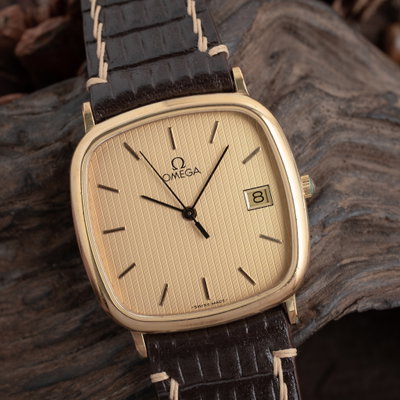
Omega · De Ville · 196 0317.1
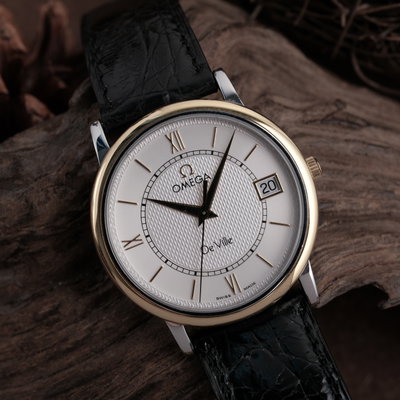
Omega · De Ville · 196 2532 · 1997
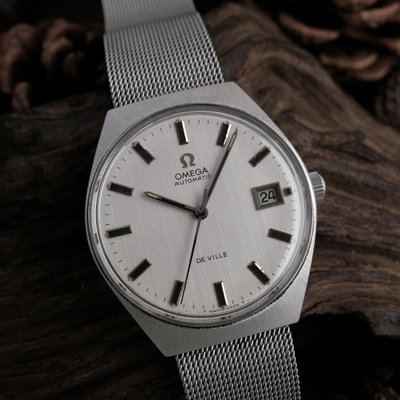
Omega · De Ville · 166.051
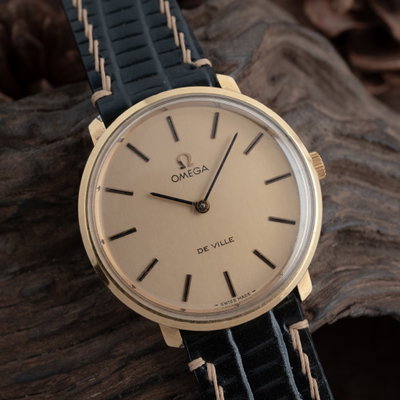
Omega · De Ville
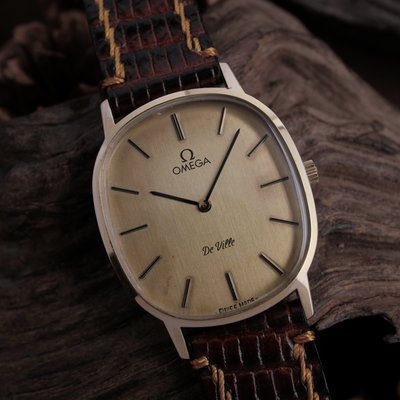
Omega · De Ville · 111.0148 · 1979
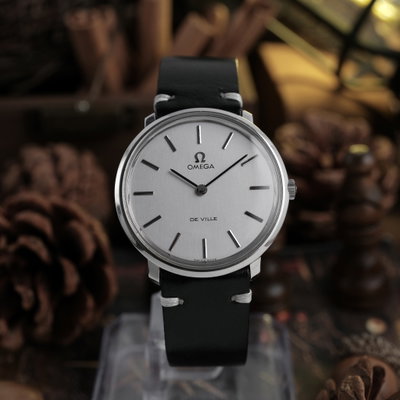
Omega · De Ville · 115.0001
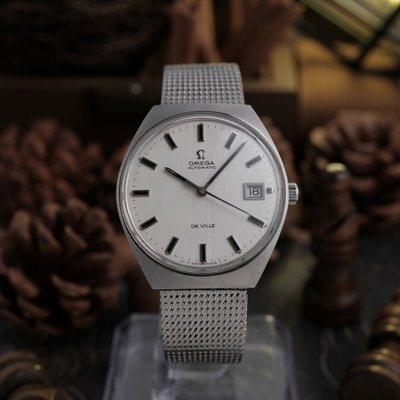
Omega · De Ville
Omega · De Ville · 166.0161 · 1973
We auction more than 100 vintage watches a week.
Get first access: new Omega watch drops and alerts before auctions end.
More Omega references
Related pages
Frequently asked questions
Ready to hunt for your own?
More than 100 vintage watches go under the hammer every week.