Vintage Omega Constellation: References, Value and Buying Advice
Buy a vintage Omega Constellation for its dial and case geometry, with caliber, complication and reference checked as supporting evidence.
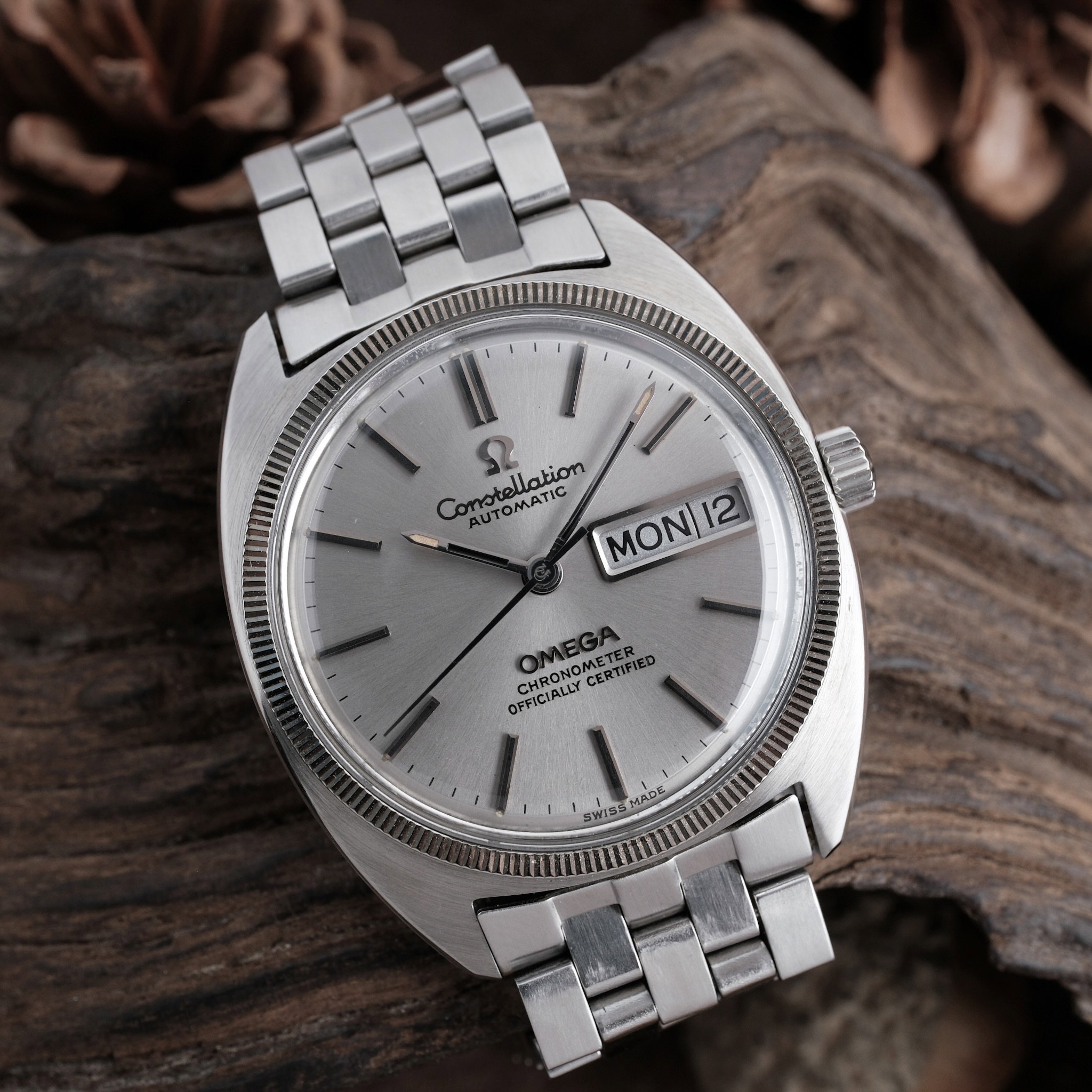
The vintage Omega Constellation is a compact chronometer dress watch whose strongest period examples combine architectural steel cases with automatic calibers 564 or 751. Watches handled from 1960 through 1998 establish a broad model history, but the clearest buying case sits with the 34 mm and 35 mm steel watches of the 1960s and early 1970s.
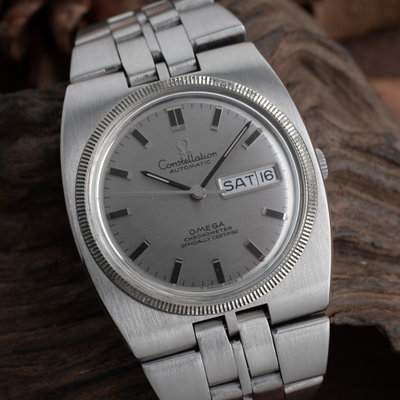
Constellation dials vary enough to change the character of the watch: silver sunburst, stippled, linen-textured and vertically brushed surfaces are all established. Case shape and complication matter too. The 168.017 SP pairs a 35 mm C-shape case with caliber 564, while the 168.019 uses caliber 751 and adds day and date.
Known production-year span
1960-1998
Handled case sizes
34 mm and 35 mm, excluding the crown where stated
Established case material
Stainless steel
Established movements
Automatic calibers 564 and 751
| Established complications | Date, or day and date |
| Established dial finishes | Silver sunburst, stippled, linen-textured and vertically brushed |
| 34 mm examples | 168.017 and ST 168.029 |
| 35 mm examples | 168.017 SP and 168.019 |
The model landscape
The 168.017 and 168.017 SP establish the compact C-shape Constellation with automatic caliber 564, at 34 mm and 35 mm respectively. The 168.019 keeps the 35 mm steel format but adds day and date through caliber 751, while ST 168.029 combines the same caliber with a 34 mm case and linen-textured dial. Choose the day-date only if that complication matters, since it adds another display that must align and change correctly.
Dial execution creates more separation than a one-millimetre case difference. A clean linen or stippled surface retains visible texture, while sunburst and vertically brushed dials depend on uninterrupted finishing. Applied black-inlaid indices give these silver dials their contrast. Between two comparable watches, stronger surface texture and crisp case lines carry more weight than an unsupported service claim.
On the wrist
At 34 mm, the 168.017 and ST 168.029 wear as compact dress watches, with the C-shape case supplying more visual width than a plain round outline. The 35 mm 168.017 SP and 168.019 gain a little more presence without leaving the proportions established by late-1960s Constellations. A silver dial with black-inlaid indices remains legible because the contrast comes from the furniture rather than a large case.
The 168.019 gives the busiest wrist view because its caliber 751 supports both day and date. The 168.017 SP is the cleaner choice at the same recorded diameter, using caliber 564 and a date display. Thickness is not established by the handled facts, so fit beneath a close cuff cannot be stated responsibly.
What goes wrong
A refinished dial is the costliest mistake because it removes the original sunburst, stippled, linen or vertical-brush surface that distinguishes these Constellations. Over-polishing is next: the C-shape case loses its architectural transitions as the edges soften. Applied indices can lose black inserts, while day and date displays may sit off-centre or fail to change correctly.
Replacement crowns and crystals are consumable changes, but their presence must be disclosed rather than hidden inside an all-original claim. A service dial is factory-made and should be identified as a replacement; a redial is refinished outside that definition. A franken Constellation combines components that did not ship together, and a married watch joins a case and movement from different watches. The service history is unknown unless documentation establishes it.
Dating this watch
| Serial range / caliber | Year | Note |
|---|---|---|
| 1000000 | 1902 | approximate, ±1-3 years |
| 2000000 | 1908 | approximate, ±1-3 years |
| 3000000 | 1912 | approximate, ±1-3 years |
| 4000000 | 1916 | approximate, ±1-3 years |
| 5000000 | 1923 | approximate, ±1-3 years |
| 6000000 | 1925 | approximate, ±1-3 years |
| 7000000 | 1929 | approximate, ±1-3 years |
| 8000000 | 1935 | approximate, ±1-3 years |
| 9000000 | 1939 | approximate, ±1-3 years |
| 10000000 | 1944 | approximate, ±1-3 years |
| 11000000 | 1947 | approximate, ±1-3 years |
| 12000000 | 1950 | approximate, ±1-3 years |
| 13000000 | 1952 | approximate, ±1-3 years |
| 14000000 | 1954 | approximate, ±1-3 years |
| 15000000 | 1956 | approximate, ±1-3 years |
| 16000000 | 1958 | approximate, ±1-3 years |
| 17000000 | 1960 | approximate, ±1-3 years |
| 18000000 | 1961 | approximate, ±1-3 years |
| 19000000 | 1962 | approximate, ±1-3 years |
| 20000000 | 1963 | approximate, ±1-3 years |
| 21000000 | 1964 | approximate, ±1-3 years |
| 22000000 | 1965 | approximate, ±1-3 years |
| 24000000 | 1966 | approximate, ±1-3 years |
| 25000000 | 1967 | approximate, ±1-3 years |
| 26000000 | 1968 | approximate, ±1-3 years |
| 28000000 | 1969 | approximate, ±1-3 years |
| 31000000 | 1970 | approximate, ±1-3 years |
| 32000000 | 1971 | approximate, ±1-3 years |
| 33000000 | 1972 | approximate, ±1-3 years |
| 35000000 | 1973 | approximate, ±1-3 years |
| 37000000 | 1974 | approximate, ±1-3 years |
| 39000000 | 1975 | approximate, ±1-3 years |
| 40000000 | 1976 | approximate, ±1-3 years |
| 41000000 | 1977 | approximate, ±1-3 years |
| 42000000 | 1978 | approximate, ±1-3 years |
| 43000000 | 1979 | approximate, ±1-3 years |
| 44000000 | 1980 | approximate, ±1-3 years |
| 45000000 | 1982 | approximate, ±1-3 years |
| 46000000 | 1984 | approximate, ±1-3 years |
| 47000000 | 1985 | approximate, ±1-3 years |
| 48000000 | 1986 | approximate, ±1-3 years |
| 49000000 | 1988 | approximate, ±1-3 years |
| 50000000 | 1990 | approximate, ±1-3 years |
| 53000000 | 1993 | approximate, ±1-3 years |
| 54000000 | 1995 | approximate, ±1-3 years |
| 56000000 | 1996 | approximate, ±1-3 years |
| 58000000 | 1998 | approximate, ±1-3 years |
| 60000000 | 2000 | approximate, ±1-3 years |
Dating data comes from our decoder tables; treat years as approximate.
What to check before you buy
- Dial print and surface: A silver Constellation dial must retain the finish appropriate to that watch: sunburst, stippled, linen-textured or vertically brushed. Flattened texture, disturbed lettering or print sitting over damage supports a redial diagnosis.
- Hands and dial furniture: Applied black-inlaid indices are established on these 1960s and 1970-era examples. The handled facts do not define one universal hand set, so matching hands requires reference-specific evidence rather than a generic Constellation rule.
- Case and reference pairing: The 168.017 is established at 34 mm and the 168.017 SP at 35 mm, both with caliber 564. The 35 mm 168.019 and 34 mm ST 168.029 are established with caliber 751, making a conflicting combination a franken warning.
- Crown and case wear: A replacement crown is possible because crowns are consumable, but it must not disguise excessive case work. On a C-shape case, softened architectural transitions and rounded edges are direct evidence of polishing.
- Movement identity: The caliber marking must agree with the reference and complication. Caliber 564 is established for the date 168.017 family, while caliber 751 is established for the day-date 168.019 and ST 168.029 examples.
- Caseback and married-watch risk: Any caseback reference must match the exact watch configuration rather than merely carrying the Constellation name. A case and movement taken from different watches create a married watch even when both components are genuine Omega parts.
Recent Omega results
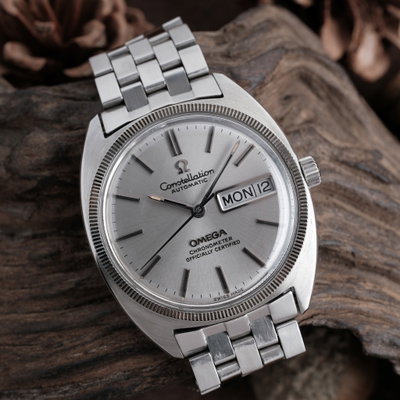
Omega · Constellation · ST 168 029 · 1970
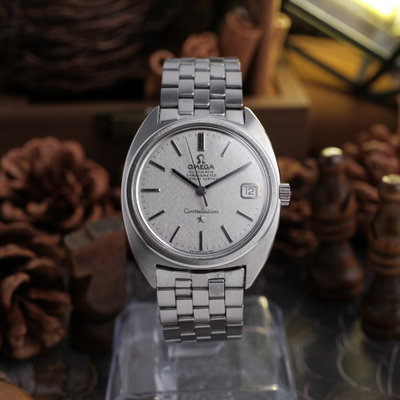
Omega · Constellation · 168.017 SP · 1969
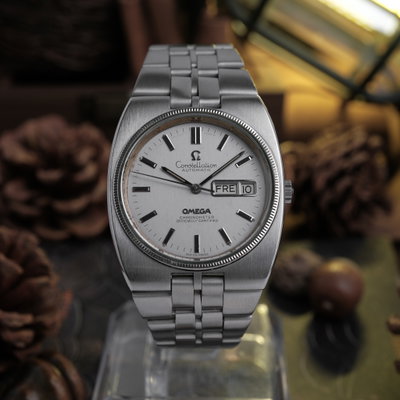
Omega · Constellation · 168.0054 · 1972
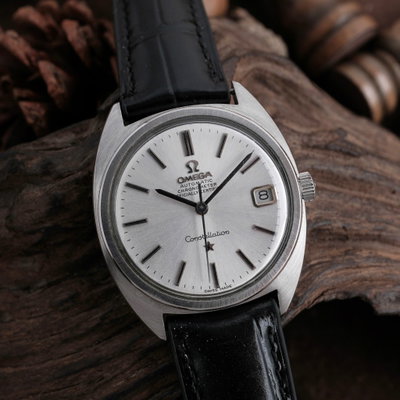
Omega · Constellation · 168.017 SP · 1968
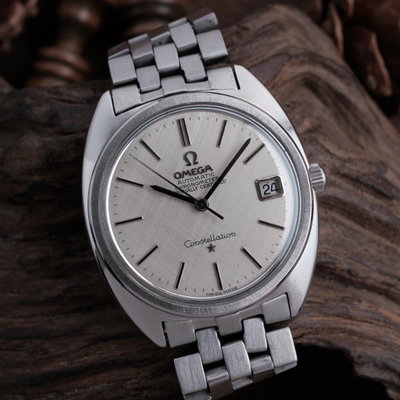
Omega · Constellation · 168017 · 1968
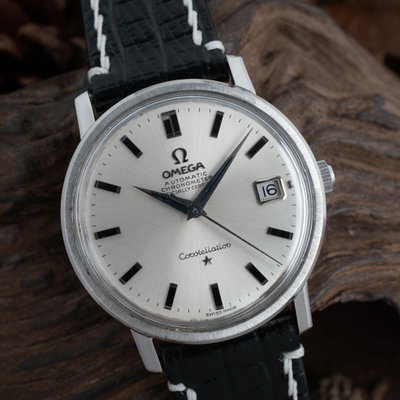
Omega · Constellation · 168018 · 1967
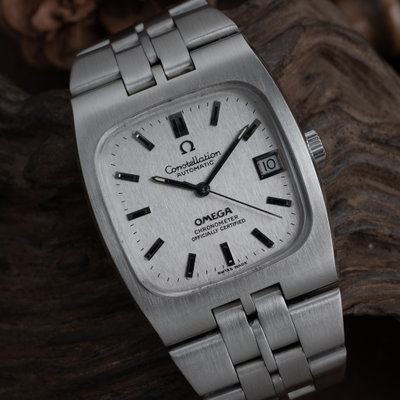
Omega · Constellation
Omega · Constellation · 168.045/368.845 · 1970
More Omega references
Related pages
Frequently asked questions
Ready to hunt for your own?
More than 100 vintage watches go under the hammer every week.