Vintage Omega Genève - the versions worth buying and the checks that matter
Buy a vintage Omega Genève for its dial and case integrity first, then choose manual or automatic winding and verify that the movement, date layout and reference agree.
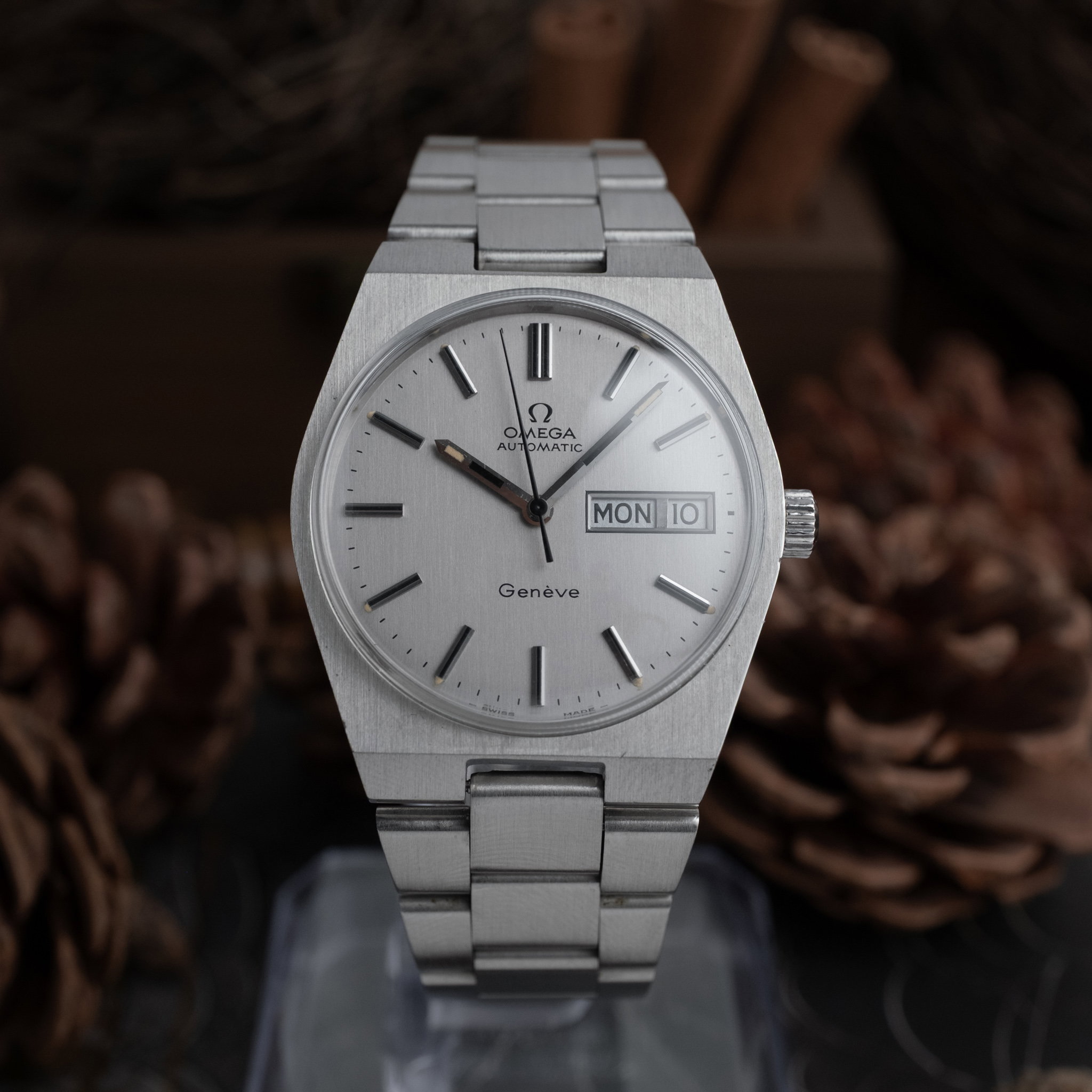
Live now
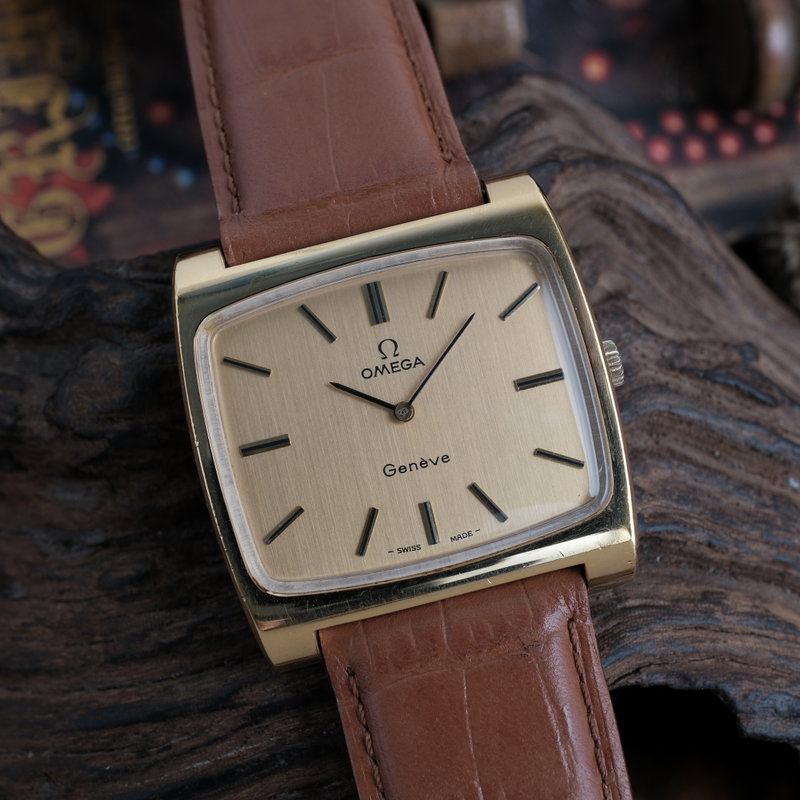
Omega - Genève - No reserve price - Men - 1970-1979
Omega - Genève - No reserve price - 166 0168 - Men - 1974
Omega - Genève - No reserve price - 1660163 - Men - 1973
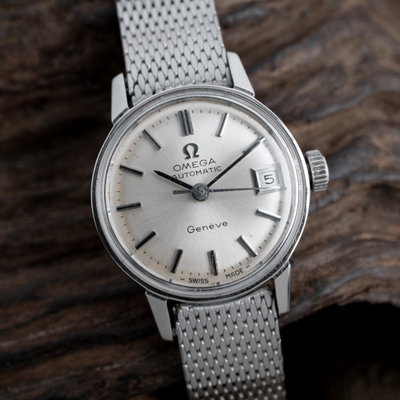
Omega - Genève - No reserve price - 566.002 - Women - 1970
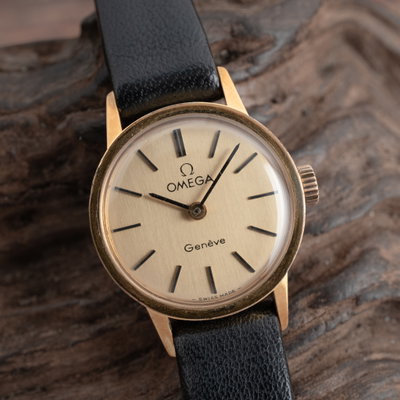
Omega - Genève - No reserve price - 511.0451 - Women - 1970-1979
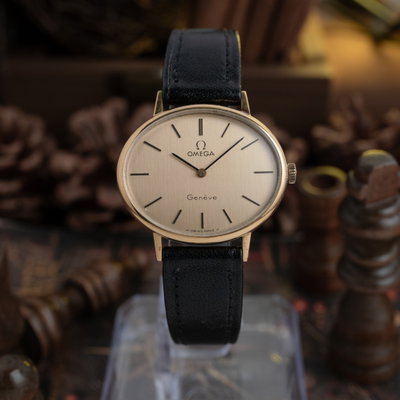
Omega - Genève - No reserve price - 511.417 - Unisex - 1974
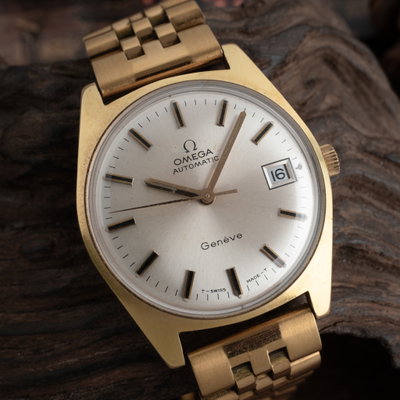
Omega - Genève - No reserve price - 166041 - Men - 1971
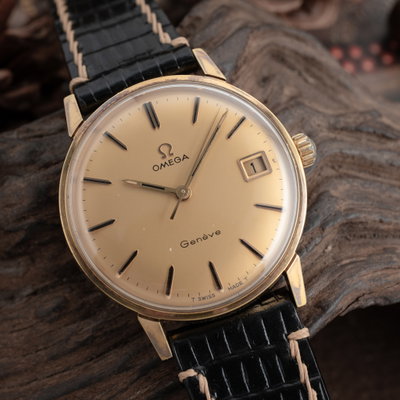
Omega - Genève - No reserve price - 136.011 SP - Men - 1960-1969
The Genève can give you a crisp 36 mm steel automatic with a no-date dial, a compact 34 mm manual-wind dress watch, or a 20 mm gold-plated piece. That range is the attraction, but it also means the name alone tells you very little about what you are buying.
Our pick is a steel example with an untouched-looking dial and sharp case geometry. The 36 mm 165.041 combines an automatic caliber 552 with a balanced no-date silver sunburst dial, while the 34 mm 135.011 SP offers a simpler manual-wind caliber 601 package. If you prefer stronger 1970s character, the tonneau-cased 136.0049 is the one to chase.
Known production-year span
1961-1977
Handled case-size range
20 mm-36 mm, excluding the crown
165.041 configuration
36 mm stainless steel, automatic caliber 552, no date
135.011 SP configuration
34 mm stainless steel, manual-wind caliber 601
| 136.0049 configuration | 34 mm stainless steel, manual-wind caliber 613, 17 jewels |
| 166.763 configuration | 35 mm, 20-micron gold-plated stainless steel, automatic caliber 1012 |
| 511.0451 configuration | 20 mm, 20-micron gold-plated case with stainless steel caseback, manual-wind caliber 625 |
| Observed dial finishes | Silver sunburst, vertically brushed silver, vertically brushed champagne and champagne gold |
Where to start
Start by deciding whether you want symmetry, convenience or period shape. The 165.041 is the cleanest enthusiast's choice here: 36 mm, steel, automatic and no date. The 135.011 SP is 34 mm and manual-wind, with a silver sunburst dial that reads as a more traditional dress watch. For a date display and a warmer finish, the 35 mm gold-plated 166.763 uses automatic caliber 1012 and a vertically brushed champagne dial.
Size changes the character more than the numbers suggest. A 20 mm 511.0451 is deliberately delicate, while the 34 mm and 35 mm watches stay compact and the 36 mm 165.041 has the strongest wrist presence. Pay for the format you will actually wear, not simply for the Genève signature.
What to look for
Make the dial your first filter. Silver sunburst, vertically brushed silver and vertically brushed champagne surfaces all occur, so texture is not evidence of alteration by itself. What matters is coherence: printing should sit cleanly on the finish, applied indices should align, black inlays should be consistent, and hands and lume plots should make visual sense together.
Then study the case. Sharp transitions and surviving original geometry are worth more than a bright surface produced by heavy polishing. On gold-plated pieces, inspect the edges and high points for loss through the plating. A fine dial in a worn plated case can still be appealing, but price it as a compromised case rather than pretending the warm finish is intact.
Dating and serials
Use the movement serial only as an approximate dating cross-check, with a tolerance of 1-3 years. A 30,198,467 serial on a 1970 135.011 SP, 33,512,191 on a 1971 165.041 and 35,399,270 on a 1972 166.763 sit close enough to the approximate table to support the stated periods.
Do not let an approximate serial date overrule the physical watch. Reference, caliber, winding type, date layout, case material and dial style must form a coherent package. The Genève examples handled here run from 1961 through 1977, so any production-year summary for the model needs to preserve that full known span.
Dating this watch
| Serial range / caliber | Year | Note |
|---|---|---|
| 1,000,000 | 1902 | approximate, ±1-3 years |
| 2,000,000 | 1908 | approximate, ±1-3 years |
| 3,000,000 | 1912 | approximate, ±1-3 years |
| 4,000,000 | 1916 | approximate, ±1-3 years |
| 5,000,000 | 1923 | approximate, ±1-3 years |
| 6,000,000 | 1925 | approximate, ±1-3 years |
| 7,000,000 | 1929 | approximate, ±1-3 years |
| 8,000,000 | 1935 | approximate, ±1-3 years |
| 9,000,000 | 1939 | approximate, ±1-3 years |
| 10,000,000 | 1944 | approximate, ±1-3 years |
| 11,000,000 | 1947 | approximate, ±1-3 years |
| 12,000,000 | 1950 | approximate, ±1-3 years |
| 13,000,000 | 1952 | approximate, ±1-3 years |
| 14,000,000 | 1954 | approximate, ±1-3 years |
| 15,000,000 | 1956 | approximate, ±1-3 years |
| 16,000,000 | 1958 | approximate, ±1-3 years |
| 17,000,000 | 1960 | approximate, ±1-3 years |
| 18,000,000 | 1961 | approximate, ±1-3 years |
| 19,000,000 | 1962 | approximate, ±1-3 years |
| 20,000,000 | 1963 | approximate, ±1-3 years |
| 21,000,000 | 1964 | approximate, ±1-3 years |
| 22,000,000 | 1965 | approximate, ±1-3 years |
| 24,000,000 | 1966 | approximate, ±1-3 years |
| 25,000,000 | 1967 | approximate, ±1-3 years |
| 26,000,000 | 1968 | approximate, ±1-3 years |
| 28,000,000 | 1969 | approximate, ±1-3 years |
| 31,000,000 | 1970 | approximate, ±1-3 years |
| 32,000,000 | 1971 | approximate, ±1-3 years |
| 33,000,000 | 1972 | approximate, ±1-3 years |
| 35,000,000 | 1973 | approximate, ±1-3 years |
| 37,000,000 | 1974 | approximate, ±1-3 years |
| 39,000,000 | 1975 | approximate, ±1-3 years |
| 40,000,000 | 1976 | approximate, ±1-3 years |
| 41,000,000 | 1977 | approximate, ±1-3 years |
| 42,000,000 | 1978 | approximate, ±1-3 years |
| 43,000,000 | 1979 | approximate, ±1-3 years |
| 44,000,000 | 1980 | approximate, ±1-3 years |
| 45,000,000 | 1982 | approximate, ±1-3 years |
| 46,000,000 | 1984 | approximate, ±1-3 years |
| 47,000,000 | 1985 | approximate, ±1-3 years |
| 48,000,000 | 1986 | approximate, ±1-3 years |
| 49,000,000 | 1988 | approximate, ±1-3 years |
| 50,000,000 | 1990 | approximate, ±1-3 years |
| 53,000,000 | 1993 | approximate, ±1-3 years |
| 54,000,000 | 1995 | approximate, ±1-3 years |
| 56,000,000 | 1996 | approximate, ±1-3 years |
| 58,000,000 | 1998 | approximate, ±1-3 years |
| 60,000,000 | 2000 | approximate, ±1-3 years |
Dating data comes from our decoder tables; treat years as approximate.
What to check before you buy
- Dial print and surface: On silver sunburst or vertically brushed dials, the Genève and Omega printing should remain clean against the original-looking texture. Blurred lettering, disturbed brushing or uneven clear areas can indicate refinishing.
- Hands, indices and lume: Applied black-inlaid baton indices should align consistently, and the hands should suit the dial's date or no-date layout. On luminous examples, compare the hand filling with the dial plots for visual coherence rather than assuming age alone proves originality.
- Reference and movement pairing: Check that the internal combination agrees: 165.041 with automatic caliber 552, 135.011 SP with manual-wind caliber 601, 136.0049 with manual-wind caliber 613, or 166.763 with automatic caliber 1012.
- Case material and geometry: Steel cases should retain clear transitions rather than uniformly rounded edges. The 166.763 and 511.0451 are 20-micron gold-plated configurations, so exposed base metal at edges is condition loss, not an alternative factory finish.
- Caseback consistency: The 511.0451 pairs its 20-micron gold-plated case with a stainless steel caseback. A materially different arrangement on that reference deserves caution because it breaks the handled configuration.
- Redial and mixed-part warning signs: Treat mismatched dial texture, irregular black index inlays, an unexplained date aperture, or a movement that conflicts with the stated reference as possible redial or franken-watch signs. Several small inconsistencies matter more than one isolated blemish.
Recent Omega results
220 Omega watches auctioned
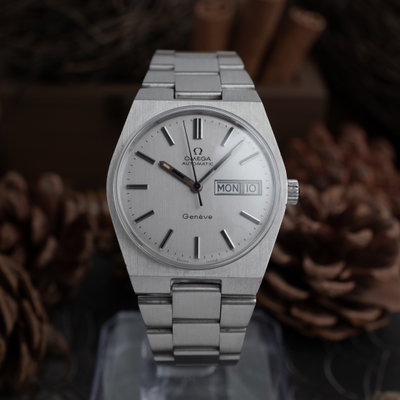
Omega · Genève · 1660125 · 1972
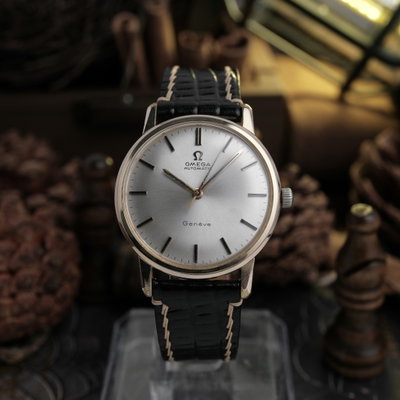
Omega · Genève · 161.003 · 1968
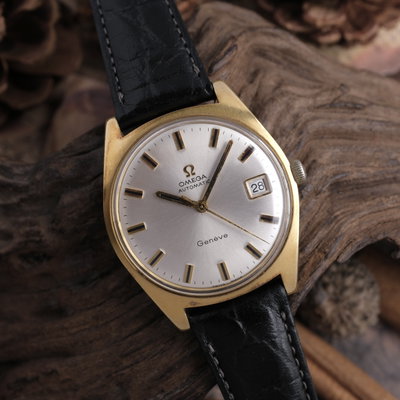
Omega · Genève · 166.041 · 1968
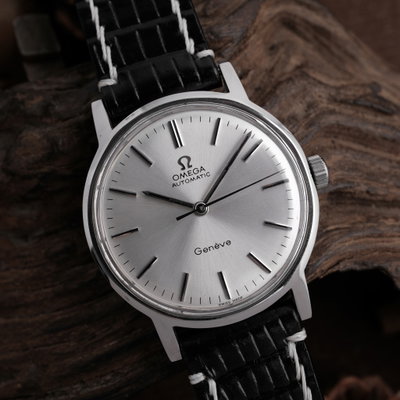
Omega · Genève · 165.070 · 1968
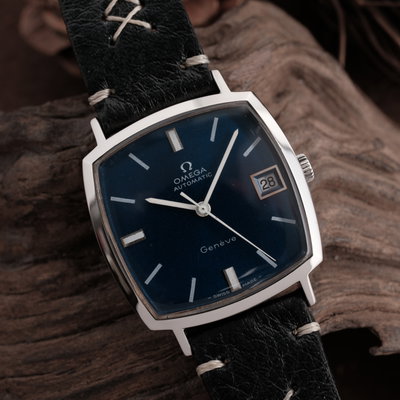
Omega · Genève · 162.0010 · 1971
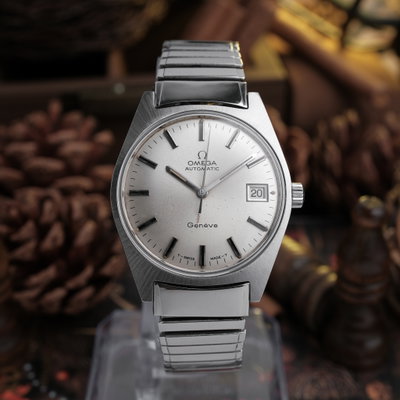
Omega · Genève · 166041 · 1970
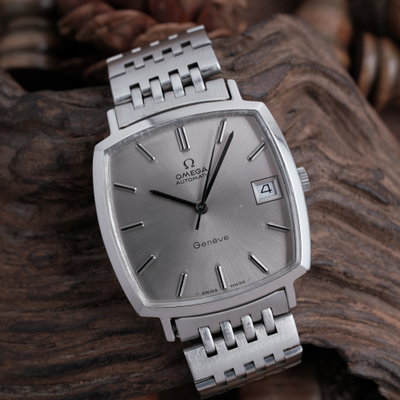
Omega · Genève · 162.0052 · 1973
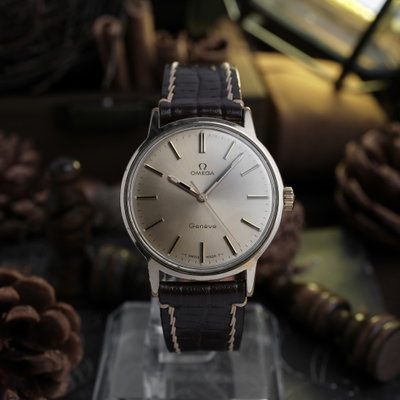
Omega · Genève · 135.070
We auction more than 100 vintage watches a week.
Get first access: new Omega watch drops and alerts before auctions end.
More Omega references
Related pages
Frequently asked questions
Ready to hunt for your own?
More than 100 vintage watches go under the hammer every week.