Omega Genève 166.0163: what to buy and what to avoid
The Omega Genève 166.0163 is a compact 1972-1974 automatic whose value depends chiefly on dial quality, case material and plating wear.
Live now
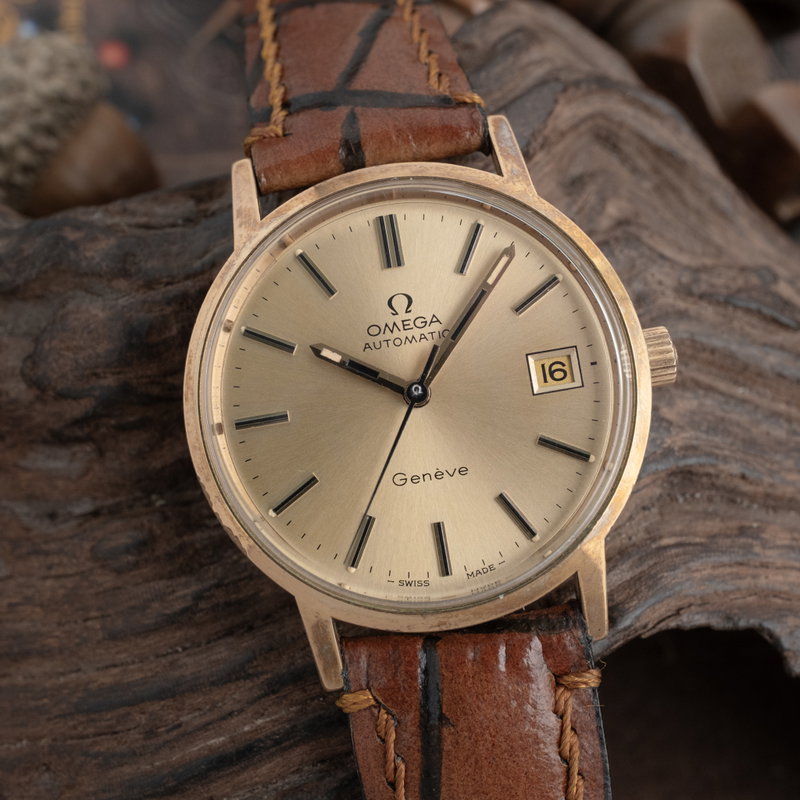
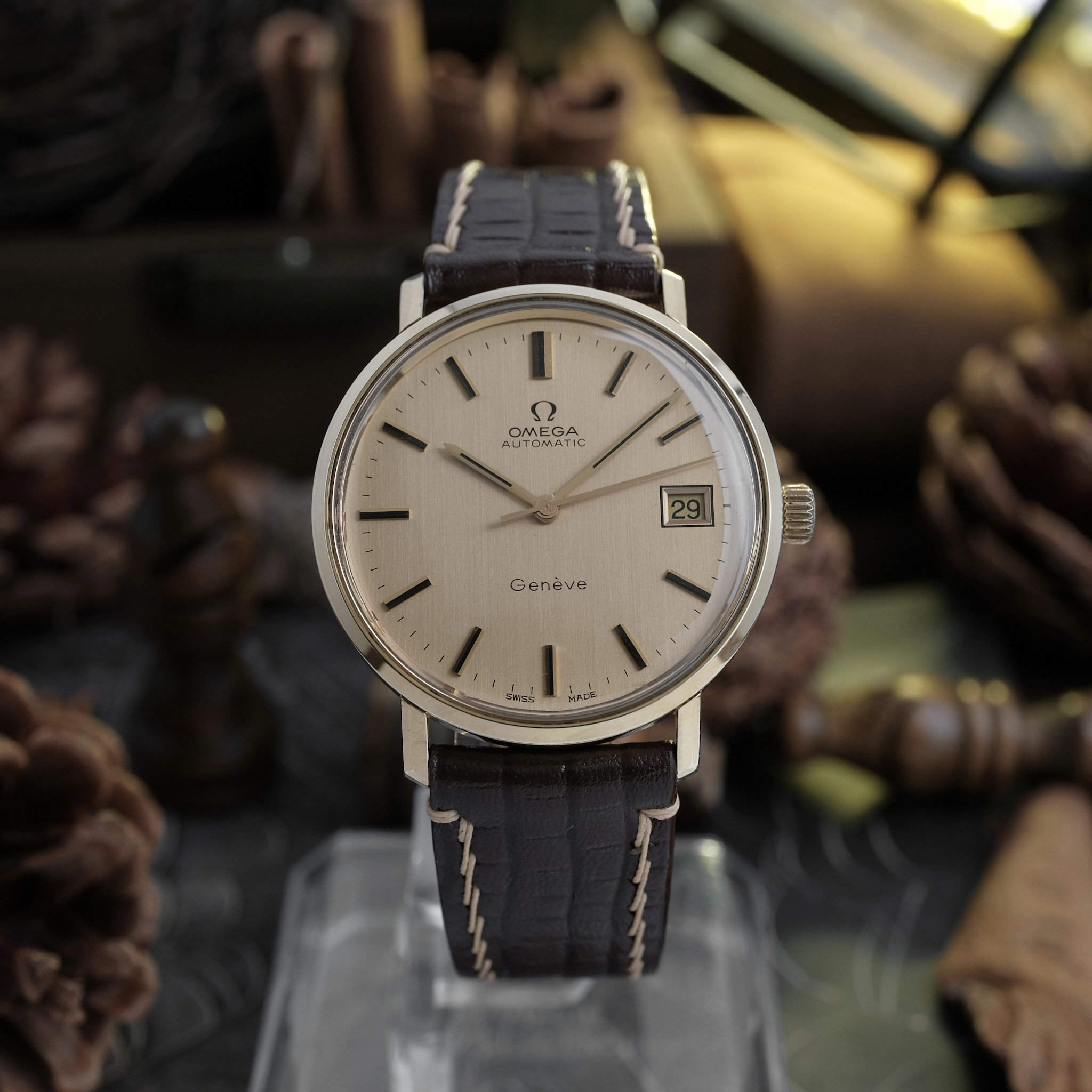
The Genève 166.0163 makes the strongest case for itself as a compact automatic dress watch from 1972-1974. Its caliber 1012, restrained sunburst dial and 34 mm or 35 mm case put it firmly in the early 1970s. Buy the cleanest honest dial, then choose between stainless steel and gold plating according to how much permanent case wear you will accept.
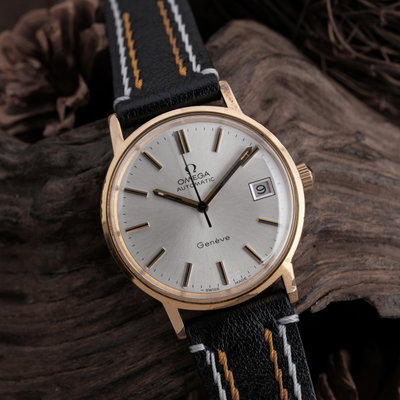
The silver sunburst versions are the safer target. Applied indices with black inserts give the dial enough contrast without making the watch ornate, while matching baton hands keep the design coherent. Gold-tone dials can work, but heavy spotting and staining erase much of their advantage. On a vintage Omega Genève 166.0163, a clean dial matters more than a bright but worn plated case.
Reference
166.0163
Model
Genève
Known production years
1972-1974
Movement
Omega automatic caliber 1012
| Handled case sizes | 34 mm and 35 mm, excluding the crown |
| Case materials | Stainless steel or gold-plated with stainless-steel caseback |
| Recorded plating | 20 microns on a handled gold-plated example |
| Dial configurations | Silver or gold-tone sunburst with applied indices and black inserts |
The model landscape
Reference 166.0163 spans stainless-steel and gold-plated cases with stainless-steel backs. The plated examples include 20-micron cases, while handled case measurements run from 34 mm to 35 mm without the crown. That difference does not create a separate model, but steel is the stronger ownership proposition because worn plating cannot be returned by routine servicing. Against a spotted gold-tone example, take a clean silver sunburst dial in steel.
Value sits first in the dial, then in the case material and surviving geometry. Clean silver sunburst dials with crisp printing stand apart from examples carrying broad spotting, staining or moisture damage. On plated watches, exposed base metal at the lugs creates a permanent discount even when caliber 1012 runs well. A refinished dial costs more than every minor hand mark combined, while an evenly aged luminous plot is less serious than damaged printing.
On the wrist
At 34 mm or 35 mm without the crown, the 166.0163 wears as a compact dress watch rather than a modern all-purpose sports watch. The applied indices and black inserts keep the silver sunburst dial readable, and the baton hands preserve the narrow visual profile. It suits a cuff and rewards a reader comfortable with period sizing. The case does not need exaggerated scale because the radial dial finish supplies movement as the light changes.
The gold-plated version has more visual warmth, especially with gold-tone furniture, but exposed wear is easier to notice on the wrist than in a straight photograph. Stainless steel is quieter and less vulnerable to irreversible surface loss. Between equal dials, steel is the easier used Omega Genève 166.0163 to wear regularly. Between a clean plated example and a stained steel one, the dial should still decide the purchase.
What goes wrong
Heavy dial spotting is the most expensive recurring fault. Staining can spread across a gold-tone sunburst surface while the printed text remains legible, and that is damage rather than patina. Hands can develop oxidation, luminous material can age unevenly, and plated cases can wear through around the lugs. None of those faults should be disguised by a polished case or a bright replacement crystal.
Over-polishing softens the lug edges and removes case definition; on gold-plated examples it can also accelerate exposure of the metal beneath. A redial needs to be separated from a genuine service dial, while a franken watch combines parts that did not leave the factory together. Caliber 1012 performance on a timegrapher does not establish service history or component correctness. Without invoices, the service history is unknown, and no further claim is justified.
Dating this watch
| Serial range / caliber | Year | Note |
|---|---|---|
| 1000000 | 1902 | approximate, ±1-3 years |
| 2000000 | 1908 | approximate, ±1-3 years |
| 3000000 | 1912 | approximate, ±1-3 years |
| 4000000 | 1916 | approximate, ±1-3 years |
| 5000000 | 1923 | approximate, ±1-3 years |
| 6000000 | 1925 | approximate, ±1-3 years |
| 7000000 | 1929 | approximate, ±1-3 years |
| 8000000 | 1935 | approximate, ±1-3 years |
| 9000000 | 1939 | approximate, ±1-3 years |
| 10000000 | 1944 | approximate, ±1-3 years |
| 11000000 | 1947 | approximate, ±1-3 years |
| 12000000 | 1950 | approximate, ±1-3 years |
| 13000000 | 1952 | approximate, ±1-3 years |
| 14000000 | 1954 | approximate, ±1-3 years |
| 15000000 | 1956 | approximate, ±1-3 years |
| 16000000 | 1958 | approximate, ±1-3 years |
| 17000000 | 1960 | approximate, ±1-3 years |
| 18000000 | 1961 | approximate, ±1-3 years |
| 19000000 | 1962 | approximate, ±1-3 years |
| 20000000 | 1963 | approximate, ±1-3 years |
| 21000000 | 1964 | approximate, ±1-3 years |
| 22000000 | 1965 | approximate, ±1-3 years |
| 24000000 | 1966 | approximate, ±1-3 years |
| 25000000 | 1967 | approximate, ±1-3 years |
| 26000000 | 1968 | approximate, ±1-3 years |
| 28000000 | 1969 | approximate, ±1-3 years |
| 31000000 | 1970 | approximate, ±1-3 years |
| 32000000 | 1971 | approximate, ±1-3 years |
| 33000000 | 1972 | approximate, ±1-3 years |
| 35000000 | 1973 | approximate, ±1-3 years |
| 37000000 | 1974 | approximate, ±1-3 years |
| 39000000 | 1975 | approximate, ±1-3 years |
| 40000000 | 1976 | approximate, ±1-3 years |
| 41000000 | 1977 | approximate, ±1-3 years |
| 42000000 | 1978 | approximate, ±1-3 years |
| 43000000 | 1979 | approximate, ±1-3 years |
| 44000000 | 1980 | approximate, ±1-3 years |
| 45000000 | 1982 | approximate, ±1-3 years |
| 46000000 | 1984 | approximate, ±1-3 years |
| 47000000 | 1985 | approximate, ±1-3 years |
| 48000000 | 1986 | approximate, ±1-3 years |
| 49000000 | 1988 | approximate, ±1-3 years |
| 50000000 | 1990 | approximate, ±1-3 years |
| 53000000 | 1993 | approximate, ±1-3 years |
| 54000000 | 1995 | approximate, ±1-3 years |
| 56000000 | 1996 | approximate, ±1-3 years |
| 58000000 | 1998 | approximate, ±1-3 years |
| 60000000 | 2000 | approximate, ±1-3 years |
Dating data comes from our decoder tables; treat years as approximate.
What to check before you buy
- Dial print and furniture: The known 166.0163 dials are silver or gold-tone sunburst with applied indices and black inserts. Crisp text and coherent furniture support the dial, while blurred printing or an altered surface requires treatment as a redial unless established otherwise.
- Hands and luminous material: Known examples use gold-tone baton hands with black inserts, matching the applied dial furniture. Oxidation and aged lume can be genuine wear, but mismatched hand style, colour or insert treatment can indicate replacement parts or a franken assembly.
- Case and caseback pairing: Reference 166.0163 occurs in stainless steel and in gold-plated cases with stainless-steel backs. Plating loss at the lugs and softened edges diagnose wear or polishing; they do not by themselves establish that the case is incorrect.
- Movement identity: The movement associated with these 1972-1974 examples is Omega automatic caliber 1012. The caliber marking must agree with the movement itself, but correct identity alone cannot establish service history or prove that case and movement began together.
- Damage versus patina: Broad spotting and staining across a sunburst dial are damage even when the text remains legible. Even ageing of luminous plots may be acceptable, but a clean surface should not be assumed original without checking the print and applied furniture together.
Other 1660163 examples we auctioned
10 Omega 1660163 auctioned

We auction more than 100 vintage watches a week.
Get first access: new Omega 1660163 drops and alerts before auctions end.
More Omega references
Related pages
Frequently asked questions
Ready to hunt for your own?
More than 100 vintage watches go under the hammer every week.