Are Omega watches worth buying?
Omega watches justify a purchase when the dial, case, movement and seller's account agree, and the premium reflects the watch rather than the signature.
Omega watches are worth buying when the individual watch stands up to scrutiny. The better purchase has a coherent dial, case and movement, while a redial, a married movement or heavily softened lugs should reduce the premium or end the deal.
The choice is broad rather than uniform. Watches handled across 1948-2006 include De Ville, Genève, Seamaster, Constellation and Speedmaster, with Seamaster De Ville, Seamaster Cosmic and Seamaster Polaris adding narrower alternatives. That breadth lets you choose for use, but it also makes family, period and condition more important than the Omega name alone.
From our Omega archive
Other Omega watches we have handled — shown for context; they are not the exact model on this page.
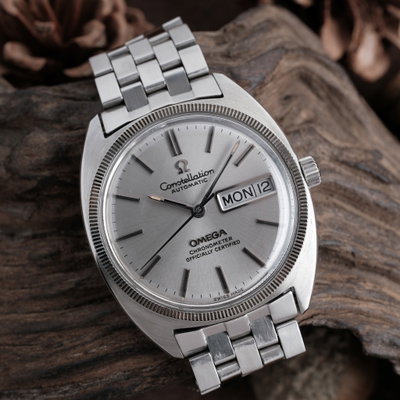
Omega · Constellation · ST 168 029 · 1970
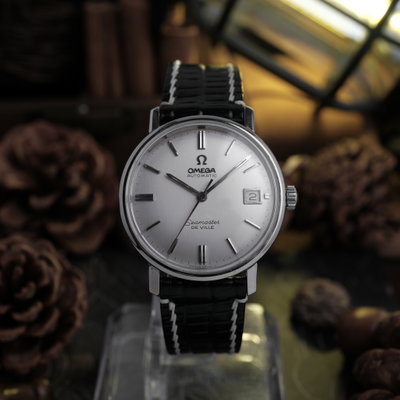
Omega · Seamaster De Ville
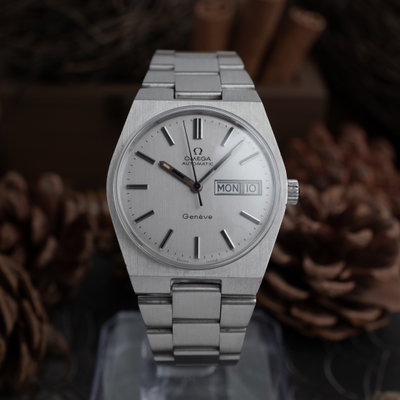
Omega · Genève · 1660125 · 1972
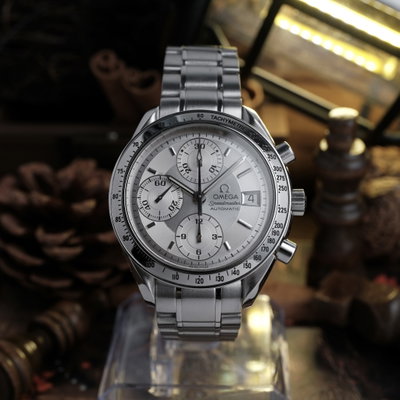
Omega · Speedmaster Chronograph · 175.0083
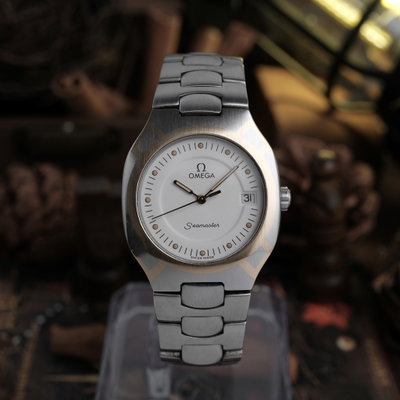
Omega · Seamaster Polaris · 396.1022 / 396.1222
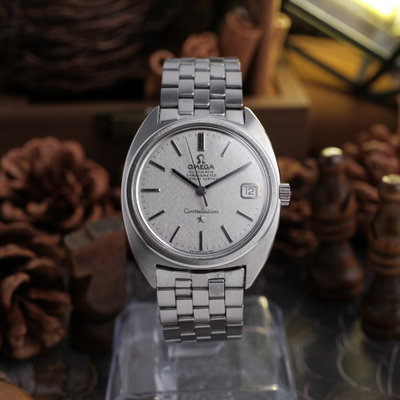
Omega · Constellation · 168.017 SP · 1969
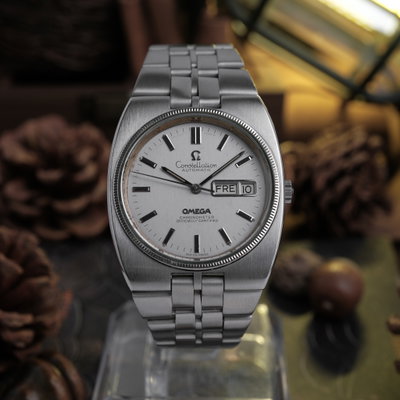
Omega · Constellation · 168.0054 · 1972
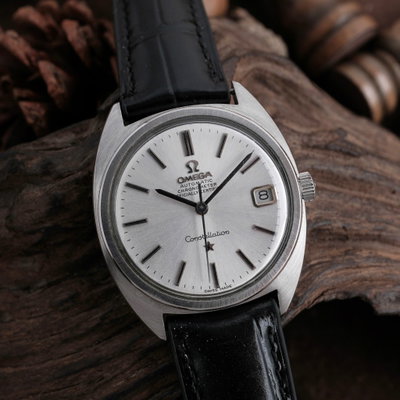
Omega · Constellation · 168.017 SP · 1968
The answer in depth
Start with the job the watch must do. De Ville and Genève offer the clearest route to a restrained dress watch, while Seamaster gives you a broader everyday proposition. Constellation asks for closer attention to dial and case coherence, and Speedmaster belongs to a different buying brief. The right premium follows the family you intended to own, not whichever signature is easiest to find.
Value sits first in the dial because a convincing refinish can erase more of the market premium than ordinary mechanical wear. A genuine service dial is different from a redial, but it is still a replacement and should be described as such. Case shape comes next: soft lugs and lost chamfers cannot be returned by servicing. Unknown service history should be budgeted as unknown, not treated as proof of trouble.
Common mistakes
The expensive errors are specific. Plated surfaces can wear through around the lugs, bracelets can develop stretch, replacement crowns can break period coherence, and polishing can leave the lugs rounded. A cracked crystal is usually less consequential than damaged dial printing beneath it. Buy the irreversible parts first, then allow for routine mechanical work.
A franken Omega is assembled from components that never left the factory together; a married watch has a case and movement from different watches. Neither term means the whole object is counterfeit, but both alter what it is worth. The seller matters when the watch cannot settle the issue: accurate disclosure of a redial or replacement part carries more weight than unsupported phrases such as all original.
Dating and serials
Omega movement serials provide approximate dating rather than a complete verdict. The available ranges run from 1000000 around 1902 to 60000000 around 2000, with a tolerance of roughly one to three years. A date must also make sense beside the named family and the watch's visible construction; a plausible serial cannot rescue mismatched parts.
The serial guidance does not establish when a case, dial, crown or bracelet was made, and the handled production window extends through 2006 while the table stops at 2000. Without documentation, we do not speculate beyond what the watch itself establishes. If the claimed year depends on greater precision than the table supports, that precision should not carry a premium.
Dating this watch
| Serial range / caliber | Year | Note |
|---|---|---|
| 1000000 | 1902 | approximate, ±1-3 years |
| 2000000 | 1908 | approximate, ±1-3 years |
| 3000000 | 1912 | approximate, ±1-3 years |
| 4000000 | 1916 | approximate, ±1-3 years |
| 5000000 | 1923 | approximate, ±1-3 years |
| 6000000 | 1925 | approximate, ±1-3 years |
| 7000000 | 1929 | approximate, ±1-3 years |
| 8000000 | 1935 | approximate, ±1-3 years |
| 9000000 | 1939 | approximate, ±1-3 years |
| 10000000 | 1944 | approximate, ±1-3 years |
| 11000000 | 1947 | approximate, ±1-3 years |
| 12000000 | 1950 | approximate, ±1-3 years |
| 13000000 | 1952 | approximate, ±1-3 years |
| 14000000 | 1954 | approximate, ±1-3 years |
| 15000000 | 1956 | approximate, ±1-3 years |
| 16000000 | 1958 | approximate, ±1-3 years |
| 17000000 | 1960 | approximate, ±1-3 years |
| 18000000 | 1961 | approximate, ±1-3 years |
| 19000000 | 1962 | approximate, ±1-3 years |
| 20000000 | 1963 | approximate, ±1-3 years |
| 21000000 | 1964 | approximate, ±1-3 years |
| 22000000 | 1965 | approximate, ±1-3 years |
| 24000000 | 1966 | approximate, ±1-3 years |
| 25000000 | 1967 | approximate, ±1-3 years |
| 26000000 | 1968 | approximate, ±1-3 years |
| 28000000 | 1969 | approximate, ±1-3 years |
| 31000000 | 1970 | approximate, ±1-3 years |
| 32000000 | 1971 | approximate, ±1-3 years |
| 33000000 | 1972 | approximate, ±1-3 years |
| 35000000 | 1973 | approximate, ±1-3 years |
| 37000000 | 1974 | approximate, ±1-3 years |
| 39000000 | 1975 | approximate, ±1-3 years |
| 40000000 | 1976 | approximate, ±1-3 years |
| 41000000 | 1977 | approximate, ±1-3 years |
| 42000000 | 1978 | approximate, ±1-3 years |
| 43000000 | 1979 | approximate, ±1-3 years |
| 44000000 | 1980 | approximate, ±1-3 years |
| 45000000 | 1982 | approximate, ±1-3 years |
| 46000000 | 1984 | approximate, ±1-3 years |
| 47000000 | 1985 | approximate, ±1-3 years |
| 48000000 | 1986 | approximate, ±1-3 years |
| 49000000 | 1988 | approximate, ±1-3 years |
| 50000000 | 1990 | approximate, ±1-3 years |
| 53000000 | 1993 | approximate, ±1-3 years |
| 54000000 | 1995 | approximate, ±1-3 years |
| 56000000 | 1996 | approximate, ±1-3 years |
| 58000000 | 1998 | approximate, ±1-3 years |
| 60000000 | 2000 | approximate, ±1-3 years |
Dating data comes from our decoder tables; treat years as approximate.
Related pages
Frequently asked questions
Ready to hunt for your own?
More than 100 vintage watches go under the hammer every week.