Omega Genève 166.0173 / 366.0832 Buying Guide
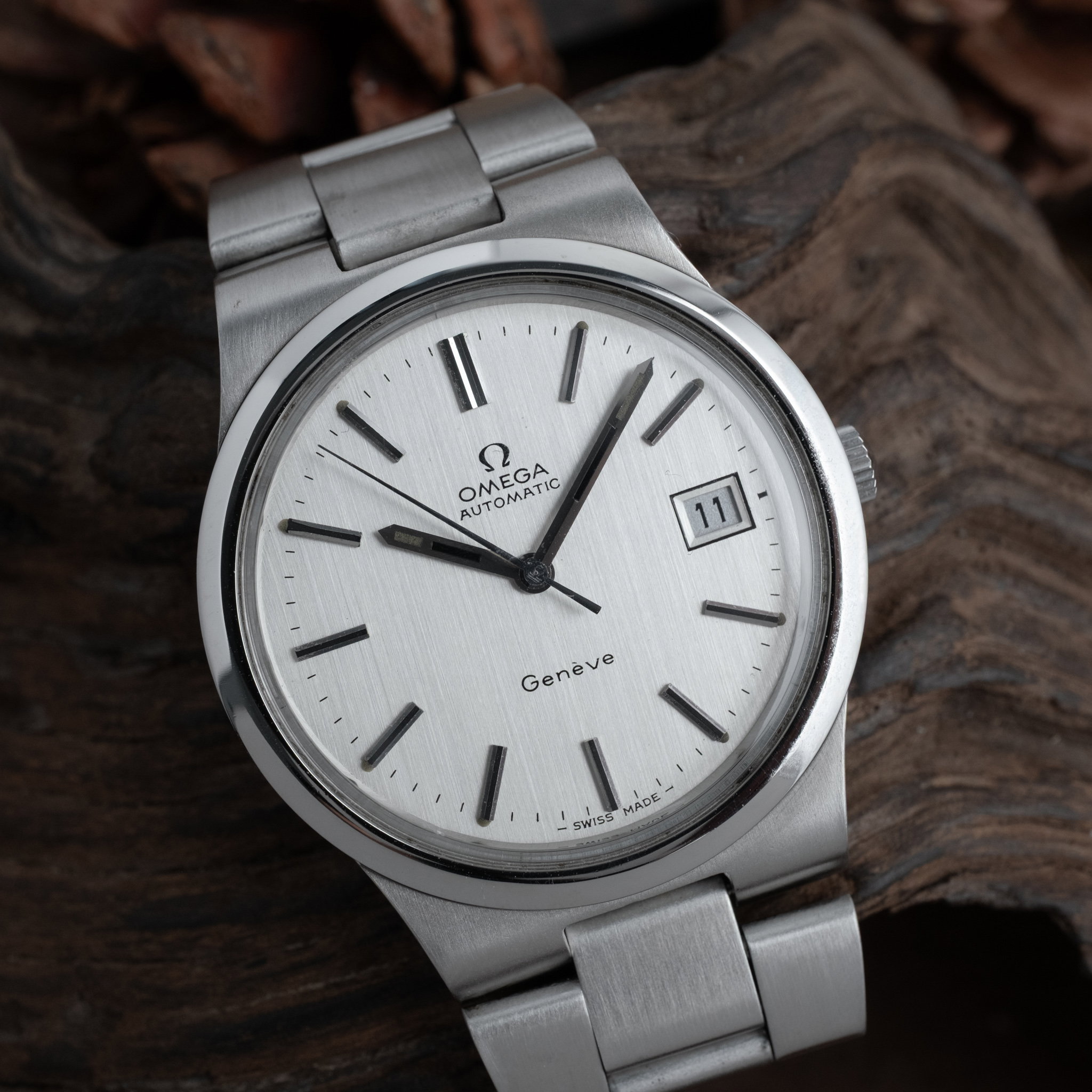
Buy this Genève for its sharp tonneau case, clean silver sunburst dial and correct caliber 1012, with the steel bracelet treated as part of the watch.
We auction more than 100 vintage watches a week.
Get first access: new Omega 166.0173 / 366.0832 drops and alerts before auctions end.
Browse 32 live Omega auctionsThe Omega Genève 166.0173 / 366.0832 is a 1970s automatic built around a broad tonneau-shaped steel case and an integrated-style bracelet. At 36 mm excluding the crown, it has more wrist presence than the number suggests because the case and bracelet read as one geometric form.
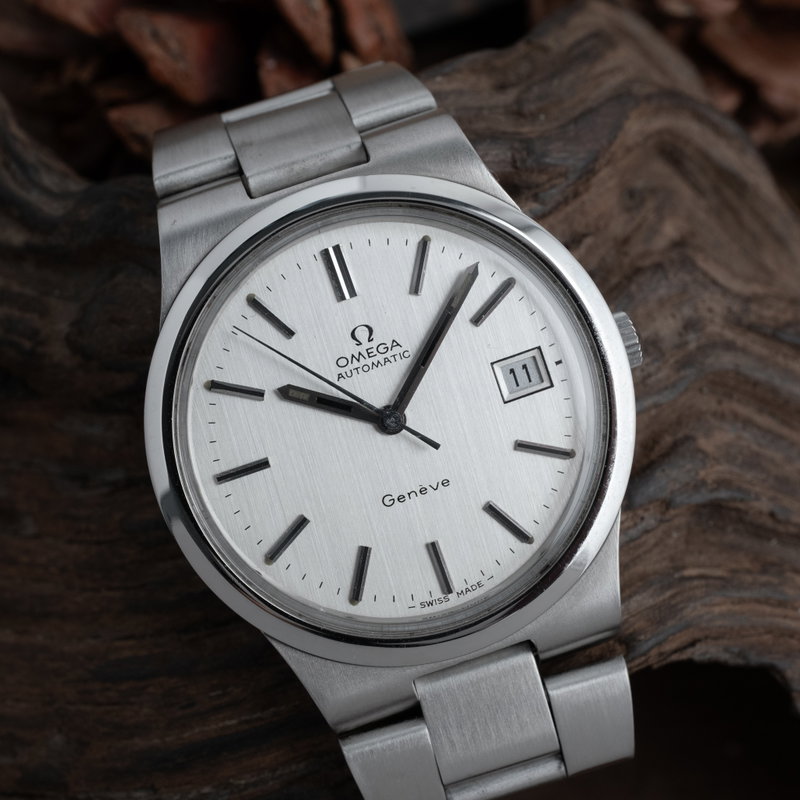
The version to want keeps the silver sunburst dial, applied black-inlaid baton indices and sharp case lines together. Examples handled from 1973 and 1974 use caliber 1012, while the strongest watches preserve the contrast between the brushed dial, dark index inserts and substantial steel exterior.
Model
Omega Genève
Reference
166.0173 / 366.0832
Known production years
1973-1974
Case material
Stainless steel
| Case size | 36 mm excluding the crown |
| Case shape | Tonneau-shaped |
| Movement | Omega caliber 1012 automatic |
| Dial | Silver sunburst with applied black-inlaid baton indices |
| Bracelet style | Integrated-style stainless-steel bracelet |
The model landscape
The reference is unusually coherent: stainless steel, a 36 mm tonneau-shaped case, automatic caliber 1012 and a silver sunburst dial with applied baton indices. The meaningful variation lies less in specification than in preservation. A clean dial and defined case geometry separate a convincing example from one whose surfaces have been refinished or softened.
Bracelet completeness matters because the integrated-style design depends on an uninterrupted transition from case to wrist. A mismatched bracelet may still function, but it changes the proportions that define this Genève. Between a cleaner head-only watch and a similarly preserved example on its correct steel bracelet, the complete configuration is the stronger buy.
On the wrist
The 36 mm measurement understates the watch. Its tonneau case spreads visually across the wrist, while the integrated-style bracelet extends that shape beyond the case rather than framing it like a conventional strap. The result is substantial without relying on a larger diameter.
The silver sunburst finish changes with the light, and the black-striped baton indices maintain legibility against it. This is not a compact round dress watch in disguise. The geometric case makes it better suited to daily wear and open cuffs than to buyers wanting a restrained, traditional profile.
What goes wrong
Dial damage is the first financial fault to price in. Light spotting can occur on the silver sunburst surface, while a redial removes the factory finish and costs more than routine mechanical work. A genuine service dial is different from a redial, but neither should be described as the dial that originally left the factory without supporting documentation.
Polishing does its damage at the case edges, turning defined tonneau lines soft and making the bracelet transition look less deliberate. Bracelet stretch and poor end-link fit weaken the integrated effect, while a replacement crown is less serious if disclosed and period-correct. A franken example is different again: its parts may be genuine Omega components but not a combination that shipped together.
Caliber 1012 should be present, but a matching caliber does not establish an untouched watch. Service history is often unknown, and without receipts it is safer not to infer recent work from a clean movement. Buy the dial and case first, then budget for inspection of the automatic movement rather than treating unsupported service language as proof.
Dating this watch
| Serial range / caliber | Year | Note |
|---|---|---|
| 35000000 | 1973 | approximate, ±1-3 years |
| 37000000 | 1974 | approximate, ±1-3 years |
Dating data comes from our decoder tables; treat years as approximate.
What to check before you buy
- Dial configuration: The expected dial is silver sunburst with applied faceted baton indices and black central inserts. Flat paint, incorrect furniture or a lost sunburst effect can indicate a redial or incompatible service component.
- Case geometry: The stainless-steel case should measure 36 mm excluding the crown and retain a defined tonneau outline. Soft edges and an indistinct bracelet transition point to polishing rather than factory geometry.
- Movement caliber: The movement should be Omega caliber 1012 and automatic. The correct caliber is necessary but not sufficient, since a movement can be married to a case from another watch.
- Bracelet fit: The steel bracelet should meet the case closely enough to preserve the integrated-style profile. Large gaps, poor end-link fit or an abrupt change in shape suggest a replacement or mismatched bracelet.
- Redial and franken signs: A clean silver dial is not automatically original. Compare the sunburst surface, applied black-inlaid indices and overall configuration together, because genuine individual parts can still create a franken watch.
Other 166.0173 / 366.0832 examples we auctioned
More Omega references
Related pages
Frequently asked questions
Ready to hunt for your own?
More than 100 vintage watches go under the hammer every week.