Omega Genève 166.041 - What to Know Before You Buy
The Omega Genève 166.041 is a compact late-1960s automatic best bought in steel, with a clean silver sunburst dial and sharp tonneau case.
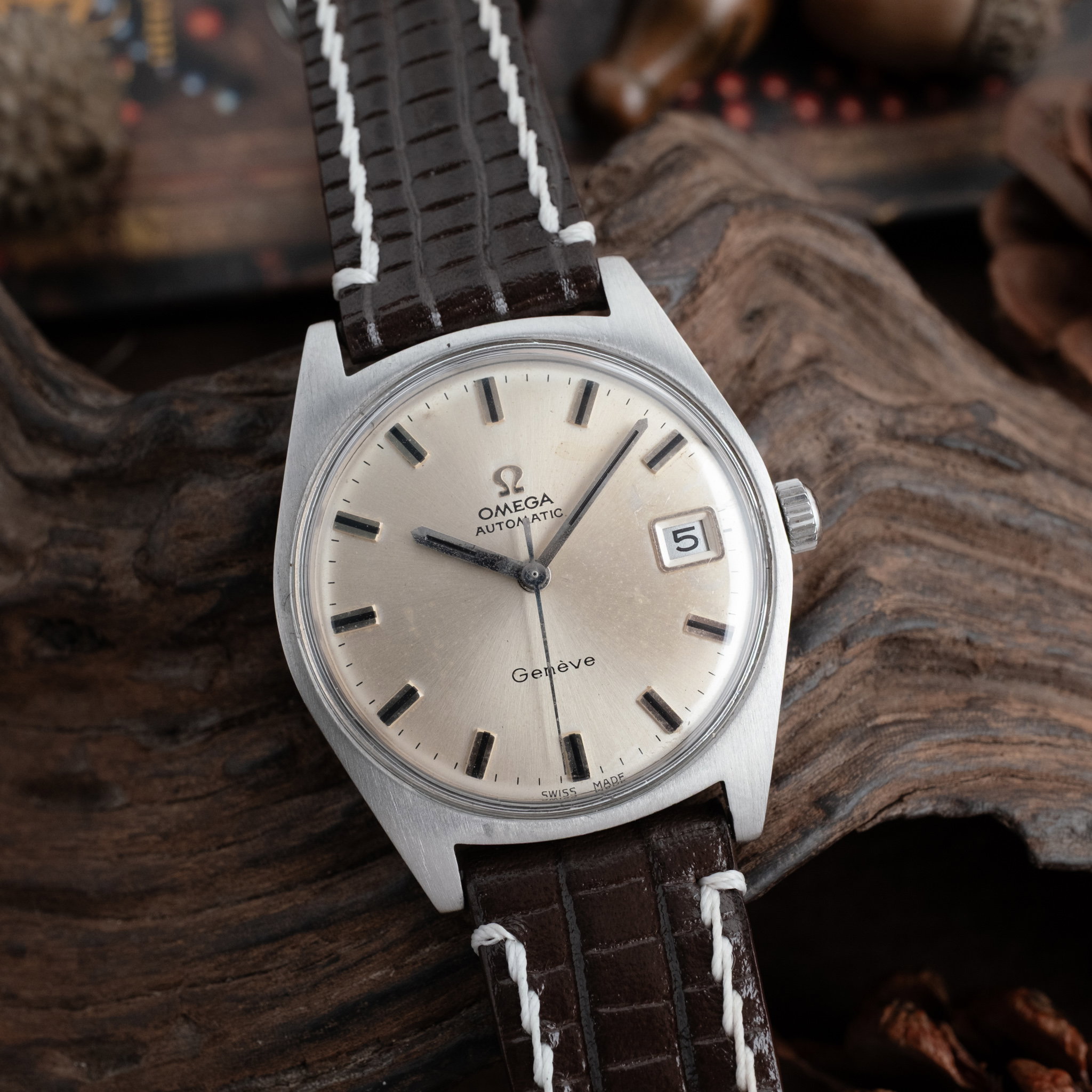
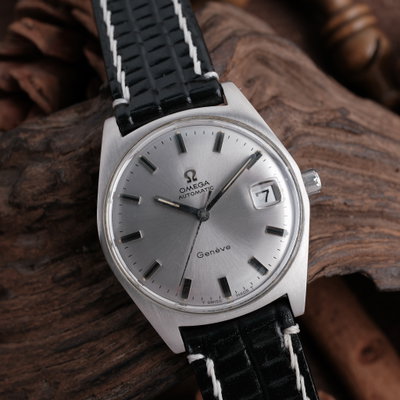
The Omega Genève 166.041 makes sense as a compact automatic for regular wear, not as a delicate dress watch kept for occasions. Made from 1968 to 1970, it combines a tonneau case with Caliber 565 and a silver sunburst dial, placing it squarely in Omega's changing design language at the end of the 1960s.
Steel is the version to want. The gold-plated alternative can look warmer and measures 35 mm rather than the 34 mm recorded for steel examples, but plating loss at the lugs cannot be reversed by servicing. Across the Genève watches we have handled, the strongest 166.041 examples pair a clean dial with sharp case lines rather than relying on polish or bracelet presentation.
Reference
166.041
Model
Genève
Production years
1968-1970
Movement
Automatic Omega Caliber 565
| Jewel count | 24 jewels |
| Steel case size | 34 mm excluding the crown |
| Gold-plated case size | 35 mm excluding the crown |
| Case materials | Stainless steel, or gold-plated with stainless-steel caseback |
| Dial | Silver sunburst with applied indices |
| Case shape | Tonneau |
The model landscape
The reference divides cleanly between stainless-steel cases and gold-plated cases with stainless-steel casebacks. Steel examples are recorded at 34 mm excluding the crown, while the plated example is 35 mm, but both retain the compact tonneau profile. Between a sharp steel watch and a plated watch with wear-through at the same level, take the steel case.
The recurring dial is silver with a radial sunburst finish and applied indices. Some indices have black central inserts, while gold-tone furniture accompanies the plated case. Bracelets vary between matching steel designs and Milanese mesh, so the bracelet should support the watch rather than excuse a spotted dial or softened case.
On the wrist
At 34 mm in steel, the 166.041 wears compactly, while the tonneau outline gives it more visual width than a strictly round case of the same measurement. Applied faceted indices break up the silver sunburst surface, and the black inserts found on some steel examples improve contrast. It suits a cuff without pretending to be a modern oversized watch.
Caliber 565 makes this an automatic Genève rather than a hand-wound dress piece. The service history of any individual used Omega Genève is unknown without receipts, so accuracy and winding condition must be judged watch by watch. A matching bracelet adds period character, but stretched links or poor end-link fit should not outrank the dial and case.
What goes wrong
Dial damage costs the most. Visible spotting, age marks and degraded luminous material occur on the silver sunburst dial, and a refinished dial costs more in lost appeal than ordinary case wear. A genuine service dial is different from a redial, but without documentation or reference-specific factory evidence, the distinction should not be guessed from cleanliness alone.
Gold plating wears through first on exposed case edges and around the lugs, and no service restores the original surface without replating. Repeated polishing softens the tonneau case lines, while bracelets can stretch and replacement crowns can weaken period coherence. On Caliber 565, corrosion, damaged screw heads or mismatched components matter more than cosmetic brightening because they can indicate poor servicing or a franken assembly.
Dating this watch
| Serial range / caliber | Year | Note |
|---|---|---|
| 1000000 | 1902 | approximate, ±1-3 years |
| 2000000 | 1908 | approximate, ±1-3 years |
| 3000000 | 1912 | approximate, ±1-3 years |
| 4000000 | 1916 | approximate, ±1-3 years |
| 5000000 | 1923 | approximate, ±1-3 years |
| 6000000 | 1925 | approximate, ±1-3 years |
| 7000000 | 1929 | approximate, ±1-3 years |
| 8000000 | 1935 | approximate, ±1-3 years |
| 9000000 | 1939 | approximate, ±1-3 years |
| 10000000 | 1944 | approximate, ±1-3 years |
| 11000000 | 1947 | approximate, ±1-3 years |
| 12000000 | 1950 | approximate, ±1-3 years |
| 13000000 | 1952 | approximate, ±1-3 years |
| 14000000 | 1954 | approximate, ±1-3 years |
| 15000000 | 1956 | approximate, ±1-3 years |
| 16000000 | 1958 | approximate, ±1-3 years |
| 17000000 | 1960 | approximate, ±1-3 years |
| 18000000 | 1961 | approximate, ±1-3 years |
| 19000000 | 1962 | approximate, ±1-3 years |
| 20000000 | 1963 | approximate, ±1-3 years |
| 21000000 | 1964 | approximate, ±1-3 years |
| 22000000 | 1965 | approximate, ±1-3 years |
| 24000000 | 1966 | approximate, ±1-3 years |
| 25000000 | 1967 | approximate, ±1-3 years |
| 26000000 | 1968 | approximate, ±1-3 years |
| 28000000 | 1969 | approximate, ±1-3 years |
| 31000000 | 1970 | approximate, ±1-3 years |
| 32000000 | 1971 | approximate, ±1-3 years |
| 33000000 | 1972 | approximate, ±1-3 years |
| 35000000 | 1973 | approximate, ±1-3 years |
| 37000000 | 1974 | approximate, ±1-3 years |
| 39000000 | 1975 | approximate, ±1-3 years |
| 40000000 | 1976 | approximate, ±1-3 years |
| 41000000 | 1977 | approximate, ±1-3 years |
| 42000000 | 1978 | approximate, ±1-3 years |
| 43000000 | 1979 | approximate, ±1-3 years |
| 44000000 | 1980 | approximate, ±1-3 years |
| 45000000 | 1982 | approximate, ±1-3 years |
| 46000000 | 1984 | approximate, ±1-3 years |
| 47000000 | 1985 | approximate, ±1-3 years |
| 48000000 | 1986 | approximate, ±1-3 years |
| 49000000 | 1988 | approximate, ±1-3 years |
| 50000000 | 1990 | approximate, ±1-3 years |
| 53000000 | 1993 | approximate, ±1-3 years |
| 54000000 | 1995 | approximate, ±1-3 years |
| 56000000 | 1996 | approximate, ±1-3 years |
| 58000000 | 1998 | approximate, ±1-3 years |
| 60000000 | 2000 | approximate, ±1-3 years |
Dating data comes from our decoder tables; treat years as approximate.
What to check before you buy
- Dial print and furniture: The established dial is silver with a radial sunburst finish, applied Omega furniture and applied indices. Flat paint, uneven model text or furniture inconsistent with the steel or plated case should be treated as evidence of a redial or mixed parts.
- Hands and luminous material: The hands must make visual sense beside the applied index style and any remaining luminous material. Differing lume colour alone is not proof, but degraded plots paired with newly luminous hands can indicate relume or replacement handset work.
- Case and caseback: The case should retain a recognisable tonneau outline and defined transitions rather than soft, rounded edges from repeated polishing. A gold-plated case with a stainless-steel caseback is established for this reference and is not automatically a franken combination.
- Movement specification: The movement should be an automatic Omega Caliber 565 marked for 24 jewels. A different caliber, inconsistent movement condition or signs that the movement does not seat correctly can indicate a married watch or a franken assembly.
- Plating and bracelet fit: On the gold-plated version, inspect the lug edges and exposed case corners for wear-through to the base metal. On bracelet examples, stretched links and poor end-link fit are condition faults and can also reveal a later, merely period-correct bracelet.
Other 166.041 examples we auctioned
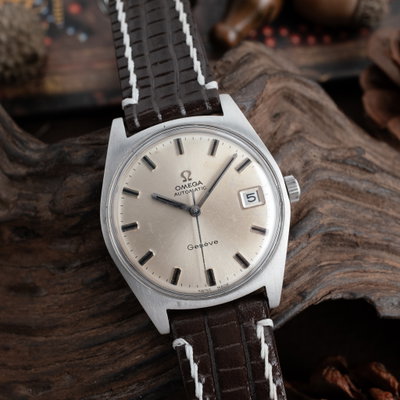
Omega · Genève · 166.041
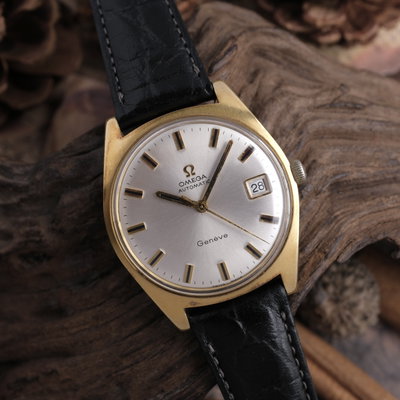
Omega · Genève · 166.041 · 1968
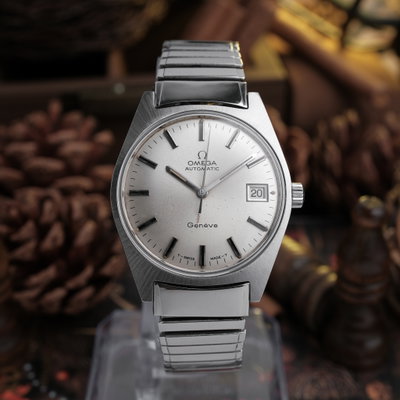
Omega · Genève · 166041 · 1970
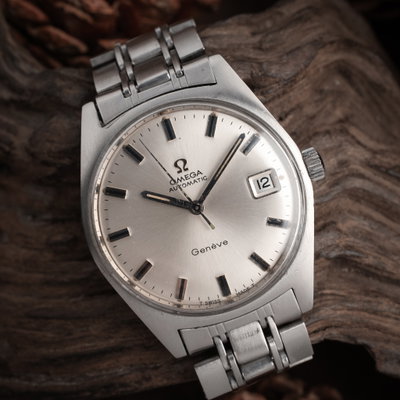
Omega · Genève · 166.041 · 1968
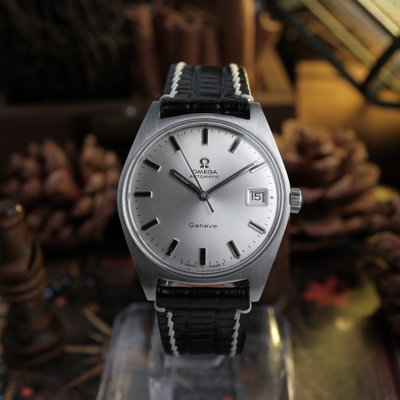
Omega · Genève · 166.041 · 1970
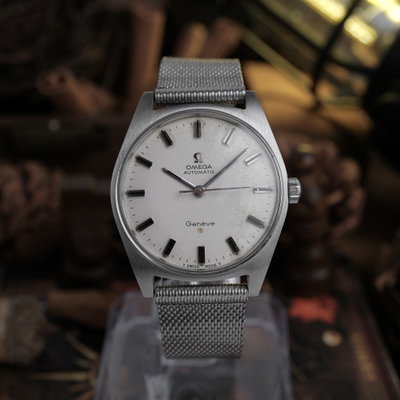
Omega · Genève · 166.041 · 1968
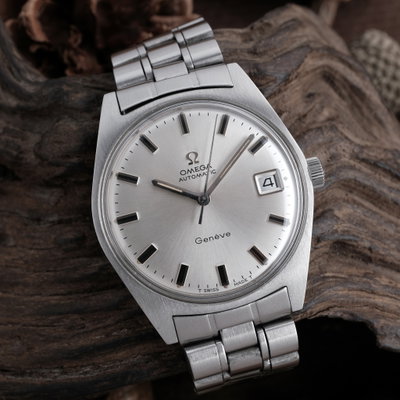
Omega · Genève · 166.041
Omega · Genève · 166.041 · 1970
More Omega references
Related pages
Frequently asked questions
Ready to hunt for your own?
More than 100 vintage watches go under the hammer every week.