Omega Genève 166.070: what to know before buying
Buy the steel Omega Genève 166.070 with the cleanest credible dial and strongest case, rather than a plated example with more shine.
We auction more than 100 vintage watches a week.
Get first access: new Omega 166.070 drops and alerts before auctions end.
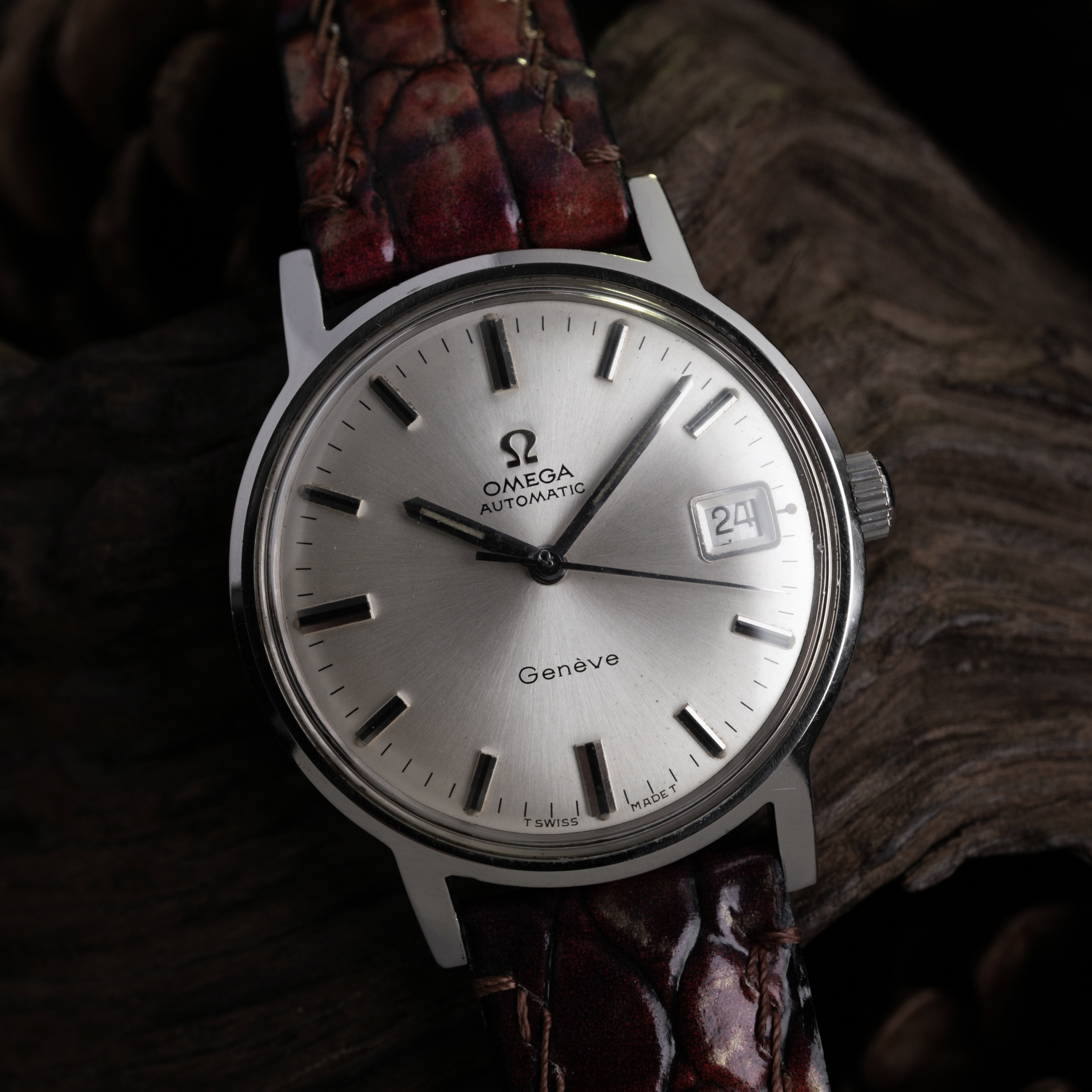
Browse 60 live Omega auctionsThe Genève 166.070 is a compact automatic from 1968-1972, built around Omega caliber 565 with 24 jewels. Steel examples measure 35 mm, while a gold-plated example we handled measured 34 mm with a stainless steel caseback.
The strongest used Omega Genève 166.070 is the steel version with a clean, credible dial and defined case lines. Silver dials occur with sunburst or vertical brushing, while the gold-plated case pairs naturally with champagne sunburst finishing. A refinished dial costs more in lost appeal than ordinary case wear, so buy the dial before surface shine.
Model
Omega Genève
Reference
166.070
Known production years
1968-1972
Movement
Automatic Omega caliber 565
| Jewel count | 24 jewels |
| Steel case size | 35 mm excluding the crown |
| Gold-plated case size | 34 mm excluding the crown |
| Case materials | Stainless steel, or 20 micron gold plating with stainless steel caseback |
| Known dial finishes | Silver sunburst, vertically brushed silver, and champagne sunburst |
The model landscape
Steel is the safer version. Its 35 mm case avoids plating wear, and silver dials with applied black-insert indices give the reference its clearest, most versatile appearance. The 34 mm gold-plated version has warmth, but exposed base metal at the lug edges cannot be corrected by routine servicing.
Dial finish separates otherwise similar watches. Silver sunburst dials throw light radially, while vertically brushed silver reads flatter and more restrained. Champagne sunburst belongs with the gold-plated case. Mixing those known configurations without firm evidence raises the possibility of a franken watch, even when every individual part is genuine.
On the wrist
At 35 mm in steel, the vintage Omega Genève 166.070 wears compactly and leaves room around the wrist rather than filling it. Applied faceted indices and dark inserts keep the silver dial legible, while the automatic caliber 565 removes daily winding from ownership. The 34 mm plated case reads smaller still, so case condition matters more than the single millimetre suggests.
A beads-of-rice bracelet is known on the steel version and changes the feel from a leather strap, but stretch and loose end-link fitment deserve attention. Bracelet originality cannot be established from style alone. Without period documentation, it is safer to call a bracelet period-correct rather than original to the watch.
What goes wrong
Plating loss is the worst irreversible case fault on the gold-plated version, especially along lug edges. On either case, repeated polishing softens the lug lines and rounds transitions that should remain defined. Bracelet stretch adds cost, and replacement crowns or married case-and-movement combinations can undermine an otherwise attractive example.
The dial carries the largest condition premium. Spotting can be acceptable when light and stable, but a redial replaces factory printing and should trade well below an honest aged dial. Hand inserts can also wear independently of the dial. A service dial is genuine Omega replacement stock, not a redial, but it is still not the dial fitted when the watch first left production.
Caliber 565 should be identified inside the watch, and the 24-jewel specification should agree. A seller's service claim has little value without a receipt and test results. The service history of most surviving examples is unknown, so budget for inspection rather than assuming an automatic movement is ready for daily use.
Dating this watch
| Serial range / caliber | Year | Note |
|---|---|---|
| 1000000 | 1902 | approximate, ±1-3 years |
| 2000000 | 1908 | approximate, ±1-3 years |
| 3000000 | 1912 | approximate, ±1-3 years |
| 4000000 | 1916 | approximate, ±1-3 years |
| 5000000 | 1923 | approximate, ±1-3 years |
| 6000000 | 1925 | approximate, ±1-3 years |
| 7000000 | 1929 | approximate, ±1-3 years |
| 8000000 | 1935 | approximate, ±1-3 years |
| 9000000 | 1939 | approximate, ±1-3 years |
| 10000000 | 1944 | approximate, ±1-3 years |
| 11000000 | 1947 | approximate, ±1-3 years |
| 12000000 | 1950 | approximate, ±1-3 years |
| 13000000 | 1952 | approximate, ±1-3 years |
| 14000000 | 1954 | approximate, ±1-3 years |
| 15000000 | 1956 | approximate, ±1-3 years |
| 16000000 | 1958 | approximate, ±1-3 years |
| 17000000 | 1960 | approximate, ±1-3 years |
| 18000000 | 1961 | approximate, ±1-3 years |
| 19000000 | 1962 | approximate, ±1-3 years |
| 20000000 | 1963 | approximate, ±1-3 years |
| 21000000 | 1964 | approximate, ±1-3 years |
| 22000000 | 1965 | approximate, ±1-3 years |
| 24000000 | 1966 | approximate, ±1-3 years |
| 25000000 | 1967 | approximate, ±1-3 years |
| 26000000 | 1968 | approximate, ±1-3 years |
| 28000000 | 1969 | approximate, ±1-3 years |
| 31000000 | 1970 | approximate, ±1-3 years |
| 32000000 | 1971 | approximate, ±1-3 years |
| 33000000 | 1972 | approximate, ±1-3 years |
| 35000000 | 1973 | approximate, ±1-3 years |
| 37000000 | 1974 | approximate, ±1-3 years |
| 39000000 | 1975 | approximate, ±1-3 years |
| 40000000 | 1976 | approximate, ±1-3 years |
| 41000000 | 1977 | approximate, ±1-3 years |
| 42000000 | 1978 | approximate, ±1-3 years |
| 43000000 | 1979 | approximate, ±1-3 years |
| 44000000 | 1980 | approximate, ±1-3 years |
| 45000000 | 1982 | approximate, ±1-3 years |
| 46000000 | 1984 | approximate, ±1-3 years |
| 47000000 | 1985 | approximate, ±1-3 years |
| 48000000 | 1986 | approximate, ±1-3 years |
| 49000000 | 1988 | approximate, ±1-3 years |
| 50000000 | 1990 | approximate, ±1-3 years |
| 53000000 | 1993 | approximate, ±1-3 years |
| 54000000 | 1995 | approximate, ±1-3 years |
| 56000000 | 1996 | approximate, ±1-3 years |
| 58000000 | 1998 | approximate, ±1-3 years |
| 60000000 | 2000 | approximate, ±1-3 years |
Dating data comes from our decoder tables; treat years as approximate.
What to check before you buy
- Dial and hands: Known dials are silver sunburst, vertically brushed silver or champagne sunburst, with applied faceted indices and black inserts. Uneven modern printing, incompatible finish or mismatched furniture points toward a redial or franken assembly.
- Case and caseback: Steel examples are known at 35 mm, while a 34 mm version uses 20 micron gold plating and a stainless steel caseback. Soft lug lines indicate polishing, and exposed base metal at plated lug edges is permanent wear.
- Movement: The movement should be the automatic Omega caliber 565 with 24 jewels. Its serial should fall broadly within the approximate period for the watch, but serial agreement alone does not prove that the movement and case left the factory together.
- Bracelet and crown: A beads-of-rice bracelet is known on a steel example, but style alone cannot establish originality; inspect stretch and end-link fitment. The available evidence does not establish a single crown specification, so no stronger claim is justified.
Other 166.070 examples we auctioned
11 Omega 166.070 auctioned
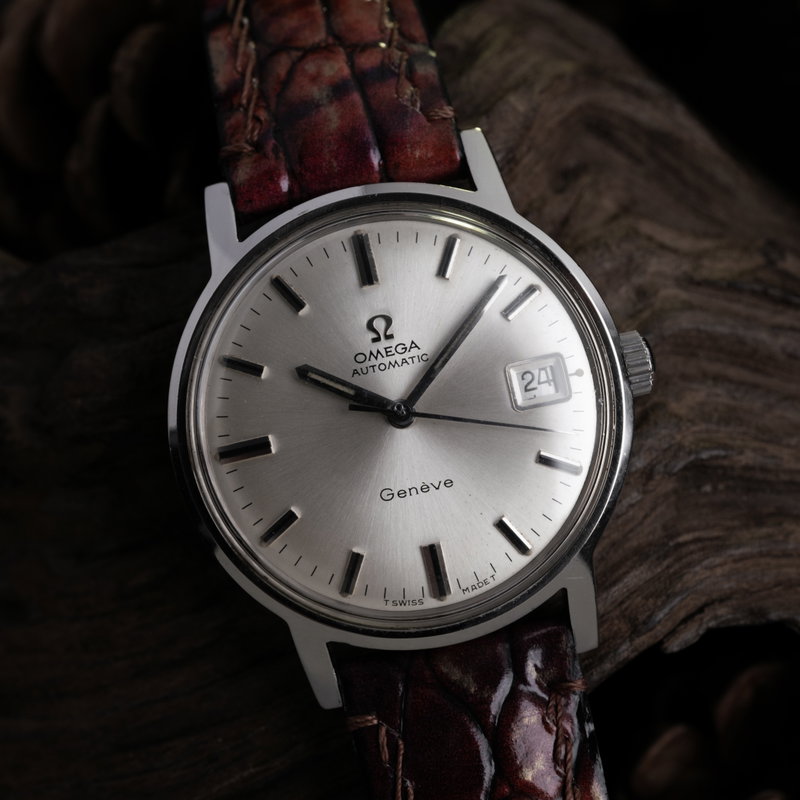
Omega · Genève · 166.070 · 1969
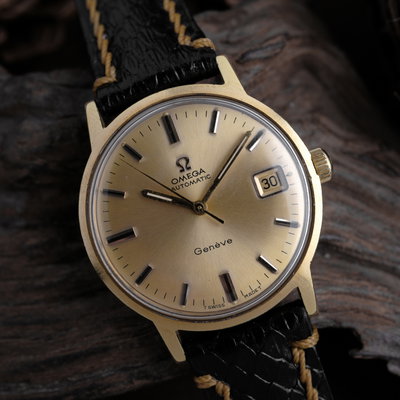
Omega · Genève · 166.070 · 1969
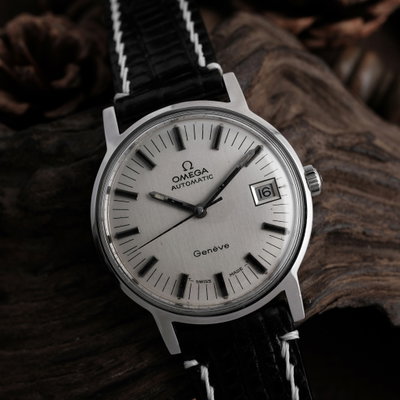
Omega · Genève · 166.070 · 1971
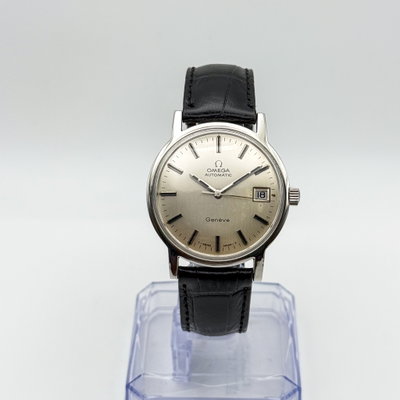
Omega · Genève · 166.070 · 1971
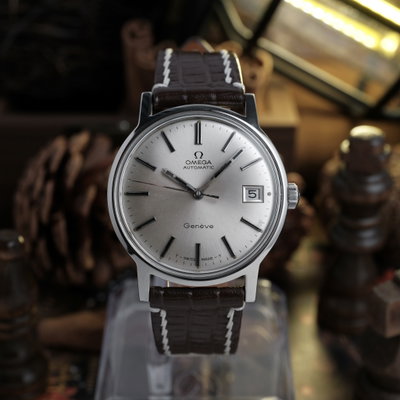
Omega · Genève · 166.070 · 1972
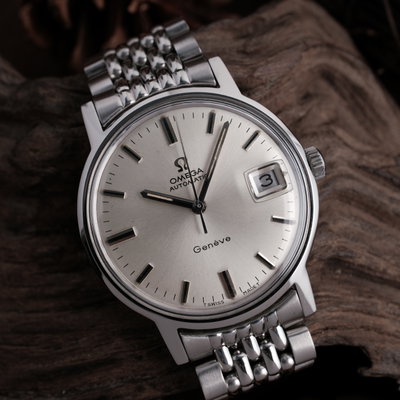
Omega · Genève · 166.070 · 1970
More Omega references
Related pages
Frequently asked questions
Ready to hunt for your own?
More than 100 vintage watches go under the hammer every week.