Omega De Ville 111.0107 Reference Guide
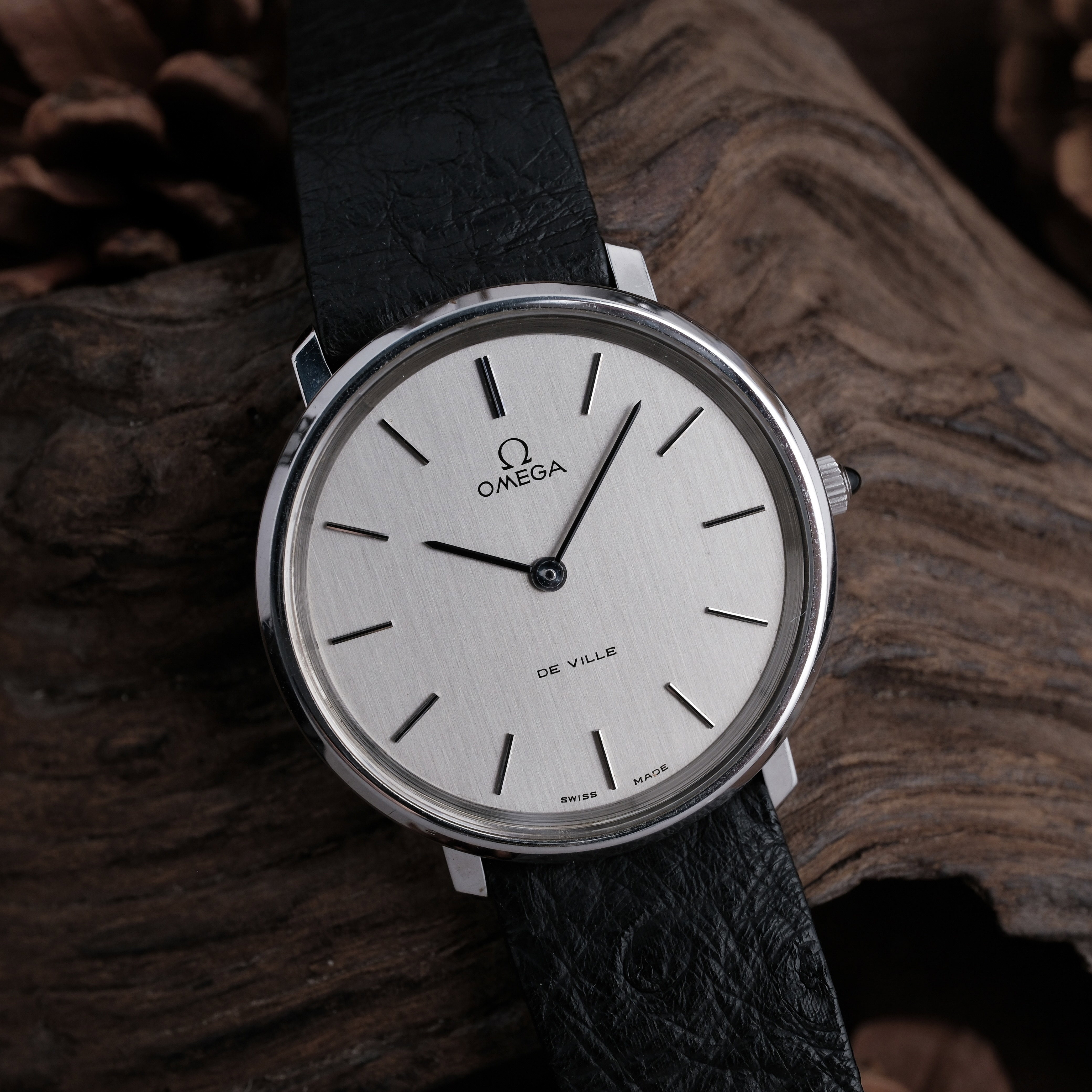
Omega 111.0107 is a compact manual-wind De Ville best bought for its dial, with steel and gold-plated versions requiring different condition checks.
Live now
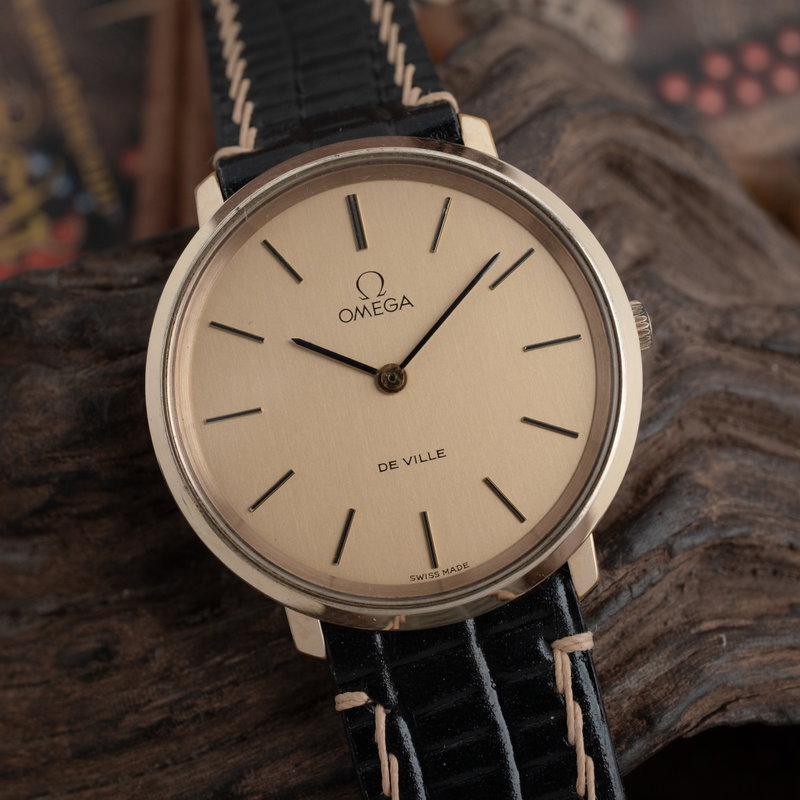
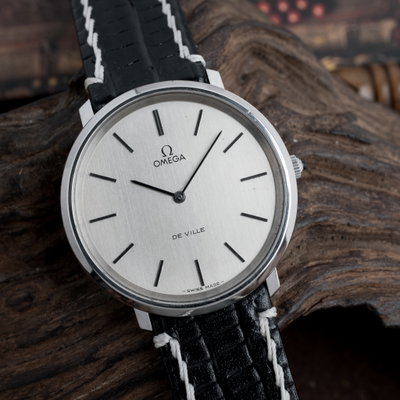
The Omega De Ville 111.0107 is a restrained manual-wind dress watch from 1971-1979, built around a two-hand display rather than complications. Its compact case and uncluttered dial make sense under a cuff, where the watch reads as deliberate rather than small. The strongest choice is the version with the best preserved dial, not automatically the brightest case.
Steel examples pair a 34 mm case with a silvered dial, while gold-plated watches use a 33 mm case and often carry vertically brushed champagne dials. That millimetre matters less than the visual change: steel looks cooler and broader, while the plated case makes the dial feel warmer and more formal. Calibers 620 and 625 both occur within reference 111.0107, so neither caliber alone settles the date or authenticity.
Reference
111.0107
Model
De Ville
Known production years
1971-1979
Case sizes
33 mm gold-plated; 34 mm stainless steel
| Movement type | Manual winding |
| Known calibers | 620 and 625 |
| Display | Two hands |
| Known case materials | Gold-plated with stainless steel caseback; stainless steel |
| Known dial finishes | Vertically brushed champagne; silvered |
The model landscape
Reference 111.0107 spans more variation than its spare design first suggests. A 1973 steel watch combines a 34 mm case, silvered dial, applied baton indices with black inserts and slender black hands. Gold-plated examples from 1971, 1973 and 1979 use 33 mm cases with stainless steel backs, while their champagne dials can have applied or printed baton indices.
For regular wear, the steel version is the easier recommendation against a gold-plated case with worn lug edges. Its surface can tolerate ordinary marks without exposing another metal underneath, and the extra millimetre gives the dial slightly more presence. The gold-plated version earns its place when the vertical brushing remains clear and the plating is intact, because no service can replace honest surface loss without materially reworking the case.
Where the value sits
The dial carries the premium on this De Ville. A clean silvered surface or evenly brushed champagne finish is worth more than a sharper-looking case paired with a redial, because refinishing changes the printing, texture and relationship between the indices and hands. Between a lightly worn case with a preserved dial and a polished case with renewed printing, take the preserved dial.
Caliber does not override that hierarchy. Both manual-wind caliber 620 and caliber 625 belong within the known reference landscape, and examples occur across the 1971-1979 span. The movement should support the watch rather than sell it by itself: coherent case material, dial furniture and caliber matter more than choosing 620 against 625 in isolation.
What goes wrong
Plating loss is the first fault to price into a gold-plated 111.0107, especially along lug edges and other exposed corners. Over-polishing compounds the problem by softening those edges, while a steel case can lose its original geometry through the same treatment. A stainless steel caseback belongs on the plated examples handled, so a fully gold-tone back needs closer comparison before the watch is accepted as coherent.
The dial is the expensive risk. Uneven vertical brushing, blurred De Ville script or printing that conflicts with the applied furniture can indicate a redial, while a genuine service dial is a factory replacement and should not be described as original to the watch. Franken combinations require equal care: a correct caliber does not rescue a dial, case and movement assembled from watches that never shipped together. The service history is unknown without documentation.
Dating this watch
| Serial range / caliber | Year | Note |
|---|---|---|
| 32,000,000 | 1971 | approximate, ±1-3 years |
| 33,000,000 | 1972 | approximate, ±1-3 years |
| 35,000,000 | 1973 | approximate, ±1-3 years |
| 37,000,000 | 1974 | approximate, ±1-3 years |
| 39,000,000 | 1975 | approximate, ±1-3 years |
| 40,000,000 | 1976 | approximate, ±1-3 years |
| 41,000,000 | 1977 | approximate, ±1-3 years |
| 42,000,000 | 1978 | approximate, ±1-3 years |
| 43,000,000 | 1979 | approximate, ±1-3 years |
Dating data comes from our decoder tables; treat years as approximate.
What to check before you buy
- Dial print and surface: Champagne dials should retain a coherent vertical brushed texture, while silvered dials should not show fresh paint covering age or damage. Blurred Omega or De Ville printing is a redial warning, not patina.
- Hands and hour furniture: Known layouts include black stick hands with applied baton indices and champagne dials with printed black batons. The hands, indices and printing must make sense as one configuration rather than merely looking period-correct.
- Case and caseback: Known gold-plated 33 mm examples use a stainless steel caseback, while the known steel form measures 34 mm. Look for plating loss at lug edges and softened case geometry from polishing.
- Movement and dating: Manual-wind calibers 620 and 625 both occur in reference 111.0107. Compare the movement serial with the approximate Omega table and allow 1-3 years rather than forcing an exact date.
- Franken and married-watch tells: A correct caliber does not prove that the movement and case left the factory together. Conflicting case material, dial furniture or serial-era cues can identify a married or franken assembly.
Other 111.0107 examples we auctioned
13 Omega 111.0107 auctioned
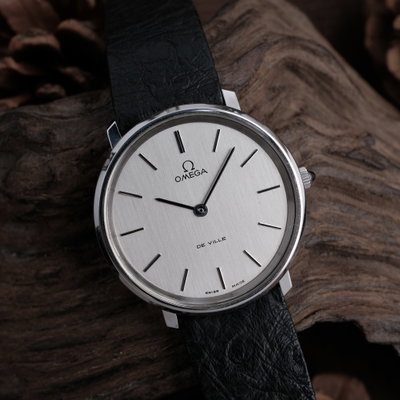
Omega · De Ville · 111.0107 · 1974
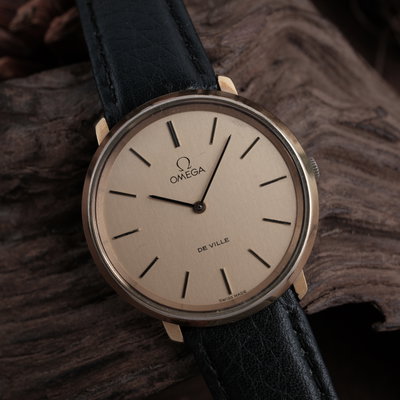
Omega · De Ville · 111.0107 · 1973
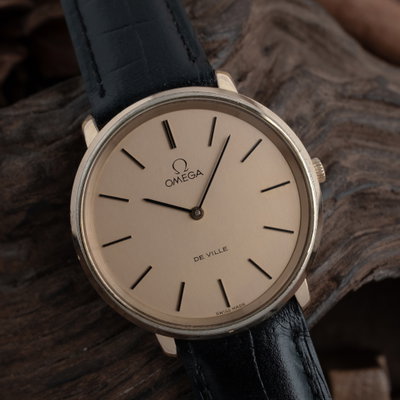
Omega · De Ville · 111.0107 · 1971
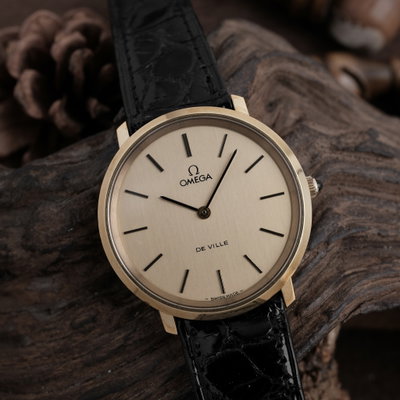
Omega · De Ville · 111.0107 · 1979
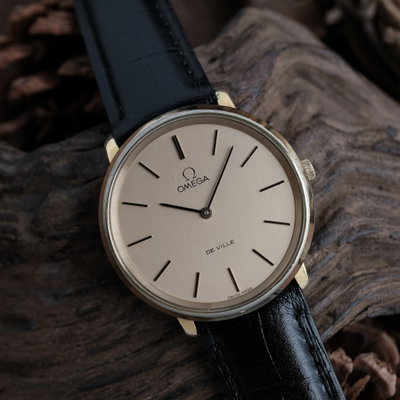
Omega · De Ville · 111.0107 · 1971
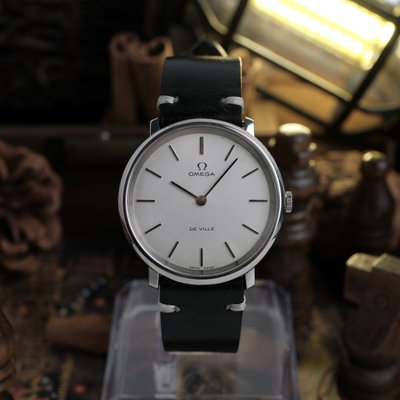
Omega · De Ville · 111.0107 · 1973
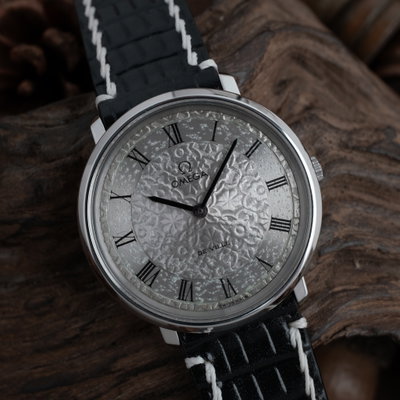
Omega · De Ville · 111.0107
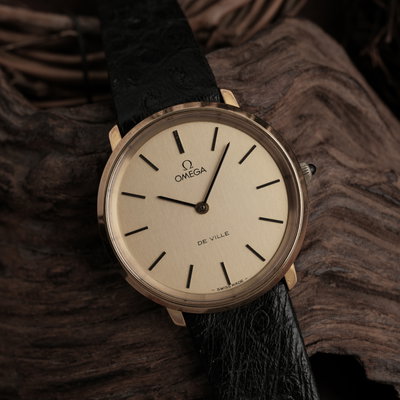
Omega · De Ville · 111.0107 · 1979
We auction more than 100 vintage watches a week.
Get first access: new Omega 111.0107 drops and alerts before auctions end.
More Omega references
Related pages
Frequently asked questions
Ready to hunt for your own?
More than 100 vintage watches go under the hammer every week.