Omega Genève 166 0168 - A Practical 1973 Automatic
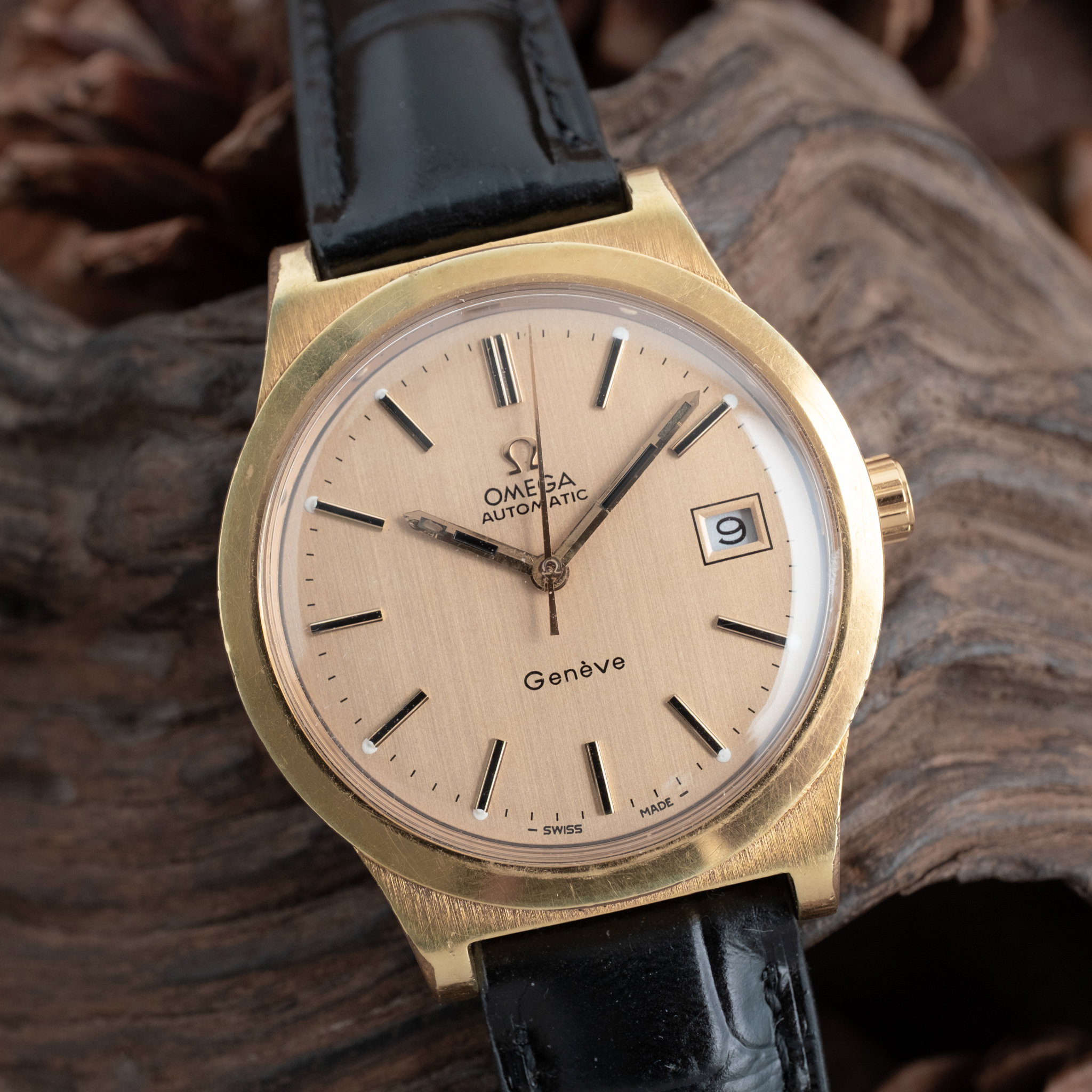
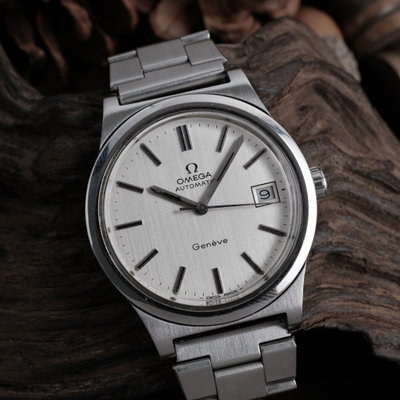
Omega Genève reference 166 0168 is a 1973 automatic best bought in steel with a clean brushed dial, a correct caliber 1012 and a case retaining its C-shape.
Live now
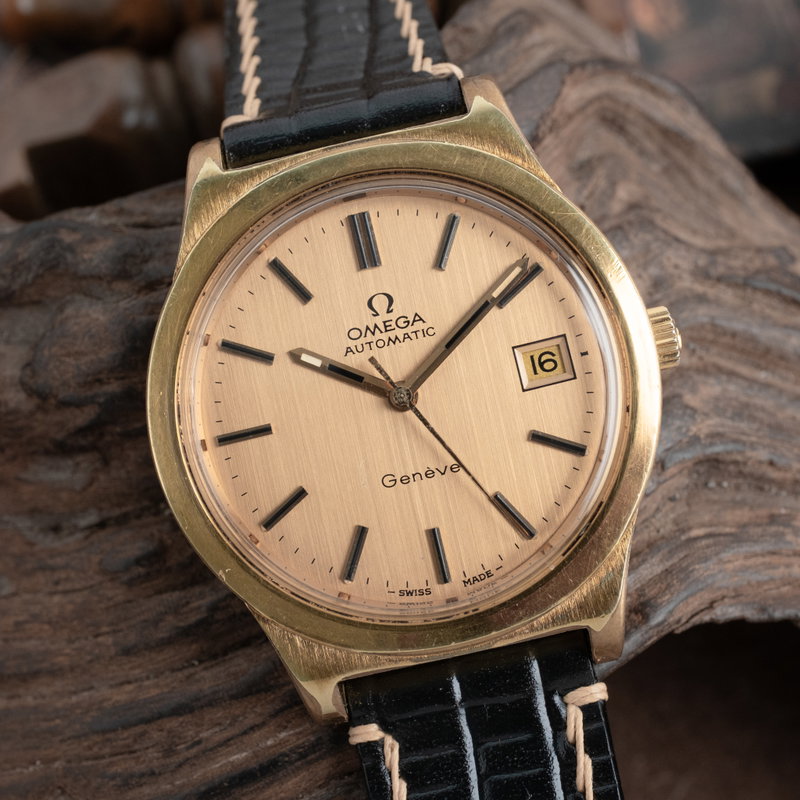
The Omega Genève 166 0168 belongs squarely to 1973: a broad C-shape case, an automatic caliber 1012 and brushed dials built around applied baton markers. It is substantial enough to read as a 1970s watch, not a reduced dress watch.
Steel is the safer purchase. The 36 mm steel version avoids irreversible plating loss, while the 37 mm gold-plated version adds warmth and slightly more presence. On either, the dial decides the watch: a clean vertical brush or silver sunburst is worth more than cosmetic shine on a softened case.
Reference
166 0168
Model
Genève
Known production year
1973-1973
Movement
Automatic Omega caliber 1012
| Steel case size | 36 mm excluding the crown |
| Gold-plated case size | 37 mm excluding the crown |
| Case materials | Stainless steel, or 20-micron gold plating with stainless-steel back |
| Known dial finishes | Silver sunburst, vertically brushed silver, vertically brushed champagne |
The model landscape
Reference 166 0168 exists here in two materially different forms. The stainless-steel watch measures 36 mm excluding the crown and has a silver dial, either sunburst or vertically brushed. Its black-insert baton markers give stronger contrast than the champagne treatment.
The gold-plated version measures 37 mm excluding the crown, with 20-micron plating over a stainless-steel back and a vertically brushed champagne dial. Buy it only when the plating remains continuous around the lug edges. Between worn plating and honest marks on steel, steel wins because scratches can remain stable while exposed base metal cannot be reversed.
What goes wrong
Plating wear is the costliest case fault because no routine service replaces missing gold at the lugs. Steel cases avoid that problem, but polishing can still soften the C-shape transitions and round the lug edges. A replaced crown matters less than a refinished dial, provided fit and operation are correct.
Hands deserve separate scrutiny. The examples handled show oxidation, dirt and degradation around the centre pinion even where the dial remains clean. Crisp dial printing, intact outer lume plots and an uninterrupted brushed finish support a coherent watch; uneven printing or a finish running beneath applied furniture points toward a redial. The service history is unknown unless paperwork establishes it.
Where to start
Choose the 36 mm steel watch with the cleanest dial and the least softened case, ahead of a brighter gold-plated example with wear at the lug edges. Caliber 1012 should be clearly marked, but its presence alone does not prove the movement and case left the factory together.
A period-correct bracelet or signed buckle can complete the look, yet neither should outrank the dial, case or movement. Reference 166 0168 suits regular wear when its automatic movement has been assessed and water exposure is avoided. Without service documentation, do not treat a favourable timing snapshot as proof of mechanical condition.
Dating this watch
| Serial range / caliber | Year | Note |
|---|---|---|
| 1000000 | 1902 | approximate, ±1-3 years |
| 2000000 | 1908 | approximate, ±1-3 years |
| 3000000 | 1912 | approximate, ±1-3 years |
| 4000000 | 1916 | approximate, ±1-3 years |
| 5000000 | 1923 | approximate, ±1-3 years |
| 6000000 | 1925 | approximate, ±1-3 years |
| 7000000 | 1929 | approximate, ±1-3 years |
| 8000000 | 1935 | approximate, ±1-3 years |
| 9000000 | 1939 | approximate, ±1-3 years |
| 10000000 | 1944 | approximate, ±1-3 years |
| 11000000 | 1947 | approximate, ±1-3 years |
| 12000000 | 1950 | approximate, ±1-3 years |
| 13000000 | 1952 | approximate, ±1-3 years |
| 14000000 | 1954 | approximate, ±1-3 years |
| 15000000 | 1956 | approximate, ±1-3 years |
| 16000000 | 1958 | approximate, ±1-3 years |
| 17000000 | 1960 | approximate, ±1-3 years |
| 18000000 | 1961 | approximate, ±1-3 years |
| 19000000 | 1962 | approximate, ±1-3 years |
| 20000000 | 1963 | approximate, ±1-3 years |
| 21000000 | 1964 | approximate, ±1-3 years |
| 22000000 | 1965 | approximate, ±1-3 years |
| 24000000 | 1966 | approximate, ±1-3 years |
| 25000000 | 1967 | approximate, ±1-3 years |
| 26000000 | 1968 | approximate, ±1-3 years |
| 28000000 | 1969 | approximate, ±1-3 years |
| 31000000 | 1970 | approximate, ±1-3 years |
| 32000000 | 1971 | approximate, ±1-3 years |
| 33000000 | 1972 | approximate, ±1-3 years |
| 35000000 | 1973 | approximate, ±1-3 years |
| 37000000 | 1974 | approximate, ±1-3 years |
| 39000000 | 1975 | approximate, ±1-3 years |
| 40000000 | 1976 | approximate, ±1-3 years |
| 41000000 | 1977 | approximate, ±1-3 years |
| 42000000 | 1978 | approximate, ±1-3 years |
| 43000000 | 1979 | approximate, ±1-3 years |
| 44000000 | 1980 | approximate, ±1-3 years |
| 45000000 | 1982 | approximate, ±1-3 years |
| 46000000 | 1984 | approximate, ±1-3 years |
| 47000000 | 1985 | approximate, ±1-3 years |
| 48000000 | 1986 | approximate, ±1-3 years |
| 49000000 | 1988 | approximate, ±1-3 years |
| 50000000 | 1990 | approximate, ±1-3 years |
| 53000000 | 1993 | approximate, ±1-3 years |
| 54000000 | 1995 | approximate, ±1-3 years |
| 56000000 | 1996 | approximate, ±1-3 years |
| 58000000 | 1998 | approximate, ±1-3 years |
| 60000000 | 2000 | approximate, ±1-3 years |
Dating data comes from our decoder tables; treat years as approximate.
What to check before you buy
- Dial finish and furniture: The silver sunburst, vertically brushed silver or vertically brushed champagne finish should remain coherent around the applied logo and baton indices. Uneven brushing or broken printing is a redial warning.
- Hands and lume: Stick hands should carry black inserts that agree visually with the baton indices. Oxidation near the centre pinion is known on this reference, while freshly applied luminous material would require evidence before being called original.
- Case construction: Steel cases measure 36 mm and the handled gold-plated case measures 37 mm, both excluding the crown. The plated version should have a stainless-steel back, and worn lug edges expose irreversible loss.
- Crown and external signatures: A signed Omega crown and signed buckle occur on a handled gold-plated example, but signatures alone do not authenticate the watch. Replacements are possible, and period-correct is not the same as original.
- Movement and parts coherence: The movement should be clearly marked Omega caliber 1012. A correct caliber can still sit in a married or franken watch, so its fit with the case, dial and external reference must remain coherent.
Other 166 0168 examples we auctioned
3 Omega 166 0168 auctioned
We auction more than 100 vintage watches a week.
Get first access: new Omega 166 0168 drops and alerts before auctions end.
More Omega references
Related pages
Frequently asked questions
Ready to hunt for your own?
More than 100 vintage watches go under the hammer every week.