Omega Genève 135.011 SP: What to Know Before You Buy
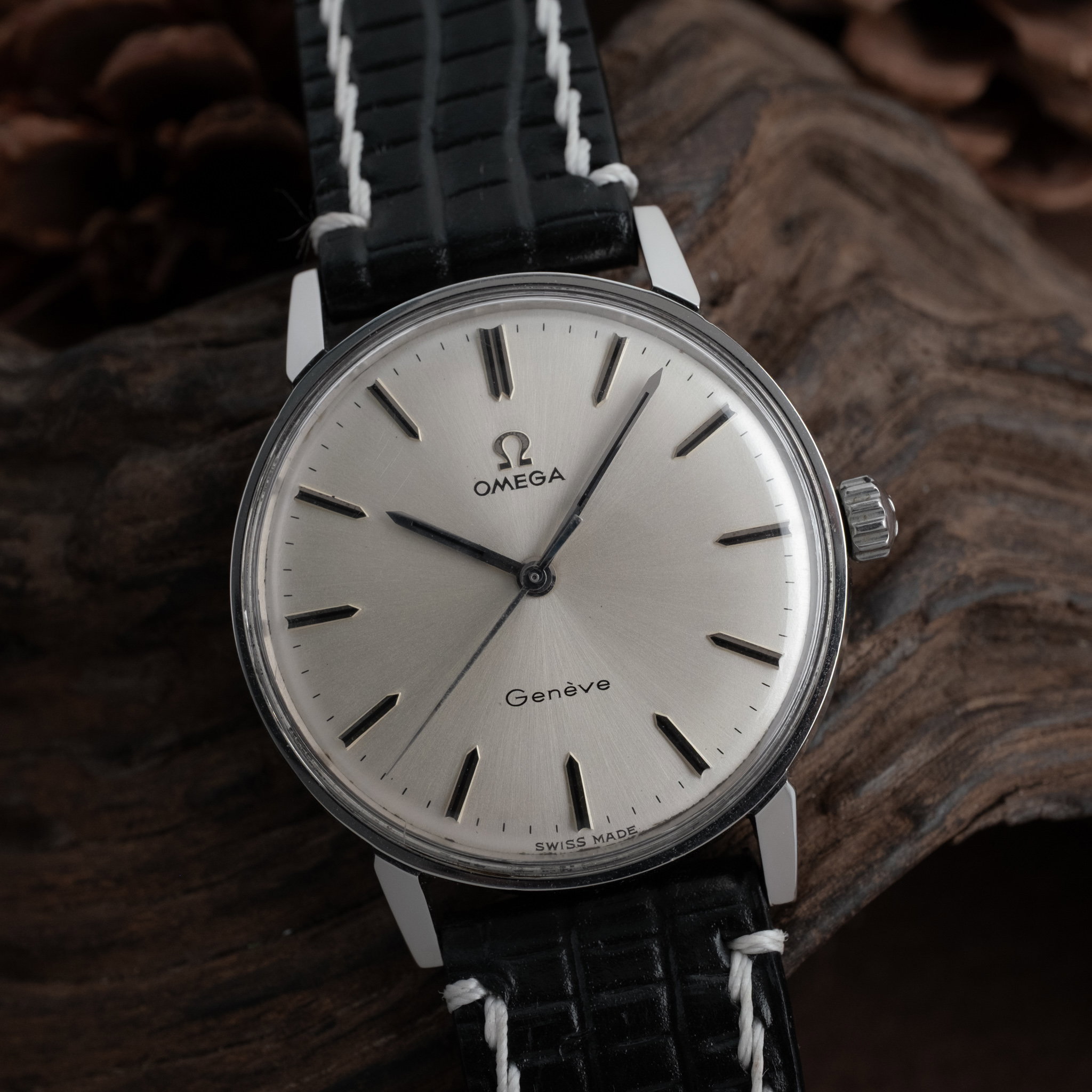
The Omega Genève 135.011 SP is a compact manual-wind steel dress watch whose value depends chiefly on an honest silver dial and a coherent caliber 601 movement.
We auction more than 100 vintage watches a week.
Get first access: new Omega 135.011 SP drops and alerts before auctions end.
Browse 66 live Omega auctionsThe Omega Genève 135.011 SP makes sense as a restrained late-1960s dress watch: stainless steel, manual winding and a silver dial in a 34 mm case. Examples handled from 1968 to 1970 use caliber 601 with 17 jewels, keeping the specification simple and the proportions compact.
The clean silver sunburst dial with black-accented applied indices is the version to want. Heavy spotting can spread evenly across the surface and is sometimes described as stardust patina, but it remains dial damage rather than a premium finish. At 34 mm excluding the crown, the watch wears discreetly and slips under a cuff rather than filling the wrist.
Reference
135.011 SP
Model
Genève
Known production years
1968-1970
Case material
Stainless steel
| Case size | 34 mm excluding the crown |
| Movement | Manual-wind Omega caliber 601 |
| Jewels | 17 |
| Dial configuration | Silver sunburst with applied baton indices |
| Hand style | Stick hands |
What it was built for
The 135.011 SP was built as a legible, manually wound Genève for everyday dress wear. Its silver sunburst dial, applied baton indices and matching stick hands put contrast ahead of ornament, while the stainless-steel case avoids the irreversible wear-through associated with plated cases.
Caliber 601 requires daily interaction rather than automatic convenience. That is part of the ownership proposition, but service history matters more than a seller's description of strong performance. Without dated documentation, the service history is unknown, and a short timing result does not establish the condition of the movement.
Where the value sits
The dial creates the widest value spread. A clean silver sunburst surface without spotting or moisture damage deserves a premium over a heavily spotted example, even when both retain clear printing and intact applied furniture. A refinished dial costs more than every minor case mark combined because the lost factory surface cannot be recovered.
A signed Milanese mesh bracelet adds period character when its fit and condition are coherent, but it should not outweigh the dial. Corporate engraving on the caseback is another visible distinction rather than automatic provenance. Between an engraved example with a clean dial and an unengraved watch with heavy spotting, take the clean dial.
What goes wrong
Heavy dial spotting is the first fault to price because it dominates the watch in normal light. Moisture staining, softened printing and mismatched hands can also indicate damage, a redial or a franken assembly, although no single symptom proves the whole case. A genuine service dial is different from a redial and should be described as such.
Over-polishing rounds the lugs and weakens the case geometry; deeper marks around the caseback can indicate careless opening. Black inserts in the applied indices and stick hands may degrade or cease to match, while lume pips can be lost or relumed. Movement corrosion, damaged screw heads and inconsistent finishing matter more than an isolated timing figure, and the crown may have been replaced as a normal service part.
Dating this watch
| Serial range / caliber | Year | Note |
|---|---|---|
| 1000000 | 1902 | approximate, ±1-3 years |
| 2000000 | 1908 | approximate, ±1-3 years |
| 3000000 | 1912 | approximate, ±1-3 years |
| 4000000 | 1916 | approximate, ±1-3 years |
| 5000000 | 1923 | approximate, ±1-3 years |
| 6000000 | 1925 | approximate, ±1-3 years |
| 7000000 | 1929 | approximate, ±1-3 years |
| 8000000 | 1935 | approximate, ±1-3 years |
| 9000000 | 1939 | approximate, ±1-3 years |
| 10000000 | 1944 | approximate, ±1-3 years |
| 11000000 | 1947 | approximate, ±1-3 years |
| 12000000 | 1950 | approximate, ±1-3 years |
| 13000000 | 1952 | approximate, ±1-3 years |
| 14000000 | 1954 | approximate, ±1-3 years |
| 15000000 | 1956 | approximate, ±1-3 years |
| 16000000 | 1958 | approximate, ±1-3 years |
| 17000000 | 1960 | approximate, ±1-3 years |
| 18000000 | 1961 | approximate, ±1-3 years |
| 19000000 | 1962 | approximate, ±1-3 years |
| 20000000 | 1963 | approximate, ±1-3 years |
| 21000000 | 1964 | approximate, ±1-3 years |
| 22000000 | 1965 | approximate, ±1-3 years |
| 24000000 | 1966 | approximate, ±1-3 years |
| 25000000 | 1967 | approximate, ±1-3 years |
| 26000000 | 1968 | approximate, ±1-3 years |
| 28000000 | 1969 | approximate, ±1-3 years |
| 31000000 | 1970 | approximate, ±1-3 years |
| 32000000 | 1971 | approximate, ±1-3 years |
| 33000000 | 1972 | approximate, ±1-3 years |
| 35000000 | 1973 | approximate, ±1-3 years |
| 37000000 | 1974 | approximate, ±1-3 years |
| 39000000 | 1975 | approximate, ±1-3 years |
| 40000000 | 1976 | approximate, ±1-3 years |
| 41000000 | 1977 | approximate, ±1-3 years |
| 42000000 | 1978 | approximate, ±1-3 years |
| 43000000 | 1979 | approximate, ±1-3 years |
| 44000000 | 1980 | approximate, ±1-3 years |
| 45000000 | 1982 | approximate, ±1-3 years |
| 46000000 | 1984 | approximate, ±1-3 years |
| 47000000 | 1985 | approximate, ±1-3 years |
| 48000000 | 1986 | approximate, ±1-3 years |
| 49000000 | 1988 | approximate, ±1-3 years |
| 50000000 | 1990 | approximate, ±1-3 years |
| 53000000 | 1993 | approximate, ±1-3 years |
| 54000000 | 1995 | approximate, ±1-3 years |
| 56000000 | 1996 | approximate, ±1-3 years |
| 58000000 | 1998 | approximate, ±1-3 years |
| 60000000 | 2000 | approximate, ±1-3 years |
Dating data comes from our decoder tables; treat years as approximate.
What to check before you buy
- Dial print and surface: The silver sunburst surface should carry a crisp applied Omega logo and clear printed text. Heavy spotting is damage, while fuzzy or uneven printing raises the possibility of a redial rather than honest ageing.
- Hands and hour furniture: Applied baton indices with black accents should remain visually coherent with the black-insert stick hands. Mismatched finish, degraded inserts or unrelated hand shapes can signal replacement parts or a franken assembly.
- Case and caseback: The case should be stainless steel and measure 34 mm excluding the crown. Rounded lugs indicate polishing, while a corporate caseback engraving must be judged as a permanent alteration rather than proof of provenance.
- Movement: The movement should be the manual-wind Omega caliber 601 with 17 jewels. Check for corrosion, damaged screw heads and inconsistent finishing, since a clean timing result alone cannot establish mechanical condition.
- Crown and service parts: Treat the crown, crystal and gaskets as consumable service parts rather than relying on an all-original claim. A genuine service replacement can be period-correct without being the component fitted when the watch first shipped.
Other 135.011 SP examples we auctioned
10 Omega 135.011 SP auctioned
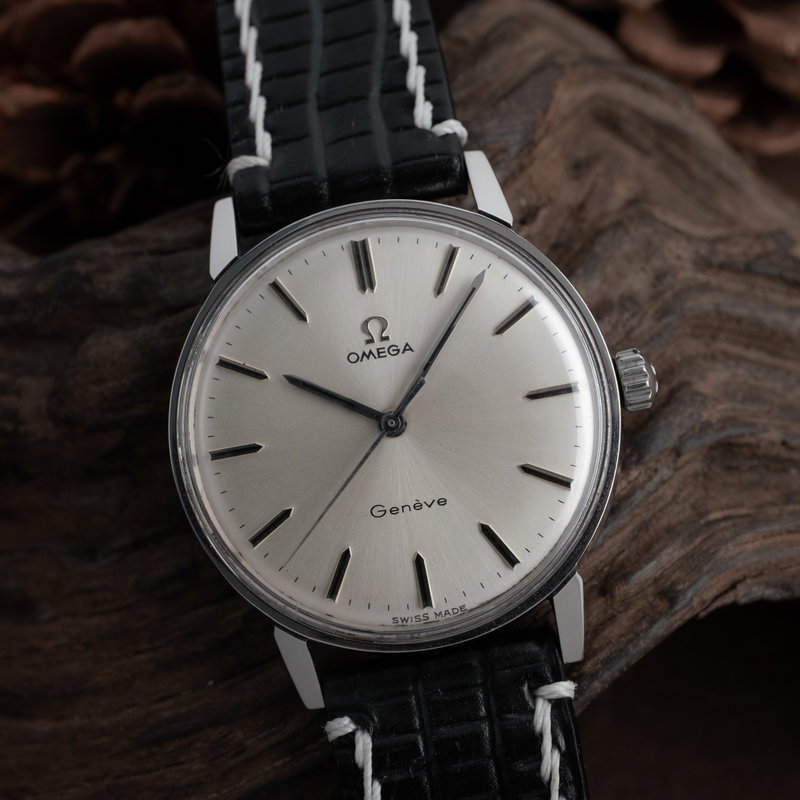
Omega · Genève · 135.011 SP
Omega · Genève · 135.011 SP · 1970
Omega · Genève · 135.011 SP · 1970

Omega · Genève · 135.011 SP · 1968
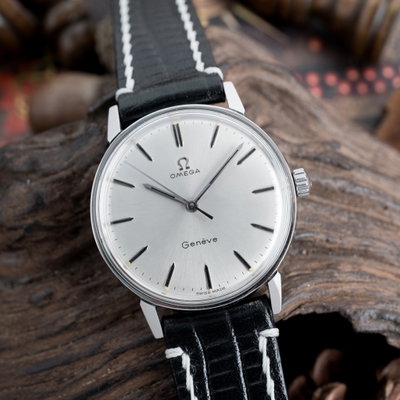
Omega · Genève · 135.011 SP · 1970
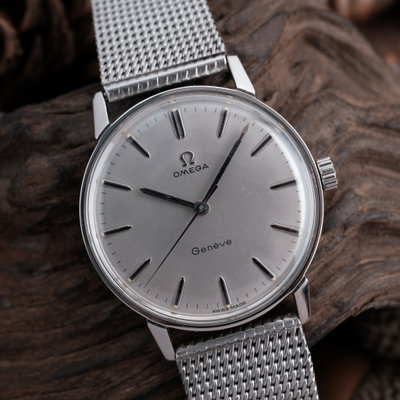
Omega · Genève · 135.011 SP
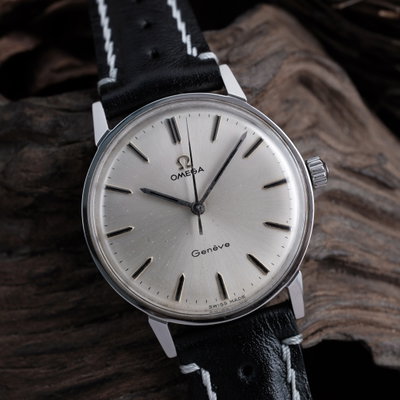
Omega · Genève · 135.011 SP · 1969
More Omega references
Related pages
Frequently asked questions
Ready to hunt for your own?
More than 100 vintage watches go under the hammer every week.