Omega De Ville 115.0001 Reference Guide
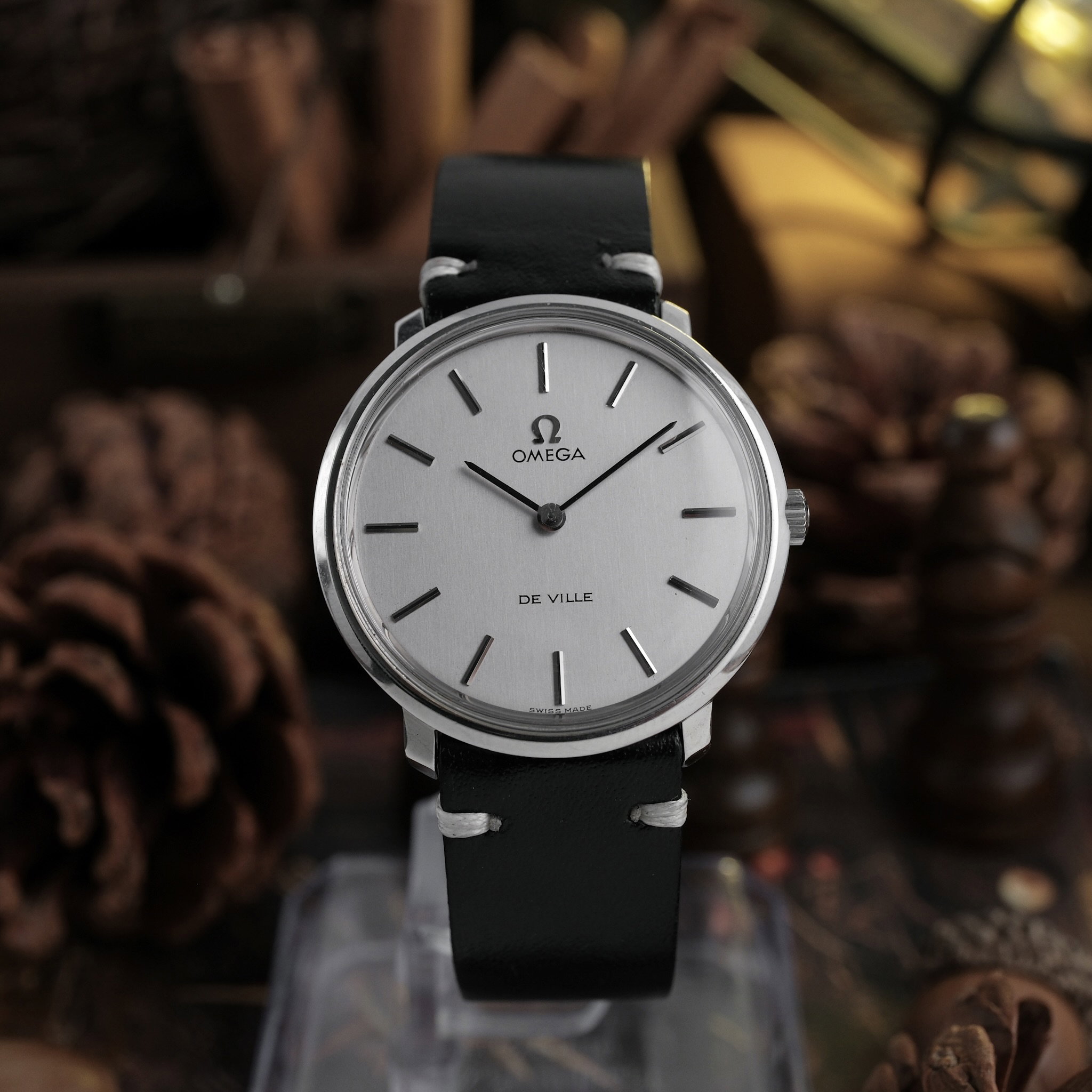
The Omega De Ville 115.0001 is a compact manual-wind dress watch best bought with a clean silver dial, sharp steel case and coherent movement date.
We auction more than 100 vintage watches a week.
Get first access: new Omega 115.0001 drops and alerts before auctions end.
Browse 50 live Omega auctionsThe Omega De Ville 115.0001 reduces the dress watch to the essentials: a 33 mm stainless-steel case, manual winding and no seconds hand. Its compact scale and restrained silver dial place the emphasis on proportion rather than complication.
Two dial treatments matter when comparing a used Omega De Ville 115.0001. Silver sunburst examples have applied black-inlaid baton indices, while vertically brushed dials use applied black batons and a silver-toned Omega logo. Neither finish excuses spotting or a redial, so buy the cleaner, more coherent dial before paying a premium for a mesh bracelet.
Reference
115.0001
Model
De Ville
Case material
Stainless steel
Case size
33 mm excluding the crown
| Movement | Manual-wind mechanical |
| Jewel count | 17 jewels on one handled example |
| Display | Two hands, no seconds hand |
| Dial variants | Silver sunburst or silver vertically brushed |
| Known production period | 1960s-1970s |
| Case construction | Monocoque |
What it was built for
The 115.0001 was built as a slim, manually wound De Ville for formal and everyday wear. The absence of a seconds hand keeps the dial open, while applied baton furniture gives the silver surface enough depth without making it busy. The watch asks for daily winding but avoids the visual weight of an automatic layout.
The stainless-steel case is the practical choice against a plated dress watch because there is no surface plating to wear through at the lugs. Its monocoque construction also shapes ownership: movement access is not the same as on a conventional removable-back case, so careless opening work can mark the case or damage dial-side components.
On the wrist
At 33 mm excluding the crown, the 115.0001 wears as a compact period dress watch rather than a reduced modern watch. The spare two-hand dial makes the face read larger than the case measurement suggests, but buyers accustomed to wider sports watches should expect a distinctly restrained presence.
A leather strap keeps the proportions quiet and lets the slim baton dial sit naturally with tailoring. A period mesh bracelet gives the same watch more visual width and turns it into a stronger design object, though stretched links, poor end fit and an incorrect clasp can erase that advantage. Between a compromised mesh bracelet and a clean dial on leather, take the dial.
What goes wrong
Dial damage is the costliest problem. Vertically brushed examples can show localized spotting and age-related wear, while a refinished dial may lose the correct texture, applied furniture relationship or crisp De Ville signature. A genuine service dial is different from a redial, but without documentation the replacement date may remain unknown.
Over-polishing softens the lugs and rounds the case edges; opening marks are especially relevant on the monocoque case. Replacement crowns can be period-correct without being original, and a movement from another watch makes the result married even when both parts are genuine Omega. Mesh bracelets can stretch or acquire mismatched clasps. The service history is often unknown, so cosmetic coherence cannot establish mechanical condition.
Dating this watch
| Serial range / caliber | Year | Note |
|---|---|---|
| 1000000 | 1902 | approximate, ±1-3 years |
| 2000000 | 1908 | approximate, ±1-3 years |
| 3000000 | 1912 | approximate, ±1-3 years |
| 4000000 | 1916 | approximate, ±1-3 years |
| 5000000 | 1923 | approximate, ±1-3 years |
| 6000000 | 1925 | approximate, ±1-3 years |
| 7000000 | 1929 | approximate, ±1-3 years |
| 8000000 | 1935 | approximate, ±1-3 years |
| 9000000 | 1939 | approximate, ±1-3 years |
| 10000000 | 1944 | approximate, ±1-3 years |
| 11000000 | 1947 | approximate, ±1-3 years |
| 12000000 | 1950 | approximate, ±1-3 years |
| 13000000 | 1952 | approximate, ±1-3 years |
| 14000000 | 1954 | approximate, ±1-3 years |
| 15000000 | 1956 | approximate, ±1-3 years |
| 16000000 | 1958 | approximate, ±1-3 years |
| 17000000 | 1960 | approximate, ±1-3 years |
| 18000000 | 1961 | approximate, ±1-3 years |
| 19000000 | 1962 | approximate, ±1-3 years |
| 20000000 | 1963 | approximate, ±1-3 years |
| 21000000 | 1964 | approximate, ±1-3 years |
| 22000000 | 1965 | approximate, ±1-3 years |
| 24000000 | 1966 | approximate, ±1-3 years |
| 25000000 | 1967 | approximate, ±1-3 years |
| 26000000 | 1968 | approximate, ±1-3 years |
| 28000000 | 1969 | approximate, ±1-3 years |
| 31000000 | 1970 | approximate, ±1-3 years |
| 32000000 | 1971 | approximate, ±1-3 years |
| 33000000 | 1972 | approximate, ±1-3 years |
| 35000000 | 1973 | approximate, ±1-3 years |
| 37000000 | 1974 | approximate, ±1-3 years |
| 39000000 | 1975 | approximate, ±1-3 years |
| 40000000 | 1976 | approximate, ±1-3 years |
| 41000000 | 1977 | approximate, ±1-3 years |
| 42000000 | 1978 | approximate, ±1-3 years |
| 43000000 | 1979 | approximate, ±1-3 years |
| 44000000 | 1980 | approximate, ±1-3 years |
| 45000000 | 1982 | approximate, ±1-3 years |
| 46000000 | 1984 | approximate, ±1-3 years |
| 47000000 | 1985 | approximate, ±1-3 years |
| 48000000 | 1986 | approximate, ±1-3 years |
| 49000000 | 1988 | approximate, ±1-3 years |
| 50000000 | 1990 | approximate, ±1-3 years |
| 53000000 | 1993 | approximate, ±1-3 years |
| 54000000 | 1995 | approximate, ±1-3 years |
| 56000000 | 1996 | approximate, ±1-3 years |
| 58000000 | 1998 | approximate, ±1-3 years |
| 60000000 | 2000 | approximate, ±1-3 years |
Dating data comes from our decoder tables; treat years as approximate.
What to check before you buy
- Dial configuration: A 115.0001 should retain the spare two-hand layout without a seconds hand. Known dials are silver sunburst with black-inlaid batons or vertically brushed silver with applied black batons.
- Dial surface and printing: The silver finish should remain visibly sunburst or vertically brushed rather than uniformly painted. Soft printing, lost texture or furniture sitting inconsistently can identify a redial, while a service dial requires separate assessment.
- Case and reference coherence: The known configuration is a 33 mm stainless-steel monocoque case. Rounded edges and opening damage indicate prior work, while a different material, size or construction would not match the handled examples.
- Movement coherence: The watch should contain a manual-wind mechanical movement, and its serial should align approximately with the 1960s or 1970s character of the complete watch. The caliber is not established by the available evidence.
- Hands and applied furniture: The hands, applied Omega symbol and baton indices should read as one restrained two-hand design. Genuine but mismatched replacement parts can create a franken watch even when no individual component is counterfeit.
Other 115.0001 examples we auctioned
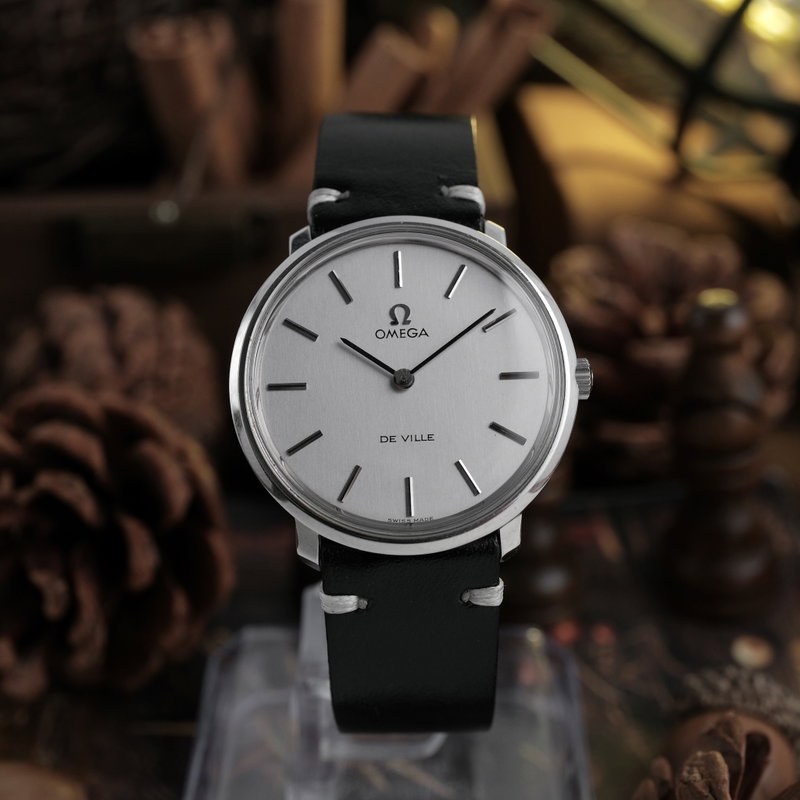
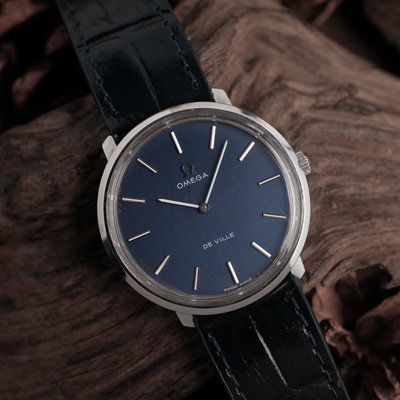
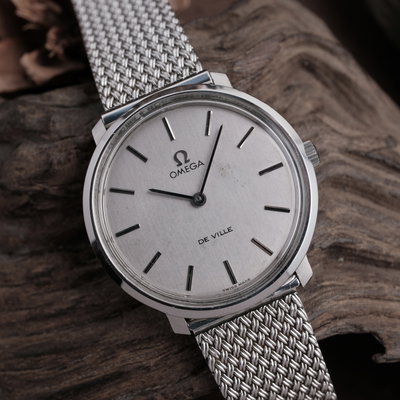
3 Omega 115.0001 auctioned
More Omega references
Related pages
Frequently asked questions
Ready to hunt for your own?
More than 100 vintage watches go under the hammer every week.