Omega De Ville 111.0139 - a collector's reference guide
The Omega De Ville 111.0139 is a compact manual-wind dress watch whose value depends chiefly on dial integrity, case geometry and a correct caliber 625.
We auction more than 100 vintage watches a week.
Get first access: new Omega 111.0139 drops and alerts before auctions end.
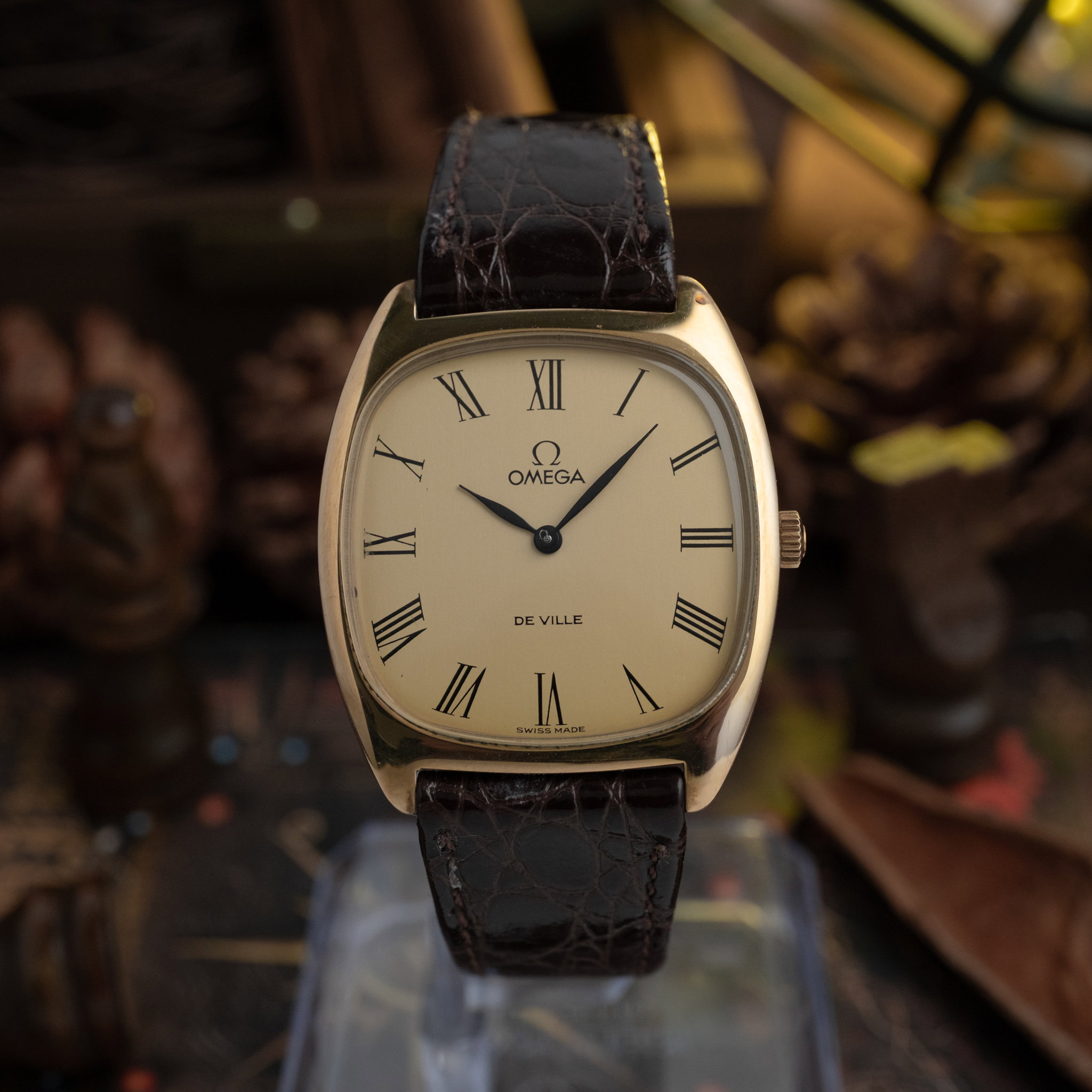
Browse 60 live Omega auctionsThe Omega De Ville 111.0139 is a compact dress watch built around a cushion case, a restrained dial and a manual-wind caliber 625. The reference is known across 1963-1979, while the late-1970s watches handled by Second Vintage establish the clearest specification: 32 mm cases, black hands and vertically brushed dials.
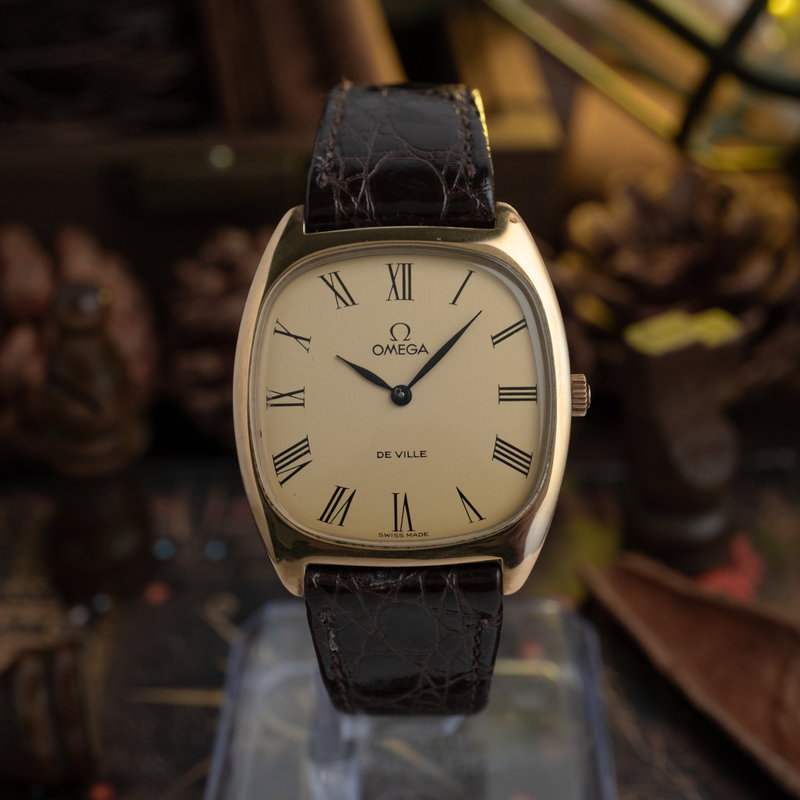
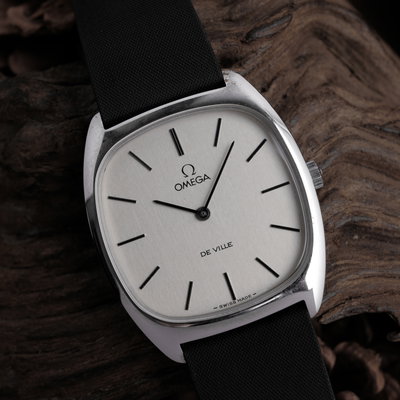
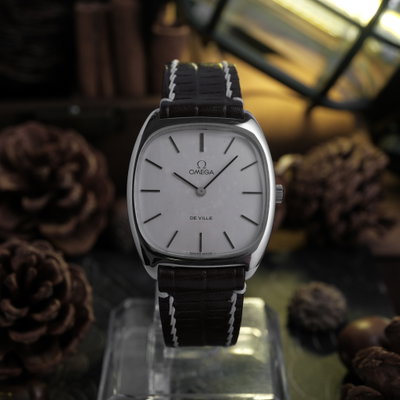
Two materially different versions matter. Stainless-steel examples use silver or white-silver dials with printed indices, while gold-plated examples pair a stainless-steel caseback with a champagne dial and printed Roman numerals. Choose between those designs only after judging the dial, because widespread spotting or a redial changes the watch more decisively than either case material.
Brand
Omega
Model
De Ville
Reference
111.0139
Known production-year span
1963-1979
| Case diameter | 32 mm excluding the crown |
| Case form | Cushion case |
| Movement | Manual-wind Omega caliber 625 |
| Jewels | 17 |
| Case materials | Stainless steel or gold-plated with stainless-steel caseback |
| Known dial variants | Vertically brushed silver with printed indices, white-silver with printed indices, or champagne with printed Roman numerals |
| Hands | Black stick hands |
On the wrist
At 32 mm excluding the crown, the 111.0139 wears as a small dress watch rather than a reduced modern sports watch. The cushion case gives the dial a broader frame than a round case of the same diameter, while black hands and indices provide strong contrast against silver, white-silver or champagne surfaces. It belongs under a cuff and suits a narrow strap; buyers expecting contemporary visual weight should choose against it.
Caliber 625 requires manual winding, so ownership includes a regular interaction that an automatic De Ville would avoid. The reference earns its place through proportion and dial texture, not technical complication. Service history is unknown unless paperwork accompanies a particular watch, and an acceptable timegrapher reading does not establish when the movement was last dismantled, cleaned or lubricated.
Where the value sits
The dial carries the largest share of value. A clean vertically brushed silver dial with intact black printing commands a meaningful premium over a white-silver dial covered in widespread spotting, even when both remain legible. On the gold-plated version, the champagne surface and printed Roman numerals must be weighed against plating loss, because exposed base metal at the lugs cannot be reversed by routine servicing.
Between a sharp steel case with a damaged dial and a softer case with a clean, credible dial, the better dial is usually the stronger purchase. The exception is a case polished until the cushion geometry has become rounded, since lost brushed and polished planes cannot be recovered without removing more metal. Steel is the safer ownership choice against gold plate when both dials are comparable.
What goes wrong
Widespread dial spotting is the most consequential known fault, and it should be called damage rather than patina when it breaks across the whole surface. Refinishing can erase the vertical brushing or alter the printed indices and Roman numerals; that loss costs more than light case wear. Black hands may also show oxidation, surface ageing or dust under magnification.
Cases fail differently by material. Gold plating wears through first on exposed edges and lugs, while repeated polishing softens the cushion outline and blurs the transition between brushed and polished surfaces. Replacement crowns and mixed parts can create a franken watch even when every component is genuine Omega, and a movement paired with a case from another watch is married. Without service records, no service date should be assumed.
Dating this watch
| Serial range / caliber | Year | Note |
|---|---|---|
| 1000000 | 1902 | approximate, ±1-3 years |
| 2000000 | 1908 | approximate, ±1-3 years |
| 3000000 | 1912 | approximate, ±1-3 years |
| 4000000 | 1916 | approximate, ±1-3 years |
| 5000000 | 1923 | approximate, ±1-3 years |
| 6000000 | 1925 | approximate, ±1-3 years |
| 7000000 | 1929 | approximate, ±1-3 years |
| 8000000 | 1935 | approximate, ±1-3 years |
| 9000000 | 1939 | approximate, ±1-3 years |
| 10000000 | 1944 | approximate, ±1-3 years |
| 11000000 | 1947 | approximate, ±1-3 years |
| 12000000 | 1950 | approximate, ±1-3 years |
| 13000000 | 1952 | approximate, ±1-3 years |
| 14000000 | 1954 | approximate, ±1-3 years |
| 15000000 | 1956 | approximate, ±1-3 years |
| 16000000 | 1958 | approximate, ±1-3 years |
| 17000000 | 1960 | approximate, ±1-3 years |
| 18000000 | 1961 | approximate, ±1-3 years |
| 19000000 | 1962 | approximate, ±1-3 years |
| 20000000 | 1963 | approximate, ±1-3 years |
| 21000000 | 1964 | approximate, ±1-3 years |
| 22000000 | 1965 | approximate, ±1-3 years |
| 24000000 | 1966 | approximate, ±1-3 years |
| 25000000 | 1967 | approximate, ±1-3 years |
| 26000000 | 1968 | approximate, ±1-3 years |
| 28000000 | 1969 | approximate, ±1-3 years |
| 31000000 | 1970 | approximate, ±1-3 years |
| 32000000 | 1971 | approximate, ±1-3 years |
| 33000000 | 1972 | approximate, ±1-3 years |
| 35000000 | 1973 | approximate, ±1-3 years |
| 37000000 | 1974 | approximate, ±1-3 years |
| 39000000 | 1975 | approximate, ±1-3 years |
| 40000000 | 1976 | approximate, ±1-3 years |
| 41000000 | 1977 | approximate, ±1-3 years |
| 42000000 | 1978 | approximate, ±1-3 years |
| 43000000 | 1979 | approximate, ±1-3 years |
| 44000000 | 1980 | approximate, ±1-3 years |
| 45000000 | 1982 | approximate, ±1-3 years |
| 46000000 | 1984 | approximate, ±1-3 years |
| 47000000 | 1985 | approximate, ±1-3 years |
| 48000000 | 1986 | approximate, ±1-3 years |
| 49000000 | 1988 | approximate, ±1-3 years |
| 50000000 | 1990 | approximate, ±1-3 years |
| 53000000 | 1993 | approximate, ±1-3 years |
| 54000000 | 1995 | approximate, ±1-3 years |
| 56000000 | 1996 | approximate, ±1-3 years |
| 58000000 | 1998 | approximate, ±1-3 years |
| 60000000 | 2000 | approximate, ±1-3 years |
Dating data comes from our decoder tables; treat years as approximate.
What to check before you buy
- Dial print and finish: Silver and champagne dials can carry subtle vertical brushing, with black printed indices or Roman numerals. Missing brushing, uneven replacement print or printing laid over existing spotting points toward a redial.
- Hands: Known watches use black stick hands that contrast with the pale dial. Oxidation and dust can be genuine age, but a mismatched shape, colour or length raises the possibility of replacement parts.
- Case and caseback: The case should measure 32 mm excluding the crown and retain a defined cushion outline with distinct brushed and polished surfaces. Gold-plated versions use a stainless-steel caseback.
- Crown: No single crown design is established by the available handled examples. Treat the crown as a replaceable component and do not use a logo alone to declare the whole watch original.
- Movement: The correct known movement is the manual-wind Omega caliber 625 with 17 jewels. The evidence does not establish a broader finishing checklist, so the caliber identity and case fit are the defensible checks.
- Redial, franken and married watches: A silver, white-silver or champagne dial is not enough on its own. Dial treatment, black hands, caliber 625 and case material must form a coherent combination; genuine parts assembled from incompatible watches make a franken or married example.
Other 111.0139 examples we auctioned
5 Omega 111.0139 auctioned
More Omega references
Related pages
Frequently asked questions
Ready to hunt for your own?
More than 100 vintage watches go under the hammer every week.