Omega De Ville 111.140: what to buy and what to avoid
The Omega De Ville 111.140 is a 32 mm, manual-wind dress watch whose value depends chiefly on an honest brushed dial and intact gold plating.
Live now
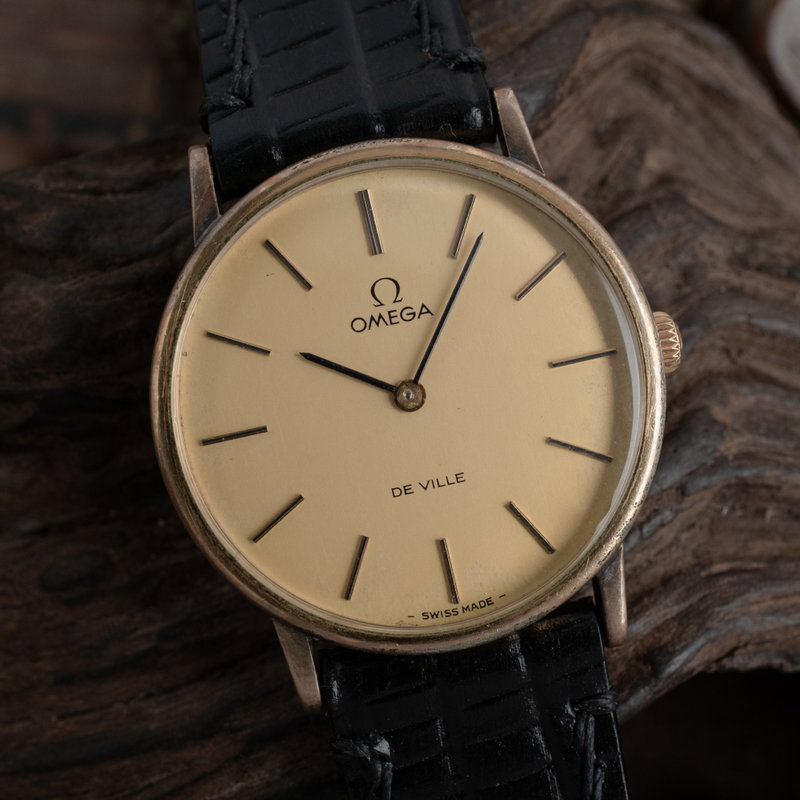
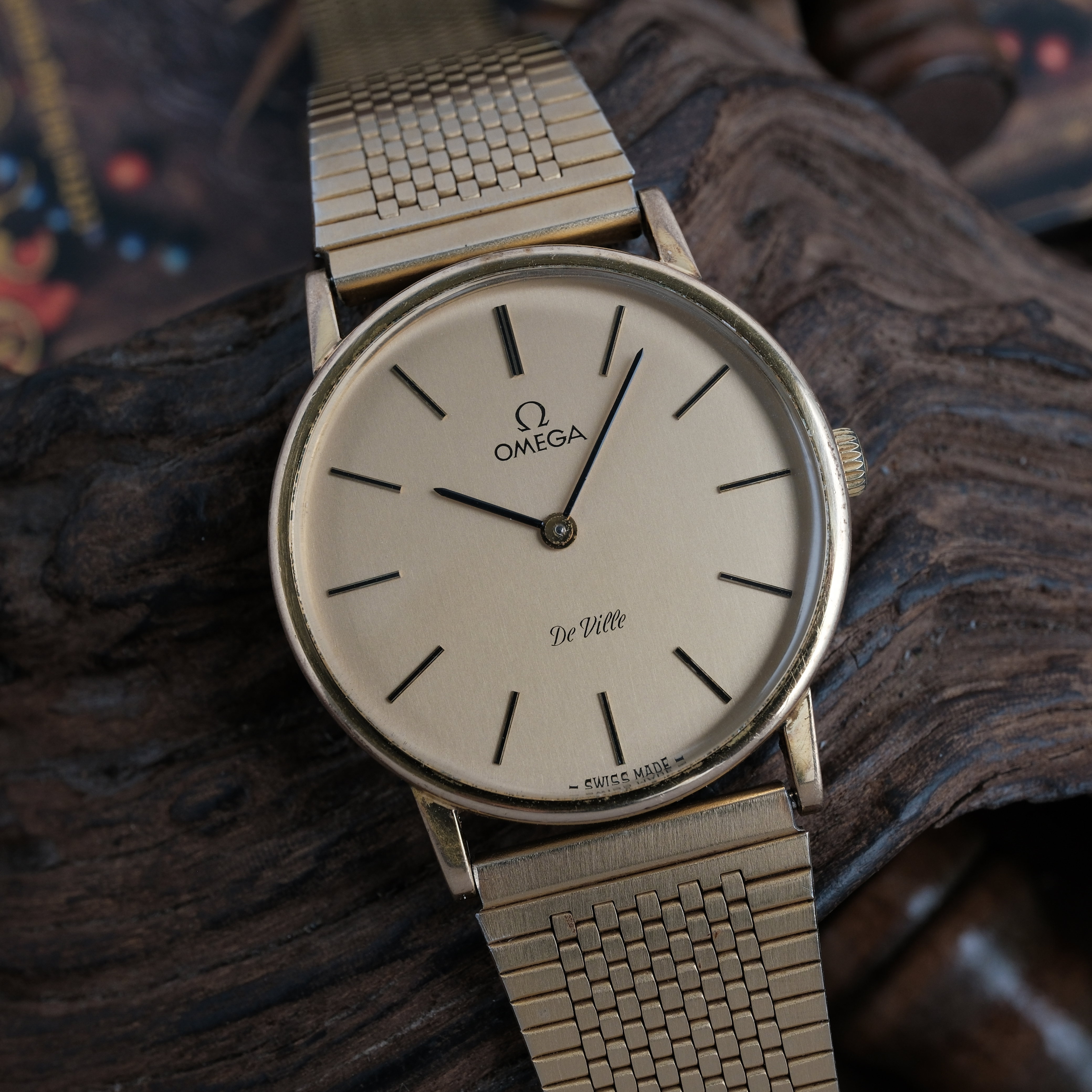
The Omega De Ville 111.140 is a compact two-hand dress watch from 1975-1979, built around the manual-wind caliber 625. Its 32 mm gold-plated case, stainless steel back and brushed champagne or gold-tone dial place it firmly in late 1970s formal watchmaking.
The version to want has an even vertical-brushed dial, crisp black furniture and plating that has not worn through at the lugs. Examples exist with printed or applied black stick indices, but the available evidence does not establish a year-by-year change, so neither layout should be treated as earlier or rarer without further documentation.
Reference
111.140
Model
De Ville
Production years
1975-1979
Case diameter
32 mm excluding the crown
| Case material | Gold-plated case with stainless steel back |
| Movement | Manual-wind caliber 625 |
| Jewel count | 17 jewels |
| Display | Two-hand |
| Dial | Vertically brushed champagne or gold-tone |
| Hands and indices | Black stick hands with printed or applied black stick indices |
What it was built for
Reference 111.140 was built as a slim, time-only De Ville for formal wear rather than as a sports watch. The absence of a seconds hand keeps the dial quiet, while black stick hands and indices give useful contrast against the champagne or gold-tone surface. At 32 mm excluding the crown, it slips under a cuff and wears with visibly restrained 1970s proportions.
Caliber 625 requires regular hand winding, and that matters more here because there is no seconds hand to confirm operation at a glance. Timing results from individual watches cannot establish the condition of another example. The service history is often unknown, so movement performance and service needs must be judged watch by watch.
Where the value sits
The dial carries the largest share of value on this reference. An even vertical brush, intact black printing and hands without corrosion matter more than superficial case shine, because a redial changes the watch while light surface wear does not. Between a sharply printed dial in a worn case and a refinished dial in a brighter case, take the honest dial.
Gold plating creates a wider condition spread than the simple case shape suggests. Surface scratches can remain acceptable, but plating worn through at the lug edges exposes the base metal and no routine service reverses that loss. Crisp case edges deserve a premium over soft, heavily polished ones, provided the dial and caliber 625 also agree with the reference.
Where to start
Start with the dial, then accept only the amount of case wear the price reflects. Dark spotting, moisture staining or blurred printing should be valued as damage, not patina; unevenly redrawn text is a redial warning. Black stick hands should match the dial furniture in character, although period-correct hands are not proof that they left the factory with that watch.
The stainless steel back should sit with a gold-plated case, and the movement should be caliber 625. A correct movement alone does not rule out a married or franken watch, so case, dial and movement must form a coherent reference 111.140. Crown originality cannot be established from the evidence here, and without documentation the service history remains unknown.
Dating this watch
| Serial range / caliber | Year | Note |
|---|---|---|
| 1000000 | 1902 | approximate, ±1-3 years |
| 2000000 | 1908 | approximate, ±1-3 years |
| 3000000 | 1912 | approximate, ±1-3 years |
| 4000000 | 1916 | approximate, ±1-3 years |
| 5000000 | 1923 | approximate, ±1-3 years |
| 6000000 | 1925 | approximate, ±1-3 years |
| 7000000 | 1929 | approximate, ±1-3 years |
| 8000000 | 1935 | approximate, ±1-3 years |
| 9000000 | 1939 | approximate, ±1-3 years |
| 10000000 | 1944 | approximate, ±1-3 years |
| 11000000 | 1947 | approximate, ±1-3 years |
| 12000000 | 1950 | approximate, ±1-3 years |
| 13000000 | 1952 | approximate, ±1-3 years |
| 14000000 | 1954 | approximate, ±1-3 years |
| 15000000 | 1956 | approximate, ±1-3 years |
| 16000000 | 1958 | approximate, ±1-3 years |
| 17000000 | 1960 | approximate, ±1-3 years |
| 18000000 | 1961 | approximate, ±1-3 years |
| 19000000 | 1962 | approximate, ±1-3 years |
| 20000000 | 1963 | approximate, ±1-3 years |
| 21000000 | 1964 | approximate, ±1-3 years |
| 22000000 | 1965 | approximate, ±1-3 years |
| 24000000 | 1966 | approximate, ±1-3 years |
| 25000000 | 1967 | approximate, ±1-3 years |
| 26000000 | 1968 | approximate, ±1-3 years |
| 28000000 | 1969 | approximate, ±1-3 years |
| 31000000 | 1970 | approximate, ±1-3 years |
| 32000000 | 1971 | approximate, ±1-3 years |
| 33000000 | 1972 | approximate, ±1-3 years |
| 35000000 | 1973 | approximate, ±1-3 years |
| 37000000 | 1974 | approximate, ±1-3 years |
| 39000000 | 1975 | approximate, ±1-3 years |
| 40000000 | 1976 | approximate, ±1-3 years |
| 41000000 | 1977 | approximate, ±1-3 years |
| 42000000 | 1978 | approximate, ±1-3 years |
| 43000000 | 1979 | approximate, ±1-3 years |
| 44000000 | 1980 | approximate, ±1-3 years |
| 45000000 | 1982 | approximate, ±1-3 years |
| 46000000 | 1984 | approximate, ±1-3 years |
| 47000000 | 1985 | approximate, ±1-3 years |
| 48000000 | 1986 | approximate, ±1-3 years |
| 49000000 | 1988 | approximate, ±1-3 years |
| 50000000 | 1990 | approximate, ±1-3 years |
| 53000000 | 1993 | approximate, ±1-3 years |
| 54000000 | 1995 | approximate, ±1-3 years |
| 56000000 | 1996 | approximate, ±1-3 years |
| 58000000 | 1998 | approximate, ±1-3 years |
| 60000000 | 2000 | approximate, ±1-3 years |
Dating data comes from our decoder tables; treat years as approximate.
What to check before you buy
- Dial finish and text: The established dial is champagne or gold-tone with vertical brushing and black text. Uneven brushing, blurred lettering or text sitting over an altered surface points to a redial rather than honest ageing.
- Hands and hour furniture: Reference 111.140 uses black stick hour and minute hands with black stick indices. Printed and applied indices both occur, so either can be period-correct, but mismatched styles or an added seconds hand need explanation.
- Case and caseback: The 32 mm case is gold-plated and paired with a stainless steel back. Plating loss at the lug edges, softened case lines or a back inconsistent with this construction lowers confidence and value.
- Movement: The movement should be the manual-wind caliber 625, with 17 jewels stated on handled examples. A correct caliber supports the watch, but it does not by itself rule out a married case and movement.
- Crown and service parts: The available evidence does not establish one crown pattern for every 111.140, so crown originality should not be claimed without documentation. A replacement crown can be period-correct without being original to the watch.
- Whole-watch coherence: Dial, hands, 32 mm plated case, stainless steel back and caliber 625 should agree as one watch. Correct parts assembled from watches that never shipped together make a franken example, not an authentic configuration.
Other 111.140 examples we auctioned
5 Omega 111.140 auctioned

We auction more than 100 vintage watches a week.
Get first access: new Omega 111.140 drops and alerts before auctions end.
More Omega references
Related pages
Frequently asked questions
Ready to hunt for your own?
More than 100 vintage watches go under the hammer every week.