Omega De Ville 111.0132: the 32 mm cushion-case reference
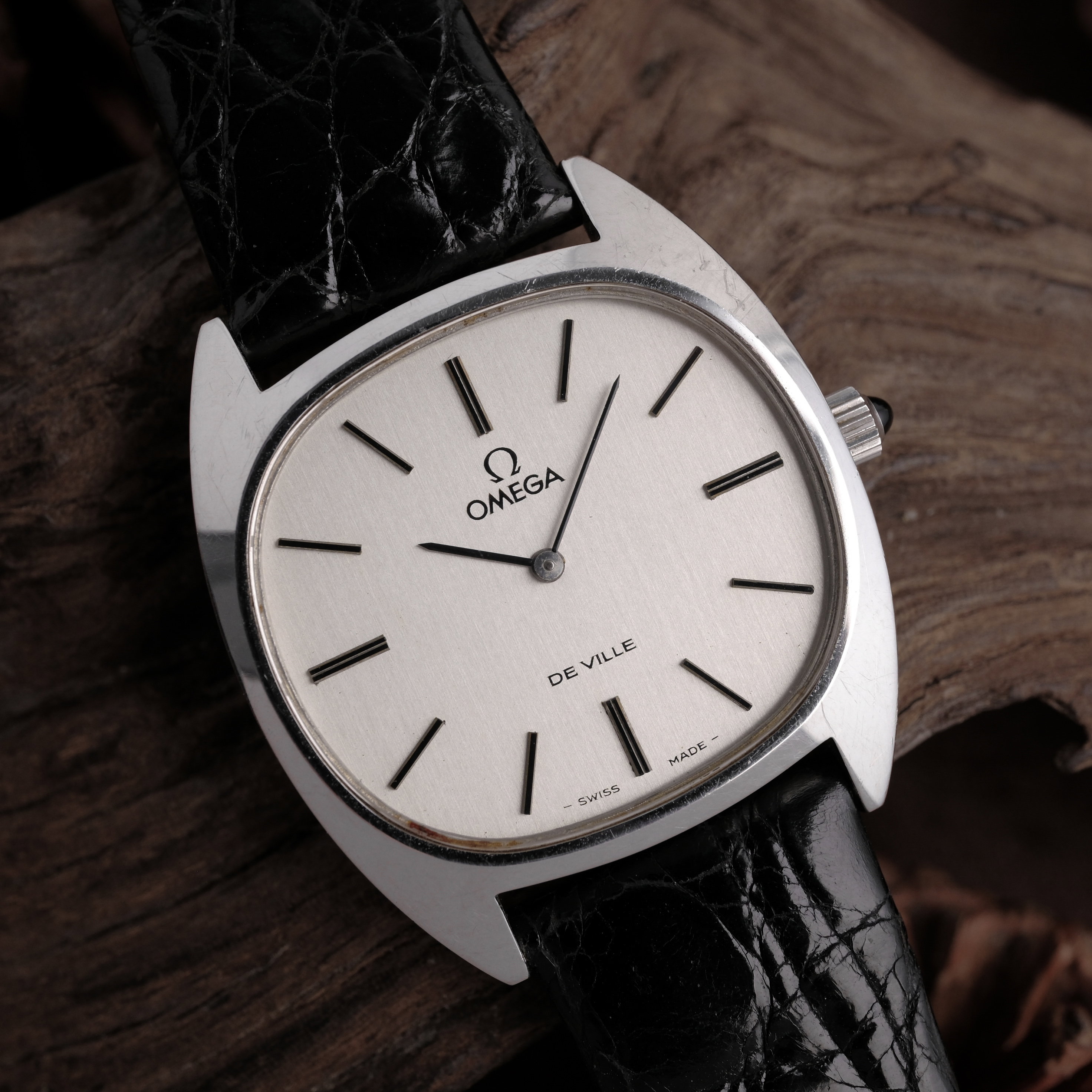
The Omega De Ville 111.0132 to buy is a sharp 32 mm cushion-case example with an honest brushed dial and the correct manual-wind caliber 625.
We auction more than 100 vintage watches a week.
Get first access: new Omega 111.0132 drops and alerts before auctions end.
Browse 62 live Omega auctionsThe Omega De Ville 111.0132 is a compact 1970s dress watch built around a 32 mm cushion case, a two-hand dial and the manual-wind caliber 625. Examples handled from 1972 through 1978 establish the useful buying range. The reference looks most coherent in stainless steel with a silver vertically brushed dial, although dark grey and champagne dials give it markedly different characters.
Dial condition decides this reference. Spotting around the centre pinion, staining near the outer edge and loss of the vertical brushing all matter more than routine marks elsewhere. Gold-plated examples add another permanent risk because worn plating cannot be recovered by ordinary servicing. Between a sharp steel case with an honest dial and a brighter gold-plated watch with damage, take the steel watch.
Reference
111.0132
Model
Omega De Ville
Known production years
1972-1978
Case size
32 mm excluding the crown
| Case shape | Cushion-shaped |
| Case materials | Stainless steel or 20-micron gold plate with stainless steel caseback |
| Movement | Manual-wind Omega caliber 625 |
| Jewels | 17 |
| Dial finishes | Silver, dark grey or champagne with vertical brushing and applied indices |
| Display | Two hands |
| Crown style | Cabochon-set |
What it was built for
The De Ville 111.0132 belongs to the restrained dress-watch language of the 1970s: no seconds hand, a hand-wound caliber 625 and a cushion-shaped case that supplies the visual weight. At 32 mm without the crown, it was built to sit discreetly rather than fill the wrist. The applied indices and vertically brushed dial provide contrast without adding another complication.
That compact format works best with tailoring, knitwear and other settings where a thin visual profile matters. The black stick hands on silver dials give the clearest reading, while silver-tone furniture against dark grey creates a softer effect. A cabochon-set crown is part of the reference's character, but its small size makes daily winding more deliberate than on a larger conventional crown.
Where the value sits
The worst fault is a refinished dial. A redial that replaces the vertical brushing or alters the printed Omega and De Ville signatures costs more than minor case wear, because the dial supplies most of this reference's identity. Honest spotting can be acceptable when it is localised, but dark staining from the centre pinion or concentrated damage between 7 and 9 o'clock should widen the condition discount.
Stainless steel is the safer version when two examples have comparable dials. The 20-micron gold-plated case offers warmer contrast with a champagne dial, but wear-through at the lug edges is permanent and narrows the buyer pool. Sharp cushion-case transitions also deserve a premium over a polished case with soft, mushy edges, even when the polished watch looks brighter in photographs.
Where to start
Start with the dial, then choose the case material. A silver vertically brushed dial with black hands and indices gives the strongest legibility, while dark grey is the more distinctive option and exposes centre spotting readily. Champagne belongs naturally with the 20-micron gold-plated case, but that pairing only makes sense when the plating remains continuous at the lugs.
After that, confirm the caliber 625 and assess whether the movement, case and dial belong together. A service dial can be genuine yet later, while a franken watch may combine genuine Omega parts that never shipped together. The service history is unknown without documentation, and a timegrapher reading alone does not establish what work has been completed. Against a polished or redialled example, buy the sharp steel watch with the honest brushed dial.
Dating this watch
| Serial range / caliber | Year | Note |
|---|---|---|
| 1,000,000 | 1902 | approximate, ±1-3 years |
| 2,000,000 | 1908 | approximate, ±1-3 years |
| 3,000,000 | 1912 | approximate, ±1-3 years |
| 4,000,000 | 1916 | approximate, ±1-3 years |
| 5,000,000 | 1923 | approximate, ±1-3 years |
| 6,000,000 | 1925 | approximate, ±1-3 years |
| 7,000,000 | 1929 | approximate, ±1-3 years |
| 8,000,000 | 1935 | approximate, ±1-3 years |
| 9,000,000 | 1939 | approximate, ±1-3 years |
| 10,000,000 | 1944 | approximate, ±1-3 years |
| 11,000,000 | 1947 | approximate, ±1-3 years |
| 12,000,000 | 1950 | approximate, ±1-3 years |
| 13,000,000 | 1952 | approximate, ±1-3 years |
| 14,000,000 | 1954 | approximate, ±1-3 years |
| 15,000,000 | 1956 | approximate, ±1-3 years |
| 16,000,000 | 1958 | approximate, ±1-3 years |
| 17,000,000 | 1960 | approximate, ±1-3 years |
| 18,000,000 | 1961 | approximate, ±1-3 years |
| 19,000,000 | 1962 | approximate, ±1-3 years |
| 20,000,000 | 1963 | approximate, ±1-3 years |
| 21,000,000 | 1964 | approximate, ±1-3 years |
| 22,000,000 | 1965 | approximate, ±1-3 years |
| 24,000,000 | 1966 | approximate, ±1-3 years |
| 25,000,000 | 1967 | approximate, ±1-3 years |
| 26,000,000 | 1968 | approximate, ±1-3 years |
| 28,000,000 | 1969 | approximate, ±1-3 years |
| 31,000,000 | 1970 | approximate, ±1-3 years |
| 32,000,000 | 1971 | approximate, ±1-3 years |
| 33,000,000 | 1972 | approximate, ±1-3 years |
| 35,000,000 | 1973 | approximate, ±1-3 years |
| 37,000,000 | 1974 | approximate, ±1-3 years |
| 39,000,000 | 1975 | approximate, ±1-3 years |
| 40,000,000 | 1976 | approximate, ±1-3 years |
| 41,000,000 | 1977 | approximate, ±1-3 years |
| 42,000,000 | 1978 | approximate, ±1-3 years |
| 43,000,000 | 1979 | approximate, ±1-3 years |
| 44,000,000 | 1980 | approximate, ±1-3 years |
| 45,000,000 | 1982 | approximate, ±1-3 years |
| 46,000,000 | 1984 | approximate, ±1-3 years |
| 47,000,000 | 1985 | approximate, ±1-3 years |
| 48,000,000 | 1986 | approximate, ±1-3 years |
| 49,000,000 | 1988 | approximate, ±1-3 years |
| 50,000,000 | 1990 | approximate, ±1-3 years |
| 53,000,000 | 1993 | approximate, ±1-3 years |
| 54,000,000 | 1995 | approximate, ±1-3 years |
| 56,000,000 | 1996 | approximate, ±1-3 years |
| 58,000,000 | 1998 | approximate, ±1-3 years |
| 60,000,000 | 2000 | approximate, ±1-3 years |
Dating data comes from our decoder tables; treat years as approximate.
What to check before you buy
- Dial finish and furniture: The dial should retain a vertical brushed finish with applied indices. Silver examples use black details, while dark grey examples use silver-tone furniture; flat repainting or inconsistent signatures point to a redial.
- Hands and two-hand layout: Reference 111.0132 uses a restrained two-hand display. Black stick hands are established on silver dials; mismatched hand styles or an added seconds display indicate incorrect parts or a franken assembly.
- Cushion case and crown: The case should measure 32 mm excluding the crown and retain readable cushion-shaped transitions rather than soft, rounded edges. The cabochon-set crown should suit the case profile, although a crown can be a service replacement.
- Movement pairing: The correct movement is the manual-wind Omega caliber 625 with 17 jewels. A different caliber, inconsistent movement condition or unexplained mismatch between serial estimate and case can indicate a married watch.
- Gold-plated case construction: Gold-plated examples use a 20-micron plated case with a stainless steel caseback. Exposed base metal at the lug edges is wear, not patina, and replating can blur the cushion-case transitions.
Other 111.0132 examples we auctioned
6 Omega 111.0132 auctioned
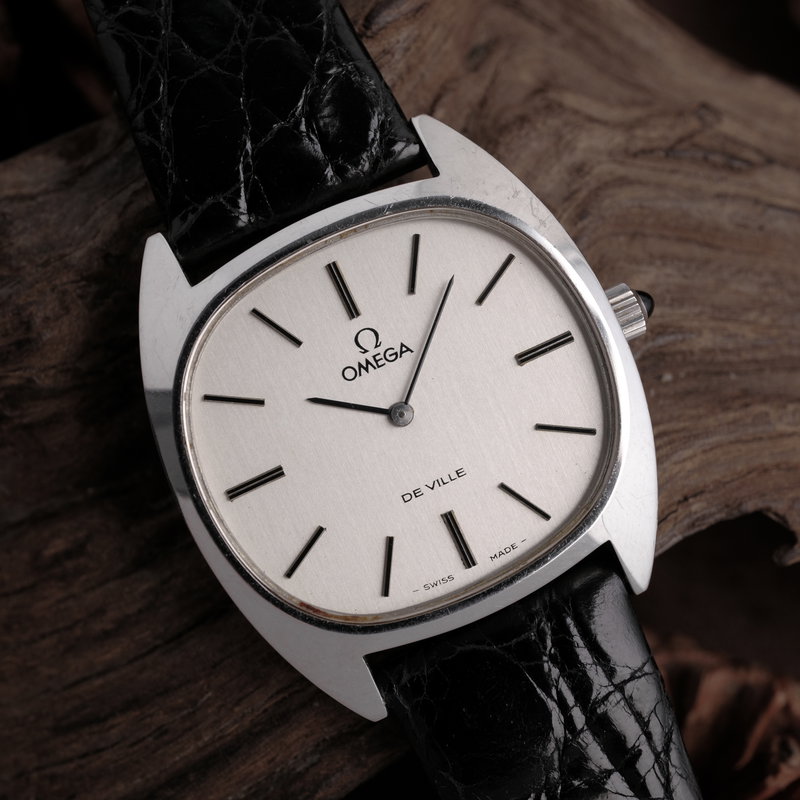
Omega · De Ville · 111.0132 · 1972
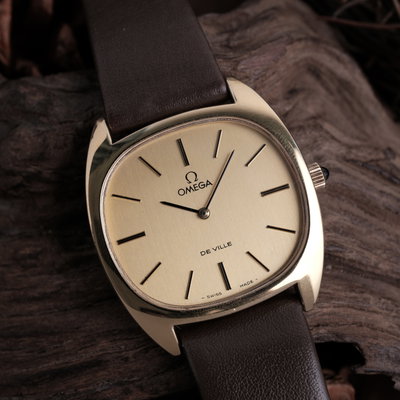
Omega · De Ville · 111.0132 · 1974
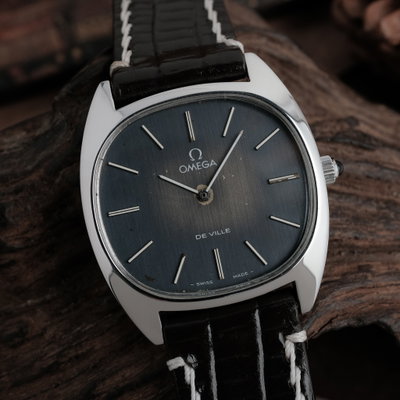
Omega · De Ville · 111.0132 · 1977
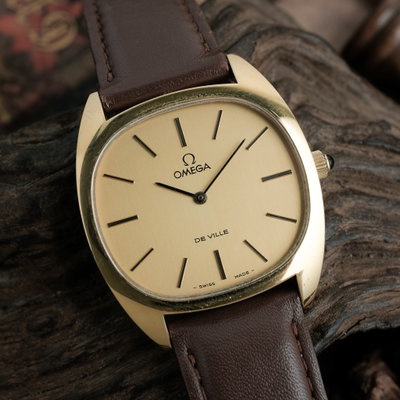
Omega · De Ville · 111.0132 · 1978
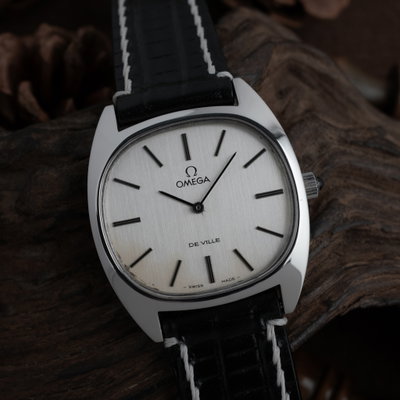
Omega · De Ville · 111.0132 · 1975
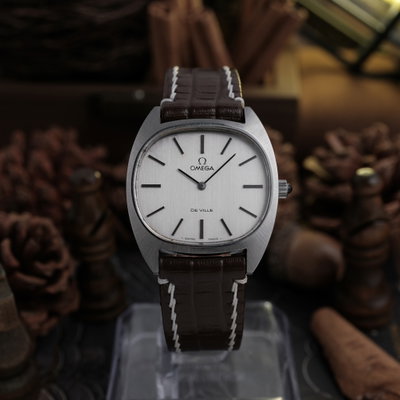
Omega · De Ville · 111.0132 · 1975
More Omega references
Related pages
Frequently asked questions
Ready to hunt for your own?
More than 100 vintage watches go under the hammer every week.