Omega Genève 136.0099: A 1972-1973 Manual-Wind Reference
Choose Omega Genève 136.0099 for its 35 mm proportions and caliber 1030, but put dial quality and intact 20-micron plating ahead of the stated year.
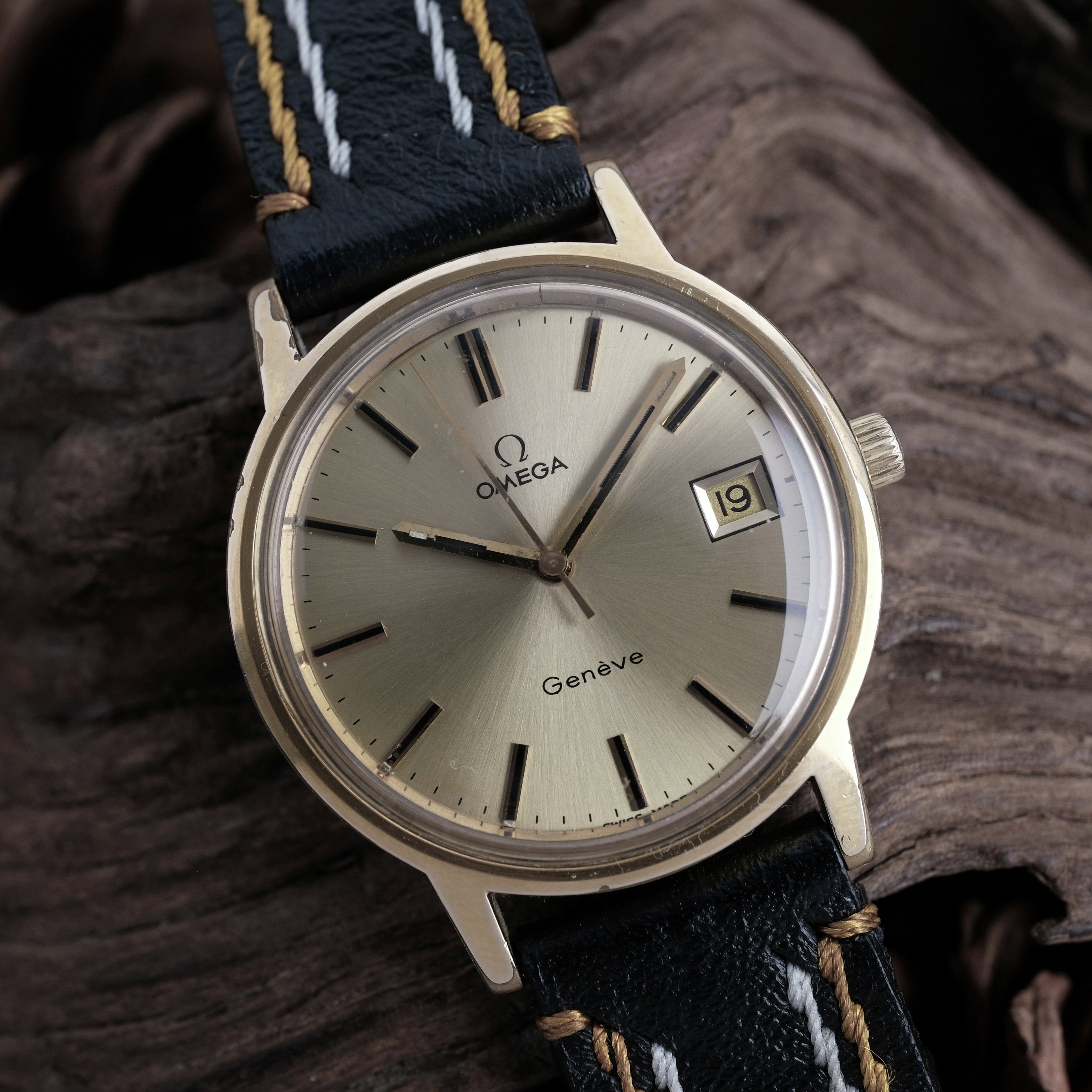
The vintage Omega Genève 136.0099 is a 35 mm manual-wind dress watch from 1972-1973, built around caliber 1030 and a silver sunburst dial. Its 20-micron gold-plated case has a stainless steel back, making surface condition central to the buying decision. Once plating wears through, ordinary servicing cannot return the original case surface without adding new material.
Among examples we have handled, the decisive split is not between the two production years. It is between lightly aged silver dials and dials covered by heavy coppery-brown speckling. The latter can be visually forceful, but it is not tropical: that term belongs to a black dial faded brown. Buy the dial you want to keep, because refinishing removes the surface on which much of this reference's value depends.
Known production years
1972-1973
Reference
136.0099
Movement
Omega caliber 1030
Winding
Manual winding
| Case diameter | 35 mm excluding the crown |
| Case finish | 20-micron gold plating |
| Caseback | Stainless steel |
| Dial | Silver sunburst |
| Hour markers | Applied faceted indices |
What it was built for
Reference 136.0099 puts a manually wound caliber 1030 inside a compact 35 mm case, with applied faceted indices over a silver sunburst finish. The thin visual profile comes from restrained dial furniture rather than a large case or heavy external hardware. It suits formal clothing, but its plain layout also works as a simple everyday watch when water resistance is not being assumed.
Daily use includes winding the movement by hand. That repeated interaction is intrinsic to caliber 1030, and it separates this Genève from an automatic watch before dial condition enters the comparison. The service history of any individual example remains unknown without supporting paperwork, so smooth winding and current timekeeping do not establish when movement work was last completed.
Where the value sits
The costliest fault is a refinished dial. Light spotting on the silver sunburst surface is easier to accept than incorrect printing or a newly applied finish, while heavy coppery-brown speckling should be priced as visible dial damage rather than promoted as tropical ageing. Applied faceted indices must remain part of the assessment because a flat repaint can change the character of the entire watch.
Case wear creates the next meaningful spread. The 20-micron gold layer can wear through at exposed edges and lugs, and polishing both thins that layer and softens the case outline. A stainless steel back is correct for the known configuration, but it does not compensate for lost plating. Between a cleaner case with a redial and a worn case with an honest silver dial, the honest dial is the stronger buy if the wear is plainly disclosed.
Dating and serials
Known production for Omega Genève 136.0099 spans 1972-1973. Omega serial guidance places the 33-million line around 1972 and the 35-million line around 1973, but the table is approximate by plus or minus one to three years. Examples in the 35-million range have been assigned across both years, so a serial supports a date window rather than proving a single calendar year.
Dating must agree with the rest of the watch. A claimed 1972 or 1973 example should still have reference 136.0099, caliber 1030, the 35 mm gold-plated case and stainless steel back established for this configuration. A plausible serial cannot rescue a married watch or a franken assembled from components that did not ship together.
Dating this watch
| Serial range / caliber | Year | Note |
|---|---|---|
| 1,000,000 | 1902 | approximate, ±1-3 years |
| 2,000,000 | 1908 | approximate, ±1-3 years |
| 3,000,000 | 1912 | approximate, ±1-3 years |
| 4,000,000 | 1916 | approximate, ±1-3 years |
| 5,000,000 | 1923 | approximate, ±1-3 years |
| 6,000,000 | 1925 | approximate, ±1-3 years |
| 7,000,000 | 1929 | approximate, ±1-3 years |
| 8,000,000 | 1935 | approximate, ±1-3 years |
| 9,000,000 | 1939 | approximate, ±1-3 years |
| 10,000,000 | 1944 | approximate, ±1-3 years |
| 11,000,000 | 1947 | approximate, ±1-3 years |
| 12,000,000 | 1950 | approximate, ±1-3 years |
| 13,000,000 | 1952 | approximate, ±1-3 years |
| 14,000,000 | 1954 | approximate, ±1-3 years |
| 15,000,000 | 1956 | approximate, ±1-3 years |
| 16,000,000 | 1958 | approximate, ±1-3 years |
| 17,000,000 | 1960 | approximate, ±1-3 years |
| 18,000,000 | 1961 | approximate, ±1-3 years |
| 19,000,000 | 1962 | approximate, ±1-3 years |
| 20,000,000 | 1963 | approximate, ±1-3 years |
| 21,000,000 | 1964 | approximate, ±1-3 years |
| 22,000,000 | 1965 | approximate, ±1-3 years |
| 24,000,000 | 1966 | approximate, ±1-3 years |
| 25,000,000 | 1967 | approximate, ±1-3 years |
| 26,000,000 | 1968 | approximate, ±1-3 years |
| 28,000,000 | 1969 | approximate, ±1-3 years |
| 31,000,000 | 1970 | approximate, ±1-3 years |
| 32,000,000 | 1971 | approximate, ±1-3 years |
| 33,000,000 | 1972 | approximate, ±1-3 years |
| 35,000,000 | 1973 | approximate, ±1-3 years |
| 37,000,000 | 1974 | approximate, ±1-3 years |
| 39,000,000 | 1975 | approximate, ±1-3 years |
| 40,000,000 | 1976 | approximate, ±1-3 years |
| 41,000,000 | 1977 | approximate, ±1-3 years |
| 42,000,000 | 1978 | approximate, ±1-3 years |
| 43,000,000 | 1979 | approximate, ±1-3 years |
| 44,000,000 | 1980 | approximate, ±1-3 years |
| 45,000,000 | 1982 | approximate, ±1-3 years |
| 46,000,000 | 1984 | approximate, ±1-3 years |
| 47,000,000 | 1985 | approximate, ±1-3 years |
| 48,000,000 | 1986 | approximate, ±1-3 years |
| 49,000,000 | 1988 | approximate, ±1-3 years |
| 50,000,000 | 1990 | approximate, ±1-3 years |
| 53,000,000 | 1993 | approximate, ±1-3 years |
| 54,000,000 | 1995 | approximate, ±1-3 years |
| 56,000,000 | 1996 | approximate, ±1-3 years |
| 58,000,000 | 1998 | approximate, ±1-3 years |
| 60,000,000 | 2000 | approximate, ±1-3 years |
Dating data comes from our decoder tables; treat years as approximate.
What to check before you buy
- Dial configuration: Handled examples pair a silver sunburst surface with applied faceted indices. A flat repaint, printed substitutes or newly sharp text against a heavily aged dial would conflict with that established configuration.
- Movement caliber: Reference 136.0099 should be paired with the manually wound Omega caliber 1030. The correct caliber alone does not prove the whole watch is coherent, but a different one contradicts the evidence available for this reference.
- Case construction: The known case is 35 mm excluding the crown, with 20-micron gold plating and a stainless steel back. A solid-gold claim or an all-steel case does not match the configuration established by handled examples.
- Serial consistency: Serial guidance should support the 1972-1973 window, allowing the stated plus or minus one to three years. A plausible serial is supporting evidence only and cannot authenticate an incorrect dial, case or movement.
- Redial and franken risk: A refinished silver dial can look cleaner than the case, while a caliber 1030 can be installed in a watch assembled from unrelated parts. Dial ageing, case construction, reference and movement must therefore agree as a set.
Other 136.0099 examples we auctioned
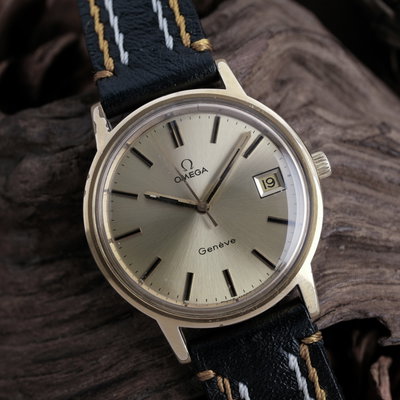
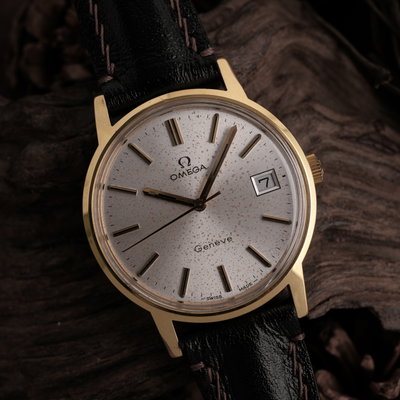
More Omega references
Related pages
Frequently asked questions
Ready to hunt for your own?
More than 100 vintage watches go under the hammer every week.