Vintage Seiko 14036 Crown Reference Guide
The Seiko 14036 is a compact manual-wind dress watch whose dial quality, case metal and correct Seikosha movement determine the example to buy.
We auction more than 100 vintage watches a week.
Get first access: new Seiko 14036 drops and alerts before auctions end.
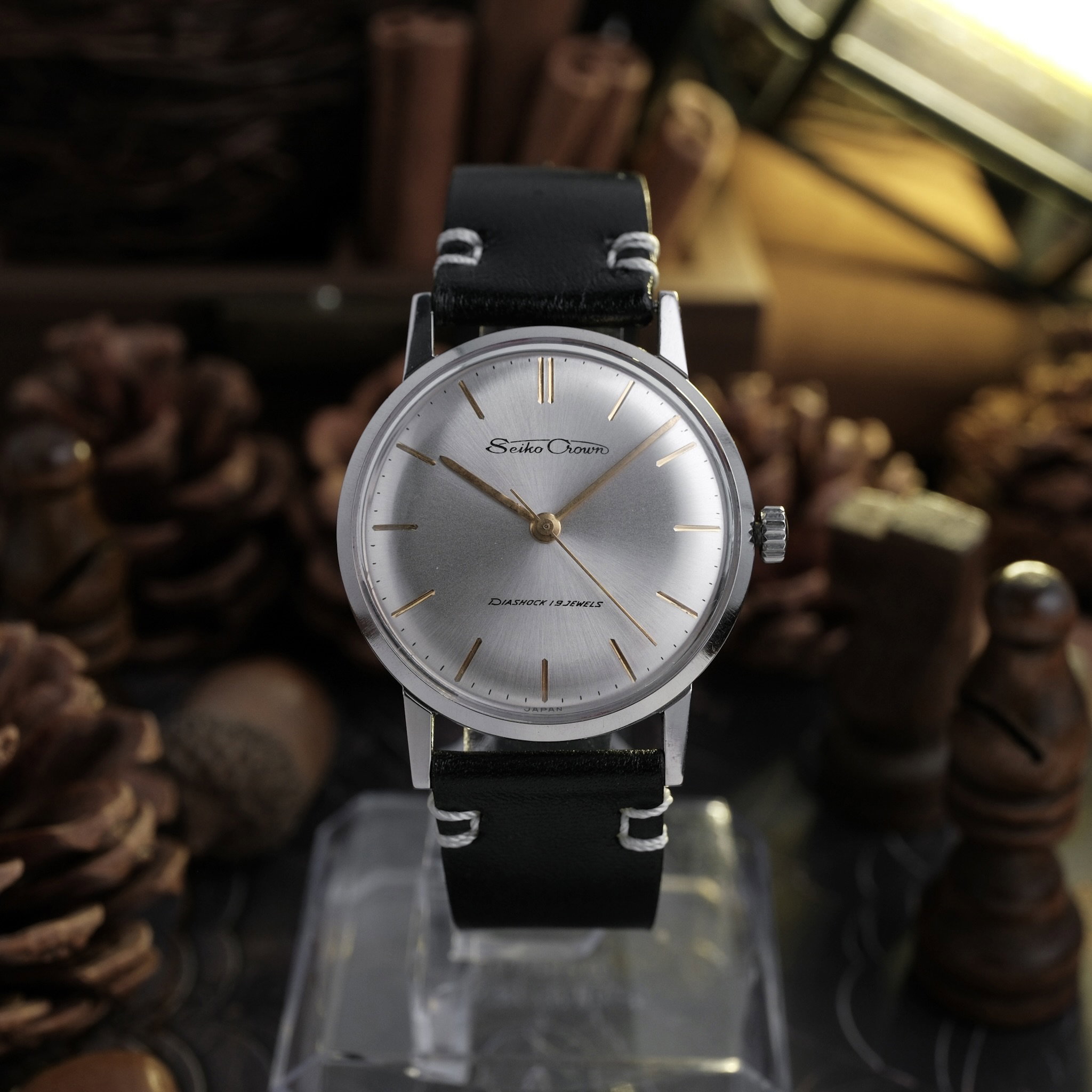
Browse 27 live Seiko auctionsThe Seiko 14036 is a compact manual-wind dress watch from 1959-1969, built around a silver sunburst dial and sharp gold-tone furniture. Crown is the clearest model name for the reference, although Cronos and Crown Diashock also occur on watches associated with 14036. That naming variation matters because the dial, movement and case must still make sense together.
Steel examples measure 33 mm without the crown, while a gold-tone example measures 34 mm. Both wear as restrained period dress watches rather than modern all-purpose watches. Among the vintage Seiko 14036 watches we have handled, the strongest examples combine an undisturbed sunburst finish, crisp script, faceted applied indices and a Seikosha manual-wind movement without using surface shine to disguise case wear.
Reference
14036
Known production years
1959-1969
Model names seen
Crown, Cronos, Crown Diashock
Case sizes observed
33 mm and 34 mm, excluding the crown
| Case materials observed | Stainless steel and gold-tone |
| Movement type | Manual-wind Seikosha |
| Caliber observed | 560 |
| Jewel counts observed | 19 and 21 |
| Dial configuration | Silver sunburst with applied gold-tone faceted indices |
| Hand style | Gold-tone dauphine hands |
The model landscape
Reference 14036 spans more than one visible configuration. A 1959 steel watch can carry Cronos on its dial, while later examples are identified as Crown and may include Diashock script. Silver sunburst dials, gold-tone applied faceted indices and dauphine hands provide the common visual language. The name alone cannot authenticate the watch because the evidence supports several legitimate dial signatures.
Movement specifications also vary. Seikosha manual-wind movements with 19 and 21 jewels occur, and caliber 560 is present in Crown examples from the 1960s. That variation makes a confident blanket specification unsafe. The value sits first in an undisturbed dial, then in a coherent movement and case combination. A refinished dial costs more in lost appeal than light case wear, and a cleaner case cannot compensate for altered printing.
On the wrist
At 33 mm in stainless steel, the 14036 sits discreetly and leaves the dial furniture to carry the design. The 34 mm gold-tone case has slightly more presence, but plating condition matters more than the extra millimetre. Both versions suit a cuff because the visual emphasis is a slim manual-wind dress-watch profile rather than a broad case.
Legibility comes from dark dial printing, faceted gold-tone indices and dauphine hands against the silver sunburst surface. Oxidation on the hands can reduce that contrast, especially when spotting becomes visible away from magnification. The hand-wound movement also changes ownership: the crown is used regularly, so a damaged, replaced or poorly fitting crown is more consequential here than on a watch wound automatically.
What goes wrong
A redial is the most expensive mistake. The sunburst finish may be flattened, Crown, Cronos or Diashock text may be reapplied, and replacement hands may be made to look coherent with bright indices. Cases create separate risks: polishing softens the lugs, gold-tone surfaces can wear through, and repeated opening can leave damage around the caseback. None of those faults is patina.
Movement mixing is the other concern. A Seikosha manual-wind movement belongs in the reference, but the surviving evidence includes both jewel counts and does not establish that every dial signature shipped with one exclusive movement specification. Without documentation, we prefer not to speculate beyond the watch itself. Between a sharp steel case with an honest dial and a brighter gold-tone case with plating loss or refinished print, take the steel watch.
What to check before you buy
- Dial print and finish: A correct candidate can carry Crown, Cronos or Crown Diashock naming, but the silver sunburst finish and script must age coherently. Flat refinishing, freshly reapplied text or uneven tracks indicate a redial rather than honest ageing.
- Hands and indices: Known examples pair applied gold-tone faceted indices with gold-tone dauphine hands. Bright replacement hands beside aged indices, incompatible oxidation or an obvious difference in finish can indicate swapped parts or a franken assembly.
- Case dimensions and metal: Handled configurations include 33 mm stainless-steel cases and a 34 mm gold-tone case, both measured without the crown. A size or material outside those observations is not automatically false, but the available evidence cannot authenticate it.
- Crown: A signed crown survives on a 1959 Cronos example, but the evidence does not prove one crown design for every 14036. Because the watch is manually wound, inspect for poor fit, heavy wear or a replacement that conflicts with the case.
- Movement specification: The movement should be manual-wind and signed Seikosha. Caliber 560 is known in 1960s Crown examples, while both 19 and 21 jewel versions occur, so rejecting a watch solely because of either recorded jewel count would be unsound.
- Caseback limits: The available evidence does not establish one exact caseback layout for every 14036, so caseback typography alone cannot settle the watch. Damage around the opening edge can establish repeated access, but not whether the movement and case were born together.
- Redial and franken tells: Crown, Cronos and Crown Diashock are known names, but that does not make every mixture correct. A franken watch may combine legitimate Seiko parts that never shipped together, so dial ageing, hand finish, case metal and movement must agree.
Other 14036 examples we auctioned
12 Seiko 14036 auctioned
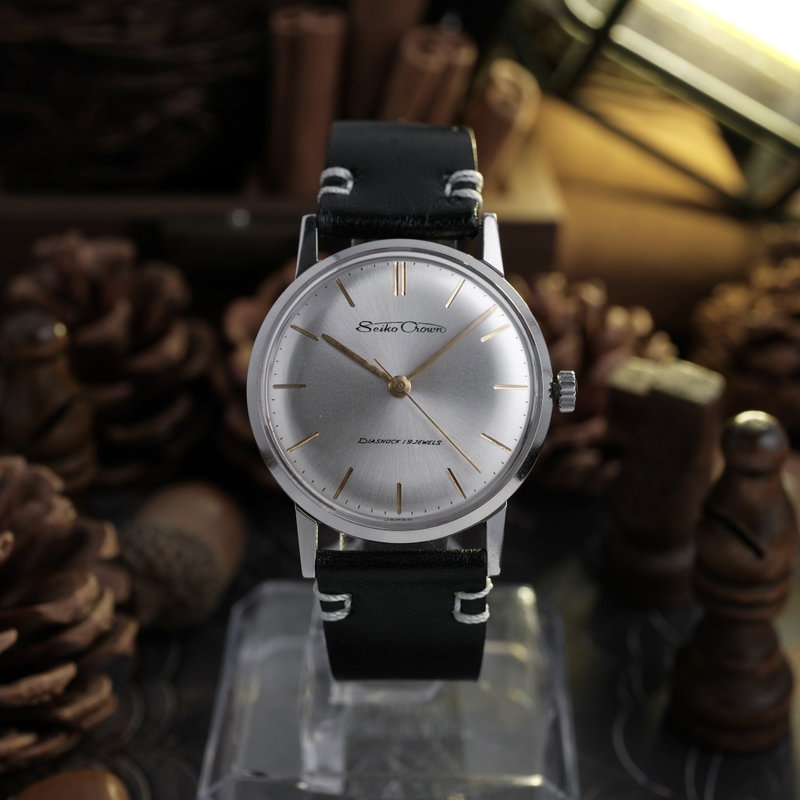
Seiko · Crown · 14036
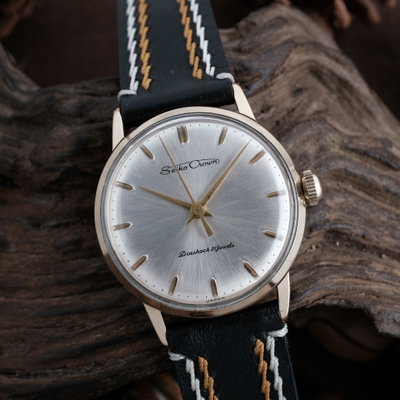
Seiko · Crown · 14036
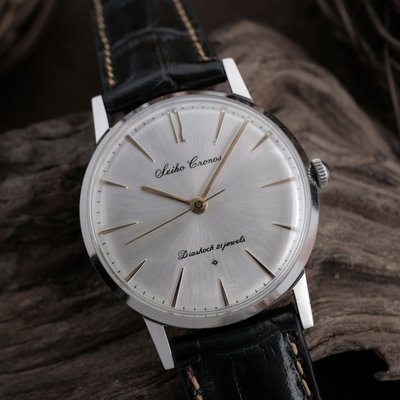
Seiko · Cronos · 14036 · 1959
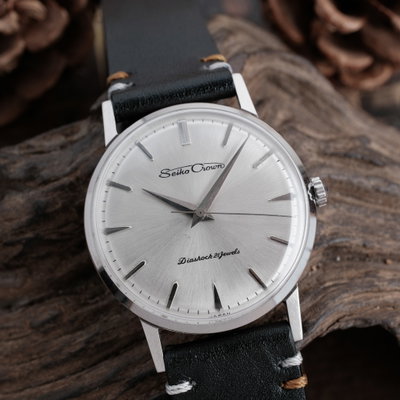
Seiko · Crown · 14036
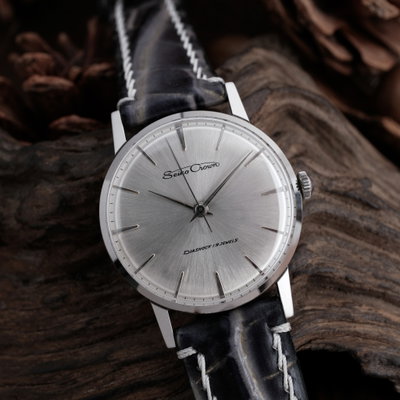
Seiko · Crown Diashock · 14036 · 1959
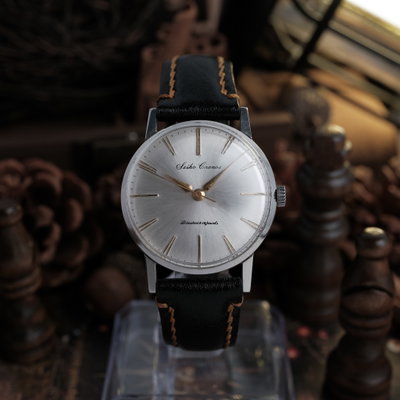
Seiko · Cronos · 14036 · 1959
More Seiko references
Related pages
Frequently asked questions
Ready to hunt for your own?
More than 100 vintage watches go under the hammer every week.