Seiko Cronos 15001A: dial, case variants and buying advice
Buy the Seiko Cronos 15001A for its silver sunburst dial and manual-wind simplicity, with steel the safer choice over worn gold-filled cases.
We auction more than 100 vintage watches a week.
Get first access: new Seiko 15001A drops and alerts before auctions end.
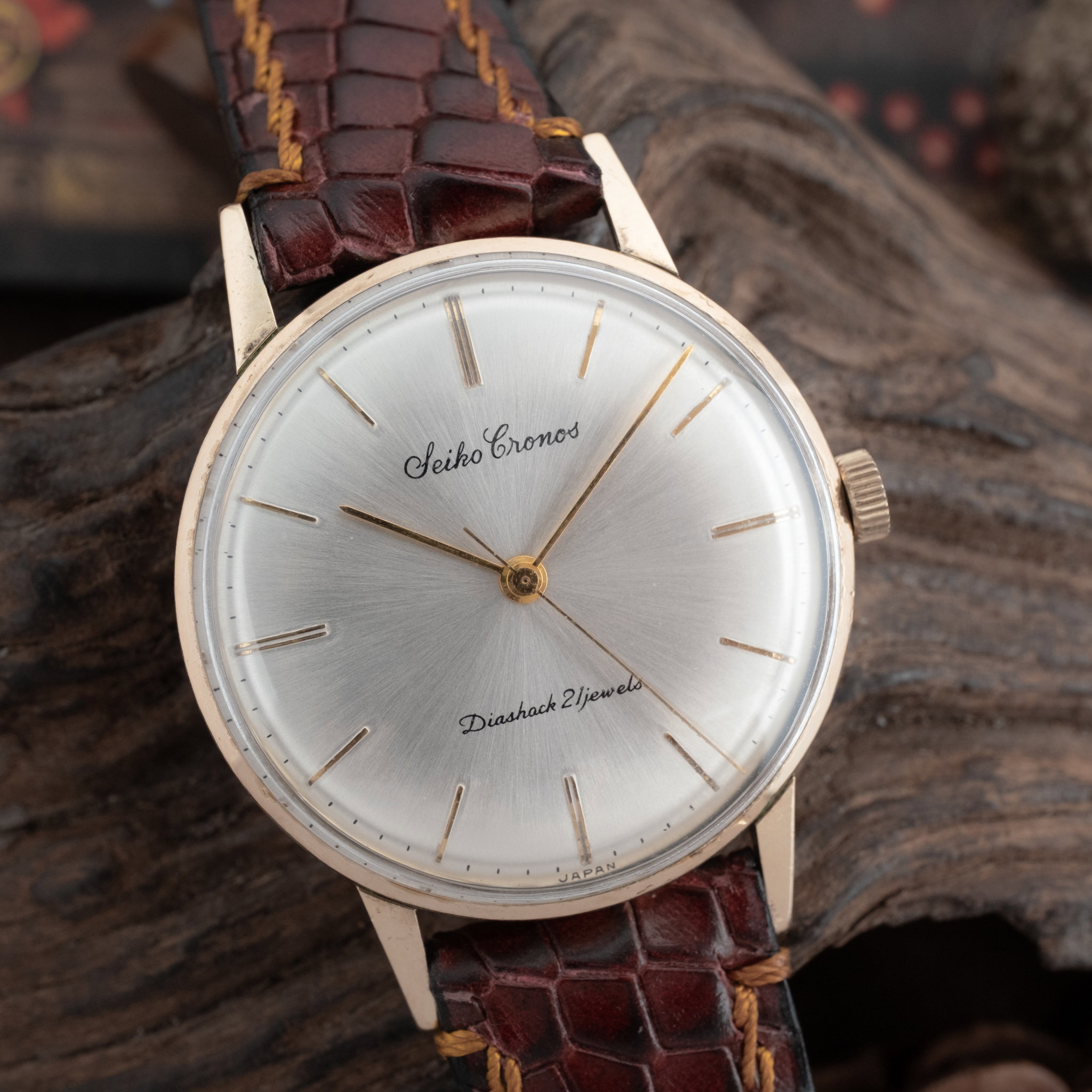
Browse 22 live Seiko auctionsThe vintage Seiko Cronos 15001A is an early manual-wind dress watch whose value sits disproportionately in its silver sunburst dial. Examples handled by Second Vintage establish a production span from 1959 through 1961, with both stainless-steel cases and 14K gold-filled fronts with stainless-steel backs.
At 35 mm excluding the crown, the Cronos retains the restrained proportions expected of its period without reducing the dial to a minor detail. A used Seiko Cronos 15001A should be chosen first for an honest dial, then for sharp lug geometry and a case material that matches the back. A refinished sunburst dial is a larger compromise than light, evenly distributed case wear.
Reference
15001A
Known production years
1959-1961
Case diameter
35 mm excluding the crown
Case materials
Stainless steel, or 14K gold-filled front with stainless-steel back
| Movement | Manual-wind Seikosha |
| Jewel count | 21 jewels |
| Dial | Silver sunburst with applied gold-tone faceted indices |
| Hands | Gold-tone dauphine hands |
What it was built for
The Cronos 15001A was built as a manually wound dress watch, with a silver sunburst dial, applied gold-tone faceted indices and gold-tone dauphine hands. The design relies on reflected light rather than luminous furniture or a rotating bezel for legibility. Its 35 mm case excludes the crown, keeping the watch visually restrained beside later sports watches.
The Seikosha movement is manual wind and marked for 21 jewels, so there is no automatic rotor behind the winding experience. That specification matters when assessing a loose movement or a watch assembled from incompatible parts. No water-resistance rating is established by the evidence available, and the service history of any individual example remains unknown without documentation.
Where the value sits
The silver sunburst dial carries the largest share of the 15001A's value. Known examples combine applied gold-tone indices with printed Seiko Cronos, Diashock 21 jewels and JAPAN text, while the dauphine hands complete the same gold-tone scheme. Spotting, abrasion or a redial matters more than light case marks because the original surface and printing cannot be recovered by routine servicing.
Case material creates the second important divide. Stainless steel avoids the irreversible wear-through that can expose the base beneath a 14K gold-filled front, while the gold-filled version adds a warmer contrast against the silver dial. Neither construction excuses soft lugs: polishing removes the sharp profile, and repeated work leaves the case visibly rounded.
Where to start
Between an honest stainless-steel 15001A and a gold-filled example with wear at the lug edges, take the steel watch when the dials are equal. The gold-filled version deserves consideration only when its surface remains continuous and its stainless-steel back belongs coherently with the case front. Dial quality still overrides material, so a clean gold-filled watch is preferable to a steel example with refinished printing.
Lead with the worst fault when judging a candidate. A redial, broad spotting or heavy hand oxidation changes the watch more than a scratched crystal, while softened lugs and gold-layer loss cannot be returned by servicing. Replacement crowns are consumable parts rather than proof of a franken watch, but the exact factory crown geometry is not established here, so without documentation we prefer not to speculate.
What to check before you buy
- Dial configuration: Known 15001A dials combine a silver sunburst surface with applied gold-tone faceted indices and Seiko Cronos, Diashock 21 jewels and JAPAN printing. Uneven or freshly applied text can indicate a redial.
- Hands and dial agreement: Gold-tone dauphine hands agree with the applied gold-tone furniture on known examples. Heavy oxidation, mismatched finishes or an undocumented relume should be treated as evidence requiring a parts-level explanation.
- Case construction: Both stainless steel and a 14K gold-filled front with stainless-steel back are established for 15001A. Gold-layer loss at the lugs is damage, while rounded lug profiles indicate polishing rather than honest sharpness.
- Movement specification: The established movement is a manually wound Seikosha marked for 21 jewels. An automatic movement or a different jewel marking conflicts with the known specification and raises the possibility of a franken or married watch.
- Crown limitation: The exact factory crown geometry is not established by the available evidence. A replacement crown is possible on a watch of this period, so the crown alone cannot support an unqualified originality claim.
Other 15001A examples we auctioned
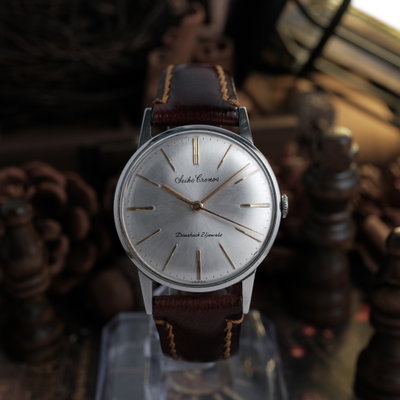
5 Seiko 15001A auctioned

More Seiko references
Related pages
Frequently asked questions
Ready to hunt for your own?
More than 100 vintage watches go under the hammer every week.