Seiko Seikomatic-P 5106-8020: What to Know Before Buying
The Seiko Seikomatic-P 5106-8020 is a late-1960s automatic best bought with an honest silver sunburst dial and a functioning crown-operated date quickset.
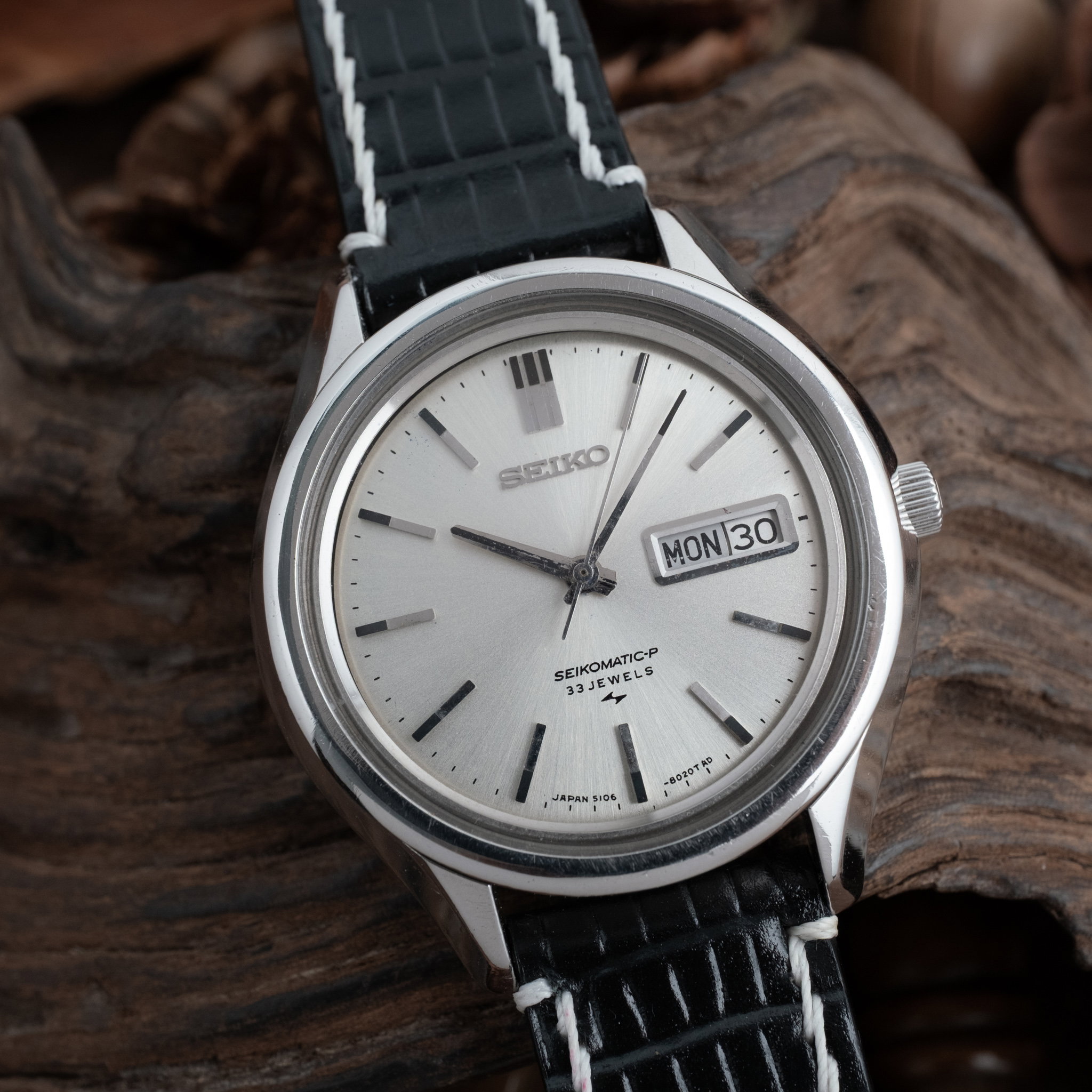
The Seikomatic-P 5106-8020 belongs to 1967-1969 and pairs an automatic caliber 5106A with a day-date display and crown-operated date quickset. Its 38-39 mm case gives it more wrist presence than its restrained silver sunburst dial suggests. The defining ownership detail is practical rather than decorative: pressing the crown advances the date without repeatedly cycling the hands.
Steel and gold-plated cases both belong to the reference. At equal dial quality, the steel version is the safer buy because worn plating cannot be returned by routine service. The dial still comes first. Among the vintage Seiko examples we have handled, a refinished silver sunburst dial costs more in lost value than ordinary case wear, a scratched crystal or an unknown service history.
Reference
5106-8020
Model
Seikomatic-P
Known production years
1967-1969
Movement
Automatic Seiko caliber 5106A
| Jewel count | 33 jewels |
| Case size | 38-39 mm excluding the crown |
| Case materials | Stainless steel or gold plated (SGP), including examples with a stainless-steel back |
| Dial | Silver sunburst |
| Calendar | Day and date with crown-operated push-button date quickset |
The model landscape
The reference runs from 1967 through 1969, with stainless-steel and gold-plated cases measuring 38-39 mm without the crown. Some plated examples pair the gold exterior with a stainless-steel back. Both versions use the Seikomatic-P name, silver sunburst dial and day-date layout, so plating alone is not evidence of a franken watch.
Caliber 5106A is the correct automatic movement, and the known specification is 33 jewels. The crown-operated quickset separates this reference from an ordinary day-date dress watch in daily use. At equal dial and movement condition, steel deserves the premium over gold plate because edge and lug wear expose the underlying metal permanently. A plated watch with the better original dial still outranks a steel example with a redial.
On the wrist
At 38-39 mm excluding the crown, the 5106-8020 has a broad footprint and does not disappear like a smaller dress watch. The silver sunburst finish changes with the light, while the day-date display adds useful visual weight to the dial. Exact thickness is not established by the available evidence, so cuff clearance should not be claimed from diameter alone.
The push-button date quickset makes ownership easier when the watch has stopped for several days. It should operate cleanly through the crown, but resistance is a reason to stop rather than force it. The service history of any individual used Seiko Seikomatic-P remains unknown without documentation, even when the movement is running and the calendar changes correctly.
What goes wrong
A redial is the costliest fault because the silver sunburst surface and printed furniture carry most of the reference's value. Gold plating also wears through, especially around exposed edges and lugs, and no ordinary service replaces that lost surface. Scratched crystals can obscure an otherwise sound dial, while repeated polishing softens case lines and reduces the distinction between the upper surfaces and flanks.
The quickset mechanism adds another functional check: a crown that will not advance the date may be incorrect or may signal a calendar fault. A replacement crown can be period-correct without being original, and a genuine service dial is not the same thing as a redial. Between a plated 5106-8020 with an honest dial and a steel watch with refinished printing, take the plated watch and accept the visible wear.
Dating this watch
| Serial range / caliber | Year | Note |
|---|---|---|
| 5106 | 1968-1971 | caliber production window |
Dating data comes from our decoder tables; treat years as approximate.
What to check before you buy
- Dial surface and print: The 5106-8020 has a silver sunburst day-date dial. Flat paint, disturbed printing or furniture inconsistent with the sunburst surface points toward a redial, while a service dial is a genuine factory replacement and must be described separately.
- Movement identity: The movement should be the automatic Seiko caliber 5106A with 33 jewels. Another caliber inside the 5106-8020 case creates a franken or married-watch concern; the available evidence does not establish a finishing pattern beyond that identity.
- Crown and calendar: The crown should operate the push-button date quickset associated with the Seikomatic-P. Failure to advance the date is not proof of a fake, but it can identify an incorrect crown, a calendar fault or an incomplete parts combination.
- Case and caseback pairing: The case must correspond to reference 5106-8020, with either stainless-steel or gold-plated construction accepted for the reference. A plated case with a stainless-steel back can be correct and should not be rejected on that fact alone.
- Case wear and reshaping: Gold-plated examples need scrutiny for exposed base metal at the lugs and edges. On either material, soft transitions and rounded case lines indicate polishing; that loss is permanent even when the movement and dial remain correct.
- Hands and dial coherence: The hands must form a coherent period-correct set with the applied dial furniture and case tone. The available evidence does not establish every hand variant, so unsupported claims of original hands should stop at visible consistency rather than certainty.
Other 5106-8020 examples we auctioned
More Seiko references
Related pages
Frequently asked questions
Ready to hunt for your own?
More than 100 vintage watches go under the hammer every week.