How old is my Seiko watch?
Match the identified Seiko caliber to its production window; that can rule out false dates, but an exact year needs dated documentation.
Your Seiko is no older or younger than the production window of its identified caliber allows. A 6139 belongs within 1969-1979, so an earlier claim conflicts with the movement, while a date inside that span still needs documentation.
Seiko watches from 1955 through 2006 have passed through our hands, including Lord Matic, Crown, Seikomatic and King Seiko families. That breadth makes one buying rule especially useful: reject a seller's date when it falls outside the caliber window, and do not pay an exact-year premium when the watch establishes only a range.
From our Seiko archive
Other Seiko watches we have handled — shown for context; they are not the exact model on this page.
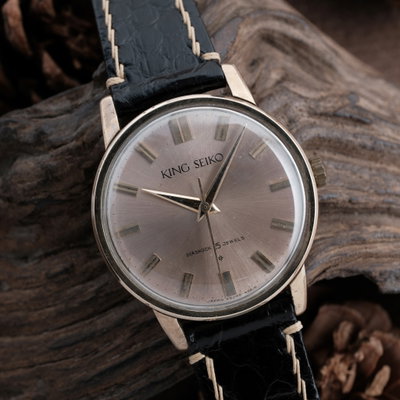
Seiko · King Seiko · J14102E · 1962
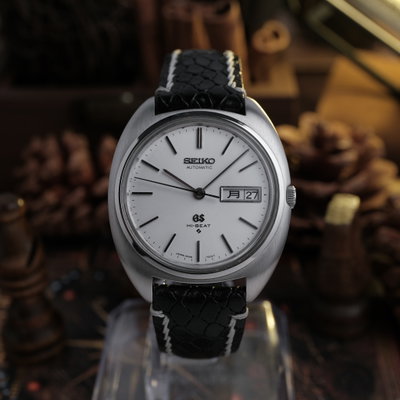
Seiko · Grand Seiko 56GS · 5646-7000 · 1970
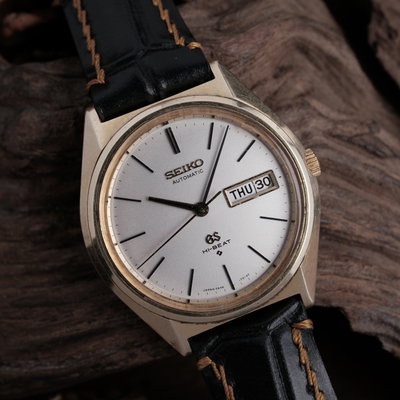
Seiko · Grand Seiko · 5646-7010 · 1971
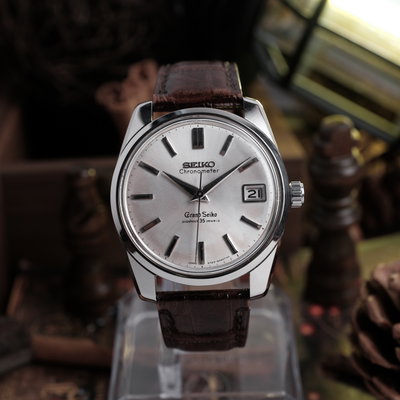
Seiko · Grand Seiko · 5722-9990 · 1965
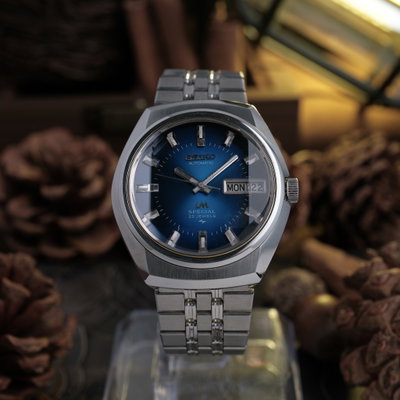
Seiko · Lord Matic Special · 5216-6020 · 1974
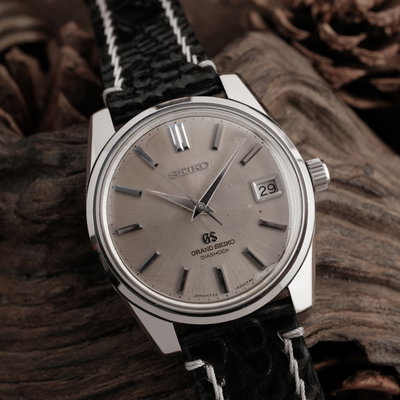
Seiko · Grand Seiko · 175.0084 · 1967
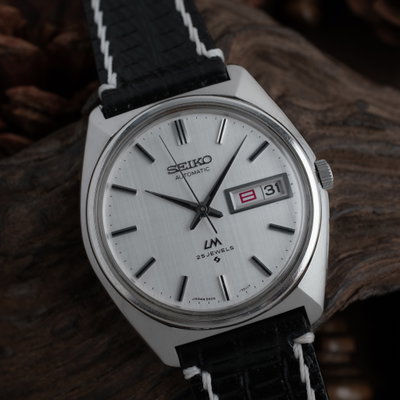
Seiko · Lord Matic · 5606-7000 · 1969
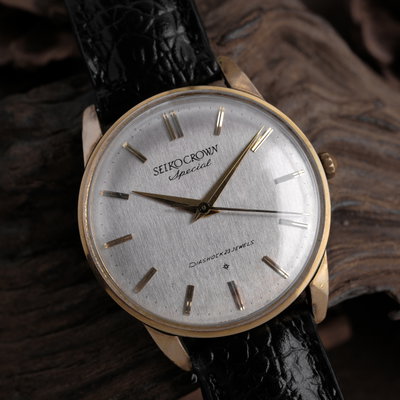
Seiko · Crown Special · J14100 · 1962
The answer in depth
The caliber is the first useful limit on age because its production window can disprove a listing date. Caliber 6309 was produced from 1976-1988. A watch described as earlier than that has a factual conflict, and the conflict must be resolved before the date can carry any weight.
The movement cannot prove that the surrounding watch left the factory with it. A replacement movement may fit and run correctly while making the watch married or franken, so the dial, case and family designation still need to agree with the claimed configuration. If that relationship is undocumented, the defensible conclusion is the caliber window rather than a precise birthday.
An exact year should affect the premium only when dated documentation supports it and the watch itself presents no contradiction. Without that support, a precise date is seller attribution. The seller's value then lies in describing the uncertainty plainly, identifying replaced parts and answering a caliber mismatch without evasion.
What our archive shows
Some Seiko caliber windows are broad enough to settle only the era. Caliber 4006 runs from 1966-1978, leaving too much room for an exact-year claim based on the movement alone. Its practical use is exclusion: a date beyond either endpoint is incompatible with that caliber's production.
Other windows narrow the purchase decision materially. Caliber 4520 runs from 1968-1972, so the movement confines the watch to a much shorter period. Even there, assigning one particular year requires evidence beyond the production span.
Quartz and mechanical calibers must be matched to their own rows rather than grouped by styling. Caliber 7548 runs from 1978-1985. A dial that looks older or newer cannot overturn that movement window, though a swapped movement can reveal that the watch is assembled from parts that did not originally ship together.
Dating and serials
Read each row only as the period in which that caliber was produced. No serial chronology is established by these entries, and combining a caliber with a family name does not justify narrowing its dates beyond the stated endpoints.
Take caliber 5606 as a complete example. Its production window is 1968-1976, so a seller's date inside that period is compatible with the movement and a date beyond it is not. Compatibility is the first hurdle, not proof of one year.
The service history is unknown unless records accompany the watch. A caliber-correct replacement movement may preserve period fit while breaking the original relationship between case and movement, which changes what the date means and what premium the watch deserves.
Dating this watch
| Serial range / caliber | Year | Note |
|---|---|---|
| 4006 | 1966-1978 | caliber production window |
| 4500 | 1968-1973 | caliber production window |
| 4502 | 1968-1973 | caliber production window |
| 4520 | 1968-1972 | caliber production window |
| 4522 | 1968-1972 | caliber production window |
| 5106 | 1968-1971 | caliber production window |
| 5126 | 1968-1971 | caliber production window |
| 5605 | 1968-1975 | caliber production window |
| 5606 | 1968-1976 | caliber production window |
| 5621 | 1968-1975 | caliber production window |
| 5625 | 1968-1975 | caliber production window |
| 5626 | 1968-1975 | caliber production window |
| 6105 | 1968-1977 | caliber production window |
| 6106 | 1968-1976 | caliber production window |
| 6117 | 1968-1976 | caliber production window |
| 6119 | 1966-1977 | caliber production window |
| 6138 | 1970-1979 | caliber production window |
| 6139 | 1969-1979 | caliber production window |
| 6145 | 1967-1975 | caliber production window |
| 6146 | 1967-1975 | caliber production window |
| 6206 | 1963-1968 | caliber production window |
| 6216 | 1965-1968 | caliber production window |
| 6217 | 1964-1969 | caliber production window |
| 6306 | 1976-1981 | caliber production window |
| 6309 | 1976-1988 | caliber production window |
| 6602 | 1961-1968 | caliber production window |
| 6619 | 1963-1968 | caliber production window |
| 7005 | 1969-1977 | caliber production window |
| 7006 | 1969-1977 | caliber production window |
| 7009 | 1976-1988 | caliber production window |
| 7016 | 1971-1977 | caliber production window |
| 7548 | 1978-1985 | caliber production window |
| 8306 | 1963-1968 | caliber production window |
Dating data comes from our decoder tables; treat years as approximate.
What to check before you buy
- Caliber and claimed date: Match the identified caliber only to its listed production window. A claimed date beyond either endpoint is incompatible unless the caliber identification is wrong.
- Movement and watch identity: A caliber-correct movement does not prove that the case, dial and movement left the factory together. A replacement may be period-correct while making the watch married or franken.
- Exact-year attribution: Treat one precise production year as unsupported unless dated documentation accompanies the watch and no component conflicts with it. The caliber window alone establishes only endpoints.
Related pages
Frequently asked questions
Ready to hunt for your own?
More than 100 vintage watches go under the hammer every week.