Vintage Seiko Advan: Dials, Cases and the Versions to Buy
Buy a vintage Seiko Advan for its dial and case geometry, favouring a sharp steel example with an honest two-tone dial over a brighter redial.
We auction more than 100 vintage watches a week.
Get first access: new Seiko watch drops and alerts before auctions end.
Browse 18 live Seiko auctionsThe Advan belongs to Seiko's early-1970s experiment with watches aimed at a younger, fashion-led buyer. Bold case geometry, two-tone colour and faceted crystals define the model, while references such as 7019-7150 and 7019-7220 show how far the design could move without leaving the same family.
The buying decision is visual before it is mechanical. A clean factory dial and a sharp case matter more than surface shine, because polishing cannot restore lost geometry and a redial removes the character that makes a vintage Seiko Advan worth owning. Examples handled from 1972 to 1974 span 36 mm to 38 mm, giving the model presence without modern bulk.
Model
Seiko Advan
Known production years
1972-1974
Handled case sizes
36 mm, 37 mm and 38 mm
Case material
Stainless steel, with a gold-tone bezel on 7019-7310
| Confirmed automatic calibers | 7019 and 7019A |
| Confirmed jewel count | 21 jewels on handled 7019 and 7019A examples |
| Dial formats | Two-tone sunburst, matte, brushed and vertical-gradient designs |
| Crystal style | Faceted crystal |
| Highlighted references | 7019-7150, 7019-7220, 7019-7310 and 7019-7170 |
What it was built for
The Advan was built for Seiko's youthful, fashion-forward market in the early 1970s, not as a conservative office watch. Two-tone dials, segmented chapter rings and asymmetric or sweeping cases gave it a more experimental role than a conventional round automatic. The faceted crystal is part of that design: it breaks up reflections and changes the dial as the wrist moves.
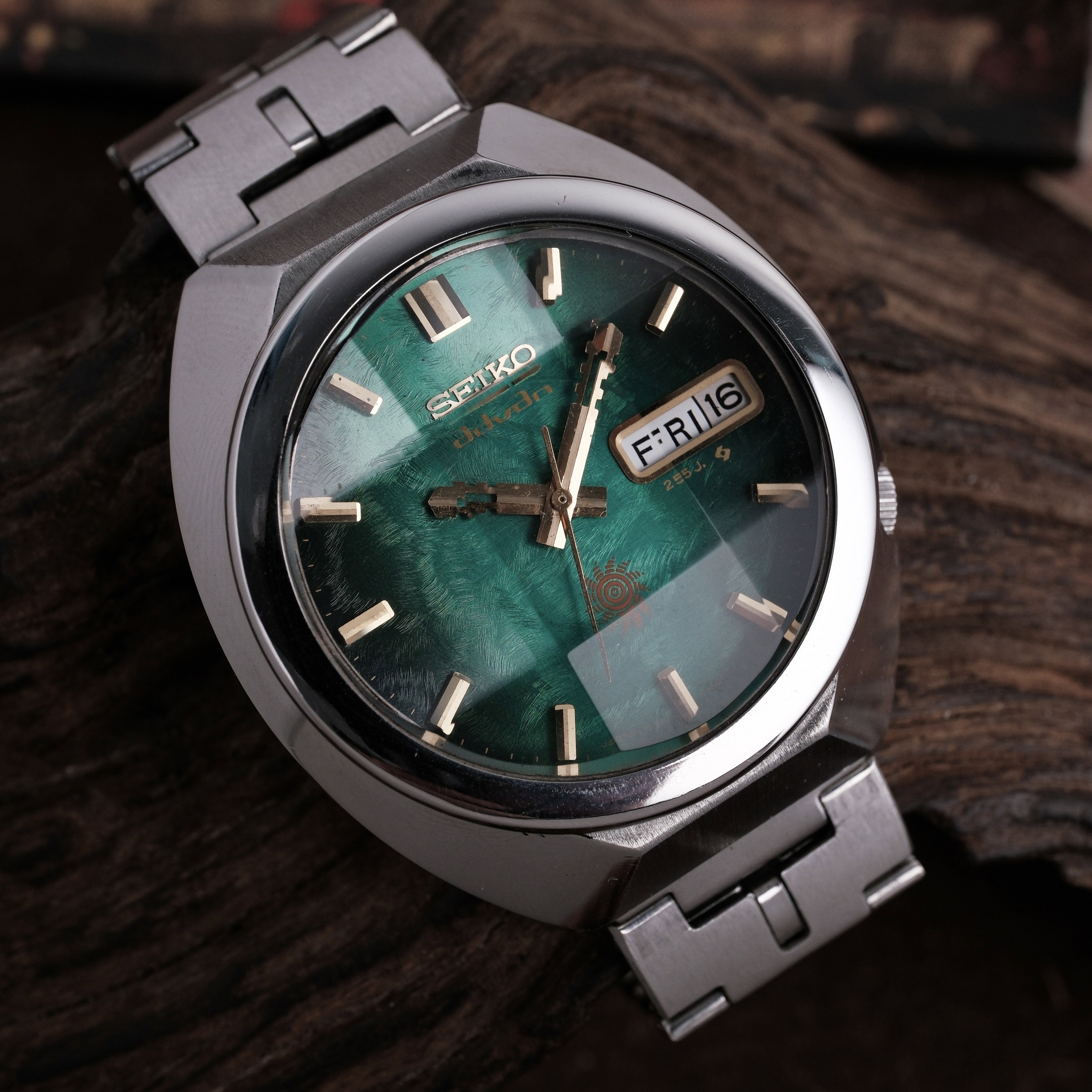
That effect varies materially by reference. The 7019-7310 pairs an emerald vertical-gradient dial with a gold-tone bezel, while the 7019-7170 uses a deep blue centre and a brushed silver outer track. These are not minor colour substitutions. Each combination changes the balance of the watch, so the dial layout should drive the purchase before the reference number does.
Where the value sits
Most of the value sits in the dial, crystal and surviving case lines. A refinished dial costs more in desirability than ordinary case wear, particularly where the original design depends on abrupt colour boundaries, sunburst texture or intact applied furniture. Between a polished bright example and a sharp case with light wear, take the sharper case.
Original signed bracelets add coherence, but they should not excuse oxidation, dial spotting or softened lugs. The premium belongs to watches where the crystal still delivers the intended light play and the factory printing remains intact. A genuine service component can be period-correct without being original to the watch, while a franken Advan combines parts that never shipped together. Those distinctions should remain explicit.
Where to start
The clearest entry point is a steel 7019-series Advan with a two-tone dial, automatic caliber 7019 or 7019A, and legible factory printing. The 7019-7220 gives the idea in concentrated form through its green sunburst centre and matte blue outer section. The 7019-7150 is another useful benchmark, but surviving dials range from clean charcoal-and-blue examples to pieces with spotting and oxidation.
Size should settle the final choice. A 36 mm 7019-7310 wears more compactly and lets its gold-tone bezel carry the visual weight, while 38 mm examples such as the 7019-7170 put more dial and case architecture on the wrist. For the same condition, choose the layout that remains readable at a glance rather than the loudest colour. The service history is unknown unless documentation establishes it.
Dating this watch
| Serial range / caliber | Year | Note |
|---|---|---|
| 5606 | 1968-1976 | caliber production window |
| 6106 | 1968-1976 | caliber production window |
Dating data comes from our decoder tables; treat years as approximate.
What to check before you buy
- Dial construction and print: Two-tone sections should retain distinct surface treatments and clean boundaries, with printing sitting naturally above the finish. Paint across applied furniture, lost texture or uniformly renewed colour points to a redial rather than honest ageing.
- Hands and applied furniture: The hands, indices and dial furniture should share a coherent design and degree of ageing. Bright replacement hands against oxidised indices do not prove a franken watch alone, but the mismatch requires a clear service explanation.
- Case geometry: Advan cases rely on pronounced sweeping lines and facets. Rounded transitions, mushy edges or an uneven bezel indicate polishing, while sharp changes of plane support better preservation without justifying an unpolished claim.
- Faceted crystal profile: The crystal should preserve distinct facets that create the Advan's shifting reflections. A smooth substitute, heavily softened facet junctions or poor seating at the case edge changes the intended profile and may indicate an incorrect replacement.
- Movement and reference coherence: A 7019-series example should be assessed against handled watches using automatic caliber 7019 or 7019A. A movement from another watch can create a married example, and matching age alone does not establish that the case and movement left the factory together.
Recent Seiko results
52 Seiko watches auctioned
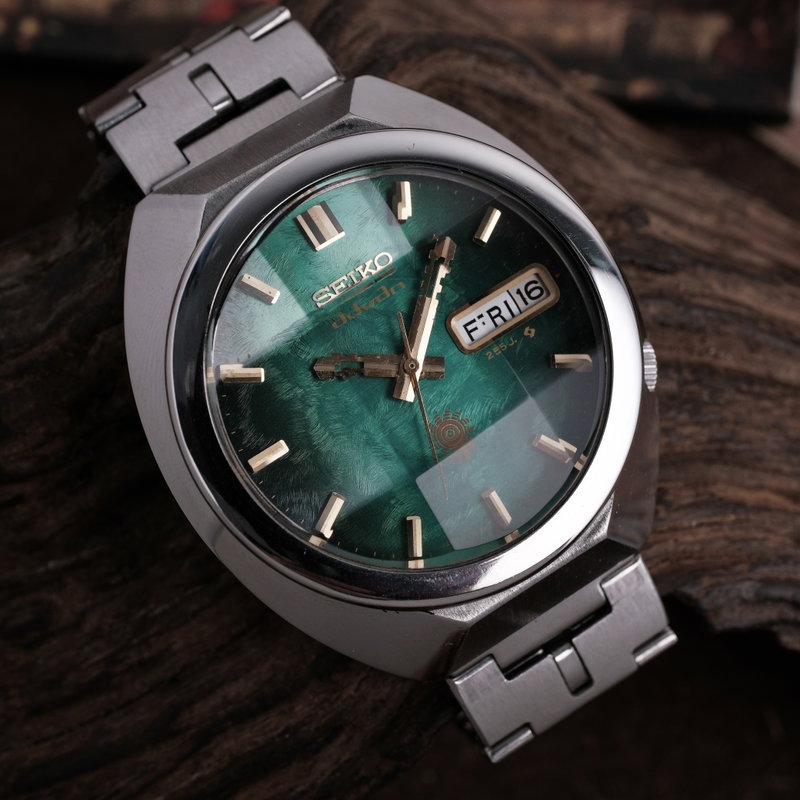
Seiko · Advan · 5606-7270 · 1972
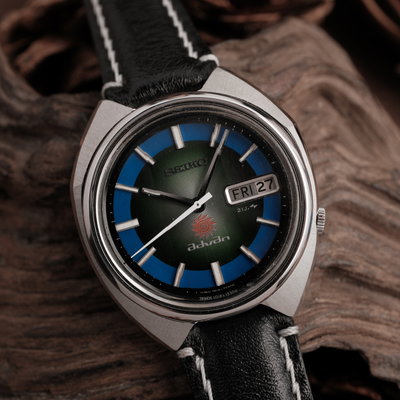
Seiko · Advan · 7019-7220 · 1972
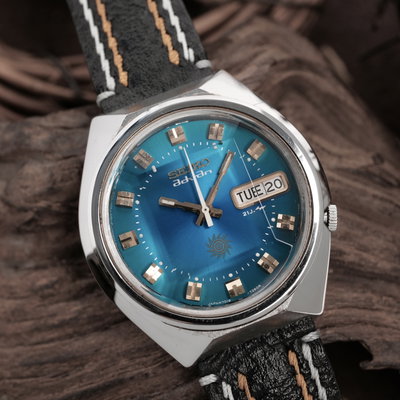
Seiko · Advan · 7019-7290 · 1974
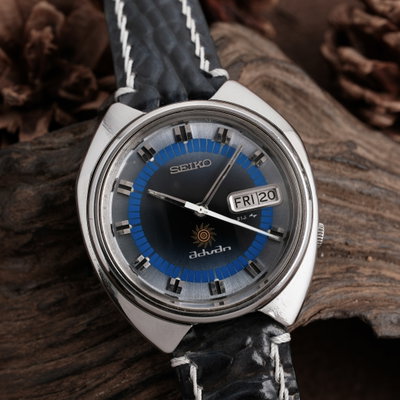
Seiko · Advan · 7019-7150 · 1973
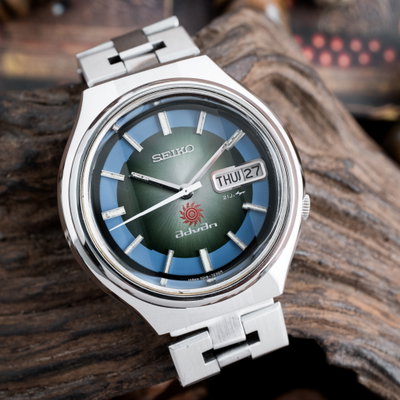
Seiko · Advan · 7019-7220 · 1973
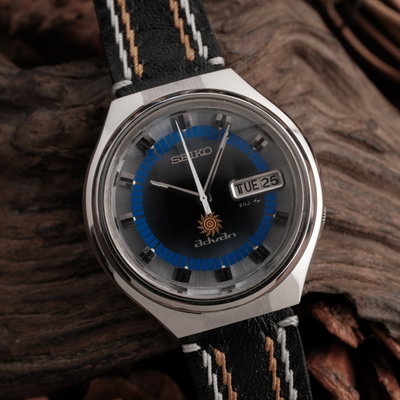
Seiko · Advan · 7019-7150 · 1972
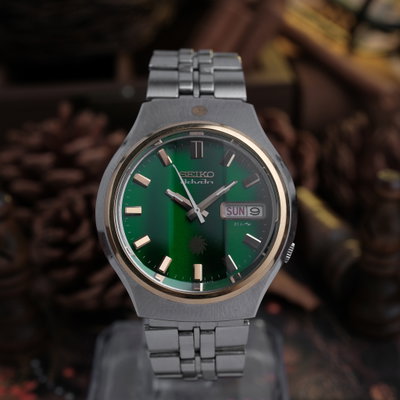
Seiko · Advan · 7019-7310 · 1974
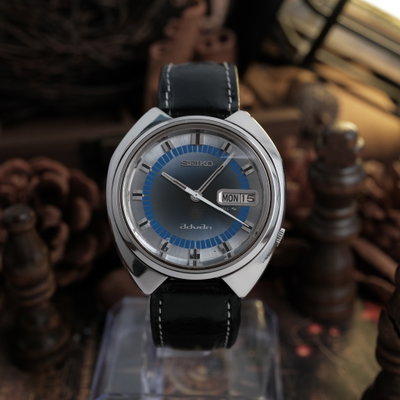
Seiko · Advan · 7019-7150 · 1972
More Seiko references
Related pages
Frequently asked questions
Ready to hunt for your own?
More than 100 vintage watches go under the hammer every week.