Seiko 427990 Sportsmatic 5 Deluxe - the 1964 reference explained
Seiko reference 427990 is a 1964 Sportsmatic 5 Deluxe automatic whose strongest configuration pairs a clean silver sunburst dial with a sharp steel case.
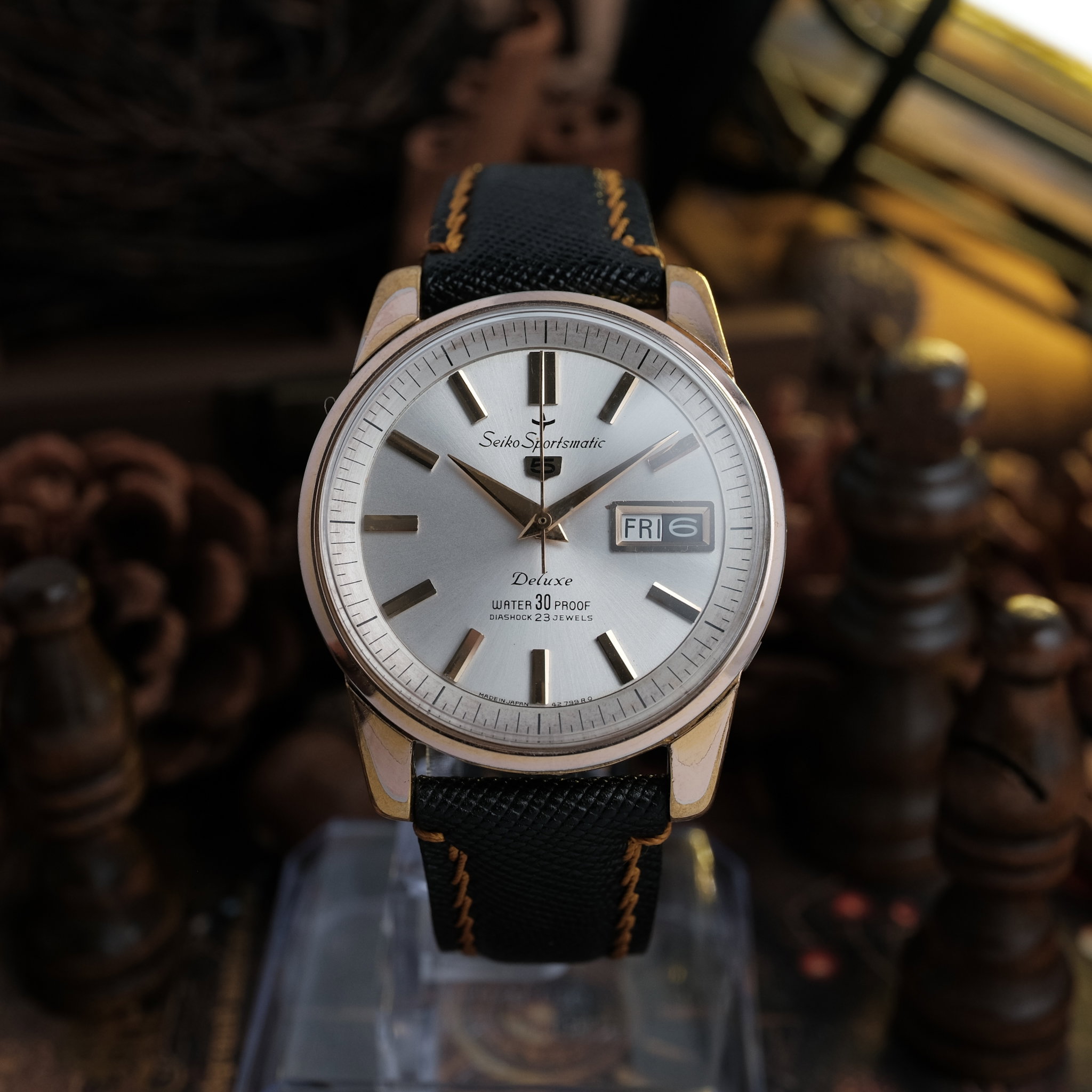
The Seiko 427990 is a 1964 Sportsmatic 5 Deluxe built around automatic winding, day-date display and unusually discreet controls. Its crown sits recessed at 4 o'clock, while a separate date pusher at 3 o'clock leaves the case profile visually clean. Sportsmatic Deluxe also appears in period-style descriptions of the reference, but Sportsmatic 5 Deluxe is the model identity attached to 427990 here.
Steel and electro-gold-plated cases both occur, paired with silver sunburst dials and applied faceted indices. Across watches we have handled, diameter varies between 36 and 37 mm excluding the crown. The steel version is the safer target: worn plating at the lug edges cannot be reversed, while an honest steel case can tolerate ordinary marks without exposing another metal beneath.
Reference
427990
Model
Sportsmatic 5 Deluxe
Known production year
1964
Case diameter
36-37 mm excluding the crown
| Case materials | Stainless steel or electro-gold plate with stainless steel caseback |
| Movement | Automatic |
| Documented caliber | 7606A |
| Jewel count | 23 jewels |
| Dial | Silver sunburst with applied faceted indices |
| Display | Framed day and date at 3 o'clock |
| Controls | Recessed crown at 4 o'clock and date pusher at 3 o'clock |
Where the value sits
The dial carries the largest share of the value. A clean silver sunburst finish, intact printing and crisp applied furniture matter more than light oxidation on the dauphine hands. A redial removes the surface that defines the reference, and a generic replacement dial breaks the relationship between the day-date aperture, indices and 1964 case. A genuine service dial would be a different proposition, but none can be identified without examining its construction and fit.
Steel deserves a premium over an electro-gold-plated case when both dials are equal. The reason is permanent material loss: plating wears through first on exposed lug edges, whereas scratches on steel remain honest case wear. Between a sharp plated example with an exceptional dial and a heavily polished steel watch with a weaker dial, however, the plated watch makes the stronger case. Dial quality comes first, then case geometry, then material.
On the wrist
The 36 to 37 mm diameter gives the 427990 a broad dial opening, and the recessed crown prevents extra width on the right side. Applied indices and dauphine hands read as dress-watch details, while the framed day-date display makes the watch more practical than a time-only design. The silver sunburst surface changes visibly with the light, so spotting and refinishing are also easier to notice in direct daylight.
The dedicated pusher at 3 o'clock is convenient but changes how the watch should be handled. It should move cleanly rather than bind, and the day-date display should settle squarely in its frame after adjustment. Water 30 Proof is dial wording, not evidence of present water resistance. Without a documented pressure test, a used Seiko 427990 belongs away from water regardless of gasket condition.
What goes wrong
The most expensive fault is a refinished silver dial, followed by plating loss on gold-tone cases and softened case edges from polishing. Other recurring concerns are oxidation on the dauphine hands, edge wear around the dial and a date pusher that sticks or fails to advance the display. None should be disguised as patina: even ageing can be attractive, but missing plating and damaged printing are material losses.
A franken 427990 can combine individually genuine Seiko parts that never left the factory together. The 4 o'clock recessed crown, 3 o'clock pusher, framed day-date aperture and case material therefore need to agree as one configuration. The service history is unknown unless invoices establish it. Running figures from a single test prove only how the movement behaved during that test, not when it was last serviced or how it will perform after extended wear.
What to check before you buy
- Dial construction and print: The expected layout combines a silver sunburst surface, applied faceted indices and a framed day-date aperture at 3 o'clock. Flat paint, damaged printing or furniture that does not align with the aperture points to a redial or mismatched dial.
- Hands and dial furniture: Known examples use dauphine hour and minute hands, with gold-tone hands and indices documented on plated cases. A different hand form or a colour mismatch between hands and applied furniture is a practical franken warning.
- Crown and date pusher layout: Reference 427990 places a recessed winding crown at 4 o'clock and a separate date pusher at 3 o'clock. A conventional exposed crown, missing pusher or altered case opening conflicts with the reference's defining control arrangement.
- Case material and wear: Both stainless-steel and electro-gold-plated cases are valid, with a stainless-steel back documented on the plated version. Exposed base metal at the lugs confirms plating wear, while rounded edges indicate polishing rather than factory geometry.
- Movement specification: A 23-jewel automatic movement belongs with the reference, and caliber 7606A is documented in a handled example. Conflicting jewel text, unsuitable movement fit or improvised spacers can indicate a married movement or a franken assembly.
Other 427990 examples we auctioned
Seiko · Sportsmatic Deluxe · 427990 · 1964
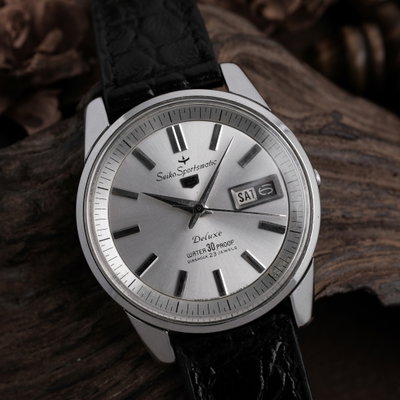
Seiko · Sportsmatic 5 Deluxe · 427990 · 1964
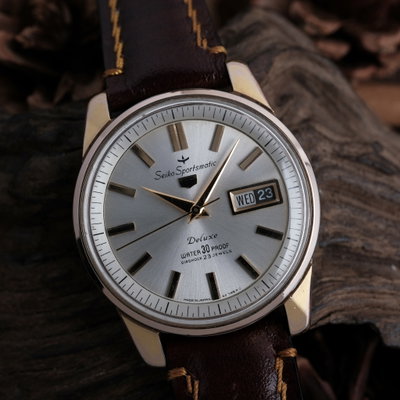
Seiko · Sportsmatic Deluxe · 427990 · 1964
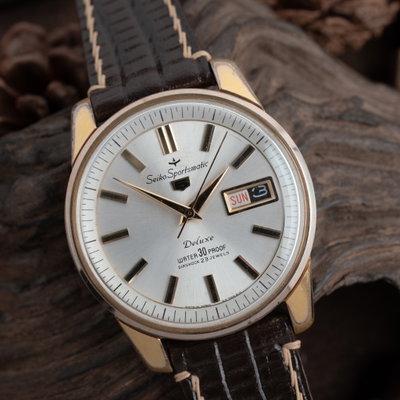
Seiko · Sportsmatic 5 Deluxe · 427990 · 1964
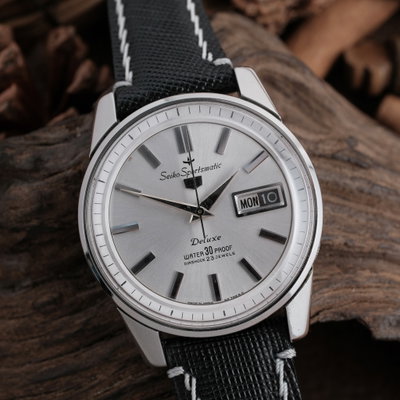
Seiko · Sportsmatic Deluxe · 427990 · 1964
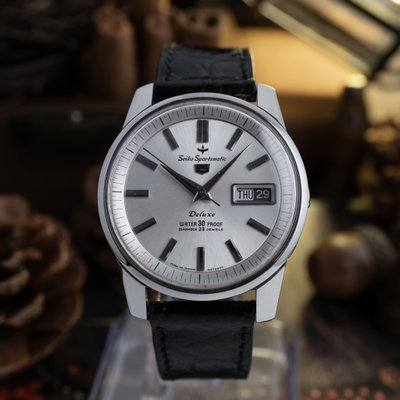
Seiko · Sportsmatic Deluxe · 427990 · 1964
More Seiko references
Related pages
Frequently asked questions
Ready to hunt for your own?
More than 100 vintage watches go under the hammer every week.