Seiko 5216-6030 Lord Matic Special Reference Guide
Buy the Seiko 5216-6030 for an intact sunburst dial and caliber 5216A, accepting case wear before a redial or an uncertain movement.
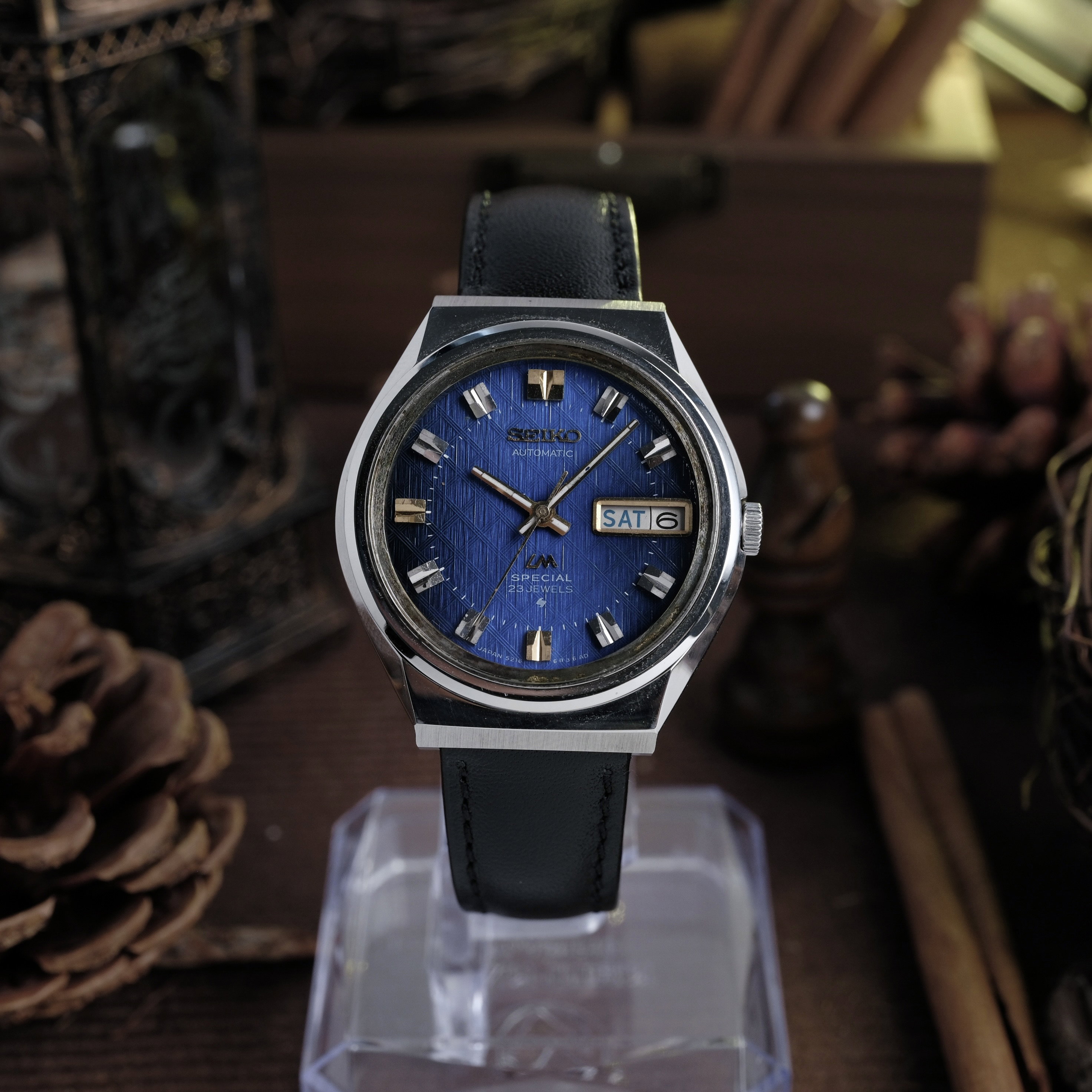
The Lord Matic Special 5216-6030 belongs to a narrow 1973-1974 window and pairs a stainless steel case with the automatic caliber 5216A. That movement is the practical distinction from a standard Lord Matic, so a watch lacking the correct caliber has lost the reason to buy this reference.
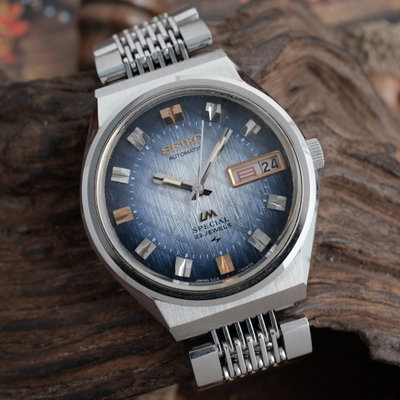
Known dials include emerald green sunburst, electric or gradient deep blue sunburst, and vivid blue with a textured sunburst finish. Case measurements fall between 35 mm and 36 mm, while one deep blue 1974 example has a faceted crystal. The dial should decide the purchase: a convincing original finish outranks a sharper-looking case with a redial.
Brand
Seiko
Model
Lord Matic Special
Reference
5216-6030
Known production years
1973-1974
| Movement | Automatic caliber 5216A |
| Case material | Stainless steel |
| Known case measurements | 35 mm-36 mm |
| Known dial finishes | Emerald green sunburst, electric or gradient deep blue sunburst, vivid blue textured sunburst |
| Known crystal configuration | Faceted crystal on a 1974 deep blue example |
What it was built for
The 5216-6030 is a compact stainless steel automatic from 1973-1974, but its specification sits above the standard Lord Matic through caliber 5216A. The Special designation therefore has a mechanical basis rather than serving as dial decoration. Any buying decision should preserve that relationship between reference, model name and movement.
Its blue and green sunburst dials place the watch firmly in Seiko's 1970s design language without requiring an oversized case. One known 1974 deep blue example adds a faceted crystal, which changes the geometry above the dial but should not be assumed correct for every surviving watch. Evidence does not establish whether every dial treatment shared that crystal.
Where the value sits
The largest spread within this reference sits between an intact factory sunburst dial and a redial. Emerald green, electric or gradient deep blue, and vivid textured blue are all established configurations, but the available evidence does not support a rarity ranking among them. Buy the best-preserved original finish rather than paying a premium for an unsupported colour claim.
Case measurements of 35 mm and 36 mm occur on watches carrying the same reference. That one-millimetre difference may reflect measurement practice or a physical variation, and the evidence does not settle which. It should not command a premium without a demonstrable construction difference; caliber 5216A and an honest dial matter more.
Where to start
Start with the worst irreversible fault. A refinished dial removes the reference's strongest visual evidence, while heavy polishing can soften case edges and cannot be undone. Crystal marks are less decisive because known examples have survived with visible crystal wear while retaining well-preserved dials.
Between a crisp-looking redial and an honestly aged blue or green sunburst dial, take the honest dial. Confirm caliber 5216A before judging cosmetic details, then assess whether the stainless steel case still keeps defined edges rather than rounded, mushy transitions. The service history is unknown unless documentation accompanies the individual watch, and the surviving evidence does not establish water resistance.
What to check before you buy
- Movement and model pairing: The movement should be automatic caliber 5216A, matching the Lord Matic Special specification established for 5216-6030. A different caliber is not a harmless service substitution because it breaks the reference's defining mechanical combination.
- Dial finish: Established dials use emerald green, electric or gradient deep blue, or vivid textured blue sunburst finishes. A flat repaint, missing radial effect or newly applied finish presented as factory work should be treated as a redial, not patina.
- Case specification: Known 5216-6030 cases are stainless steel and measure 35 mm to 36 mm. Rounded or mushy edges indicate polishing; a case in another material or far outside that measured band is not supported by the handled examples.
- Crystal claim: A faceted crystal is confirmed on a deep blue 1974 watch, but the evidence does not make it universal. Treat a seller's claim that every 5216-6030 requires this crystal as unproven, and judge the component against the individual configuration.
Other 5216-6030 examples we auctioned
More Seiko references
Related pages
Frequently asked questions
Ready to hunt for your own?
More than 100 vintage watches go under the hammer every week.