Seiko Lord Matic Special 5216-6050 Reference Guide
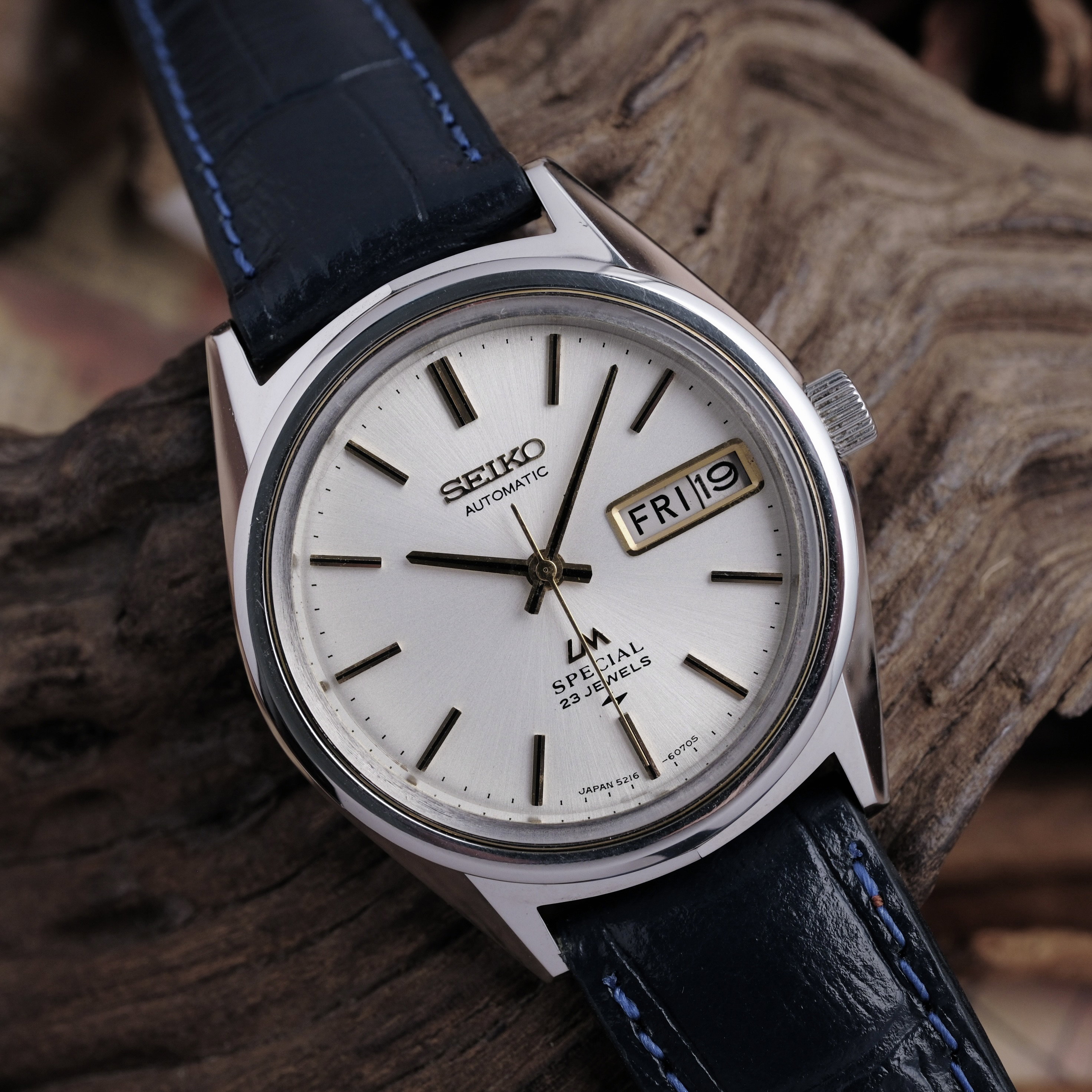
The Seiko 5216-6050 to buy has a clean sunburst dial, a sharply defined steel case and the correct automatic 5216-series movement.
We auction more than 100 vintage watches a week.
Get first access: new Seiko 5216-6050 drops and alerts before auctions end.
Browse 22 live Seiko auctionsThe Lord Matic Special 5216-6050 belongs to Seiko's more ambitious early 1970s output: a compact stainless-steel automatic with a faceted crystal, sharp case geometry and the higher-grade 5216-series movement. Examples handled from 1973 and 1974 establish the reference's period, while blue and silver sunburst dials show how strongly its character changes with colour.
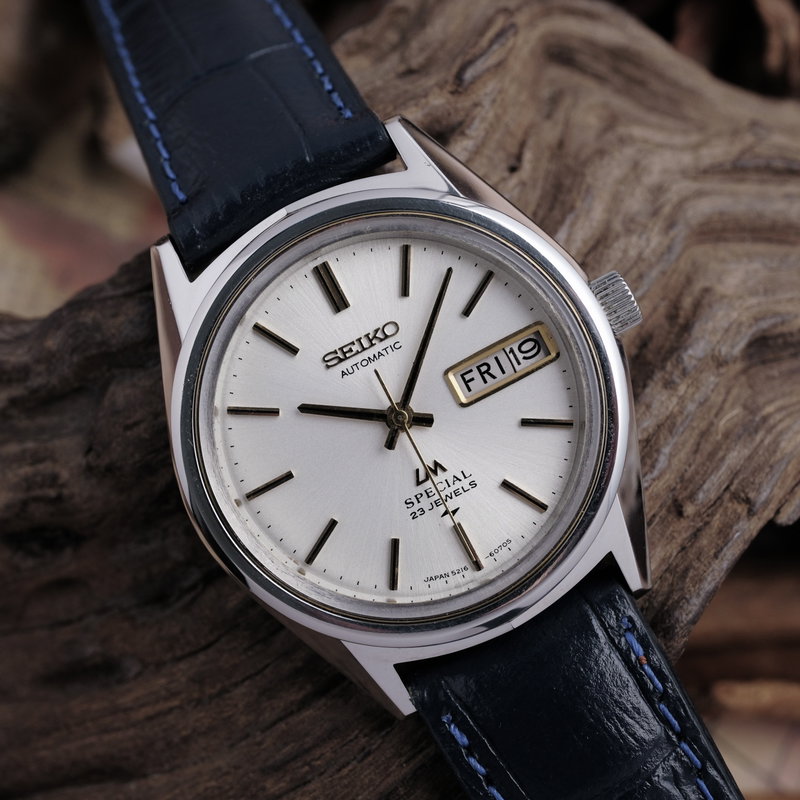
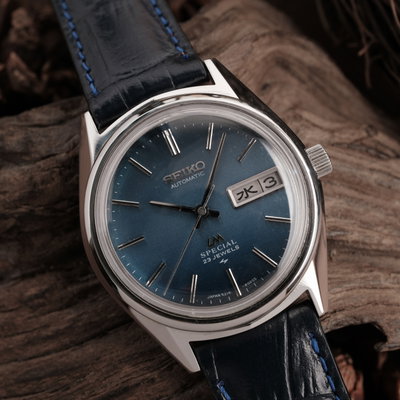
A clean dial decides the purchase. Blue has more visual depth, but spotting is conspicuous across its sunburst finish; silver is quieter and easier to wear daily. Between a sharp silver example and a blue one with surface marks, take the silver. A refinished dial costs more in collector appeal than honest crystal wear, because the crystal is separate from the reference's original printed and applied furniture.
Reference
5216-6050
Model
Lord Matic Special
Known production years
1973-1974
Case material
Stainless steel
| Handled case sizes | 34 mm or 35 mm, excluding the crown |
| Movement | Automatic Seiko caliber 5216 or 5216A |
| Jewel count | 23 jewels on a handled 5216A example |
| Known dial finishes | Blue sunburst or silver sunburst |
| Crystal | Faceted crystal |
The model landscape
The 5216-6050 sits above the standard Lord Matic line through its Special designation and 5216 automatic movement. The dial uses applied block indices, and handled blue examples carry gold-tone accents; silver examples give the same case a more restrained face. The Daini lightning-bolt mark belongs on known dials, making its presence and execution useful confirmation rather than decoration.
Blue sunburst is the stronger choice when its surface remains even. It rewards direct light and works with the faceted crystal, but visible spotting quickly narrows the premium over silver. The value sits first in an honest dial, then in sharp case lines and a coherent 5216-series movement. A clean silver watch beats a marked blue one, while a polished case with a clean original dial can still outrank a sharp watch with a redial.
On the wrist
Handled cases measure 34 mm or 35 mm excluding the crown, so the 5216-6050 wears compactly by current standards. Its applied indices and sunburst finish carry more visual weight than the diameter suggests, while the faceted crystal adds reflections around the dial edge. Silver slips under formal clothing more quietly; blue reads as the more assertive 1970s choice.
The small difference between the recorded case measurements matters less than the surviving geometry. Sharp planes give the watch definition, whereas softened transitions make the same diameter look rounder and visually smaller. This is a compact used Seiko for a collector who values dial treatment and case architecture over wrist presence. The crystal's facets also make scratches easier to notice in angled light.
What goes wrong
Dial damage is the costliest fault. Blue examples can develop visible spotting and light ageing marks across the surface, and refinishing removes the evidence needed to judge the original sunburst, printing and applied furniture. A genuine service dial is not the same as a redial, but no service-dial evidence is established here, so the distinction must not be guessed from cleanliness alone.
Faceted crystals collect wear, cases lose their sharp lines through polishing, and movement performance varies between examples. One handled watch ran from -16 to -22 seconds per day, while another ran from +12 to +20, so neither isolated result establishes what another 5216-6050 will do. The service history is unknown unless documentation accompanies the individual watch. Prioritise the dial and case, then budget for mechanical assessment rather than treating a brief timing reading as a service record.
What to check before you buy
- Dial configuration: Known 5216-6050 dials use a blue or silver sunburst finish with applied indices. Blue examples are established with block indices and gold-tone accents; flat colour, crude printing or mismatched furniture warrants caution.
- Daini dial mark: Known dials carry the Daini lightning-bolt mark. Its presence supports the correct configuration, but it does not authenticate the dial by itself because a refinished surface can retain or reproduce markings.
- Movement identity: The case should be paired with an automatic 5216-series movement, recorded as caliber 5216 or 5216A on handled watches. Another caliber creates a franken or married-watch concern rather than a harmless service variation.
- Case geometry: The stainless-steel case should retain defined planes and sharp transitions consistent with the reference's angular design. Softened edges do not prove a fake, but they identify polishing that permanently changes how the compact case reads.
- Dial surface and crystal: Separate scratches on the faceted crystal from marks in the sunburst dial below. Blue dials with visible surface spotting are known, so such damage should be described directly rather than hidden under the word patina.
Other 5216-6050 examples we auctioned
More Seiko references
Related pages
Frequently asked questions
Ready to hunt for your own?
More than 100 vintage watches go under the hammer every week.