Seiko Lord Matic Special 5206-6100: What to Buy and What to Avoid
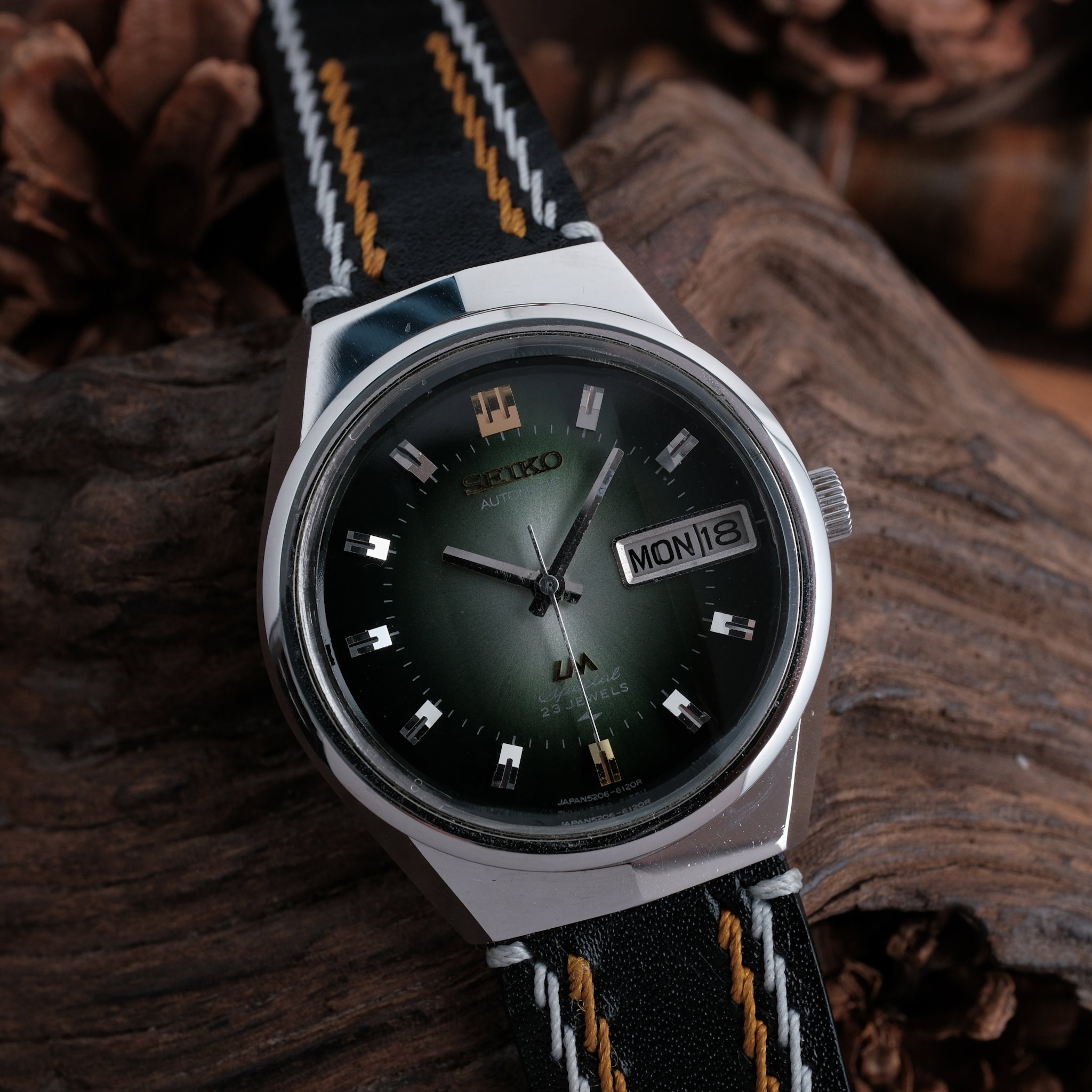
Buy the Seiko 5206-6100 for its clean blue textile or green gradient dial, intact faceted crystal and sharply defined steel case.
We auction more than 100 vintage watches a week.
Get first access: new Seiko 5206-6100 drops and alerts before auctions end.
Browse 24 live Seiko auctionsThe Seiko Lord Matic Special 5206-6100 pairs an angular stainless steel case with a faceted crystal and two dial treatments that define the reference: deep blue textile texture and green gradient. Examples handled from 1972 and 1973 use the automatic caliber 5206, also described as 5206A.
The buying decision is condition before colour. No defensible rarity ranking between blue textile and green gradient follows from the watches available to compare, so the stronger purchase is the cleaner dial beneath the correct faceted crystal. Case measurements have varied from 34 mm to 36 mm, but measurement method may account for part of that spread. Without measuring the individual watch, we prefer not to claim that separate case sizes were manufactured.
Reference
5206-6100
Model
Lord Matic Special
Known production years
1972-1973
Movement
Automatic caliber 5206, also recorded as 5206A
| Case material | Stainless steel |
| Observed case diameter | 34 mm to 36 mm, with measurement method not established |
| Known dial variants | Deep blue textile texture and green gradient sunburst |
| Crystal | Faceted crystal |
What it was built for
Produced across 1972 and 1973, the 5206-6100 was built as a compact automatic Lord Matic Special with more visual emphasis than a plain dress watch. The 5206 or 5206A movement sits behind a dial intended to react to changing light, while the faceted crystal breaks reflections across the blue textile or green gradient surface.
Where the value sits
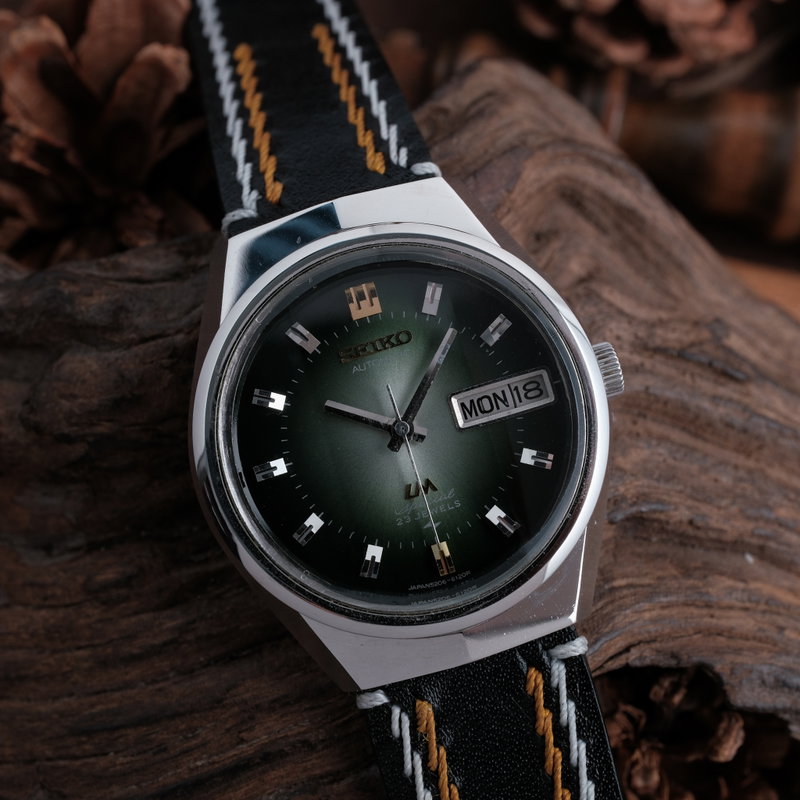
A refinished dial is the costliest compromise because the reference depends on texture and graduated colour. The blue version needs visible textile-like structure rather than a flat blue surface. The green version should darken towards the perimeter, with a sunburst effect and applied faceted indices; known examples also carry gold-tone accents at 12, 6 and 9. Flat colour, crude printing or mismatched furniture needs an explanation rather than a generous description.
The faceted crystal comes next because it changes how either dial reads. A plain replacement may remain usable, but it removes a defining part of the 5206-6100 configuration and should trade below an otherwise comparable watch with the correct crystal. Case definition creates another spread. Sharp transitions and clear case lines deserve a premium over heavily polished examples with soft geometry, even when the softer watch looks brighter in photographs.
Where to start
Start with the dial you can judge most confidently, not the nominal case measurement. A clean blue textile dial is the more graphic option, while the green gradient has stronger edge shading and gold-tone accents at three cardinal markers. Between a damaged blue dial and a clean green one, take the green. Between comparable dials, the intact faceted crystal and sharper case settle the choice.
Lead with the worst fault when assessing a used Seiko 5206-6100. A redial permanently removes the surface that gives the reference its identity; a plain replacement crystal changes its light play; over-polishing rounds the case transitions. Movement condition remains a separate question, and the service history of an undocumented example is unknown. Caliber 5206 or 5206A is correct here, but the name on the movement does not establish servicing or timekeeping by itself.
What to check before you buy
- Dial surface and furniture: A blue dial should retain a textile-like structure, while a green dial should graduate darker towards the edge. Known green examples use applied faceted indices with gold-tone accents at 12, 6 and 9.
- Crystal configuration: The 5206-6100 is known with a faceted crystal that breaks reflections across the dial. A plain crystal indicates replacement or an altered configuration, although that change alone does not prove the rest of the watch is false.
- Case geometry: The stainless steel case should retain clear angular transitions and defined case lines. Soft edges and blurred transitions indicate polishing, which matters because removed geometry cannot be restored through ordinary servicing.
- Movement identity: The correct automatic movement is caliber 5206 or 5206A. Another caliber raises the possibility of a franken or married watch, but movement identity alone does not establish the condition or service history.
Other 5206-6100 examples we auctioned
15 Seiko 5206-6100 auctioned
More Seiko references
Related pages
Frequently asked questions
Ready to hunt for your own?
More than 100 vintage watches go under the hammer every week.