Seiko Lord Matic Special 5206-6060 reference guide
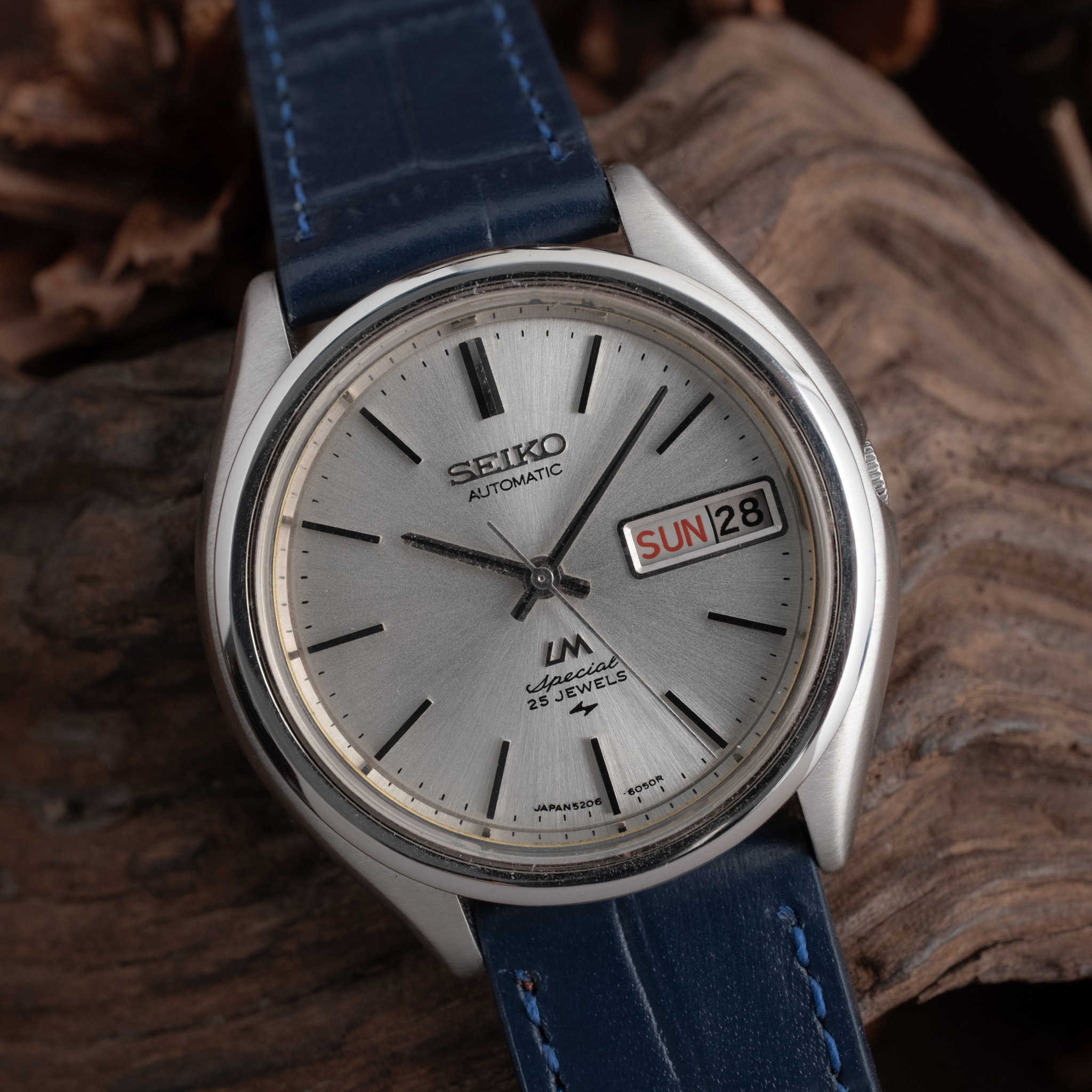
The Seiko Lord Matic Special 5206-6060 to buy has a clean original dial, coherent day-date display and the least-softened case available.
We auction more than 100 vintage watches a week.
Get first access: new Seiko 5206-6060 drops and alerts before auctions end.
Browse 22 live Seiko auctionsThe Lord Matic Special 5206-6060 compresses Seiko's early-1970s dress-watch language into a 36 mm stainless-steel case.
Every example handled dates to 1971 and uses the automatic 5206A. The strongest version is the silver vertically brushed dial with intact printing and clean applied furniture, rather than a spotted dial or a sharper-looking redial.
Reference
5206-6060
Model
Lord Matic Special
Known production year
1971-1971
Case material
Stainless steel
| Case size | 36 mm excluding the crown |
| Movement | Automatic Seiko caliber 5206A |
| Dial variants | Silver vertically brushed or silver sunburst |
| Calendar | Framed day-date, including English and Kanji examples |
The model landscape
The meaningful choice within the 5206-6060 is the dial. Silver examples occur with vertical brushing or a sunburst effect, while applied indices carry dark accents that sharpen the display. Some watches also have an English and Kanji day wheel. Take the cleaner original dial over a more dramatic texture with spotting, because the dial carries most of the reference's value.
The automatic 5206A is consistent across the examples handled, but stated jewel counts differ between 23 and 25. That discrepancy cannot be resolved from the available evidence alone, so the movement marking should govern the description of an individual watch. A correct caliber does not excuse a redial, a married movement and case, or day-date parts that do not belong together.
On the wrist
At 36 mm excluding the crown, the 5206-6060 wears as a compact dress watch rather than a reduced modern sports watch. The framed day-date occupies substantial dial space, while the dark index accents keep the silver surface legible as its brushing changes in the light.
The case gains its presence from tailored lines rather than diameter. Crisp transitions around the lugs matter because polishing quickly makes this geometry soft and visually smaller. Stainless steel removes the plating-loss problem found on many period dress watches, although scratches, rounded edges and an overworked case still affect the result.
What goes wrong
Dial damage is the expensive fault. Localised spotting can interrupt the silver finish, oxidation can develop on the hands, and refinishing can erase the original vertical character or alter the printed signatures. A clean original dial is worth accepting ordinary case wear for, while a redial costs more than the cosmetic improvement of a polished case can recover.
The case loses definition when polishing rounds the lug edges and softens the transitions between surfaces. The day-date mechanism also needs to change coherently, and the English and Kanji display should sit squarely within its frame. One handled watch was running about 55 to 58 seconds slow per day, which establishes that operational is not the same as accurately serviced. Service history is unknown unless paperwork accompanies the individual watch.
What to check before you buy
- Dial identity: The dial should read as Lord Matic Special and use a silver vertically brushed or sunburst finish with applied dark-accented indices. Flat paint, lost brushing or altered signatures point to a redial.
- Hands and calendar: Check for oxidation on the hands and confirm that both calendar indications sit squarely inside the framed window. An English and Kanji wheel is known, but mismatched or poorly aligned parts can signal a franken assembly.
- Case geometry: The stainless-steel case should retain distinct transitions around the lugs. Rounded edges and blended surfaces identify polishing, while inconsistent wear between case and caseback deserves scrutiny for a married assembly.
- Movement: The movement should be marked 5206A. Because handled descriptions state both 23 and 25 jewels, use the marking on the individual movement and do not treat a claimed jewel count as proof of correctness.
- Running condition: A running 5206A is not proof of service or acceptable accuracy. One operational example measured about 55 to 58 seconds slow per day, so service documentation and measured performance remain separate facts.
Other 5206-6060 examples we auctioned
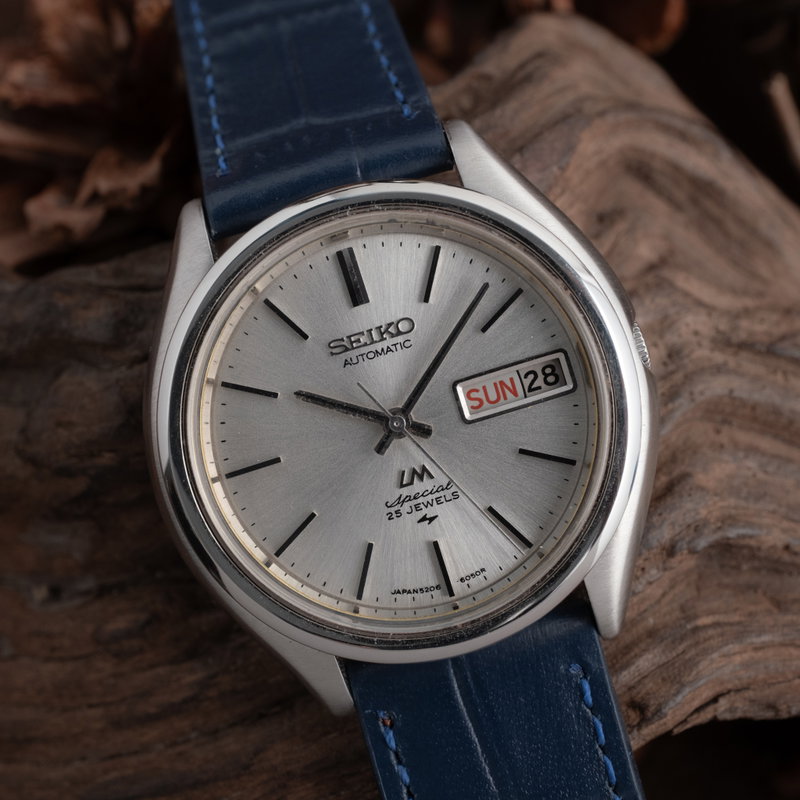
Seiko · Lord Matic Special · 5206-6060 · 1971
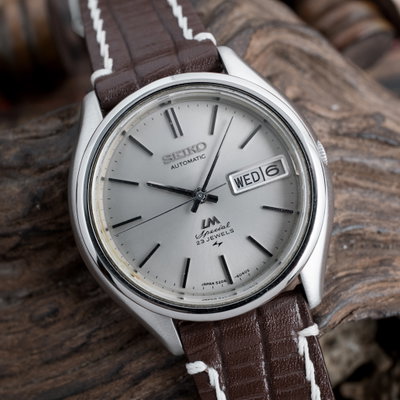
Seiko · Lord Matic Special · 5206-6060 · 1971
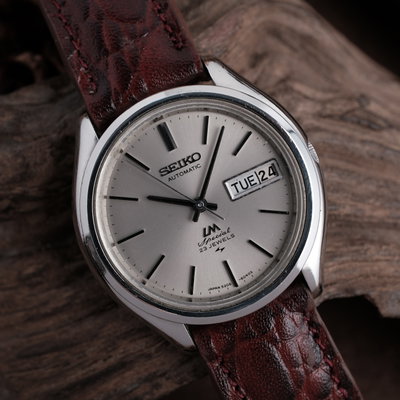
Seiko · Lord Matic Special · 5206-6060 · 1971
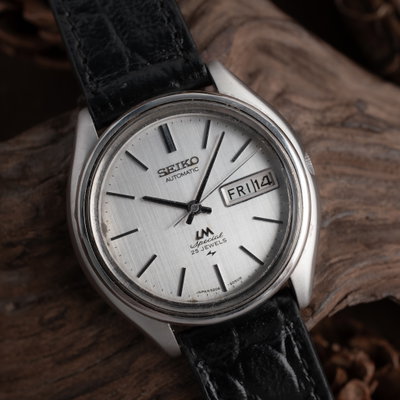
Seiko · Lord Matic Special · 5206-6060
More Seiko references
Related pages
Frequently asked questions
Ready to hunt for your own?
More than 100 vintage watches go under the hammer every week.