Seiko 5206-6110: A Collector's Guide to the Lord Matic Special
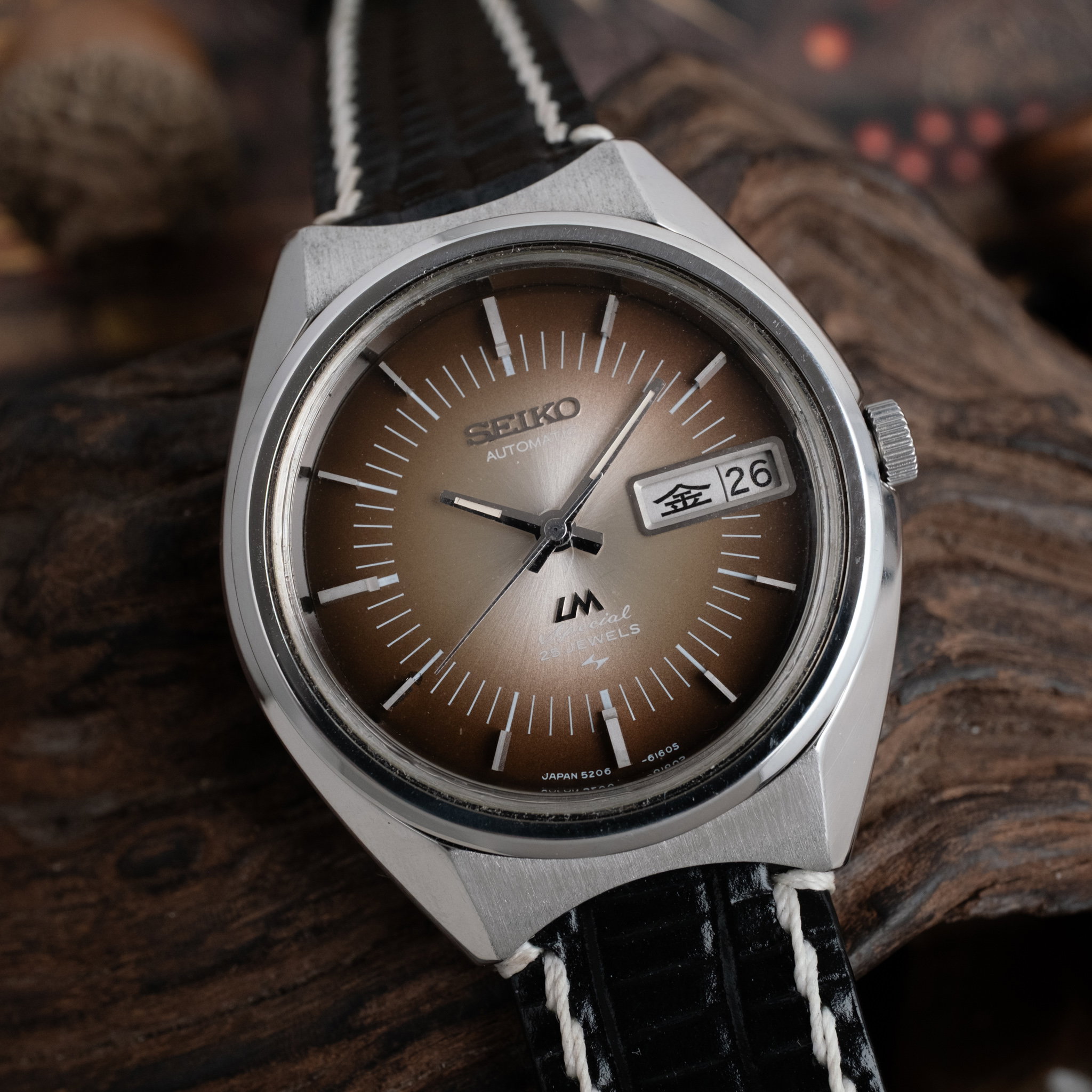
The Seiko 5206-6110 to buy is the sharp-cased 1972 example with an honest sunburst dial, the correct 5206A movement and an intact faceted crystal.
We auction more than 100 vintage watches a week.
Get first access: new Seiko 5206-6110 drops and alerts before auctions end.
Browse 18 live Seiko auctionsThe Seiko 5206-6110 is a Lord Matic Special from 1972, built around the automatic 5206A rather than treated as a cosmetic variation. Its 35 mm stainless-steel case, applied faceted indices and angular crystal place the mechanical specification inside a distinctly early 1970s design.
Silver and deep blue sunburst dials are both established for this reference. The blue version carries more drama as its colour shifts beneath the faceted crystal, while silver makes oxidation, spotting and edge wear easier to judge. Buy the cleaner dial rather than choosing colour first. A redial costs more in lost value than light case wear or hand oxidation, provided the 5206A and case remain correct.
Brand
Seiko
Model
LM Special - Lord Matic Special
Reference
5206-6110
Known production year
1972-1972
| Case size | 35 mm excluding the crown |
| Case material | Stainless steel |
| Movement | Automatic caliber 5206A |
| Jewel count | 25 jewels |
| Known dial finishes | Silver sunburst and deep blue sunburst |
| Dial furniture | Applied faceted indices and silver hands |
| Crystal form | Faceted crystal |
What it was built for
The Lord Matic Special paired a thin automatic movement with sharper external finishing than an ordinary everyday Seiko required. The 5206A came from Daini's 52-series architecture, which Seiko later used as the basis for the 4S family.
There are two clear dial directions within the 5206-6110: restrained silver sunburst and deeper blue sunburst. Both use applied faceted indices and silver hands. Between a spotted silver dial and an evenly aged blue one, take the blue; between a refinished blue dial and an honest silver one with minor edge patina, take the silver. The market pays for surviving dial surface, not colour alone.
On the wrist
At 35 mm without the crown, the 5206-6110 wears compactly, but the faceted crystal gives the dial more presence as light breaks across it. Applied baton indices keep the display legible, while the sunburst finish prevents the watch from reading like a plain round dress model.
One handled blue example retained its bracelet, but that does not establish the fitment for every watch. If documentation is absent, the watch itself can establish the case, dial and movement configuration, not the history of every removable component.
What goes wrong
Dial damage is the first financial problem. Silver examples can show edge patina, surface spotting and a vertical mark near nine o'clock, while hands can oxidise independently of the dial. A redial is worse than either because it removes the factory surface and changes the reference collectors are paying for. A genuine service dial is different from a redial, but no service-dial specification is established by the available examples.
Over-polishing is the next permanent loss: sharp case lines become soft, and no service can restore removed steel without adding material. Faceted crystals also matter because their geometry creates much of the reference's visual character; a plain replacement changes the watch even if it fits. The service history is unknown unless supported by paperwork, so movement health must be treated separately from cosmetic condition.
The safest 5206-6110 is not the shiniest one. Choose a correct 5206A, an honest sunburst dial and case edges that still read clearly, then accept light hand oxidation or minor surface wear. Against a heavily polished watch with a cleaner presentation, the sharper and less cosmetically altered example is the better vintage Seiko 5206-6110.
What to check before you buy
- Movement caliber: The case should contain the automatic Seiko 5206A with 25 jewels. Another caliber makes the watch a franken unless firm evidence establishes a legitimate factory or service configuration.
- Dial construction: Handled 5206-6110 dials are silver or deep blue sunburst with applied faceted indices and silver hands. Flat printed hour markers or a dead painted surface conflict with these established configurations.
- Case and crystal: The reference uses a 35 mm stainless-steel case and a faceted crystal. Soft case edges indicate polishing, while a plain replacement crystal removes the angular light effect associated with the watch.
- Ageing consistency: Edge patina, light spotting and hand oxidation are known on silver examples. Uniformly fresh printing beside aged hands or a worn case can indicate a redial, although condition alone does not prove alteration.
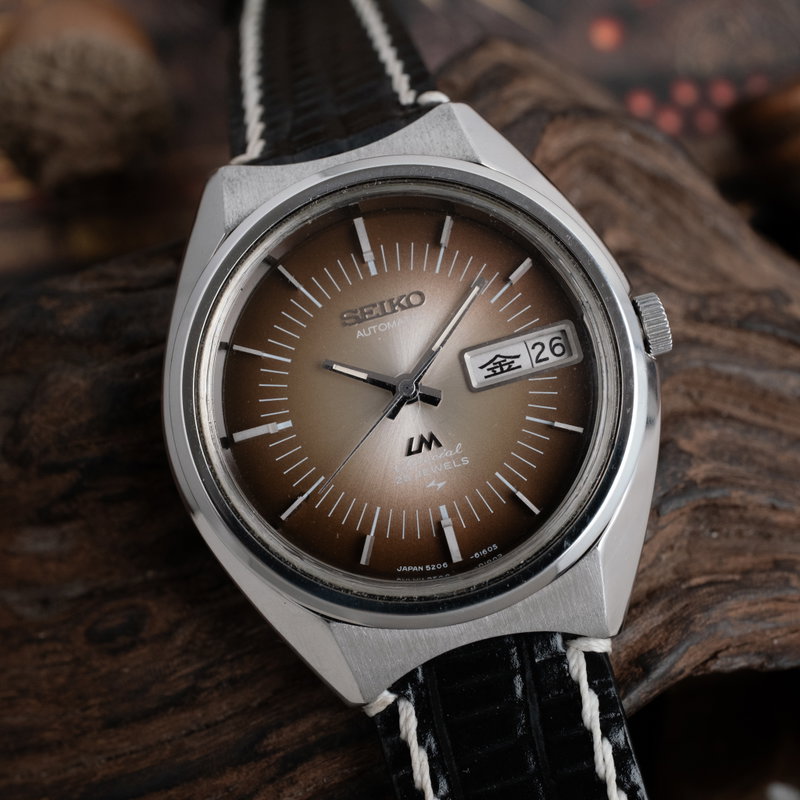
Other 5206-6110 examples we auctioned
8 Seiko 5206-6110 auctioned
More Seiko references
Related pages
Frequently asked questions
Ready to hunt for your own?
More than 100 vintage watches go under the hammer every week.