Seiko 5216-6010 Lord Matic Special Reference Guide
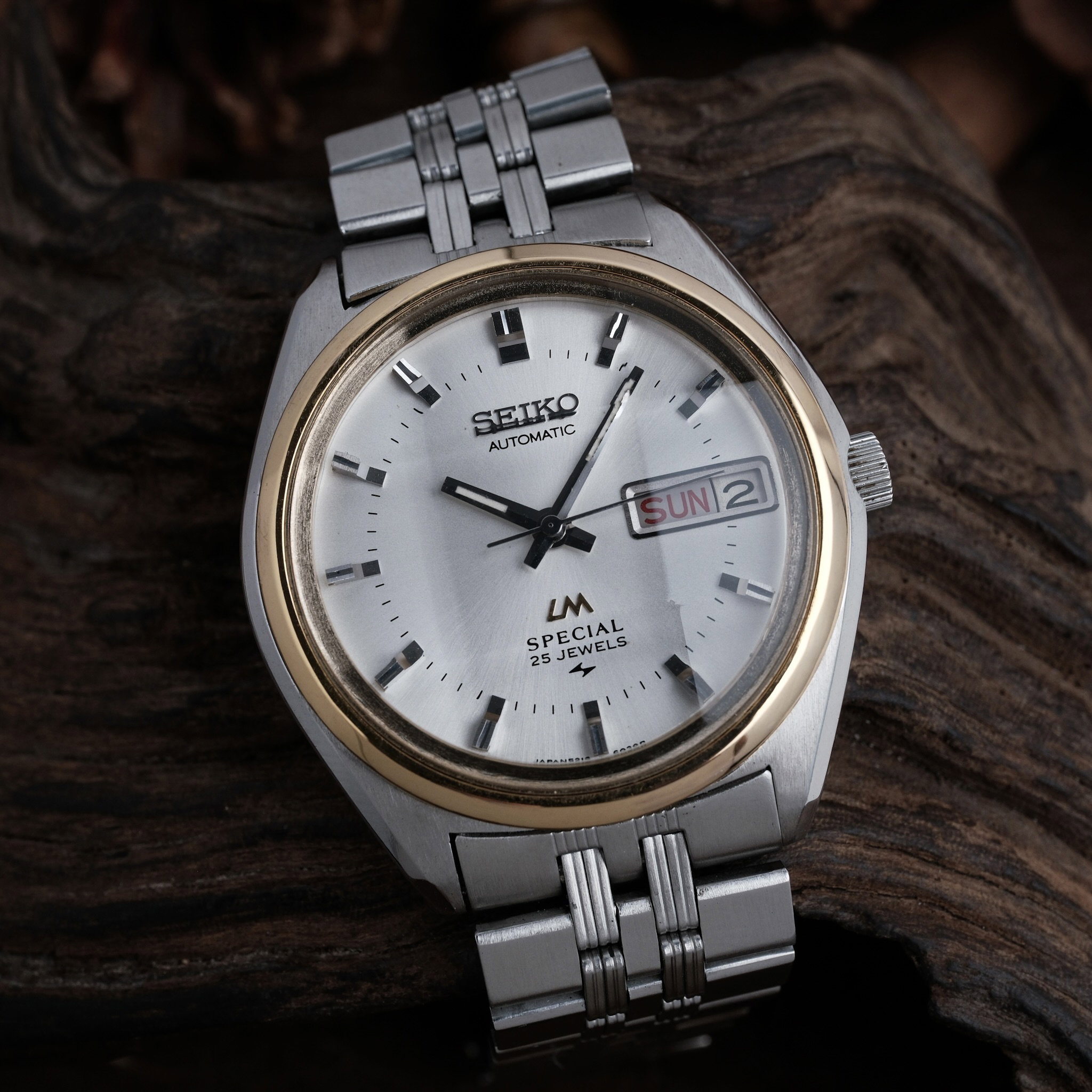
Buy the Seiko 5216-6010 for its faceted crystal and dial, taking clean silver linen over a green example with spotting or oxidised hands.
We auction more than 100 vintage watches a week.
Get first access: new Seiko 5216-6010 drops and alerts before auctions end.
Browse 32 live Seiko auctionsThe Seiko 5216-6010 combines a faceted crystal, day-date display and automatic caliber 5216A in a Lord Matic Special made across 1973-1974. Its strongest visual signature is the interaction between the crystal and dial rather than case size or complication. For a vintage Seiko buyer, that makes the condition of those two parts decisive.
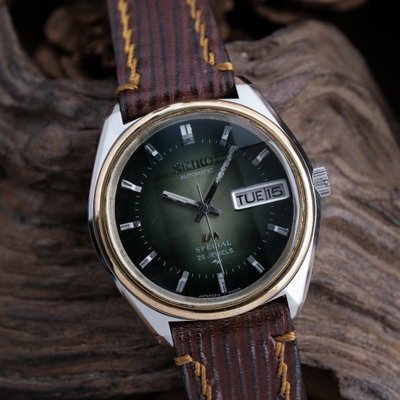
Two dial treatments define the choice. The green version runs from an emerald sunburst centre to darker edges, while the silver version uses a vertical brushed linen texture and faceted indices with black accents. Clean green has the more forceful period identity, but visible spotting changes the order: between damaged green and clean silver, take the silver.
Model
Lord Matic Special
Reference
5216-6010
Known production years
1973-1974
Case diameter
35-36 mm excluding the crown
| Movement | Automatic caliber 5216A |
| Jewel count | 25 jewels |
| Display | Framed day-date at 3 o'clock |
| Dial configurations | Green gradient sunburst or silver vertical brushed linen |
| Case construction | Stainless steel with gold-tone bezel |
| Crystal | Faceted crystal |
On the wrist
Handled cases measure 35-36 mm excluding the crown, so the 5216-6010 wears compactly and leaves the dial architecture to carry its presence. The faceted crystal breaks reflections across the green gradient or silver linen surface, while the gold-tone bezel creates a clear boundary against the stainless steel case. Thickness is not established by the available evidence, so cuff clearance cannot be promised from the reference alone.
Where the value sits
The dial carries the widest value spread. A clean green gradient deserves a premium over one with atmospheric spotting, but colour does not rescue damaged furniture or oxidised hands. The silver linen dial is the safer purchase when its vertical texture remains distinct and the applied indices retain their black accents. A redial would cost more than ordinary case wear because it removes the surface that defines this reference.
The faceted crystal matters next because a plain replacement suppresses the optical effect that separates the 5216-6010 from a conventional compact Seiko. Current evidence does not establish a factory crystal code, so a faceted replacement can be visually appropriate without proving originality. The caliber 5216A completes the package, although caliber identity alone says nothing about service condition.
What goes wrong
Dial spotting is the most expensive fault, and green examples can also show oxidation on the hands. Inside, visible wear on the rotor is a separate mechanical warning rather than harmless dial patina. One caliber 5216A was measured running about 38-40 seconds fast per day, which is evidence of its state at that test, not proof of a completed service or a prediction for another watch.
A faceted crystal can be replaced with a plain one, changing the watch even when the replacement is functional. Refinishing can flatten the green transition or erase the silver dial's vertical linen texture, while a mismatched movement would make the watch franken or married rather than merely serviced. The service history is unknown without dated documentation, and the available evidence does not establish exact factory crown or caseback details.
What to check before you buy
- Dial surface and furniture: The green dial should show a sunburst transition from an emerald centre to darker edges. The silver dial should retain a vertical brushed linen texture and faceted indices with black accents; a flat refinish conflicts with these configurations.
- Crystal profile: The 5216-6010 is defined visually by a faceted crystal that breaks reflections across the dial. A plain crystal is an incorrect visual configuration, although the available evidence cannot prove whether a faceted replacement is factory original.
- Movement identity: The movement should be the automatic caliber 5216A with 25 jewels. Any different caliber raises a specific franken or married-watch concern, but the correct caliber does not by itself establish service condition.
- Movement condition: Caliber identity is not evidence of health. A measured rate around 38-40 seconds fast per day is materially fast, while visible rotor wear is a separate fault that should be reported rather than hidden behind a claim that the watch runs.
- Case and bezel pairing: Known examples use a stainless steel case with a gold-tone bezel. Assess wear and polishing at the boundary between those parts, but do not infer an untouched case merely because the two-tone layout remains visible.
- Crown and caseback limits: The handled evidence does not establish exact factory crown or caseback markings for this reference. Without that baseline, those parts should not be declared original, and replacements alone should not be used to condemn the entire watch.
Other 5216-6010 examples we auctioned
12 Seiko 5216-6010 auctioned
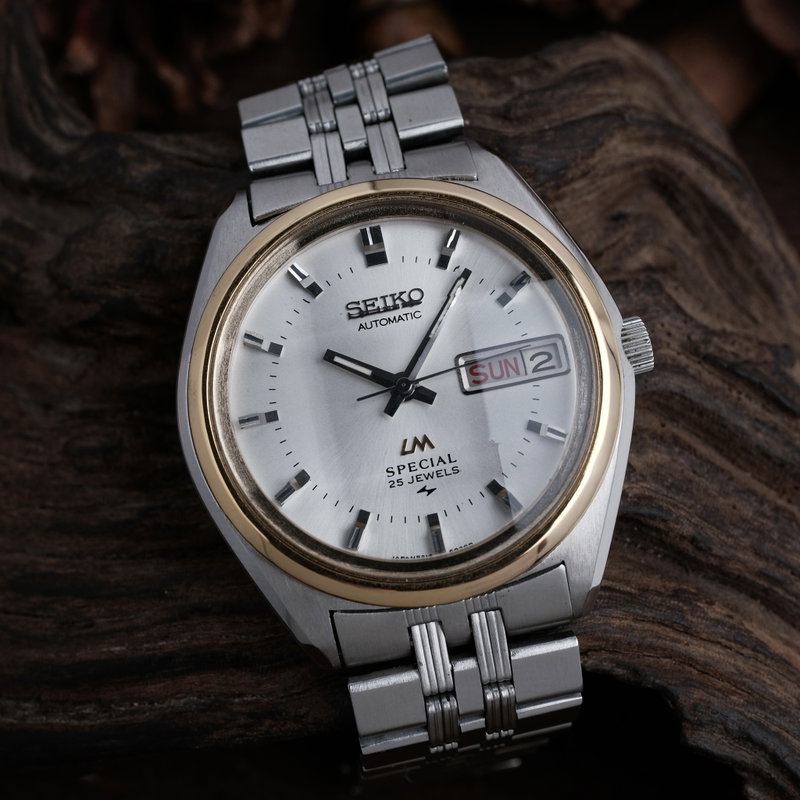
Seiko · Lord Matic Special · 5216-6010 · 1973
Seiko · Lord Matic Special · 5216-6010 · 1973
Seiko · Lord Matic Special · 5216-6010 · 1973
Seiko · Lord Matic Special · 5216-6010 · 1973
More Seiko references
Related pages
Frequently asked questions
Ready to hunt for your own?
More than 100 vintage watches go under the hammer every week.