Seiko 5 Actus: Choosing the Right Vintage Example
The Seiko 5 Actus is a late-1960s to mid-1970s automatic whose strongest buys pair a clean sunburst dial with sharp case lines.
Live now
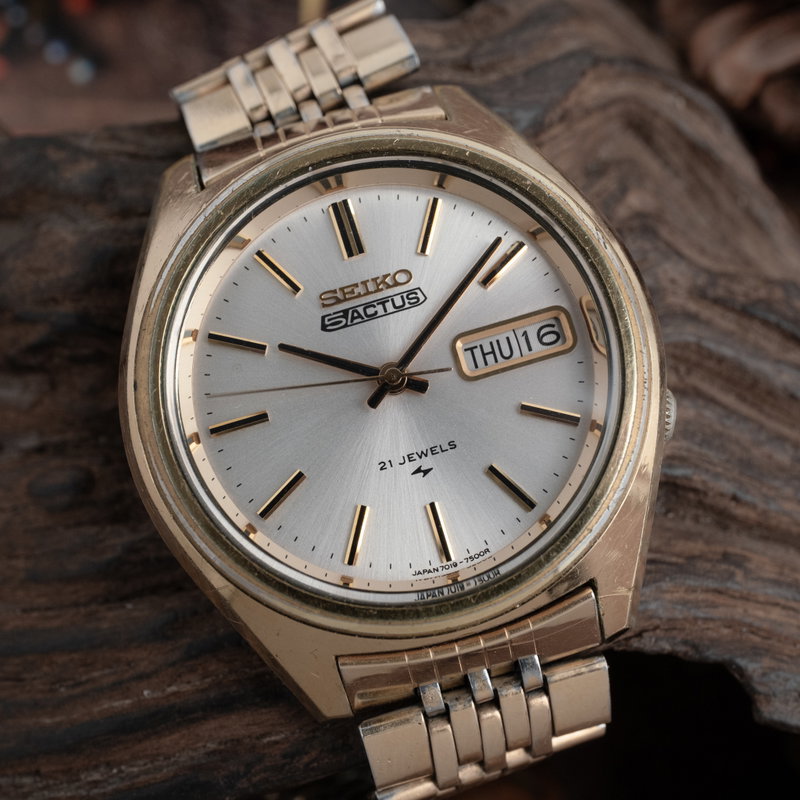
The Seiko 5 Actus was built for younger Japanese buyers who wanted an automatic watch with contemporary styling. Across 1969-1976, the line moved through sunburst dials, applied indices and cushion cases, with 5606, 6106 and 7019 calibers appearing across the model.
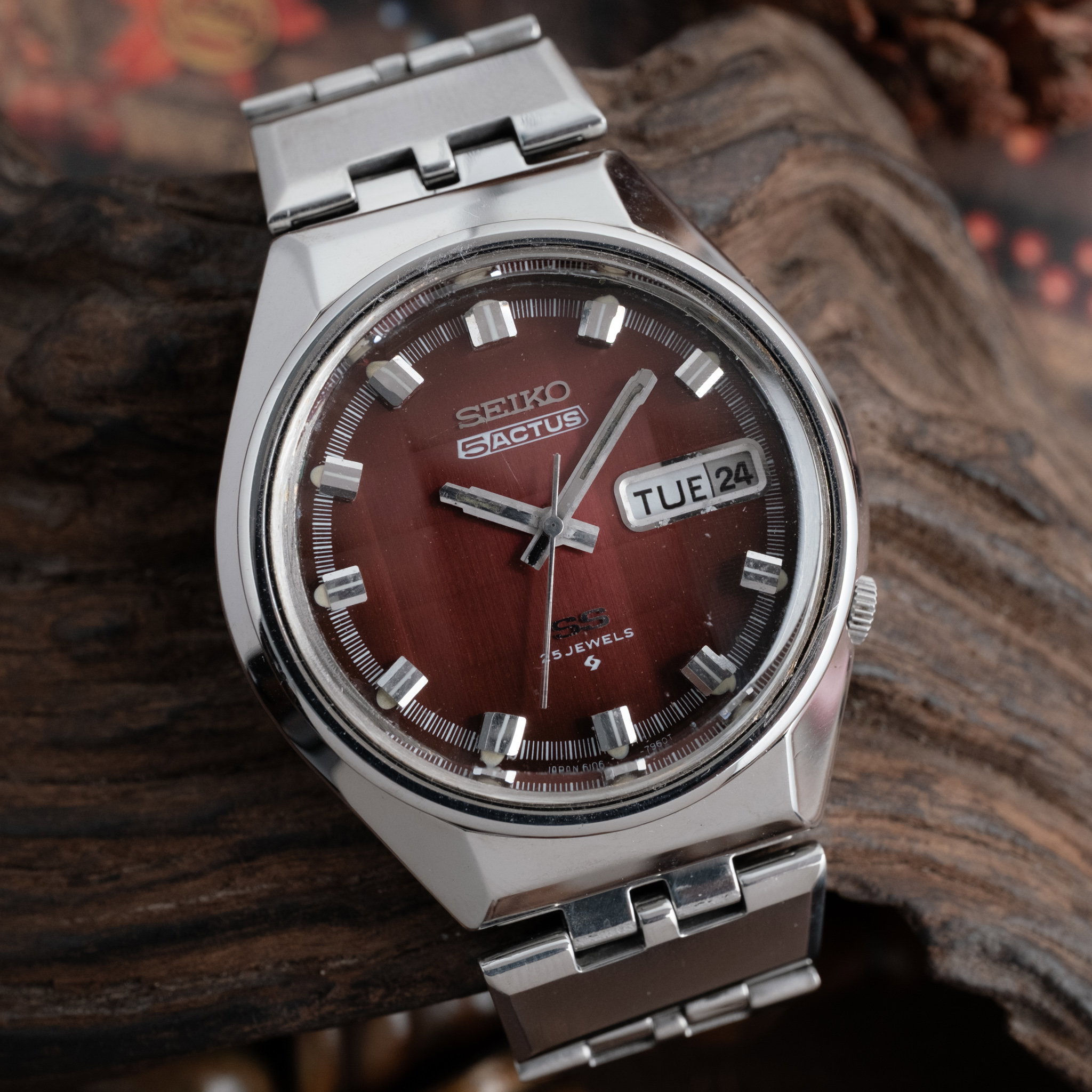
A used Seiko 5 Actus lives or dies by its dial and case. The 7019-5010 brings a blue sunburst dial and a substantial steel cushion case, while the 6106-8420 pairs a silver sunburst dial with gold plating. Buy the cleaner dial before the more elaborate case - plating loss and softened case lines remain visible after servicing.
Known model years
1969-1976
Known calibers
5606, 6106, 6106C and 7019
Known jewel counts
21 jewels for caliber 7019; 23 jewels for caliber 6106C
Known case sizes
36 mm, 37 mm and 38 mm, excluding the crown
| Known case materials | Stainless steel; gold-plated with stainless steel caseback |
| Known dial finishes | Blue sunburst and silver sunburst |
| Known day display | Kanji day wheel on 7019-7020 |
The model landscape
The references differ enough that the caliber alone does not settle the choice. The 7019-5010 and 7019-7020 use caliber 7019 with 21 jewels, while the 6106-8420 and 6106-7520 use caliber 6106C with 23 jewels. A 5606 reference also exists, but the evidence here does not establish its exact dial, case or jewel count.
Steel is the safer buy against gold plate. The plated 6106-8420 has a stainless steel caseback, but wear through the gold surface cannot be reversed by routine service. Between that watch and a steel example with equally clean dial furniture, the steel case carries less condition risk. Kanji day wheels add period character where present, as on the 7019-7020, but should not excuse dial damage.
On the wrist
The known cases run from 36 mm to 38 mm, excluding the crown, and their cushion profiles give them more presence than the figures suggest. The 36 mm plated 6106-8420 is the quieter option, while the 38 mm steel 7019-5010 and 7019-7020 put more metal around the dial.
The 37 mm 6106-7520 sits between them and retains the line's architectural shape without becoming broad. Blue sunburst dials change visibly with light; silver versions read more evenly and place greater emphasis on applied indices. No thickness measurements are established here, so cuff clearance should not be claimed from case diameter alone.
What goes wrong
Dial spotting is the costliest visible fault: the blue 6106-7520 can show scattered dust and mild spotting, and no case polish compensates for that damage. Redials deserve a larger discount than honest surface marks because altered printing removes the dial the watch left with. A genuine service dial is different from a redial, although neither should be described as original to the watch without documentation.
Over-polishing softens cushion-case edges, gold plating wears through at exposed corners, and bracelets develop stretch or lose their signed components. Replacement crowns and mixed day wheels can also turn an otherwise correct watch into a franken assembly. Service history is often unknown; without receipts, the movement's condition must not be inferred from a clean exterior.
Dating this watch
| Serial range / caliber | Year | Note |
|---|---|---|
| 5606 | 1968-1976 | caliber production window |
| 6106 | 1968-1976 | caliber production window |
Dating data comes from our decoder tables; treat years as approximate.
What to check before you buy
- Match caliber to the reference: The 7019-5010 and 7019-7020 are established with caliber 7019, while the 6106-8420 and 6106-7520 are established with caliber 6106C. A mismatch is a franken warning.
- Confirm the dial configuration: The 7019-5010 has a blue sunburst dial, while the 7019-7020 has a silver sunburst dial with applied black-accented indices. Different furniture requires a documented explanation.
- Read the plated case honestly: The 6106-8420 combines a gold-plated case with a stainless steel caseback. Steel showing through the plated corners is wear, while rounded edges point to polishing rather than factory geometry.
- Assess bracelet fit and identity: The 6106-7520 is known with a signed bracelet. Stretch, loose end links or an unsigned replacement do not make the watch fake, but they reduce coherence and may indicate assembled parts.
Recent Seiko results
50 Seiko watches auctioned
Seiko · 5 Actus · 6106-7690 · 1973
Seiko · 5 Actus · 6106-7690 · 1973
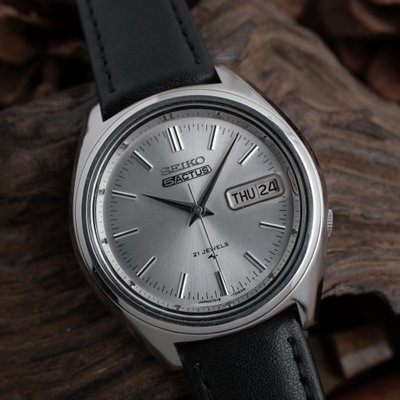
Seiko · 5 Actus · 7019-7060 · 1973
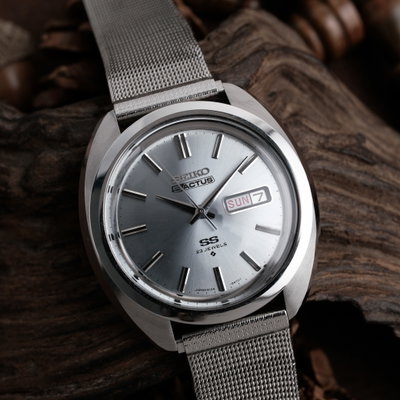
Seiko · 5 Actus · 6106-8440 · 1969
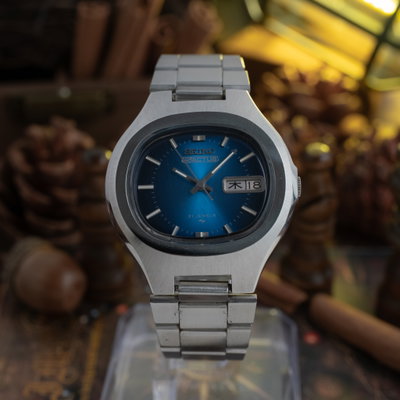
Seiko · 5 Actus · 7019-5010 · 1976
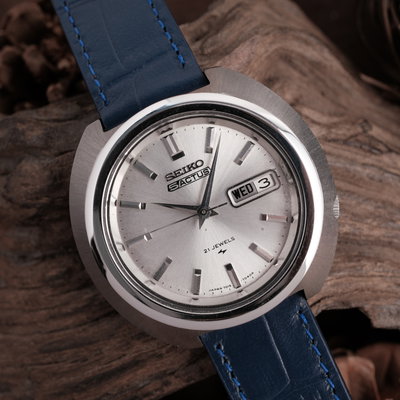
Seiko · 5 Actus · 7019-8010 · 1969

Seiko · 5 Actus · 7019-7210 · 1973

Seiko · 5 Actus · 7019-7060 · 1973
We auction more than 100 vintage watches a week.
Get first access: new Seiko watch drops and alerts before auctions end.
More Seiko references
Related pages
Frequently asked questions
Ready to hunt for your own?
More than 100 vintage watches go under the hammer every week.