Omega Constellation ST 168 029 Collector's Guide
Buy the Omega ST 168 029 for its silver dial, sharp C-shape case and caliber 751, while avoiding redials and softened case geometry.
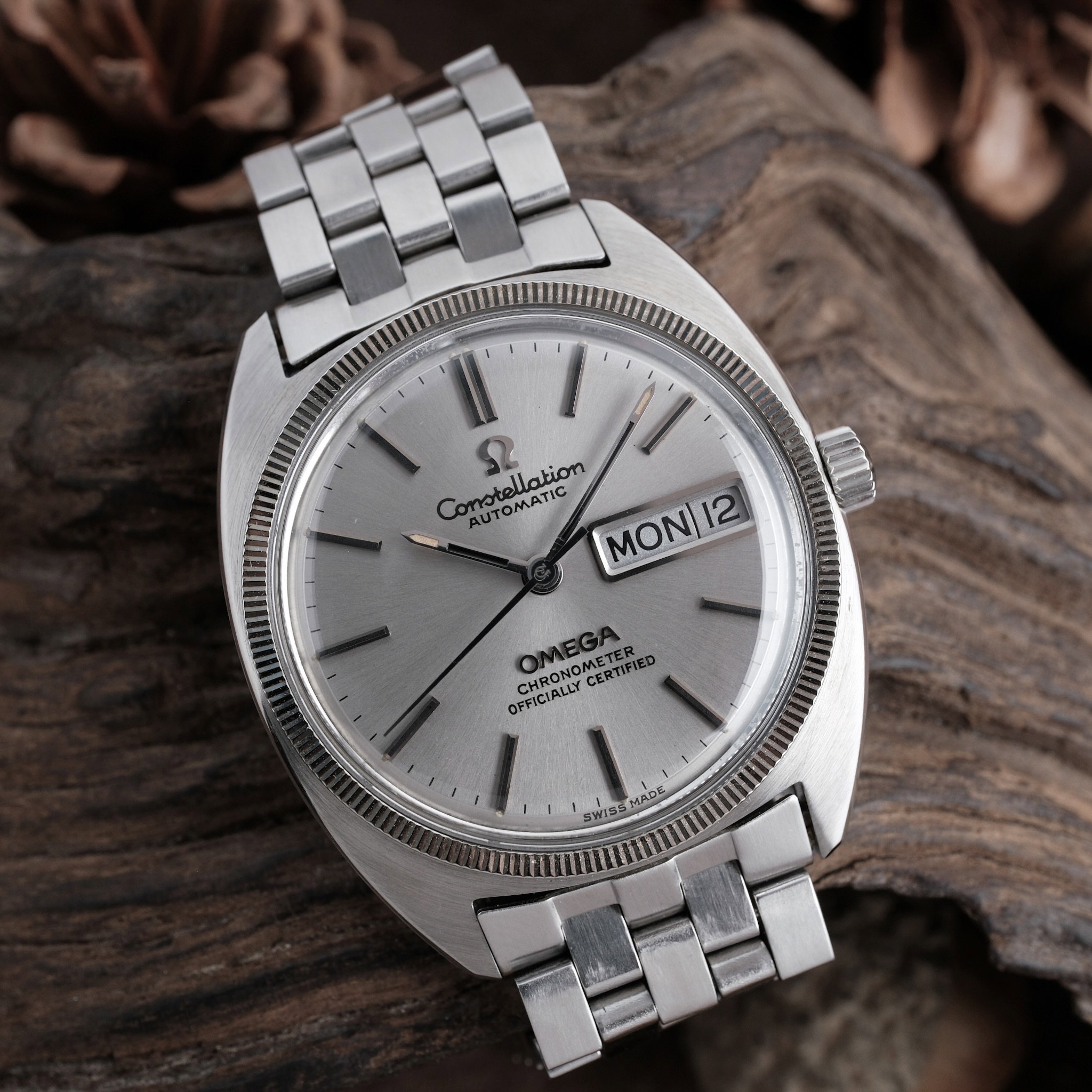
The vintage Omega Constellation ST 168 029 combines a 34mm stainless-steel C-shape case, fluted bezel and automatic caliber 751. Around 1970, this chronometer-certified reference used applied dial furniture and the Constellation star. The strongest configuration is a clean silver dial in a case that still holds its edges, preferably with the correctly fitted brick-link bracelet rather than a heavily polished head on a generic strap.
Silver dials occur with vertically brushed and sunburst finishes, accompanied by applied indices, an applied Omega logo and baton hands with black inserts. Intact printing, including the Officially Certified Chronometer designation, matters more than cosmetic case brightening. A redial should trade at a clear discount, while a genuine service dial must be identified as a replacement rather than described as original.
Reference
ST 168 029
Model
Constellation
Case style
C-shape with fluted bezel
Case material
Stainless steel
| Case size | 34mm excluding the crown |
| Movement | Automatic Omega caliber 751 |
| Certification | Chronometer-certified |
| Dial finishes | Vertically brushed silver or silver sunburst |
| Production date evidenced | Circa 1970 |
| Bracelet configuration | Signed brick-link bracelet |
The model landscape
ST 168 029 is the stainless-steel C-shape Constellation with a fluted bezel and caliber 751. The reference is not improved by mixing attractive period Omega parts: a dial, case and movement can each be genuine yet form a franken or married watch if they did not leave the factory together. Correct reference identity therefore depends on the complete configuration, not the logo alone.
Two silver treatments are established for this reference: vertically brushed and sunburst. Both use applied indices, an applied Omega logo and the Constellation star, so the buying decision rests on surface integrity and printing rather than an assumed hierarchy between finishes. Between an intact silver dial in a softly polished case and a refinished dial in a sharper case, take the intact dial, provided the case remains structurally sound.
On the wrist
The 34mm measurement excludes the crown, but the integrated C-shape spreads visual weight across the wrist instead of concentrating it in a round central body. A correctly fitted brick-link bracelet continues that geometry and gives the watch a more deliberate stance than a strap with visible gaps at the case. The silver dial, faceted indices and black hand inserts keep the display legible without changing its formal character.
Case definition changes the wearing experience on this reference. A sharp fluted bezel produces a clean boundary around the dial, while rounded case edges make the same dimensions look smaller and less structured. The watch sits most convincingly when the bracelet end fit remains tight and the bracelet has not developed enough stretch to droop away from the case.
What goes wrong
The costliest fault is a refinished silver dial, especially where the chronometer text, minute track or Constellation signature has been recreated. Moisture spotting and discoloration are damage, not patina, while uneven or freshly coloured luminous material points to relume. Original-looking warmth is not proof by itself, so the dial and hands must agree in colour, texture and ageing.
Over-polishing softens the C-shape edges and blunts the fluted bezel, removing geometry that cannot be recovered by service. Brick-link bracelets develop stretch and poor end fit, while replacement crowns can disturb an otherwise coherent configuration. Movement condition is separate: caliber 751 identification and a plausible serial establish type and approximate date, but the service history remains unknown without documentation.
Dating this watch
| Serial range / caliber | Year | Note |
|---|---|---|
| 1000000 | 1902 | approximate, ±1-3 years |
| 2000000 | 1908 | approximate, ±1-3 years |
| 3000000 | 1912 | approximate, ±1-3 years |
| 4000000 | 1916 | approximate, ±1-3 years |
| 5000000 | 1923 | approximate, ±1-3 years |
| 6000000 | 1925 | approximate, ±1-3 years |
| 7000000 | 1929 | approximate, ±1-3 years |
| 8000000 | 1935 | approximate, ±1-3 years |
| 9000000 | 1939 | approximate, ±1-3 years |
| 10000000 | 1944 | approximate, ±1-3 years |
| 11000000 | 1947 | approximate, ±1-3 years |
| 12000000 | 1950 | approximate, ±1-3 years |
| 13000000 | 1952 | approximate, ±1-3 years |
| 14000000 | 1954 | approximate, ±1-3 years |
| 15000000 | 1956 | approximate, ±1-3 years |
| 16000000 | 1958 | approximate, ±1-3 years |
| 17000000 | 1960 | approximate, ±1-3 years |
| 18000000 | 1961 | approximate, ±1-3 years |
| 19000000 | 1962 | approximate, ±1-3 years |
| 20000000 | 1963 | approximate, ±1-3 years |
| 21000000 | 1964 | approximate, ±1-3 years |
| 22000000 | 1965 | approximate, ±1-3 years |
| 24000000 | 1966 | approximate, ±1-3 years |
| 25000000 | 1967 | approximate, ±1-3 years |
| 26000000 | 1968 | approximate, ±1-3 years |
| 28000000 | 1969 | approximate, ±1-3 years |
| 31000000 | 1970 | approximate, ±1-3 years |
| 32000000 | 1971 | approximate, ±1-3 years |
| 33000000 | 1972 | approximate, ±1-3 years |
| 35000000 | 1973 | approximate, ±1-3 years |
| 37000000 | 1974 | approximate, ±1-3 years |
| 39000000 | 1975 | approximate, ±1-3 years |
| 40000000 | 1976 | approximate, ±1-3 years |
| 41000000 | 1977 | approximate, ±1-3 years |
| 42000000 | 1978 | approximate, ±1-3 years |
| 43000000 | 1979 | approximate, ±1-3 years |
| 44000000 | 1980 | approximate, ±1-3 years |
| 45000000 | 1982 | approximate, ±1-3 years |
| 46000000 | 1984 | approximate, ±1-3 years |
| 47000000 | 1985 | approximate, ±1-3 years |
| 48000000 | 1986 | approximate, ±1-3 years |
| 49000000 | 1988 | approximate, ±1-3 years |
| 50000000 | 1990 | approximate, ±1-3 years |
| 53000000 | 1993 | approximate, ±1-3 years |
| 54000000 | 1995 | approximate, ±1-3 years |
| 56000000 | 1996 | approximate, ±1-3 years |
| 58000000 | 1998 | approximate, ±1-3 years |
| 60000000 | 2000 | approximate, ±1-3 years |
Dating data comes from our decoder tables; treat years as approximate.
What to check before you buy
- Dial configuration: The silver dial should combine applied indices, an applied Omega logo, the Constellation star and Officially Certified Chronometer wording. Recreated printing, uneven luminous plots or an incorrect furniture combination indicates a redial, relume or franken configuration.
- Hands and luminous material: Baton hands with black inserts are established on ST 168 029, with luminous material that should age coherently beside the dial plots. A sharp colour or texture mismatch does not prove replacement alone, but it requires the hands and dial to be assessed as separate components.
- Case and bezel geometry: The stainless-steel C-shape case should retain defined edges around its broad profile, and the fluted bezel should remain visibly articulated. Rounded transitions or weak fluting diagnose polishing rather than honest surface ageing.
- Movement and serial: The movement should be automatic Omega caliber 751, with its serial falling plausibly within the approximate Omega table. Caliber and date compatibility do not prove that the movement and case left the factory together, so a married watch remains possible.
- Bracelet fit: A signed brick-link bracelet is established for this reference and should meet the C-shape case without conspicuous gaps. Excessive stretch, loose end fit or mismatched components reduce coherence even when individual bracelet parts are period-correct.
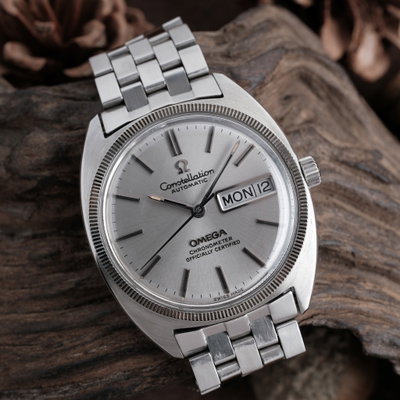
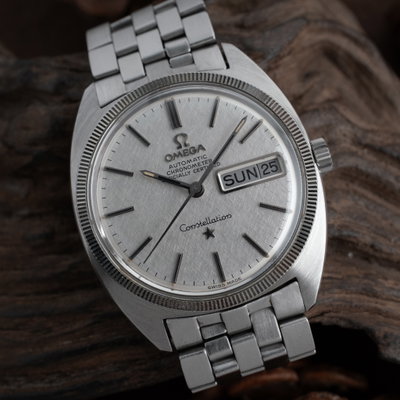
Other ST 168 029 examples we auctioned
More Omega references
Related pages
Frequently asked questions
Ready to hunt for your own?
More than 100 vintage watches go under the hammer every week.