Omega Constellation ST 168 0056 Reference Guide
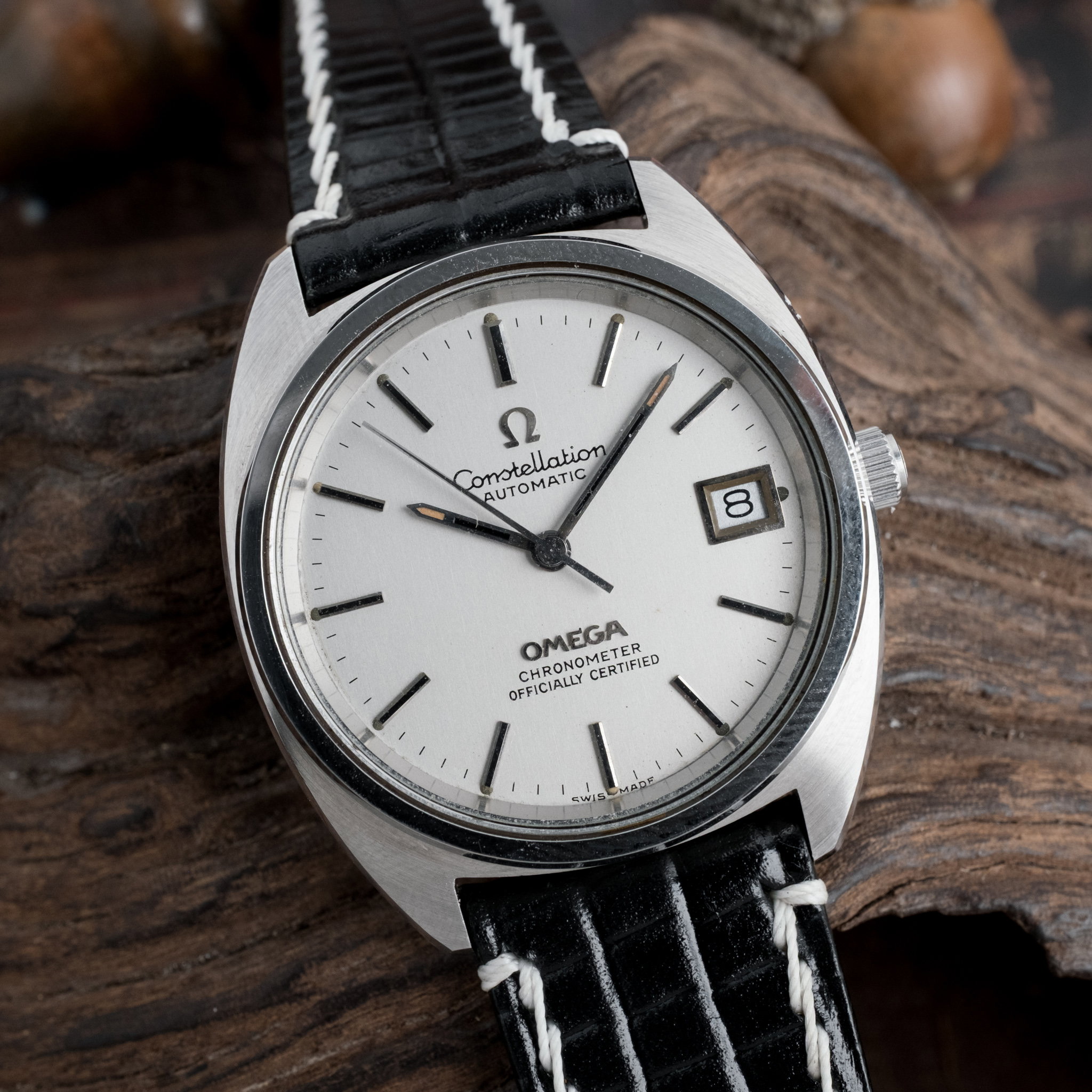
The Omega Constellation ST 168 0056 is a compact steel chronometer whose value rests chiefly on an honest brushed silver dial and a crisp C-shape case.
Live now
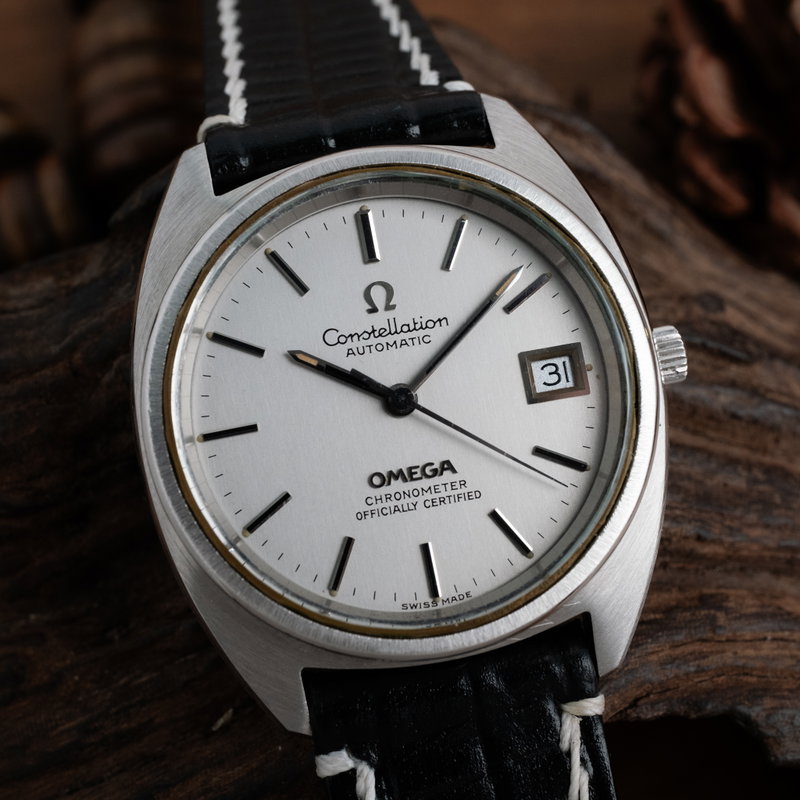
The Constellation ST 168 0056 puts early 1970s Omega chronometer watchmaking into a compact stainless steel C-shape case. Examples handled from 1971 to 1974 measure 34 to 35 mm without the crown, so the watch wears as a restrained dress piece rather than a modern sports watch.
The version to want has a clean silver dial with its vertical brushing or sunburst finish intact, applied baton indices with black inserts, and a distinct observatory medallion on the caseback. A refinished dial costs more in lost value than minor hand oxidation or ordinary case wear, while softened case geometry cannot be returned by servicing.
Reference
ST 168 0056
Model
Omega Constellation
Known production years
1971-1974
Observed case diameter
34-35 mm excluding the crown
| Case material | Stainless steel |
| Observed movements | Automatic Omega calibers 1011 and 1012 |
| Caliber 1011 jewel count | 23 jewels |
| Observed dial finish | Silver vertical brushing or silver sunburst |
| Case form | C-shape |
| Caseback detail | Observatory medallion |
What it was built for
The ST 168 0056 was built as an automatic Constellation chronometer with a date display, combining precision-focused mechanics with the C-shape case used in the early 1970s. Watches handled from 1971 and 1972 use caliber 1011, while a 1973 example uses caliber 1012. Both calibers belong within the evidence for this reference, but that does not make every loose movement and case a correct pairing.
Its silver dial is functional rather than decorative excess. Black inserts in the baton indices and stick hands sharpen contrast, while the vertically brushed or sunburst surface changes with the light. The applied Omega logo and Constellation star give the dial depth without compromising legibility.
Where the value sits
The dial carries the largest share of value. Intact brushing, crisp printing and correctly placed applied furniture matter more than a polished crystal or a claimed service, because a redial removes the surface that defines this reference. A genuine service dial is different from a redial, but it is still a replacement and should be described as such.
Case quality creates the next meaningful spread. The C-shape profile needs clear transitions around the lugs, and repeated polishing makes those transitions soft and the case visually smaller. The observatory medallion should remain distinct on the caseback. Between a sharp case with minor hand oxidation and a glossy case paired with a suspiciously fresh dial, take the former.
What goes wrong
The worst fault is a refinished silver dial, especially where the vertical brushing has been replaced by a flat or inconsistent surface. Printing can also lose its crisp relationship with the applied Omega logo, Constellation star and baton furniture. Darkened luminous tips and minor oxidation on the stick hands occur on handled examples, but they matter less when the dial remains honest.
Over-polishing softens the C-shape case and erases the transitions that give this reference its identity. Caseback wear can weaken the observatory medallion, while an integrated steel mesh bracelet must fit the case coherently rather than disguise an improvised assembly. A watch combining incompatible period parts is franken; a case and movement taken from different watches is married. The service history is unknown unless supported by documentation.
Dating this watch
| Serial range / caliber | Year | Note |
|---|---|---|
| 1000000 | 1902 | approximate, ±1-3 years |
| 2000000 | 1908 | approximate, ±1-3 years |
| 3000000 | 1912 | approximate, ±1-3 years |
| 4000000 | 1916 | approximate, ±1-3 years |
| 5000000 | 1923 | approximate, ±1-3 years |
| 6000000 | 1925 | approximate, ±1-3 years |
| 7000000 | 1929 | approximate, ±1-3 years |
| 8000000 | 1935 | approximate, ±1-3 years |
| 9000000 | 1939 | approximate, ±1-3 years |
| 10000000 | 1944 | approximate, ±1-3 years |
| 11000000 | 1947 | approximate, ±1-3 years |
| 12000000 | 1950 | approximate, ±1-3 years |
| 13000000 | 1952 | approximate, ±1-3 years |
| 14000000 | 1954 | approximate, ±1-3 years |
| 15000000 | 1956 | approximate, ±1-3 years |
| 16000000 | 1958 | approximate, ±1-3 years |
| 17000000 | 1960 | approximate, ±1-3 years |
| 18000000 | 1961 | approximate, ±1-3 years |
| 19000000 | 1962 | approximate, ±1-3 years |
| 20000000 | 1963 | approximate, ±1-3 years |
| 21000000 | 1964 | approximate, ±1-3 years |
| 22000000 | 1965 | approximate, ±1-3 years |
| 24000000 | 1966 | approximate, ±1-3 years |
| 25000000 | 1967 | approximate, ±1-3 years |
| 26000000 | 1968 | approximate, ±1-3 years |
| 28000000 | 1969 | approximate, ±1-3 years |
| 31000000 | 1970 | approximate, ±1-3 years |
| 32000000 | 1971 | approximate, ±1-3 years |
| 33000000 | 1972 | approximate, ±1-3 years |
| 35000000 | 1973 | approximate, ±1-3 years |
| 37000000 | 1974 | approximate, ±1-3 years |
| 39000000 | 1975 | approximate, ±1-3 years |
| 40000000 | 1976 | approximate, ±1-3 years |
| 41000000 | 1977 | approximate, ±1-3 years |
| 42000000 | 1978 | approximate, ±1-3 years |
| 43000000 | 1979 | approximate, ±1-3 years |
| 44000000 | 1980 | approximate, ±1-3 years |
| 45000000 | 1982 | approximate, ±1-3 years |
| 46000000 | 1984 | approximate, ±1-3 years |
| 47000000 | 1985 | approximate, ±1-3 years |
| 48000000 | 1986 | approximate, ±1-3 years |
| 49000000 | 1988 | approximate, ±1-3 years |
| 50000000 | 1990 | approximate, ±1-3 years |
| 53000000 | 1993 | approximate, ±1-3 years |
| 54000000 | 1995 | approximate, ±1-3 years |
| 56000000 | 1996 | approximate, ±1-3 years |
| 58000000 | 1998 | approximate, ±1-3 years |
| 60000000 | 2000 | approximate, ±1-3 years |
Dating data comes from our decoder tables; treat years as approximate.
What to check before you buy
- Dial construction and finish: The silver dial should retain coherent vertical brushing or a sunburst finish, with crisp printing and applied baton indices carrying black inserts. A flat, newly glossy surface or disturbed furniture points toward a redial or later intervention.
- Hands and luminous material: Correctly observed stick hands carry black inserts and luminous tips, while luminous dots sit at the outer edge of the indices. Dark ageing and minor oxidation can be honest; a stark mismatch may indicate relume or replaced hands.
- Case and caseback: The stainless steel case should retain a recognisable C-shape profile, and the caseback should carry a distinct observatory medallion. Soft transitions around the lugs and weak medallion detail are evidence of wear or polishing, not patina.
- Movement and date coherence: Handled ST 168 0056 watches contain automatic caliber 1011 or 1012. Compare the movement serial with the approximate Omega year table and the 1971-1974 reference window, while allowing the stated one-to-three-year uncertainty.
- Franken and married-watch risk: A correct caliber does not prove a correct watch. Dial finish, hands, case form, medallion and movement date must tell the same early 1970s story; incompatible period-correct parts can still make the watch franken or married.
Other ST 168 0056 examples we auctioned
7 Omega ST 168 0056 auctioned
Omega · Constellation · ST 168 0056 · 1971
Omega · Constellation · ST 168 0056 · 1973
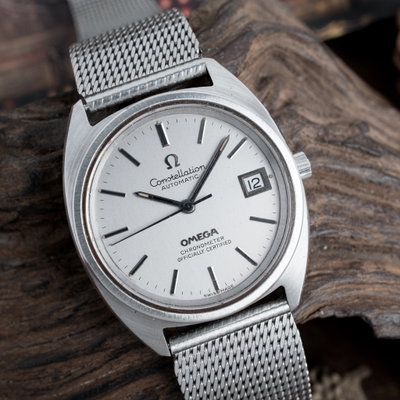
Omega · Constellation · ST 168 0056
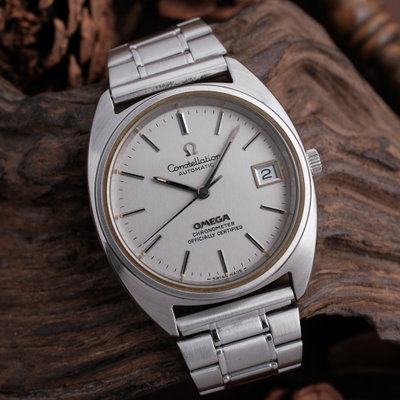
Omega · Constellation · ST 168 0056 · 1974
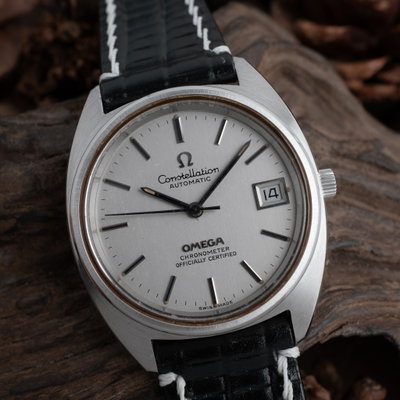
Omega · Constellation · ST 168 0056 · 1973
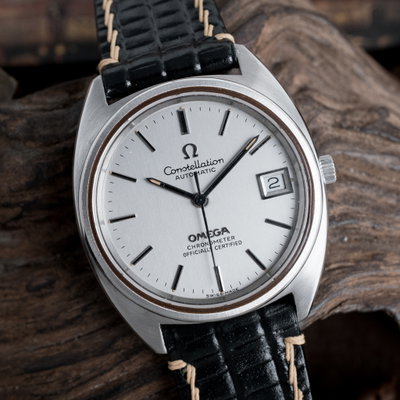
Omega · Constellation · ST 168 0056 · 1972
We auction more than 100 vintage watches a week.
Get first access: new Omega ST 168 0056 drops and alerts before auctions end.
More Omega references
Related pages
Frequently asked questions
Ready to hunt for your own?
More than 100 vintage watches go under the hammer every week.