Omega Genève 136.011 SP: calibers, variants and buying advice
The Omega Genève 136.011 SP is a compact manual-wind dress watch whose dial condition, case material and correct caliber determine the right buy.
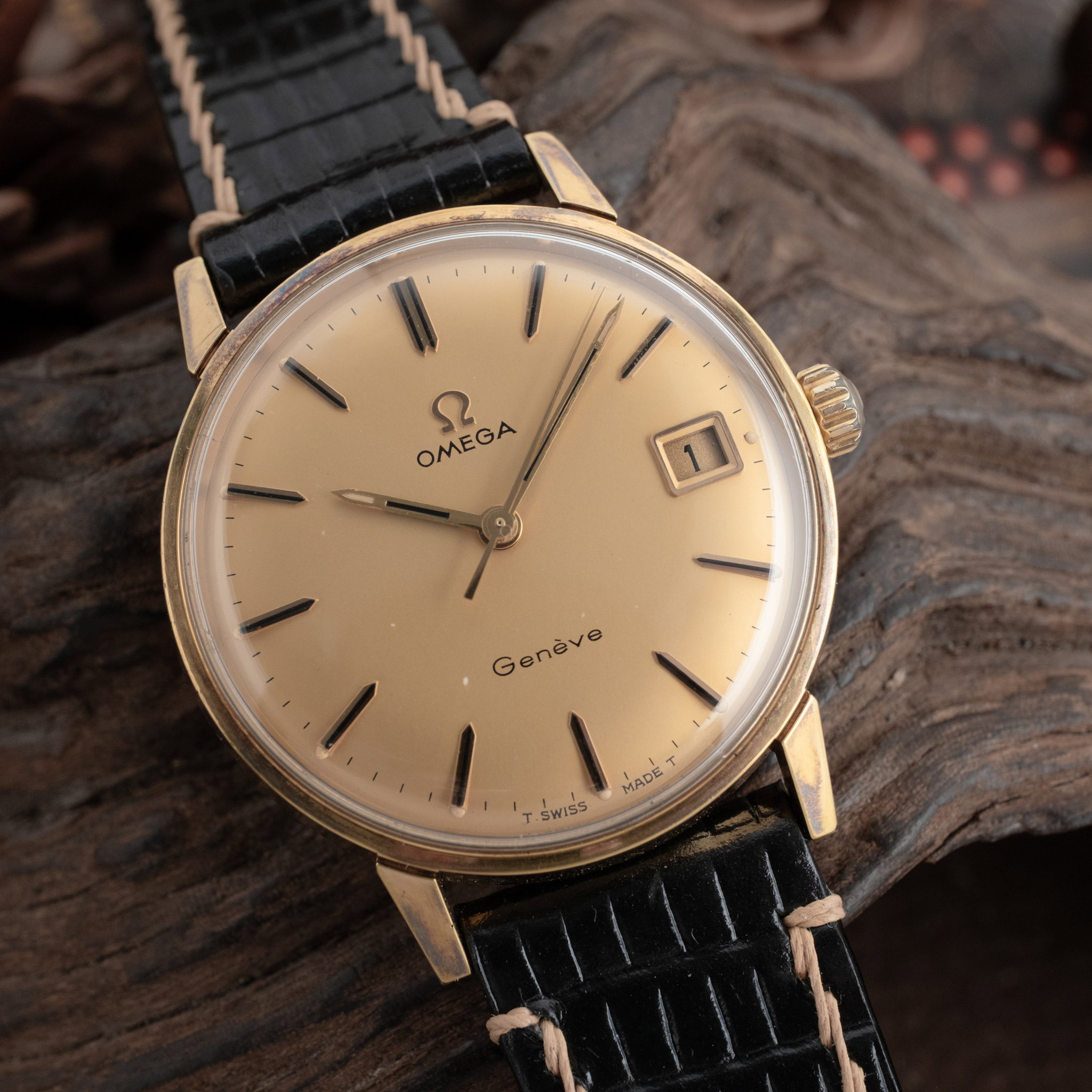
The Omega Genève 136.011 SP belongs to the compact, manual-wind dress watches made from 1968 through 1970. Steel examples measure 34 mm, while a gold-plated example measures 35 mm with a stainless steel caseback. That difference matters less than the material: steel tolerates honest wear, but worn plating at the lugs cannot be returned by routine servicing.
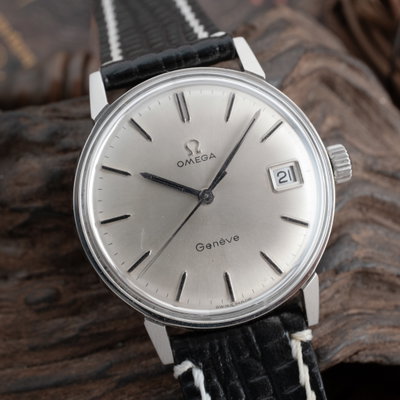
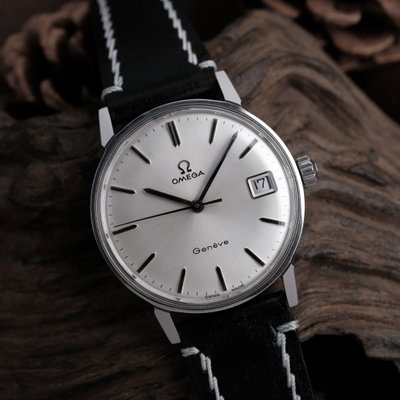
Silver and champagne sunburst dials give this reference two distinct characters. The silver dial with black-insert baton furniture is the safer choice for daily wear, while the champagne dial belongs naturally with the gold-plated case. Calibers 601 and 613 both occur in watches we have handled, so either can be correct; a movement mismatch matters more than choosing between them.
Reference
136.011 SP
Known production years
1968-1970
Movement
Manual-wind Omega calibers 601 and 613
Case formats
34 mm stainless steel; 35 mm gold-plated with stainless steel caseback
| Dial variants | Silver sunburst or champagne sunburst |
| Hour furniture | Applied baton indices with black inserts documented |
| Date display | Framed date at 3 o'clock documented with caliber 613 |
| Jewels | 17 jewels documented on a caliber 613 example |
The model landscape
The steel version pairs a 34 mm case with a silver sunburst dial, applied baton indices and black accents. The gold-plated version is 35 mm, with a champagne sunburst dial, gold-tone furniture and a stainless steel caseback. Between a sharp steel case and a plated case with wear-through at equal money, take the steel watch. The plated version only wins when its dial is clearly better and the plating remains intact at the lug edges.
Caliber 601 occurs in a 1968 example, while caliber 613 occurs in examples dated 1968 and 1970. A framed date at 3 o'clock is documented with caliber 613, adding utility without changing the compact dress-watch proportions. The movement must be judged as part of the complete configuration: another caliber, or a case and movement whose dates conflict materially, raises the possibility of a franken or married watch.
What goes wrong
A refinished dial costs more than the other common faults combined because the sunburst surface, printed wording and applied furniture carry most of this reference's value. Silver dials can develop spotting, and the hands can show oxidation even when the dial remains presentable. A genuine service dial is not a redial, but it is still a replacement; without documentation, the dial itself must establish what can safely be claimed.
Gold plating wears through first around exposed case edges and lugs, and no ordinary service puts that material back correctly. Repeated polishing softens the lug geometry on steel cases, replacing crisp transitions with rounded, mushy edges.
Where to start
Start with a 34 mm steel watch, a clean silver sunburst dial and whichever correct manual-wind caliber is already fitted. The case will wear compactly, and the black inserts in the baton indices and stick hands preserve legibility against the reflective dial. A 35 mm gold-plated watch has more warmth, but it asks for closer attention to plating loss and caseback compatibility.
Value sits first in an honest dial, then in coherent case and movement configuration, and finally in sharp case geometry. Minor spotting on an otherwise untouched silver dial is preferable to a smooth redial with newly applied printing. Between caliber 601 and caliber 613, condition settles the decision; between intact steel and compromised plating, steel is the easier used Omega Genève 136.011 SP to own.
Dating this watch
| Serial range / caliber | Year | Note |
|---|---|---|
| 1000000 | 1902 | approximate, ±1-3 years |
| 2000000 | 1908 | approximate, ±1-3 years |
| 3000000 | 1912 | approximate, ±1-3 years |
| 4000000 | 1916 | approximate, ±1-3 years |
| 5000000 | 1923 | approximate, ±1-3 years |
| 6000000 | 1925 | approximate, ±1-3 years |
| 7000000 | 1929 | approximate, ±1-3 years |
| 8000000 | 1935 | approximate, ±1-3 years |
| 9000000 | 1939 | approximate, ±1-3 years |
| 10000000 | 1944 | approximate, ±1-3 years |
| 11000000 | 1947 | approximate, ±1-3 years |
| 12000000 | 1950 | approximate, ±1-3 years |
| 13000000 | 1952 | approximate, ±1-3 years |
| 14000000 | 1954 | approximate, ±1-3 years |
| 15000000 | 1956 | approximate, ±1-3 years |
| 16000000 | 1958 | approximate, ±1-3 years |
| 17000000 | 1960 | approximate, ±1-3 years |
| 18000000 | 1961 | approximate, ±1-3 years |
| 19000000 | 1962 | approximate, ±1-3 years |
| 20000000 | 1963 | approximate, ±1-3 years |
| 21000000 | 1964 | approximate, ±1-3 years |
| 22000000 | 1965 | approximate, ±1-3 years |
| 24000000 | 1966 | approximate, ±1-3 years |
| 25000000 | 1967 | approximate, ±1-3 years |
| 26000000 | 1968 | approximate, ±1-3 years |
| 28000000 | 1969 | approximate, ±1-3 years |
| 31000000 | 1970 | approximate, ±1-3 years |
| 32000000 | 1971 | approximate, ±1-3 years |
| 33000000 | 1972 | approximate, ±1-3 years |
| 35000000 | 1973 | approximate, ±1-3 years |
| 37000000 | 1974 | approximate, ±1-3 years |
| 39000000 | 1975 | approximate, ±1-3 years |
| 40000000 | 1976 | approximate, ±1-3 years |
| 41000000 | 1977 | approximate, ±1-3 years |
| 42000000 | 1978 | approximate, ±1-3 years |
| 43000000 | 1979 | approximate, ±1-3 years |
| 44000000 | 1980 | approximate, ±1-3 years |
| 45000000 | 1982 | approximate, ±1-3 years |
| 46000000 | 1984 | approximate, ±1-3 years |
| 47000000 | 1985 | approximate, ±1-3 years |
| 48000000 | 1986 | approximate, ±1-3 years |
| 49000000 | 1988 | approximate, ±1-3 years |
| 50000000 | 1990 | approximate, ±1-3 years |
| 53000000 | 1993 | approximate, ±1-3 years |
| 54000000 | 1995 | approximate, ±1-3 years |
| 56000000 | 1996 | approximate, ±1-3 years |
| 58000000 | 1998 | approximate, ±1-3 years |
| 60000000 | 2000 | approximate, ±1-3 years |
Dating data comes from our decoder tables; treat years as approximate.
What to check before you buy
- Dial print and surface: A correct known dial is silver or champagne with a sunburst surface, applied baton indices and black accents. Flat paint, newly sharp printing over an aged surface or misplaced furniture supports a redial judgement rather than honest ageing.
- Hands: Handled examples use stick hands with black inserts and a centre seconds hand; the champagne version uses matching gold-tone furniture. Oxidation can be genuine wear, but a visibly incompatible hand set raises a parts-swap concern.
- Case and caseback: Steel examples use a 34 mm stainless steel case, while the documented 35 mm gold-plated configuration has a stainless steel caseback. A material pairing outside those known forms needs stronger evidence before acceptance.
- Crown: The available evidence does not establish the exact factory crown profile for 136.011 SP. Treat the crown as a possible service replacement and do not use it alone to certify or reject the watch.
- Movement and finishing: The movement must be manual-wind caliber 601 or 613 within the configurations documented here. The evidence does not establish every finishing detail, so another caliber is a firm conflict while cosmetic finishing alone is not proof.
- Redial and franken tells: A redial can combine a smooth surface with printing that is newer than the hands and case. A franken concern is different: it arises when the caliber, date display, case material or dial configuration did not belong together.
- Case geometry: The stainless steel case should retain defined lug transitions rather than rounded, mushy edges. On the plated case, inspect the lug edges for exposed base metal, because polishing and wear remove plating permanently.
Other 136.011 SP examples we auctioned
Omega · Genève · 136.011 SP
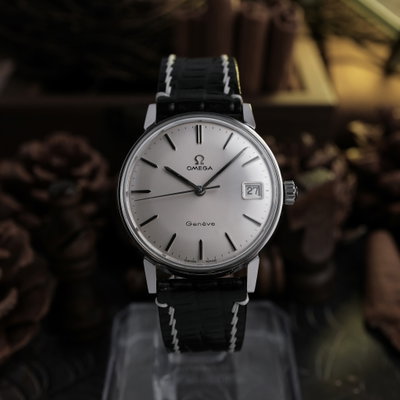
Omega · Genève · 136.011 SP · 1970
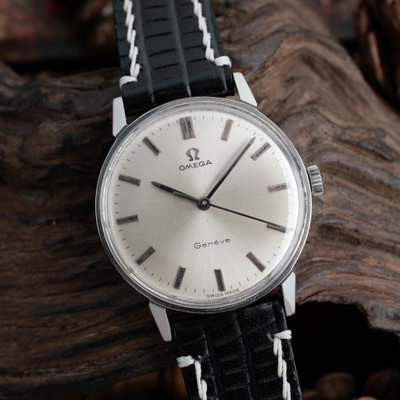
Omega · Genève · 136.011 SP · 1968
Omega · Genève · 136.011 SP
Omega · Genève · 136.011 SP · 1970
More Omega references
Related pages
Frequently asked questions
Ready to hunt for your own?
More than 100 vintage watches go under the hammer every week.