Omega Constellation 168019: What to Know Before Buying
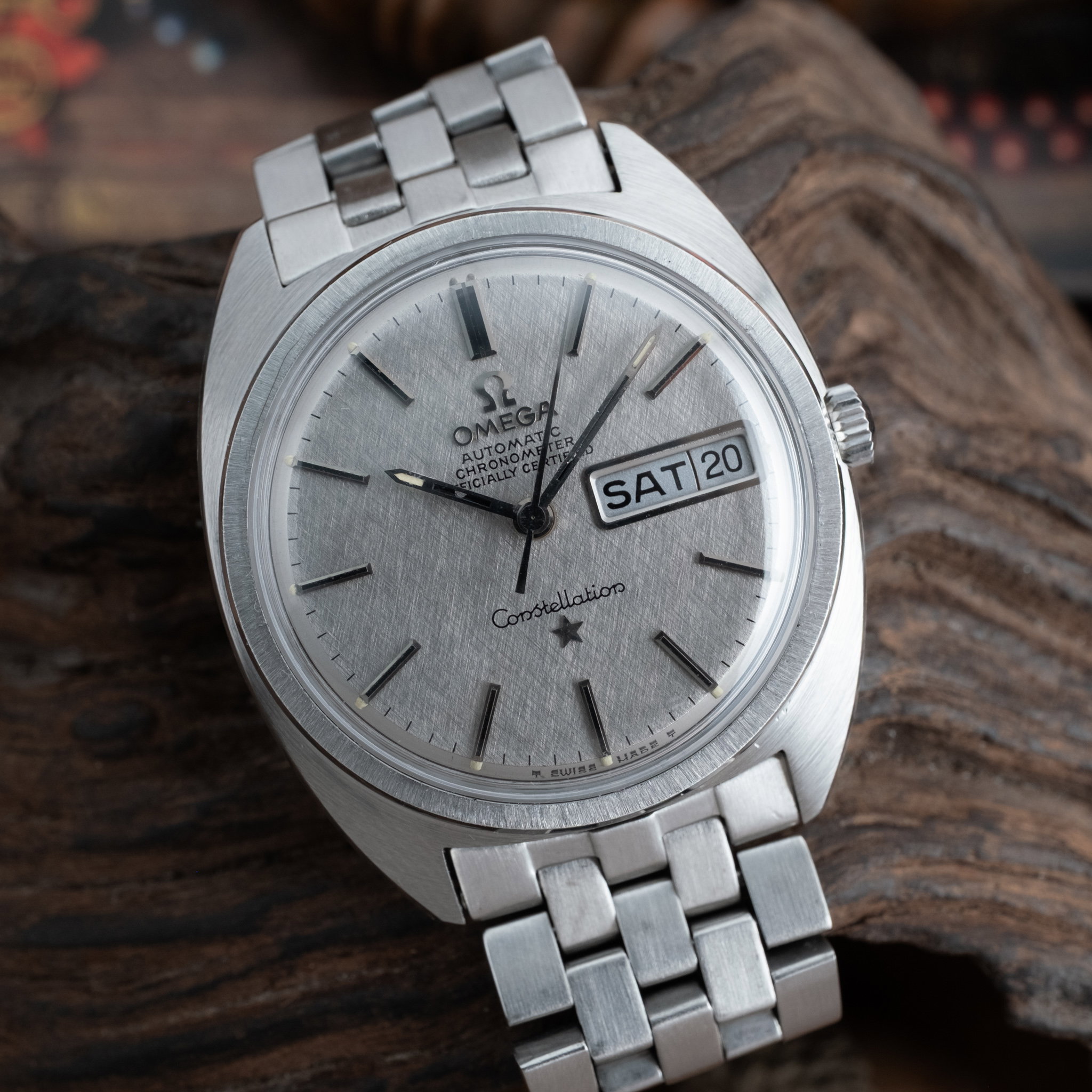
The Omega Constellation 168019 pairs a compact stainless steel C-shape case with caliber 751, day-date display and a vertically brushed silver dial.
We auction more than 100 vintage watches a week.
Get first access: new Omega 168019 drops and alerts before auctions end.
Browse 64 live Omega auctionsThe Constellation 168019 belongs to Omega's late-1960s move away from the conventional round dress watch. Its stainless steel C-shape case, automatic chronometer movement and day-date display make it more practical than its formal silver dial initially suggests.
Known examples date from 1968 to 1969 and measure either 34 mm or 35 mm without the crown. That compact diameter is central to the reference, while caliber 751 and the vertically brushed dial supply most of its mechanical and visual identity. Buy the dial first: a redial costs more in lost value than light case wear or a replaced consumable part.
Brand
Omega
Model
Constellation
Reference
168019
Known production years
1968-1969
| Case material | Stainless steel |
| Known case sizes | 34 mm or 35 mm, excluding the crown |
| Movement | Automatic caliber 751 |
| Movement specification | Chronometer-certified, 24 jewels |
| Display | Day and date |
| Known dial | Vertically brushed silver |
| Known bracelet | Stainless steel brick-link bracelet |
The model landscape
The Omega Constellation 168019 has a clear specification: stainless steel C-shape case, automatic caliber 751, chronometer certification and day-date display. The observed production span is 1968 to 1969. Silver dials carry a vertical brush, applied faceted indices with black inserts, an applied Omega logo and the Constellation star.
Case measurements vary between 34 mm and 35 mm without the crown, but that difference should not outrank preservation. Between a sharper 34 mm case with an honest dial and a softened 35 mm example with refinished printing, take the smaller watch. A brick-link bracelet adds period character when its fit and construction agree with the watch, though not every example retains one.
Value sits first in the dial, then in case definition, correct movement and bracelet condition. Crisp printing over an uninterrupted vertical brush carries a premium over a redial, while sharp C-shape case lines matter more than superficial shine. A correct caliber 751 cannot rescue a refinished dial, and an attractive dial cannot make a married or franken watch coherent.
On the wrist
At 34 mm or 35 mm excluding the crown, the Constellation 168019 wears compactly by modern standards. The C-shape case gives the watch more visual width than a conventional round case of the same diameter, while the silver dial and black index inserts keep the day-date display legible.
The reference works best when its proportions remain intact. Heavy polishing makes the C-shape case look softer and smaller by removing the transitions that give it presence. On a brick-link bracelet, stretch and loose end-link fit can change how securely the watch sits, so bracelet condition matters beyond appearance.
What goes wrong
A refinished dial is the costliest common fault because the vertical brushing, printed text and applied furniture must still agree as one surface. Relumed plots can break the even ageing seen on sound examples, while replacement hands can create a mismatch in black inserts or luminous material. A genuine service dial is not a redial, but it is still a later replacement and should be described as such.
Over-polishing softens the C-shape case transitions and rounds the lugs. Brick-link bracelets can develop stretch, and incorrect bracelets or loose end links disturb both fit and period coherence. Caliber 751 should match the automatic chronometer and day-date specification; otherwise the watch may be married or franken rather than merely serviced.
The service history of any individual watch is unknown without receipts, and a timegrapher result from one date does not establish future performance. Start with the 1968 to 1969 stainless steel example retaining a clean vertically brushed dial and defined case geometry. Choose that over a shinier watch with softened metal, mismatched lume or uncertain movement identity.
Dating this watch
| Serial range / caliber | Year | Note |
|---|---|---|
| 1000000 | 1902 | approximate, ±1-3 years |
| 2000000 | 1908 | approximate, ±1-3 years |
| 3000000 | 1912 | approximate, ±1-3 years |
| 4000000 | 1916 | approximate, ±1-3 years |
| 5000000 | 1923 | approximate, ±1-3 years |
| 6000000 | 1925 | approximate, ±1-3 years |
| 7000000 | 1929 | approximate, ±1-3 years |
| 8000000 | 1935 | approximate, ±1-3 years |
| 9000000 | 1939 | approximate, ±1-3 years |
| 10000000 | 1944 | approximate, ±1-3 years |
| 11000000 | 1947 | approximate, ±1-3 years |
| 12000000 | 1950 | approximate, ±1-3 years |
| 13000000 | 1952 | approximate, ±1-3 years |
| 14000000 | 1954 | approximate, ±1-3 years |
| 15000000 | 1956 | approximate, ±1-3 years |
| 16000000 | 1958 | approximate, ±1-3 years |
| 17000000 | 1960 | approximate, ±1-3 years |
| 18000000 | 1961 | approximate, ±1-3 years |
| 19000000 | 1962 | approximate, ±1-3 years |
| 20000000 | 1963 | approximate, ±1-3 years |
| 21000000 | 1964 | approximate, ±1-3 years |
| 22000000 | 1965 | approximate, ±1-3 years |
| 24000000 | 1966 | approximate, ±1-3 years |
| 25000000 | 1967 | approximate, ±1-3 years |
| 26000000 | 1968 | approximate, ±1-3 years |
| 28000000 | 1969 | approximate, ±1-3 years |
| 31000000 | 1970 | approximate, ±1-3 years |
| 32000000 | 1971 | approximate, ±1-3 years |
| 33000000 | 1972 | approximate, ±1-3 years |
| 35000000 | 1973 | approximate, ±1-3 years |
| 37000000 | 1974 | approximate, ±1-3 years |
| 39000000 | 1975 | approximate, ±1-3 years |
| 40000000 | 1976 | approximate, ±1-3 years |
| 41000000 | 1977 | approximate, ±1-3 years |
| 42000000 | 1978 | approximate, ±1-3 years |
| 43000000 | 1979 | approximate, ±1-3 years |
| 44000000 | 1980 | approximate, ±1-3 years |
| 45000000 | 1982 | approximate, ±1-3 years |
| 46000000 | 1984 | approximate, ±1-3 years |
| 47000000 | 1985 | approximate, ±1-3 years |
| 48000000 | 1986 | approximate, ±1-3 years |
| 49000000 | 1988 | approximate, ±1-3 years |
| 50000000 | 1990 | approximate, ±1-3 years |
| 53000000 | 1993 | approximate, ±1-3 years |
| 54000000 | 1995 | approximate, ±1-3 years |
| 56000000 | 1996 | approximate, ±1-3 years |
| 58000000 | 1998 | approximate, ±1-3 years |
| 60000000 | 2000 | approximate, ±1-3 years |
Dating data comes from our decoder tables; treat years as approximate.
What to check before you buy
- Dial surface and furniture: The silver dial should retain a continuous vertical brush beneath crisp printing, with applied faceted indices carrying black inserts plus an applied Omega logo and Constellation star.
- Hands and luminous material: Correct baton hands have black inserts and luminous material that should make visual sense beside the plots at the index bases. Fresh relume or mismatched ageing requires explanation.
- Movement identity: The movement should be automatic caliber 751 with 24 jewels, chronometer specification and working day-date display. A different caliber would conflict with the known construction of the reference.
- Case geometry: The stainless steel case should retain readable C-shape transitions at 34 mm or 35 mm excluding the crown. Rounded lugs and blurred planes indicate metal removed by polishing.
- Bracelet coherence: A brick-link stainless steel bracelet is period evidence on this reference, but it is not proof by itself. Stretch, poor end-link fit or unrelated components can indicate a later assembled bracelet.
Other 168019 examples we auctioned
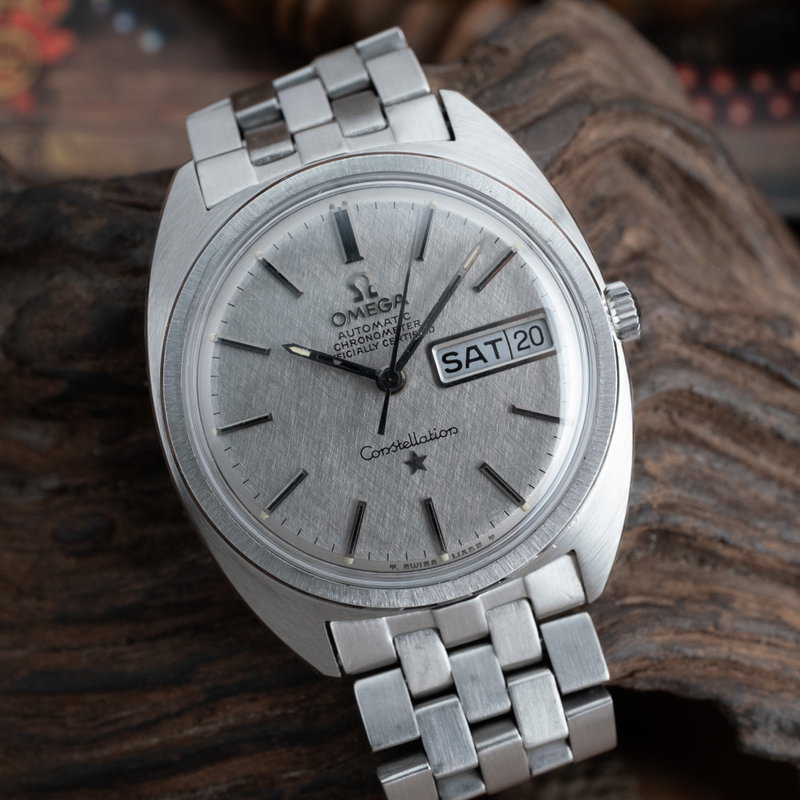
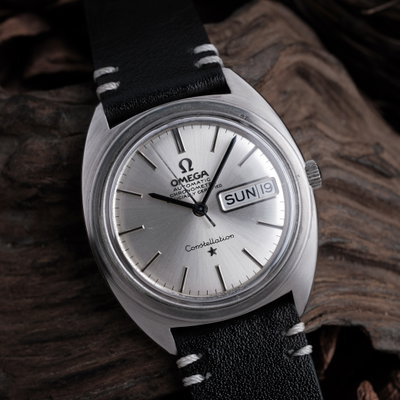
4 Omega 168019 auctioned
More Omega references
Related pages
Frequently asked questions
Ready to hunt for your own?
More than 100 vintage watches go under the hammer every week.