Omega Constellation 168.018: What to Know Before You Buy
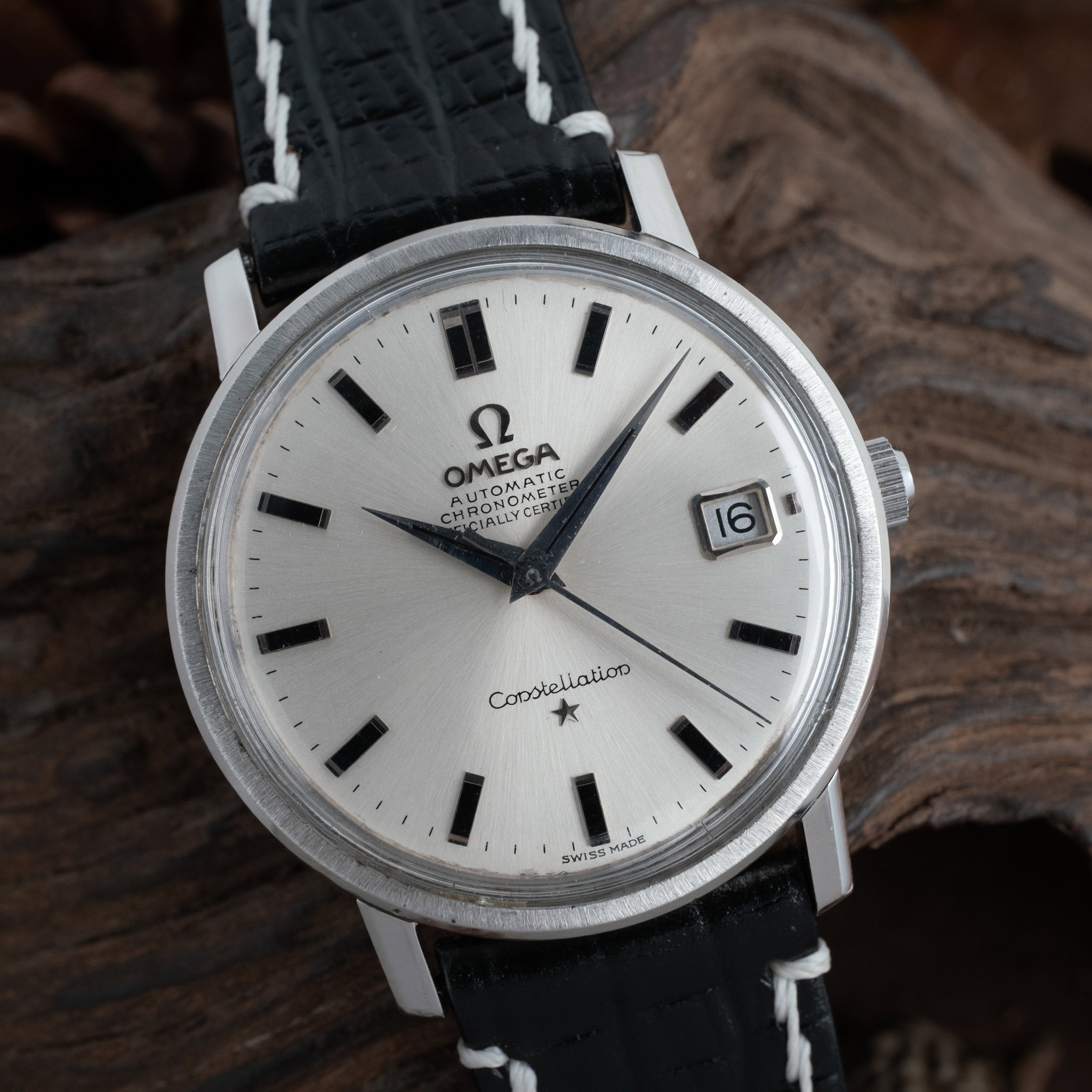
The Omega Constellation 168.018 is a 35 mm automatic chronometer whose value rests chiefly on its dial, dog-leg case geometry and correct caliber 564.
We auction more than 100 vintage watches a week.
Get first access: new Omega 168018 drops and alerts before auctions end.
Browse 29 live Omega auctionsThe Omega Constellation 168.018 is a compact automatic chronometer with a 35 mm case, caliber 564 and sharply drawn dog-leg lugs. Examples handled from 1967 through 1970 establish the reference as a late-1960s design that continued into the following decade.
The standard vintage Omega Constellation 168.018 pairs a silver sunburst dial with applied indices carrying black inserts. A MEISTER co-signed version also exists, but the clean standard dial is the safer purchase when the co-signature cannot be judged confidently. Buy the dial and case geometry first.
Reference
168.018
Model
Constellation
Handled production years
1967-1970
Case diameter
35 mm excluding the crown
| Movement | Omega caliber 564 |
| Winding | Automatic |
| Certification | Chronometer |
| Jewels | 24 |
| Adjustment | Five positions and temperature |
| Dial | Silver sunburst |
| Hour markers | Applied indices with black inserts |
| Case materials | Stainless steel; gold-tone and stainless steel |
| Case architecture | Dog-leg lugs |
| Caseback detail | Observatory medallion |
The model landscape
The central specification is consistent: a 35 mm case and automatic chronometer caliber 564. Steel examples exist, as do watches combining a gold-tone case with stainless steel. The latter should be judged carefully at the lug edges because surface wear cannot be reversed by servicing, while steel makes softened dog-leg geometry easier to see.
The silver sunburst dial has applied black-insert indices, an applied Omega logo and an applied Constellation star. Matching hands also carry black inserts. A MEISTER co-signed dial sits outside the standard configuration and can justify extra attention, but not an automatic premium - uncertain printing is a liability, not a rarity claim.
On the wrist
At 35 mm excluding the crown, the Constellation 168.018 wears as a compact dress watch rather than a modern sports watch. The dog-leg lugs add visual structure beyond the diameter, while black inserts in the hands and hour markers improve contrast against the silver sunburst surface.
The reference suits a cuff because its restrained diameter does not spread far across the wrist. No thickness measurement is available from the watches handled, so the exact cuff clearance should not be inferred. The useful comparison is proportion: the angular lugs give this 35 mm case more presence than a plain round case of the same width.
What goes wrong
A refinished dial is the costliest common compromise because the silver sunburst finish, printed text and applied furniture define the face of this reference. A service dial is different: it is a genuine factory replacement, though not the dial originally fitted. A MEISTER signature deserves the same scrutiny as the main printing because an added signature can create a false premium.
Over-polishing softens the dog-leg lugs and erases the transitions that give the case its shape. Gold-tone surfaces can wear through at exposed lug edges, while black inserts in the hands or indices can be lost or replaced unevenly. The observatory medallion should remain well defined rather than abraded. Service history is unknown unless documentation accompanies the watch.
Dating this watch
| Serial range / caliber | Year | Note |
|---|---|---|
| 1,000,000 | 1902 | approximate, ±1-3 years |
| 2,000,000 | 1908 | approximate, ±1-3 years |
| 3,000,000 | 1912 | approximate, ±1-3 years |
| 4,000,000 | 1916 | approximate, ±1-3 years |
| 5,000,000 | 1923 | approximate, ±1-3 years |
| 6,000,000 | 1925 | approximate, ±1-3 years |
| 7,000,000 | 1929 | approximate, ±1-3 years |
| 8,000,000 | 1935 | approximate, ±1-3 years |
| 9,000,000 | 1939 | approximate, ±1-3 years |
| 10,000,000 | 1944 | approximate, ±1-3 years |
| 11,000,000 | 1947 | approximate, ±1-3 years |
| 12,000,000 | 1950 | approximate, ±1-3 years |
| 13,000,000 | 1952 | approximate, ±1-3 years |
| 14,000,000 | 1954 | approximate, ±1-3 years |
| 15,000,000 | 1956 | approximate, ±1-3 years |
| 16,000,000 | 1958 | approximate, ±1-3 years |
| 17,000,000 | 1960 | approximate, ±1-3 years |
| 18,000,000 | 1961 | approximate, ±1-3 years |
| 19,000,000 | 1962 | approximate, ±1-3 years |
| 20,000,000 | 1963 | approximate, ±1-3 years |
| 21,000,000 | 1964 | approximate, ±1-3 years |
| 22,000,000 | 1965 | approximate, ±1-3 years |
| 24,000,000 | 1966 | approximate, ±1-3 years |
| 25,000,000 | 1967 | approximate, ±1-3 years |
| 26,000,000 | 1968 | approximate, ±1-3 years |
| 28,000,000 | 1969 | approximate, ±1-3 years |
| 31,000,000 | 1970 | approximate, ±1-3 years |
| 32,000,000 | 1971 | approximate, ±1-3 years |
| 33,000,000 | 1972 | approximate, ±1-3 years |
| 35,000,000 | 1973 | approximate, ±1-3 years |
| 37,000,000 | 1974 | approximate, ±1-3 years |
| 39,000,000 | 1975 | approximate, ±1-3 years |
| 40,000,000 | 1976 | approximate, ±1-3 years |
| 41,000,000 | 1977 | approximate, ±1-3 years |
| 42,000,000 | 1978 | approximate, ±1-3 years |
| 43,000,000 | 1979 | approximate, ±1-3 years |
| 44,000,000 | 1980 | approximate, ±1-3 years |
| 45,000,000 | 1982 | approximate, ±1-3 years |
| 46,000,000 | 1984 | approximate, ±1-3 years |
| 47,000,000 | 1985 | approximate, ±1-3 years |
| 48,000,000 | 1986 | approximate, ±1-3 years |
| 49,000,000 | 1988 | approximate, ±1-3 years |
| 50,000,000 | 1990 | approximate, ±1-3 years |
| 53,000,000 | 1993 | approximate, ±1-3 years |
| 54,000,000 | 1995 | approximate, ±1-3 years |
| 56,000,000 | 1996 | approximate, ±1-3 years |
| 58,000,000 | 1998 | approximate, ±1-3 years |
| 60,000,000 | 2000 | approximate, ±1-3 years |
Dating data comes from our decoder tables; treat years as approximate.
What to check before you buy
- Dial configuration: The established dial is silver sunburst with crisp printed text, applied black-insert indices, an applied Omega logo and an applied Constellation star. A flat finish or inconsistent furniture needs explanation.
- Hands and hour markers: The known hands carry black inserts that visually correspond with the inserts in the applied hour markers. Missing, uneven or newly replaced inserts can indicate later work even when the main components are genuine.
- Case geometry: The case uses angular dog-leg lugs. Soft transitions and rounded edges diagnose polishing; they do not prove the watch is false, but they permanently reduce the geometry that distinguishes this reference.
- Movement identity: The correct movement is the automatic chronometer caliber 564. Its presence is necessary but not sufficient because a correct movement can still be married to a case or dial from another watch.
- Caseback medallion: The back carries an observatory medallion, including a solid gold example among the watches handled. Definition should be judged for abrasion, while the available evidence does not support a broader claim about every medallion material.
- Co-signed dial: A MEISTER co-signed version exists. The added name must be assessed as part of the dial rather than treated as automatic proof of rarity, and without stronger documentation we prefer not to speculate beyond the printing itself.
Other 168018 examples we auctioned
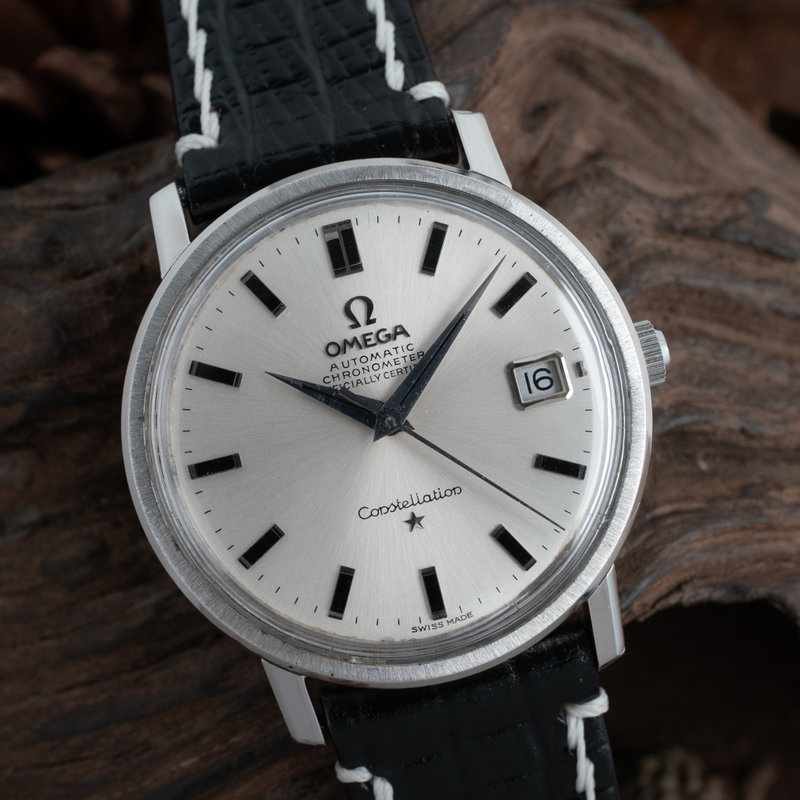
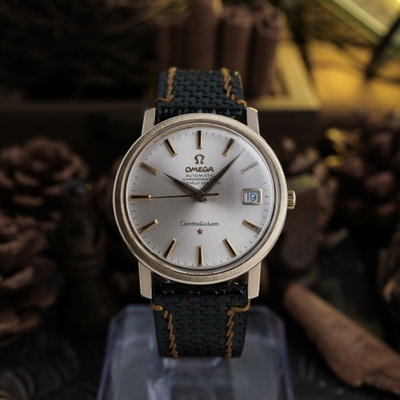
3 Omega 168018 auctioned
More Omega references
Related pages
Frequently asked questions
Ready to hunt for your own?
More than 100 vintage watches go under the hammer every week.