Omega Constellation 168.016 - A Collector's Reference Guide
Buy the Omega Constellation 168.016 for its clean silver sunburst dial, defined C-shape case and correct caliber 751, not for a service claim.
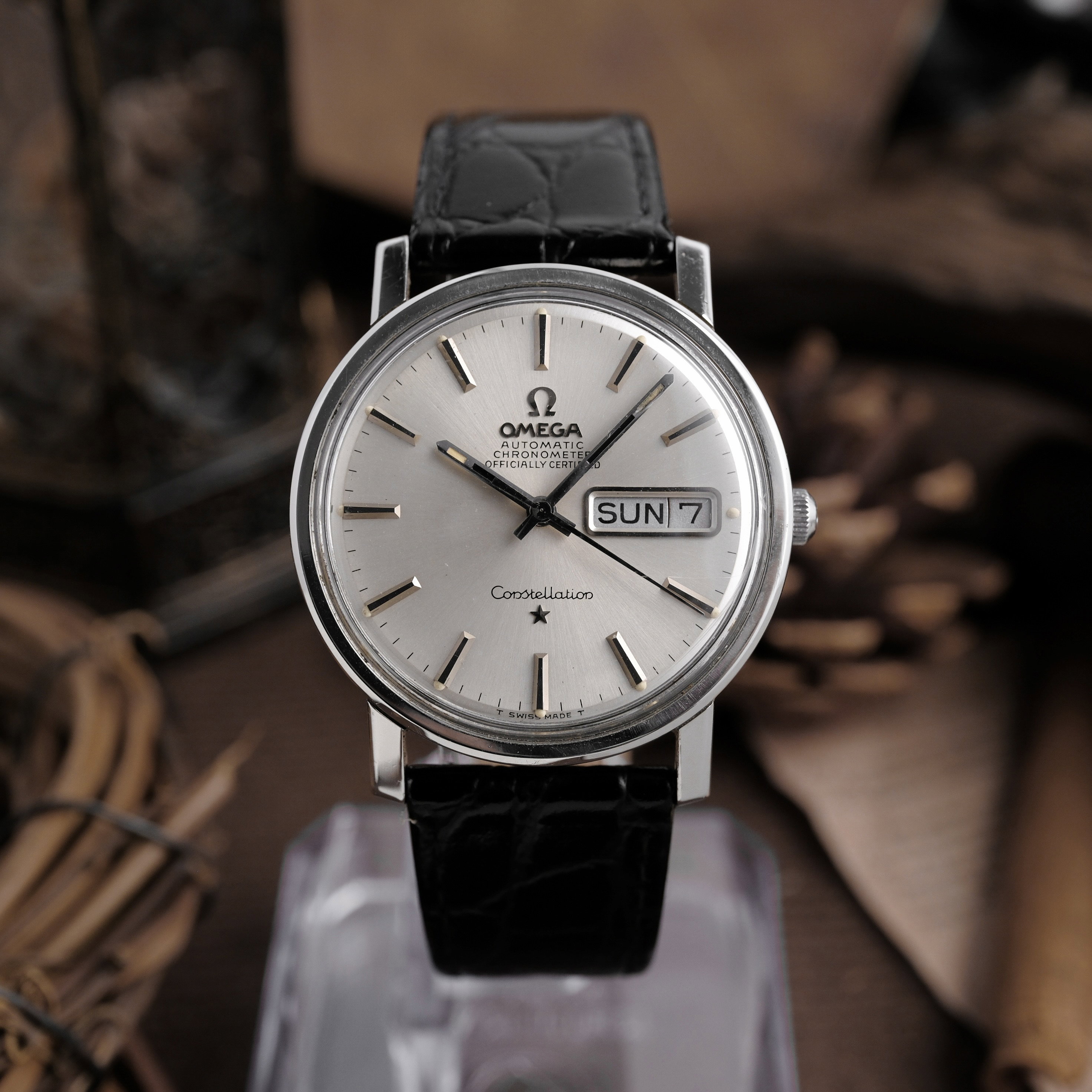
The Constellation 168.016 brought Omega's automatic day-date chronometer into a 35 mm stainless-steel C-shape case. Made across the known 1968-1970 range and powered by caliber 751, it belongs to the late-1960s shift from round dress cases toward a broader, more architectural profile associated with Gerald Genta.
The version to want has a clean silver sunburst dial, applied faceted indices with black inlays and a case whose C-shape lines remain defined. A fluted bezel and beads-of-rice bracelet occur on examples we have handled, but neither compensates for a refinished dial, softened case or incorrect movement. On a vintage Omega Constellation 168.016, the dial carries the decision.
Brand
Omega
Model
Constellation
Reference
168.016
Known production years
1968-1970
| Case size | 35 mm excluding the crown |
| Case material | Stainless steel |
| Case form | C-shape |
| Movement | Automatic Omega caliber 751 |
| Jewels | 24 |
| Display | Day and date at three o'clock |
| Dial | Silver sunburst with applied faceted, black-inlaid indices |
| Caseback detail | Observatory medallion |
On the wrist
At 35 mm excluding the crown, the Constellation 168.016 wears compactly by current standards, but the C-shape case gives it more visual width than a conventional round dress watch. The silver sunburst surface changes with the light, while black-inlaid applied indices keep the dial readable. Its framed day and date at three o'clock make it more practical than a time-only dress watch.
The steel case and automatic caliber 751 suit regular wear, while the proportions remain discreet under a cuff. A beads-of-rice bracelet adds period texture, although fit and stretch matter more than its mere presence. On a strap, the case shape becomes the dominant feature. Choose this reference for a compact daily chronometer, not for modern wrist coverage.
What goes wrong
A refinished dial is the costliest fault because it removes the silver sunburst surface and factory printing that define the watch. Original dials can also develop micro-spotting, and the location matters: light marks visible only under magnification are different from broad staining seen on the wrist. Creamy lume plots are credible only when their application and ageing remain coherent with the hands.
Over-polishing rounds the C-shape case and softens the lines around the lugs. The observatory medallion on the caseback can lose definition through wear or polishing, while a beads-of-rice bracelet can develop stretch. Relume, replacement hands and a married movement require separate disclosure rather than being folded into an unqualified claim of originality.
The caliber 751 must be assessed on its own condition, not on a listing word such as "serviced". Without dated documentation, the service history is unknown. The day and date should change and align correctly, but the evidence provided does not establish a universal switching time, crown specification or service interval, so no broader claim is justified.
Where to start
Start with the dial, then accept or reject the case. Between a lightly spotted original silver sunburst dial and a clean redial, take the original dial if the spotting is confined and honestly described. Between a sharp case and one with mushy C-shape lines, the sharper case deserves the premium because polishing cannot put the metal back.
After that, establish the caliber 751, the 24-jewel specification and the day-date layout. The observatory medallion should remain present and legible, and any beads-of-rice bracelet should be judged for stretch rather than assumed to add value. A used Omega Constellation 168.016 with an undocumented service claim still needs its movement condition judged from the watch itself.
Dating this watch
| Serial range / caliber | Year | Note |
|---|---|---|
| 26000000 | 1968 | approximate, ±1-3 years |
| 28000000 | 1969 | approximate, ±1-3 years |
| 31000000 | 1970 | approximate, ±1-3 years |
Dating data comes from our decoder tables; treat years as approximate.
What to check before you buy
- Dial configuration: The established configuration is a silver sunburst dial with applied faceted indices, black inlays and a framed day-date at three o'clock. Flat paint, crude printing or altered furniture points to a redial or incompatible parts.
- Case geometry: The stainless-steel case measures 35 mm excluding the crown and uses a C-shape profile. Rounded transitions and mushy lug lines indicate polishing, while sharply defined architecture supports a better-preserved case.
- Movement: The movement should be Omega automatic caliber 751 with 24 jewels. A different caliber, inconsistent day-date mechanism or unexplained movement swap raises the possibility of a franken or married watch.
- Caseback: The caseback should carry the Constellation observatory medallion. Its presence alone does not authenticate the watch, but missing or heavily softened detail weakens the case and can indicate wear, polishing or replacement.
- Lume and hands: Creamy dial lume plots occur on the reference and should age coherently with the hands. Bright, uneven or differently coloured material needs disclosure as possible relume, while replacement hands must be described separately.
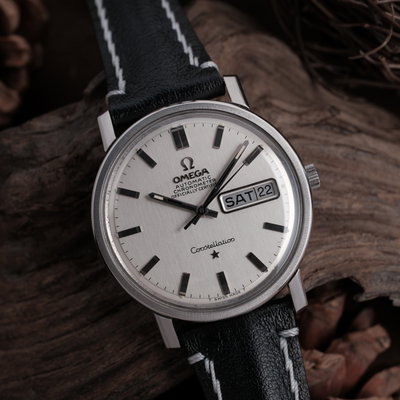
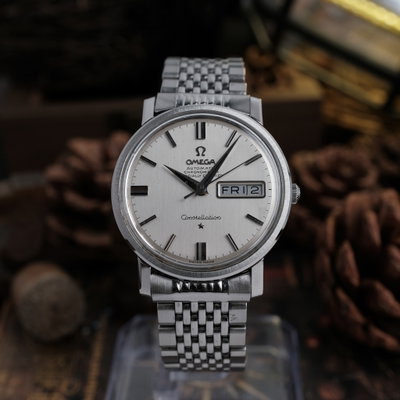
Other 168.016 examples we auctioned
More Omega references
Related pages
Frequently asked questions
Ready to hunt for your own?
More than 100 vintage watches go under the hammer every week.