Omega Constellation 168.005 Reference Guide
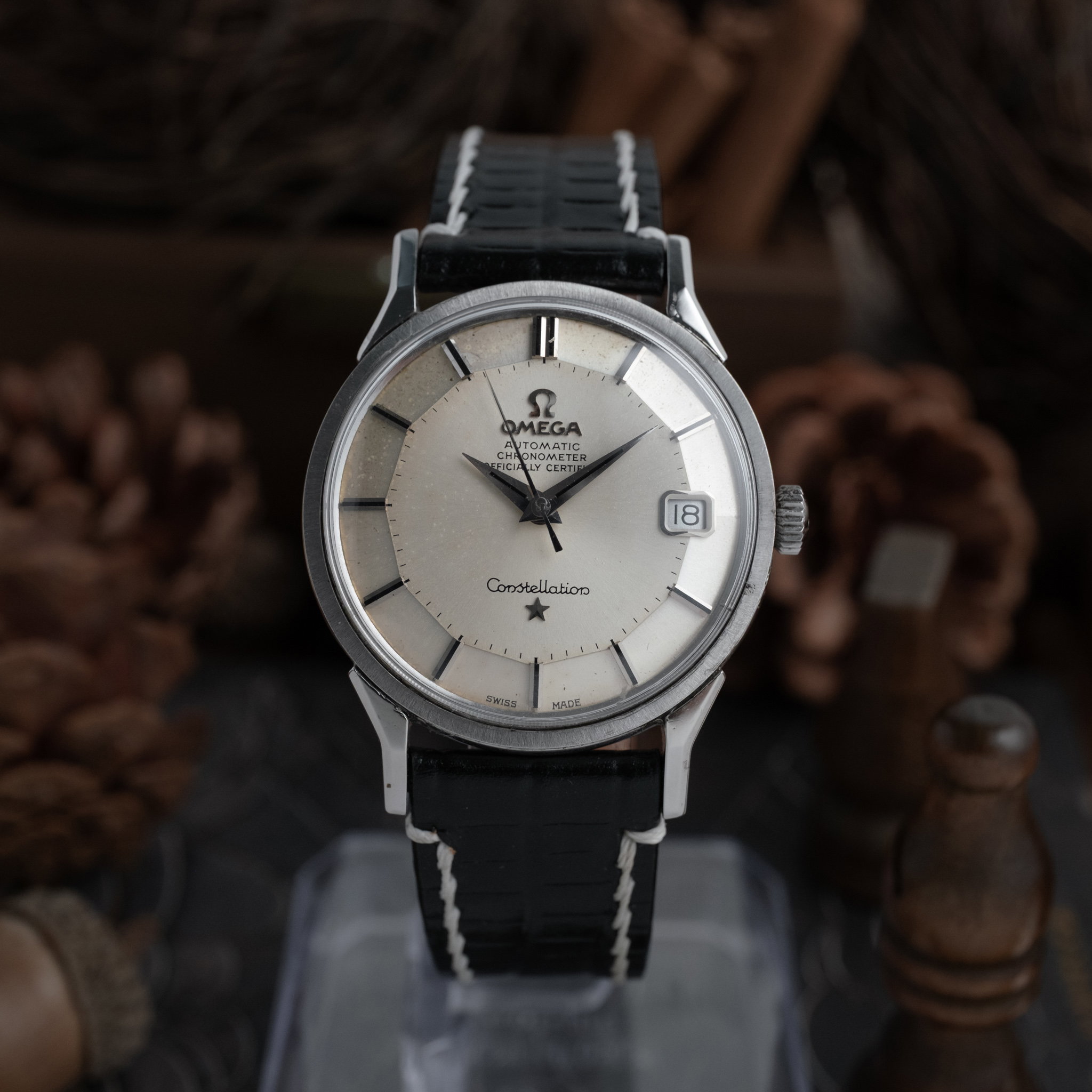
The Omega Constellation 168.005 is a 34 mm automatic chronometer whose value depends chiefly on its pie-pan dial and dog-leg case geometry.
We auction more than 100 vintage watches a week.
Get first access: new Omega 168.005 drops and alerts before auctions end.
Browse 60 live Omega auctionsThe Constellation 168.005 puts two of Omega's clearest period signatures into one 34 mm watch: a faceted pie-pan dial and dog-leg lugs. Made across 1962-1970, it is an automatic chronometer with a date at three and an observatory medallion on the caseback.
The version to want is a steel example with a clean silver pie-pan dial and sharp dog-leg geometry. Gold-capped steel has its own appeal, but worn capping cannot be corrected like routine movement work. Dial quality carries the largest premium: heavy spotting is immediately visible, while an honest, even patina costs less than a clean sunburst surface without changing what the reference is.
Reference
168.005
Model
Constellation
Known production years
1962-1970
Case diameter
34 mm excluding the crown
| Case materials | Stainless steel or gold-capped stainless steel |
| Movements | Automatic calibers 561 and 564 |
| Jewel count | 24 jewels |
| Dial configuration | Silver pie-pan dial with date at three |
| Case design | Dog-leg lugs |
| Caseback | Observatory medallion |
The model landscape
The 168.005 was built as a precise dress watch rather than a large sports watch. Its automatic, chronometer-certified movement sits behind an applied Omega logo, faceted indices, an applied star above six and a framed date at three. The pie-pan construction gives the dial a sloped outer section, while dog-leg lugs provide the case with more structure than its 34 mm diameter suggests.
Two movement versions establish the practical landscape. Examples from 1966 use caliber 561, while examples from 1969 use caliber 564, and both are 24-jewel automatics. Steel and gold-capped steel cases are known. Movement choice matters less than dial and case quality, so a clean caliber 561 watch is the stronger purchase against a spotted caliber 564 example with softened lugs.
On the wrist
At 34 mm without the crown, the 168.005 wears as a compact dress watch. The dog-leg lugs add visual width and keep it from reading like a plain round case, while the pie-pan facets catch light around the silver centre. Applied indices and dauphine hands retain clear contrast on cleaner dials, although oxidation on either can make the display look flatter.
This is the reference for a cuff rather than an oversized wrist presence. Steel makes the geometry easiest to read, while gold-capped steel gives the same proportions a warmer effect. Between equal dials, take the case with sharper dog-leg edges: the reference loses much of its identity once polishing turns those angular lugs soft and rounded.
What goes wrong
Heavy dial spotting is the costliest visible fault. It can concentrate on the outer faceted ring or spread across the full silver surface, and oxidation also develops on applied indices, the Omega logo and dauphine hands. Even patina is easier to accept than isolated dark damage, but a refinished dial costs more in lost value than ordinary case wear. A genuine service dial is different from a redial, though neither should be priced as the dial that left with the watch.
Over-polishing removes the definition from the dog-leg lugs, and no later refinishing restores the original metal. Gold-capped cases add another permanent risk where the outer layer wears through at exposed edges. Caseback condition matters because the observatory medallion belongs to the reference's identity, while a replacement crown or mismatched movement can indicate a franken or married watch. The service history is unknown unless paperwork establishes it, and timing claims without a dated record should not carry a premium.
Dating this watch
| Serial range / caliber | Year | Note |
|---|---|---|
| 1,000,000 | 1902 | approximate, ±1-3 years |
| 2,000,000 | 1908 | approximate, ±1-3 years |
| 3,000,000 | 1912 | approximate, ±1-3 years |
| 4,000,000 | 1916 | approximate, ±1-3 years |
| 5,000,000 | 1923 | approximate, ±1-3 years |
| 6,000,000 | 1925 | approximate, ±1-3 years |
| 7,000,000 | 1929 | approximate, ±1-3 years |
| 8,000,000 | 1935 | approximate, ±1-3 years |
| 9,000,000 | 1939 | approximate, ±1-3 years |
| 10,000,000 | 1944 | approximate, ±1-3 years |
| 11,000,000 | 1947 | approximate, ±1-3 years |
| 12,000,000 | 1950 | approximate, ±1-3 years |
| 13,000,000 | 1952 | approximate, ±1-3 years |
| 14,000,000 | 1954 | approximate, ±1-3 years |
| 15,000,000 | 1956 | approximate, ±1-3 years |
| 16,000,000 | 1958 | approximate, ±1-3 years |
| 17,000,000 | 1960 | approximate, ±1-3 years |
| 18,000,000 | 1961 | approximate, ±1-3 years |
| 19,000,000 | 1962 | approximate, ±1-3 years |
| 20,000,000 | 1963 | approximate, ±1-3 years |
| 21,000,000 | 1964 | approximate, ±1-3 years |
| 22,000,000 | 1965 | approximate, ±1-3 years |
| 24,000,000 | 1966 | approximate, ±1-3 years |
| 25,000,000 | 1967 | approximate, ±1-3 years |
| 26,000,000 | 1968 | approximate, ±1-3 years |
| 28,000,000 | 1969 | approximate, ±1-3 years |
| 31,000,000 | 1970 | approximate, ±1-3 years |
| 32,000,000 | 1971 | approximate, ±1-3 years |
| 33,000,000 | 1972 | approximate, ±1-3 years |
| 35,000,000 | 1973 | approximate, ±1-3 years |
| 37,000,000 | 1974 | approximate, ±1-3 years |
| 39,000,000 | 1975 | approximate, ±1-3 years |
| 40,000,000 | 1976 | approximate, ±1-3 years |
| 41,000,000 | 1977 | approximate, ±1-3 years |
| 42,000,000 | 1978 | approximate, ±1-3 years |
| 43,000,000 | 1979 | approximate, ±1-3 years |
| 44,000,000 | 1980 | approximate, ±1-3 years |
| 45,000,000 | 1982 | approximate, ±1-3 years |
| 46,000,000 | 1984 | approximate, ±1-3 years |
| 47,000,000 | 1985 | approximate, ±1-3 years |
| 48,000,000 | 1986 | approximate, ±1-3 years |
| 49,000,000 | 1988 | approximate, ±1-3 years |
| 50,000,000 | 1990 | approximate, ±1-3 years |
| 53,000,000 | 1993 | approximate, ±1-3 years |
| 54,000,000 | 1995 | approximate, ±1-3 years |
| 56,000,000 | 1996 | approximate, ±1-3 years |
| 58,000,000 | 1998 | approximate, ±1-3 years |
| 60,000,000 | 2000 | approximate, ±1-3 years |
Dating data comes from our decoder tables; treat years as approximate.
What to check before you buy
- Dial architecture and furniture: The pie-pan dial should have a faceted outer section, applied indices, an applied Omega logo, an applied star above six and a framed date at three. A flat substitute or inconsistent furniture points to a service dial, redial or franken assembly.
- Hands and dial ageing: Known examples use dauphine hands, and their oxidation should make sense beside ageing on the applied furniture. Bright replacement hands against a heavily spotted dial are period-correct only if their form matches, not proof that they are original.
- Case geometry and caseback: The 34 mm case should retain recognisable dog-leg lugs, while the caseback should carry the observatory medallion. Rounded, mushy lug edges indicate polishing, and a mismatched caseback weakens the integrity of the complete watch.
- Movement and date consistency: Handled 168.005 examples use 24-jewel automatic calibers 561 and 564. The movement, serial-based approximate year and dial configuration should form a plausible whole; disagreement can indicate a married or franken watch.
- Material-specific case wear: Steel and gold-capped steel cases are known for the 168.005. On gold-capped examples, inspect exposed lug and case edges for wear-through, because lost capping cannot be recovered through normal servicing or light refinishing.
Other 168.005 examples we auctioned
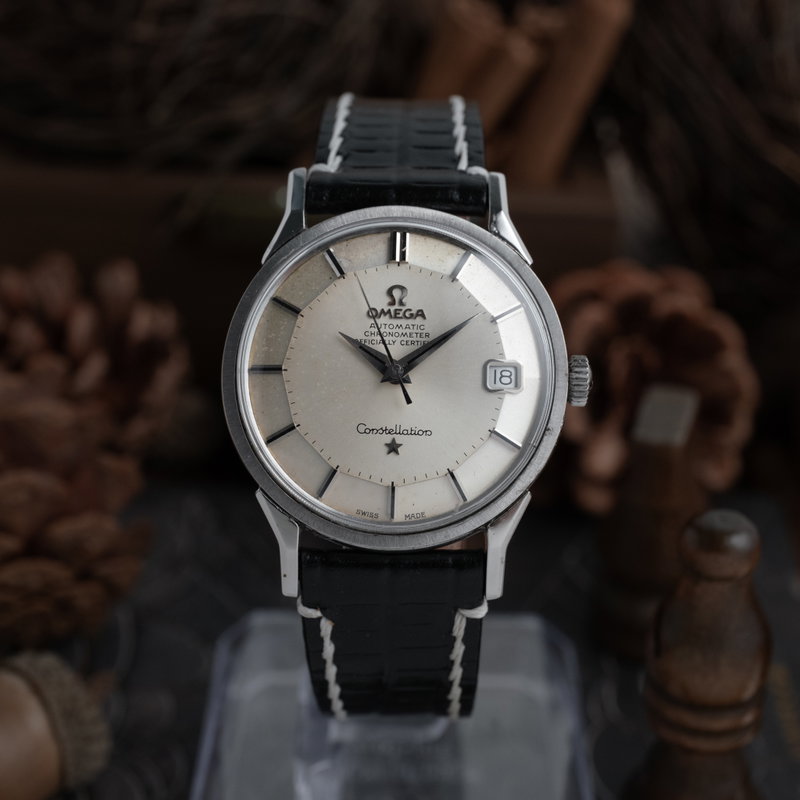
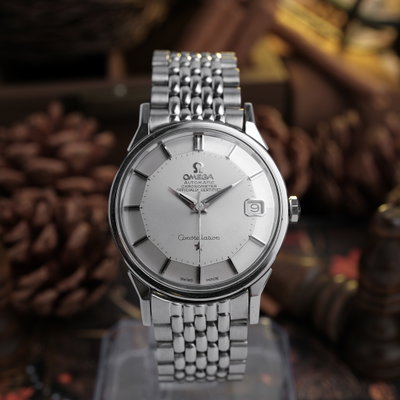
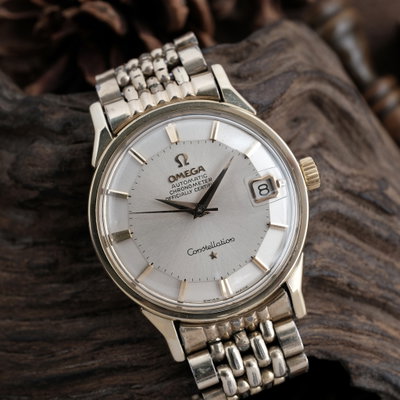
7 Omega 168.005 auctioned
More Omega references
Related pages
Frequently asked questions
Ready to hunt for your own?
More than 100 vintage watches go under the hammer every week.