Omega Constellation 168.001: What to Know Before Buying
The Omega Constellation 168.001 is a 1963-1966 automatic chronometer best bought for its honest dial, sharp dog-leg case and correct caliber 561.
We auction more than 100 vintage watches a week.
Get first access: new Omega 168.001 drops and alerts before auctions end.
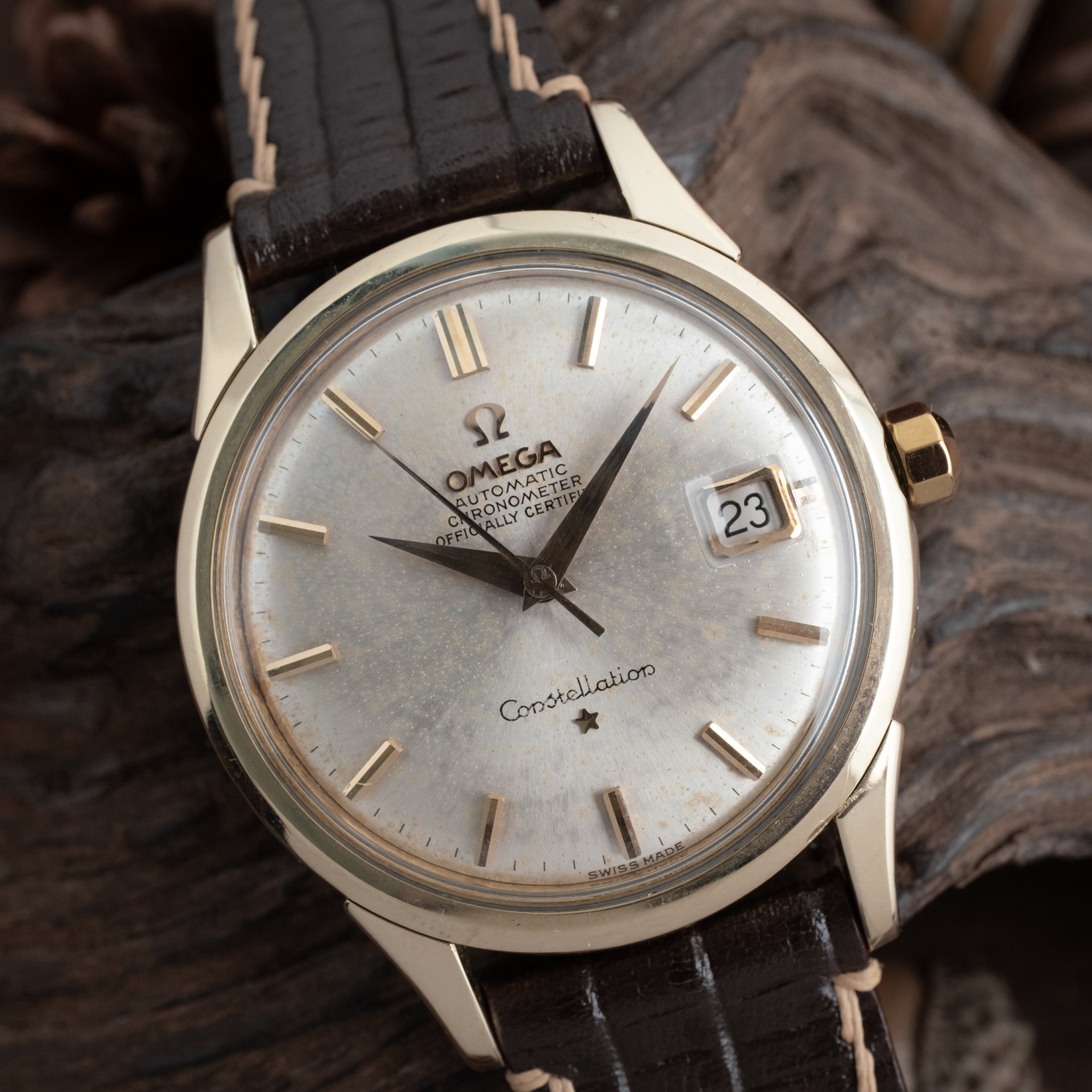
Browse 42 live Omega auctionsThe Constellation 168.001 pairs an automatic, chronometer-certified caliber 561 with the angular dog-leg case associated with this reference. Examples handled from 1963 to 1966 include stainless-steel and gold-capped steel cases, with silver pie-pan or sunburst dials. It belongs on the wrist as a precise mid-century dress watch, not as a substitute for a modern sports watch.
The version to want is the one with the most convincing dial and the clearest remaining case geometry. Heavy spotting is visible across several known dials, so age alone does not disqualify a watch, but a refinished dial costs more than every minor case mark combined. Between a heavily polished case with a clean-looking redial and a spotted original dial in a sharper case, take the latter.
Reference
168.001
Model
Constellation
Known production years
1963-1966
Movement
Automatic Omega caliber 561
| Jewels | 24 |
| Certification | Chronometer-certified |
| Case size | 36-37 mm excluding the crown |
| Case materials | Stainless steel or gold-capped stainless steel |
| Known dial configurations | Silver pie-pan or silver sunburst |
| Known bracelet | Beads-of-rice |
The model landscape
The reference spans more than one visual configuration. Stainless-steel examples can carry silver pie-pan or silver sunburst dials, while gold-capped steel cases have appeared with applied gold-tone indices. The pie-pan dial gives the watch stronger architecture, but it should not outrank an honest sunburst dial with intact printing. Dial condition drives the decision because widespread spotting is common among the examples we have examined.
Value concentrates in the dial, the dog-leg case and the correct caliber 561. A signed decagonal crown, an intact Constellation star and the caseback observatory medallion support the package, while a beads-of-rice bracelet adds period character where present. None compensates for a redial or a case whose lugs have been polished soft. A genuine service dial is not a redial, but it is still a replacement and should be valued accordingly.
On the wrist
Known cases measure 36 or 37 mm excluding the crown, and the dog-leg lugs give that compact diameter more presence than a round, plain-lug dress case. The faceted applied indices and dauphine-style hands keep the silver dial legible, even where spotting has developed. On a beads-of-rice bracelet the watch reads more casually; on a strap, the pie-pan dial and angular lugs move it firmly toward tailoring.
The proportions suit a cuff and reward a buyer comfortable with vintage scale. A 1 mm difference between recorded examples should not decide the purchase, especially because measurement methods can vary. Case shape matters more: crisp lug facets retain the design, while repeated polishing turns the dog-leg profile soft. The bracelet, if fitted, should be judged separately for stretch and end-link fit.
What goes wrong
The worst recurring fault is dial damage. Silver dials can develop widespread spotting, speckling or heavy stardust-like ageing, and attractive evenness does not turn damage into patina. Printing may remain legible despite the marks, but a redial removes more value than a worn crystal, replacement gasket or ordinary case scratches. The service history is unknown unless documentation accompanies the individual watch.
Cases suffer in two distinct ways. Polishing softens the dog-leg facets, while gold capping can wear through at exposed edges and cannot be restored by routine servicing. Decagonal crowns may be replaced, caseback medallions can lose definition, and beads-of-rice bracelets can stretch. Movement performance also varies: caliber 561 needs assessment as a mechanism, and a timegrapher result from one day is not a service record.
Authentication should confirm a coherent whole before fine dial details. The reference has been encountered with caliber 561, applied indices, an applied Omega logo and the Constellation star. A movement from another watch can create a married watch, while mixed components that never shipped together make a franken. Without documentation, we prefer not to speculate beyond the case, dial, movement and hardware that the watch itself establishes.
Dating this watch
| Serial range / caliber | Year | Note |
|---|---|---|
| 20000000 | 1963 | approximate, ±1-3 years |
| 21000000 | 1964 | approximate, ±1-3 years |
| 22000000 | 1965 | approximate, ±1-3 years |
| 23000000 | 1966 | approximate, ±1-3 years |
Dating data comes from our decoder tables; treat years as approximate.
What to check before you buy
- Dial furniture and printing: Known dials combine applied indices, an applied Omega logo and the Constellation star with legible chronometer text. A clean surface does not prove originality, so refinished printing must not be mistaken for an untouched dial.
- Case geometry and material: The case should retain recognisable dog-leg facets rather than rounded, mushy lugs. Known configurations are stainless steel and gold-capped stainless steel, with wear-through at capped edges treated as permanent loss.
- Movement: The movement should be the automatic, chronometer-certified caliber 561 with 24 jewels. Another caliber, or evidence that the movement and case came from different watches, makes the watch married or franken rather than correct.
- Crown and caseback: A signed decagonal crown and an observatory medallion are known reference details. Replacements can occur because crowns are service parts, while a softened medallion can indicate substantial caseback wear or polishing.
- Bracelet fit: A beads-of-rice bracelet is period-compatible on a known example, but its presence is not proof of authenticity. Check stretch and end-link fit independently, because a later or poorly matched bracelet does not authenticate the watch head.
Other 168.001 examples we auctioned
4 Omega 168.001 auctioned
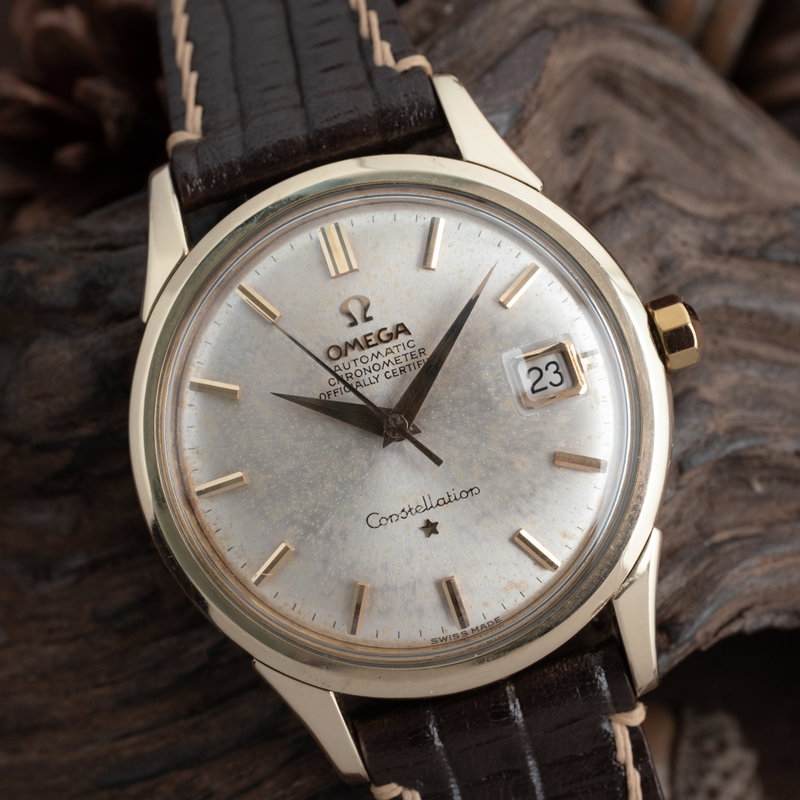
Omega · Constellation · 168.001 · 1963
Omega · Constellation · 168.001 · 1963
Omega · Constellation · 168.001 · 1966
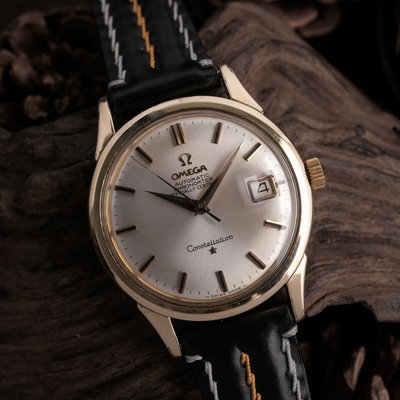
Omega · Constellation · 168.001 · 1963
More Omega references
Related pages
Frequently asked questions
Ready to hunt for your own?
More than 100 vintage watches go under the hammer every week.