Omega Constellation 168.010: what matters before you buy
The Omega Constellation 168.010 is a 35 mm steel automatic chronometer from 1966-1967, with caliber 564 and a dial that largely determines value.
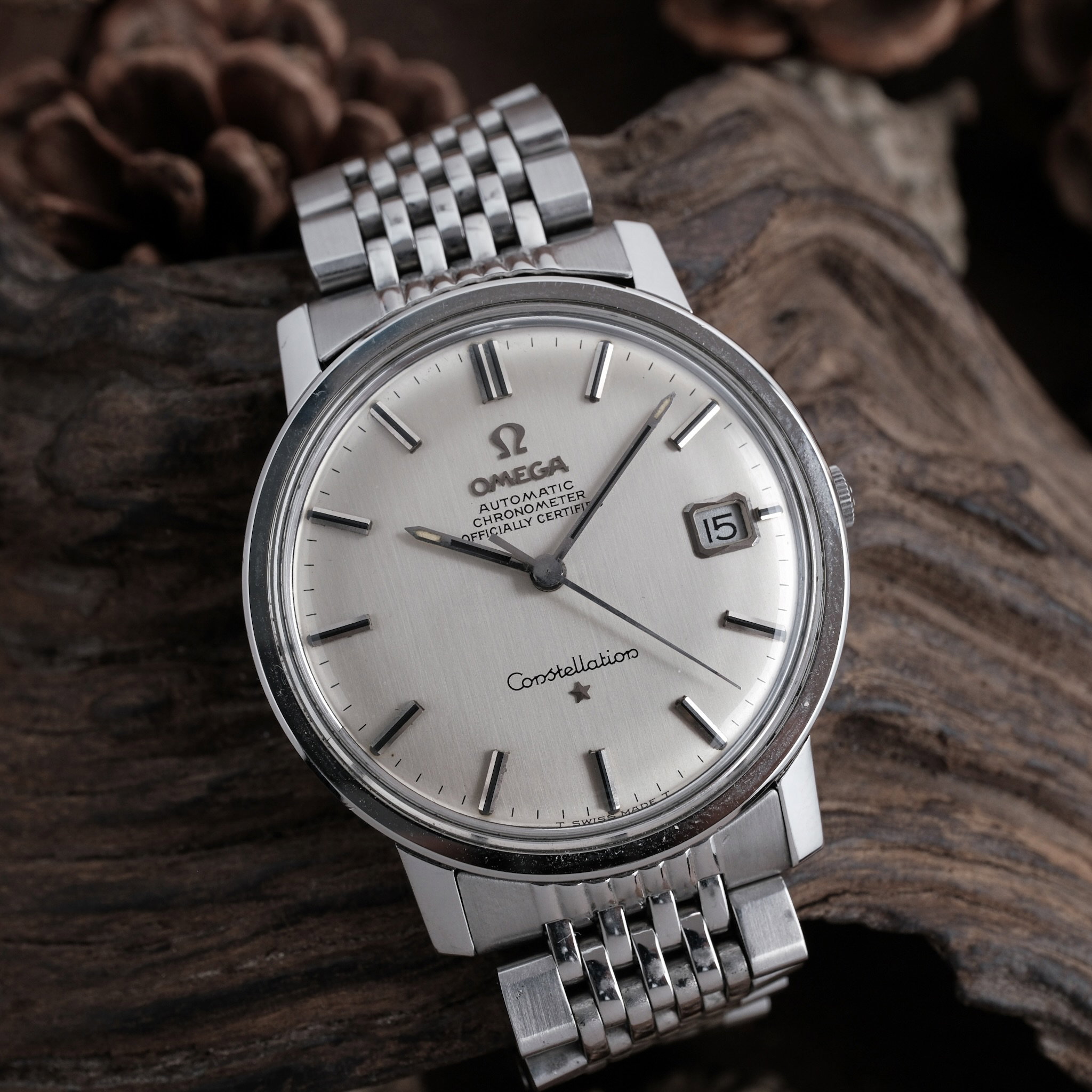
The Constellation 168.010 is a compact steel chronometer from 1966-1967, powered by Omega caliber 564. At 35 mm excluding the crown, it belongs to the dressier side of the Constellation range, but its automatic movement and stainless steel case make it more practical than a purely formal watch. The reference works best when the dial, case geometry and observatory medallion remain coherent.
A silver sunburst dial with applied faceted indices, black inserts, an applied Omega logo and the Constellation star is the configuration established by the watches handled here. Buy that dial before chasing superficial case shine. Localised spotting near eleven o'clock is visible and finite; a redial changes the entire face and costs more in collector confidence than honest ageing.
Brand
Omega
Model
Constellation
Reference
168.010
Known production years
1966-1967
| Case diameter | 35 mm excluding the crown |
| Case material | Stainless steel |
| Movement | Omega caliber 564 automatic chronometer |
| Dial configuration | Silver sunburst with applied faceted indices and black inserts |
| Caseback detail | Observatory medallion |
| Known bracelet configuration | Beads-of-rice bracelet |
What it was built for
The Constellation 168.010 combines an automatic caliber 564 with chronometer positioning and a steel case, placing accuracy and everyday convenience inside a formal Omega. Its 1966-1967 production span is narrow in the examples handled, and the observatory medallion on the caseback identifies the Constellation identity from the reverse. This is a daily dress watch, not a modern sports watch, and no water-resistance claim is established by the available evidence.
On the wrist, 35 mm excluding the crown keeps the watch compact, while the faceted markers and black inserts preserve clear separation against the silver sunburst surface. A surviving beads-of-rice bracelet changes the fit and visual weight, but it should be assessed for stretch and correct attachment. Without documentation, the service history remains unknown even when the movement is running steadily.
Where the value sits
The dial carries the largest share of the value. An evenly preserved silver sunburst finish, crisp printed text, intact applied furniture and matching dauphine hands outrank a polished case or an unsupported service claim. Fine stardust ageing and a localised spot near eleven o'clock are condition facts to price; neither should be softened into patina unless the ageing is even and attractive.
Case definition comes next. The 35 mm steel case should retain clear transitions rather than soft, blended edges, while the observatory medallion should remain legible. A beads-of-rice bracelet adds interest only when its links, fitment and stretch are acceptable. Between a clean dial in a lightly softened case and a sharp case around a refinished dial, take the clean dial.
What goes wrong
Dial damage is the expensive fault: spotting can spread across the sunburst surface, and refinishing can replace factory printing with a redial. Case polishing removes edge definition permanently, while repeated wear can soften the observatory medallion. On bracelet examples, stretched links and poor end-link fit weaken both security and the reference's period appearance.
Parts coherence matters because a genuine Omega component is not automatically original to this watch. A service dial is a factory replacement, a redial is refinished, and a franken combines parts that never shipped together. The caliber 564, dial furniture, hands, steel case and medallion must support the same 1966-1967 identity. Crown and crystal replacement cannot be ruled out from the evidence supplied.
Dating this watch
| Serial range / caliber | Year | Note |
|---|---|---|
| 1000000 | 1902 | approximate, ±1-3 years |
| 2000000 | 1908 | approximate, ±1-3 years |
| 3000000 | 1912 | approximate, ±1-3 years |
| 4000000 | 1916 | approximate, ±1-3 years |
| 5000000 | 1923 | approximate, ±1-3 years |
| 6000000 | 1925 | approximate, ±1-3 years |
| 7000000 | 1929 | approximate, ±1-3 years |
| 8000000 | 1935 | approximate, ±1-3 years |
| 9000000 | 1939 | approximate, ±1-3 years |
| 10000000 | 1944 | approximate, ±1-3 years |
| 11000000 | 1947 | approximate, ±1-3 years |
| 12000000 | 1950 | approximate, ±1-3 years |
| 13000000 | 1952 | approximate, ±1-3 years |
| 14000000 | 1954 | approximate, ±1-3 years |
| 15000000 | 1956 | approximate, ±1-3 years |
| 16000000 | 1958 | approximate, ±1-3 years |
| 17000000 | 1960 | approximate, ±1-3 years |
| 18000000 | 1961 | approximate, ±1-3 years |
| 19000000 | 1962 | approximate, ±1-3 years |
| 20000000 | 1963 | approximate, ±1-3 years |
| 21000000 | 1964 | approximate, ±1-3 years |
| 22000000 | 1965 | approximate, ±1-3 years |
| 24000000 | 1966 | approximate, ±1-3 years |
| 25000000 | 1967 | approximate, ±1-3 years |
| 26000000 | 1968 | approximate, ±1-3 years |
| 28000000 | 1969 | approximate, ±1-3 years |
| 31000000 | 1970 | approximate, ±1-3 years |
| 32000000 | 1971 | approximate, ±1-3 years |
| 33000000 | 1972 | approximate, ±1-3 years |
| 35000000 | 1973 | approximate, ±1-3 years |
| 37000000 | 1974 | approximate, ±1-3 years |
| 39000000 | 1975 | approximate, ±1-3 years |
| 40000000 | 1976 | approximate, ±1-3 years |
| 41000000 | 1977 | approximate, ±1-3 years |
| 42000000 | 1978 | approximate, ±1-3 years |
| 43000000 | 1979 | approximate, ±1-3 years |
| 44000000 | 1980 | approximate, ±1-3 years |
| 45000000 | 1982 | approximate, ±1-3 years |
| 46000000 | 1984 | approximate, ±1-3 years |
| 47000000 | 1985 | approximate, ±1-3 years |
| 48000000 | 1986 | approximate, ±1-3 years |
| 49000000 | 1988 | approximate, ±1-3 years |
| 50000000 | 1990 | approximate, ±1-3 years |
| 53000000 | 1993 | approximate, ±1-3 years |
| 54000000 | 1995 | approximate, ±1-3 years |
| 56000000 | 1996 | approximate, ±1-3 years |
| 58000000 | 1998 | approximate, ±1-3 years |
| 60000000 | 2000 | approximate, ±1-3 years |
Dating data comes from our decoder tables; treat years as approximate.
What to check before you buy
- Dial configuration: The established silver sunburst dial has applied faceted indices with black inserts, an applied Omega logo and a Constellation star. A redial often disrupts that factory surface even when the text looks tidy.
- Hands and dial coherence: Silver-tone dauphine hands belong with the silver sunburst configuration handled for this reference. Mismatched shape, finish or ageing can indicate later replacement or a watch assembled from unrelated parts.
- Case and caseback: The stainless steel case measures 35 mm excluding the crown, and the caseback carries an observatory medallion. Soft transitions or a weak medallion identify wear or polishing, not proof of a false watch.
- Movement identity: The movement should be Omega caliber 564 and should support the 1966-1967 identity through approximate serial dating. A correct caliber alone does not prove that the movement and case left the factory together.
- Bracelet assessment: A beads-of-rice bracelet is supported on a handled 1967 watch, but period-correct is not the same as original to a specific example. End-link fit and bracelet stretch must agree with the case rather than merely look plausible.
Other 168010 examples we auctioned
More Omega references
Related pages
Frequently asked questions
Ready to hunt for your own?
More than 100 vintage watches go under the hammer every week.