Omega Constellation 168.0056: What to Know Before Buying
Choose the Omega Constellation 168.0056 for its caliber 1011 and C-shape steel case, but put dial integrity and sharp case lines ahead of shine.
We auction more than 100 vintage watches a week.
Get first access: new Omega 168.0056 drops and alerts before auctions end.
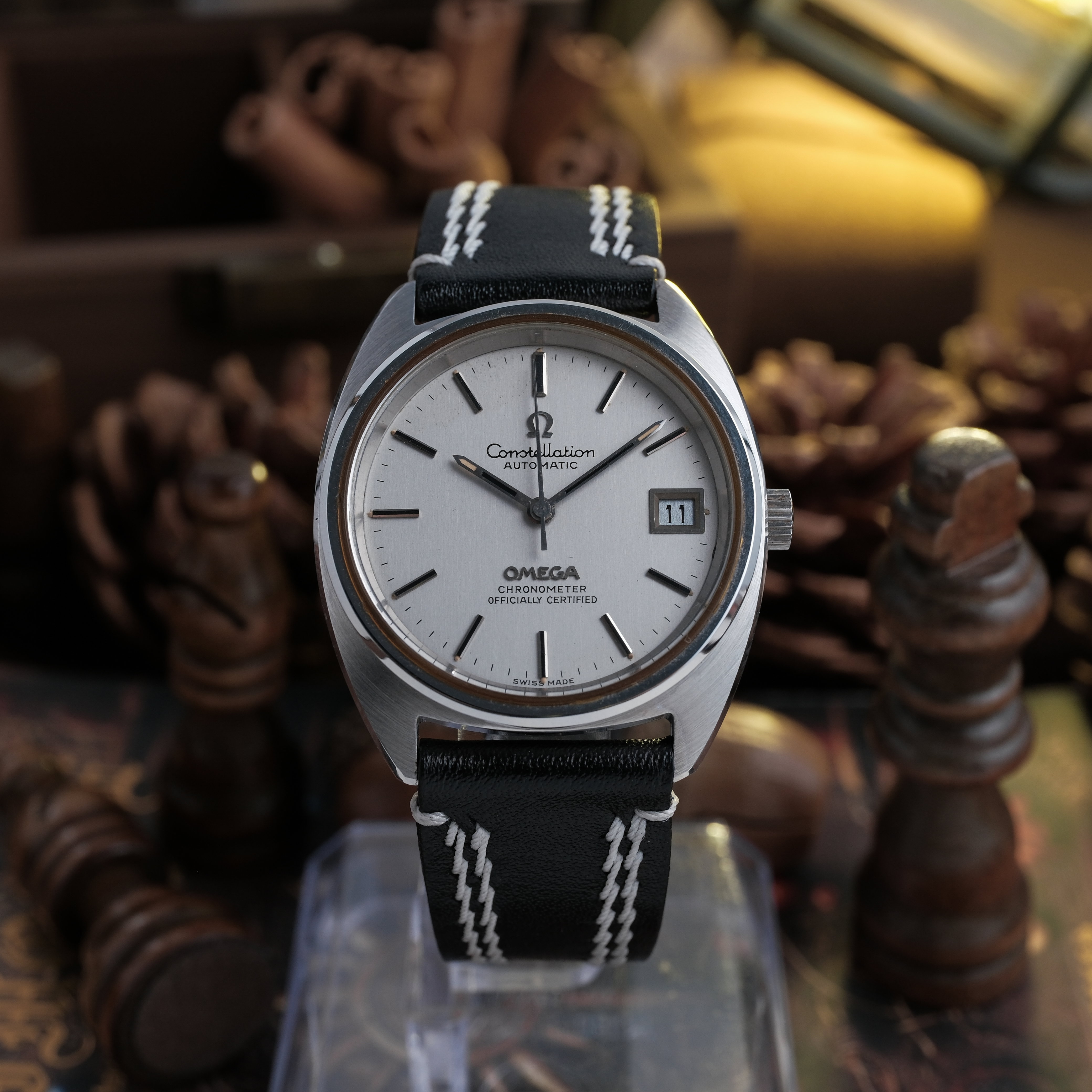
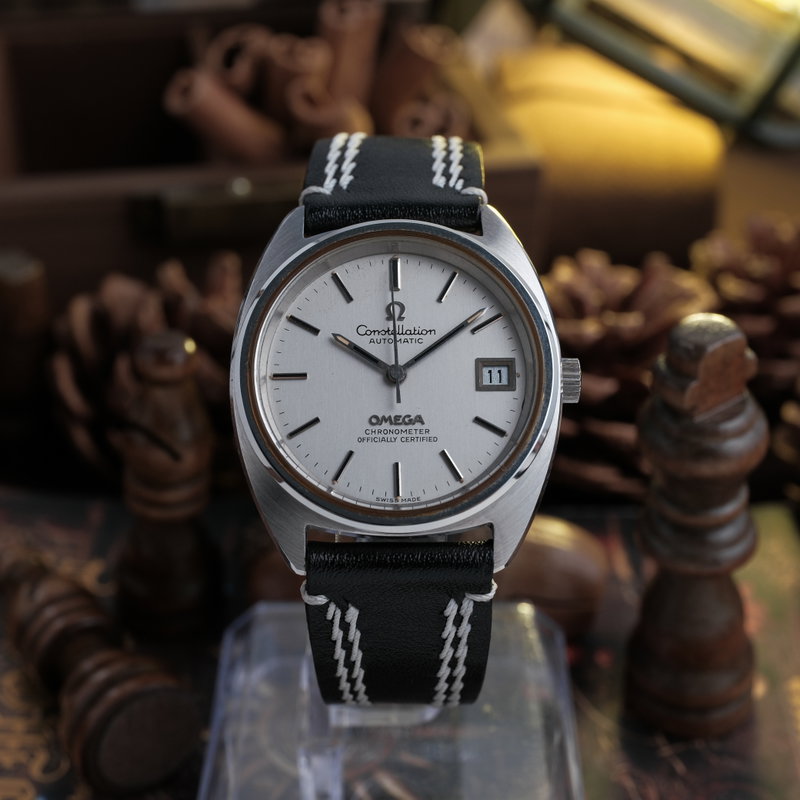
Browse 60 live Omega auctionsReference 168.0056 puts Omega's automatic chronometer caliber 1011 inside a stainless-steel C-shape case from the early 1970s. The vertically brushed silver dial, applied black-inlaid indices and observatory medallion give this Constellation its identity, while the 35 mm diameter keeps the proportions controlled rather than oversized.
The buying order matters. A clean original dial outranks a brighter refinished one, and crisp case lines outrank a heavily polished surface. Examples we have handled date from 1971 to 1973, so a used Omega Constellation 168.0056 should make sense against that known span before its cosmetic condition enters the decision.
Brand
Omega
Model
Constellation
Reference
168.0056
Known production years
1971-1973
| Case material | Stainless steel |
| Case diameter | 35 mm excluding the crown |
| Case form | C-shape tonneau-style body with integrated lugs |
| Movement | Automatic chronometer |
| Caliber | Omega 1011 |
| Jewel count | 23 jewels |
| Dial | Vertically brushed silver with applied black-inlaid indices |
| Caseback detail | Observatory medallion |
What it was built for
The 168.0056 combines an automatic chronometer movement with the formal cues of the Constellation line. Caliber 1011 has 23 jewels, while the steel C-shape case integrates the lugs into a tonneau-style outline. The observatory medallion on the caseback confirms the model identity visually, but it does not prove that the case, movement and dial left the factory together.
The silver dial is vertically brushed rather than plain, and its applied indices carry black inlays. That contrast is central to the reference: remove the brushing through a redial or lose the dark inserts, and much of the period character disappears. Between an evenly aged original dial and a spotless refinish, take the original dial.
On the wrist
At 35 mm excluding the crown, the case wears through shape as much as diameter. The C-shape body spreads visually into its integrated lugs, while the silver surface and black-inlaid indices keep the display legible without turning the watch into a sports model. It suits a cuff and reads unmistakably as an early 1970s design.
Case definition changes the wearing impression. Crisp outer lines preserve the transition from the tonneau body into the lugs, whereas repeated polishing makes the same 35 mm case look softer and less deliberate. This reference rewards proportion, so compare the silhouette before judging isolated scratches or surface brightness.
What goes wrong
Dial work is the most expensive mistake. Light spotting can remain acceptable on the vertically brushed silver surface, but a redial replaces factory work and usually matters more than ordinary case marks. Uneven printing, lost vertical grain or incorrectly finished black inlays are warnings; a genuine service dial is different from a refinished original and must be described as such.
Over-polishing rounds the C-shape case lines, and wear can flatten detail on the observatory medallion. A caliber other than 1011 also creates a serious mismatch for this reference, potentially making the watch franken or married rather than merely serviced. The hands and crown are consumable or replaceable parts, and the evidence here does not establish their exact factory specification, so unsupported originality claims should remain unaccepted.
Service claims need paperwork tied to the individual watch. Without it, the service history is unknown, and strong running alone does not establish what work was done. Buy the dial and case geometry first, then budget for mechanical assessment rather than treating a polished exterior as evidence of movement condition.
Dating this watch
| Serial range / caliber | Year | Note |
|---|---|---|
| 1000000 | 1902 | approximate, ±1-3 years |
| 2000000 | 1908 | approximate, ±1-3 years |
| 3000000 | 1912 | approximate, ±1-3 years |
| 4000000 | 1916 | approximate, ±1-3 years |
| 5000000 | 1923 | approximate, ±1-3 years |
| 6000000 | 1925 | approximate, ±1-3 years |
| 7000000 | 1929 | approximate, ±1-3 years |
| 8000000 | 1935 | approximate, ±1-3 years |
| 9000000 | 1939 | approximate, ±1-3 years |
| 10000000 | 1944 | approximate, ±1-3 years |
| 11000000 | 1947 | approximate, ±1-3 years |
| 12000000 | 1950 | approximate, ±1-3 years |
| 13000000 | 1952 | approximate, ±1-3 years |
| 14000000 | 1954 | approximate, ±1-3 years |
| 15000000 | 1956 | approximate, ±1-3 years |
| 16000000 | 1958 | approximate, ±1-3 years |
| 17000000 | 1960 | approximate, ±1-3 years |
| 18000000 | 1961 | approximate, ±1-3 years |
| 19000000 | 1962 | approximate, ±1-3 years |
| 20000000 | 1963 | approximate, ±1-3 years |
| 21000000 | 1964 | approximate, ±1-3 years |
| 22000000 | 1965 | approximate, ±1-3 years |
| 24000000 | 1966 | approximate, ±1-3 years |
| 25000000 | 1967 | approximate, ±1-3 years |
| 26000000 | 1968 | approximate, ±1-3 years |
| 28000000 | 1969 | approximate, ±1-3 years |
| 31000000 | 1970 | approximate, ±1-3 years |
| 32000000 | 1971 | approximate, ±1-3 years |
| 33000000 | 1972 | approximate, ±1-3 years |
| 35000000 | 1973 | approximate, ±1-3 years |
| 37000000 | 1974 | approximate, ±1-3 years |
| 39000000 | 1975 | approximate, ±1-3 years |
| 40000000 | 1976 | approximate, ±1-3 years |
| 41000000 | 1977 | approximate, ±1-3 years |
| 42000000 | 1978 | approximate, ±1-3 years |
| 43000000 | 1979 | approximate, ±1-3 years |
| 44000000 | 1980 | approximate, ±1-3 years |
| 45000000 | 1982 | approximate, ±1-3 years |
| 46000000 | 1984 | approximate, ±1-3 years |
| 47000000 | 1985 | approximate, ±1-3 years |
| 48000000 | 1986 | approximate, ±1-3 years |
| 49000000 | 1988 | approximate, ±1-3 years |
| 50000000 | 1990 | approximate, ±1-3 years |
| 53000000 | 1993 | approximate, ±1-3 years |
| 54000000 | 1995 | approximate, ±1-3 years |
| 56000000 | 1996 | approximate, ±1-3 years |
| 58000000 | 1998 | approximate, ±1-3 years |
| 60000000 | 2000 | approximate, ±1-3 years |
Dating data comes from our decoder tables; treat years as approximate.
What to check before you buy
- Dial surface and furniture: The silver dial should retain a vertical brushed grain and applied indices with black inlays. Missing grain, uneven replacement printing or altered inlays point toward a redial or later intervention.
- Case profile and medallion: Reference 168.0056 uses a stainless-steel C-shape case with integrated lugs and an observatory medallion. Soft transitions or flattened medallion detail diagnose polishing and wear, not proof of a different reference.
- Movement identity: The movement should be Omega caliber 1011, automatic, chronometer-rated and fitted with 23 jewels. A different caliber creates a material mismatch and may indicate a franken or married watch.
- Hands and crown: The handled evidence does not establish an exact hand or crown specification for 168.0056. Treat either part as period-correct only after comparison, and do not confuse period-correct replacement parts with original ones.
- Serial and date coherence: Known 168.0056 examples span 1971-1973, while Omega serial guidance is approximate by one to three years. A fitting estimate supports the watch, but cannot authenticate the relationship between its case, dial and movement.
Other 168.0056 examples we auctioned
4 Omega 168.0056 auctioned
More Omega references
Related pages
Frequently asked questions
Ready to hunt for your own?
More than 100 vintage watches go under the hammer every week.