Omega Genève 1660118: What to Know Before You Buy
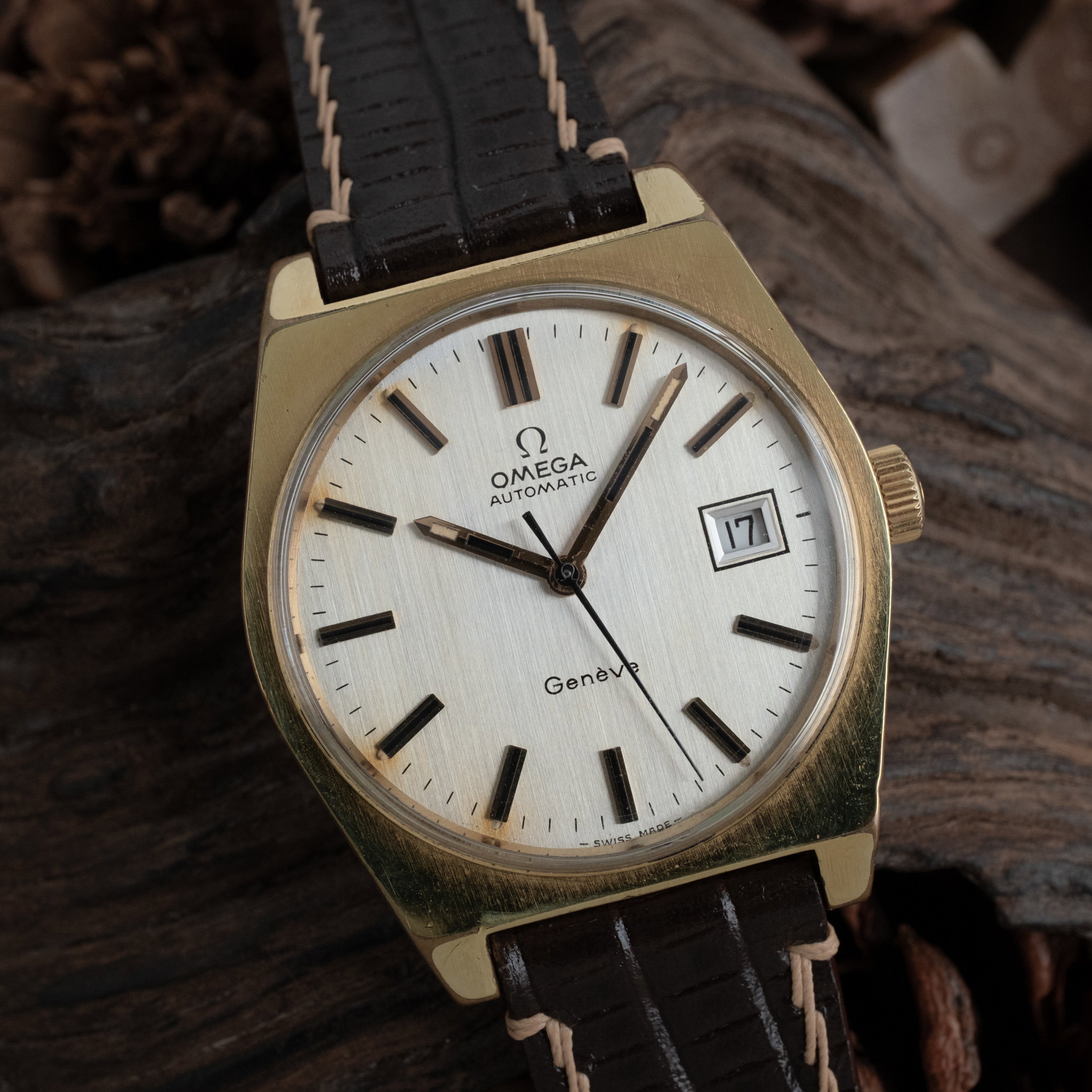
The Omega Genève 1660118 is a compact 1972-1973 automatic best bought in steel, with a clean silver dial and sharp tonneau case.
We auction more than 100 vintage watches a week.
Get first access: new Omega 1660118 drops and alerts before auctions end.
Browse 46 live Omega auctionsThe Omega Genève 1660118 is an early 1970s automatic built around a compact tonneau case and a textured silver dial. Its shape supplies the period character, while the restrained baton furniture keeps it useful as an everyday watch rather than a costume piece.
The version to want is the steel case with a clean dial and sharp transitions around the tonneau profile. Gold-plated examples have their place, especially with intact 20-micron plating, but wear-through at the lugs cannot be reversed. At 35 mm excluding the crown, either version wears broader than a round watch of the same nominal size because the case carries its width into the flanks.
Model
Omega Genève
Reference
1660118
Production years
1972-1973
Case size
35 mm excluding the crown
| Case shape | Tonneau |
| Movement type | Automatic |
| Caliber | Omega 1481 |
| Dial | Silver sunburst or vertically brushed |
| Case materials | Stainless steel or 20-micron gold-plated with stainless steel caseback |
The model landscape
Reference 1660118 runs through the examples dated 1972-1973 and pairs an automatic caliber 1481 with a tonneau case. The principal choice is between stainless steel and a gold-plated case with a stainless steel back. Steel is the safer purchase because polishing can soften its lines, but plating loss exposes base metal and no ordinary service restores the original surface.
The silver dial occurs with sunburst or vertical brushing, so texture alone does not separate a correct dial from a redial. Applied indices, baton hands and restrained black inserts belong to the visual language of the examples we have handled. A service dial may be genuine Omega yet still carry less period character than the dial fitted when the watch left production.
Where the value sits
Most of the value sits in the dial and case. A clean silver surface with coherent brushing commands the meaningful premium, while edge ageing costs less than a full redial. Between an evenly aged dial in a sharp case and a refinished dial in a brighter case, take the first watch.
Steel carries the more dependable spread because there is no plating thickness to preserve. The gold-plated version earns its place only when the coating remains continuous at the lug tips and case edges, where wear starts first. A replaced crown is less serious than rounded case lines, and an unknown service history should be priced as an unknown rather than treated as evidence of trouble.
What goes wrong
Plating wear is the permanent fault on the gold-plated 1660118, especially around the lugs and exposed edges. Over-polishing is the corresponding risk in steel: the tonneau outline loses definition, the transitions turn soft and the watch reads smaller on the wrist. Deep caseback tool marks also matter because the stainless steel back is part of the correct plated-case construction.
Dial damage ranges from oxidation at the extreme edge to staining across the brushed surface. The first can remain visually minor; the second breaks the texture that gives this Genève its character. Hand oxidation is acceptable when stable and consistent, but bright replacement hands against an aged dial can indicate a partial rebuild rather than honest wear.
Caliber 1481 should be assessed on current performance and service evidence, not a seller's adjective. Without dated documentation, the service history is unknown. A signed movement of the right caliber still does not prove the watch is not married, so case, dial, hands and movement must make sense together before fine printing becomes relevant.
Dating this watch
| Serial range / caliber | Year | Note |
|---|---|---|
| 1000000 | 1902 | approximate, ±1-3 years |
| 2000000 | 1908 | approximate, ±1-3 years |
| 3000000 | 1912 | approximate, ±1-3 years |
| 4000000 | 1916 | approximate, ±1-3 years |
| 5000000 | 1923 | approximate, ±1-3 years |
| 6000000 | 1925 | approximate, ±1-3 years |
| 7000000 | 1929 | approximate, ±1-3 years |
| 8000000 | 1935 | approximate, ±1-3 years |
| 9000000 | 1939 | approximate, ±1-3 years |
| 10000000 | 1944 | approximate, ±1-3 years |
| 11000000 | 1947 | approximate, ±1-3 years |
| 12000000 | 1950 | approximate, ±1-3 years |
| 13000000 | 1952 | approximate, ±1-3 years |
| 14000000 | 1954 | approximate, ±1-3 years |
| 15000000 | 1956 | approximate, ±1-3 years |
| 16000000 | 1958 | approximate, ±1-3 years |
| 17000000 | 1960 | approximate, ±1-3 years |
| 18000000 | 1961 | approximate, ±1-3 years |
| 19000000 | 1962 | approximate, ±1-3 years |
| 20000000 | 1963 | approximate, ±1-3 years |
| 21000000 | 1964 | approximate, ±1-3 years |
| 22000000 | 1965 | approximate, ±1-3 years |
| 24000000 | 1966 | approximate, ±1-3 years |
| 25000000 | 1967 | approximate, ±1-3 years |
| 26000000 | 1968 | approximate, ±1-3 years |
| 28000000 | 1969 | approximate, ±1-3 years |
| 31000000 | 1970 | approximate, ±1-3 years |
| 32000000 | 1971 | approximate, ±1-3 years |
| 33000000 | 1972 | approximate, ±1-3 years |
| 35000000 | 1973 | approximate, ±1-3 years |
| 37000000 | 1974 | approximate, ±1-3 years |
| 39000000 | 1975 | approximate, ±1-3 years |
| 40000000 | 1976 | approximate, ±1-3 years |
| 41000000 | 1977 | approximate, ±1-3 years |
| 42000000 | 1978 | approximate, ±1-3 years |
| 43000000 | 1979 | approximate, ±1-3 years |
| 44000000 | 1980 | approximate, ±1-3 years |
| 45000000 | 1982 | approximate, ±1-3 years |
| 46000000 | 1984 | approximate, ±1-3 years |
| 47000000 | 1985 | approximate, ±1-3 years |
| 48000000 | 1986 | approximate, ±1-3 years |
| 49000000 | 1988 | approximate, ±1-3 years |
| 50000000 | 1990 | approximate, ±1-3 years |
| 53000000 | 1993 | approximate, ±1-3 years |
| 54000000 | 1995 | approximate, ±1-3 years |
| 56000000 | 1996 | approximate, ±1-3 years |
| 58000000 | 1998 | approximate, ±1-3 years |
| 60000000 | 2000 | approximate, ±1-3 years |
Dating data comes from our decoder tables; treat years as approximate.
What to check before you buy
- Dial surface: A correct dial can be silver sunburst or vertically brushed. The texture should remain coherent across the surface; flat paint, lost brushing or printing sitting above damage points to a redial.
- Movement caliber: The movement should be the automatic Omega caliber 1481. A different caliber is not a harmless service substitution for this reference and raises the possibility of a franken or married watch.
- Case construction: Known cases are stainless steel or 20-micron gold-plated with a stainless steel caseback, all in a 35 mm tonneau form. A plated back or different geometry needs explanation from the watch itself.
- Hands and furniture: Applied indices and baton hands should agree with the restrained silver dial design. Gold-tone hands with black inserts are established on plated examples; conspicuously bright replacements can disturb an otherwise aged set.
- Case definition: The tonneau outline should retain clear transitions through the flanks and lugs. Soft edges do not prove a watch is false, but they establish heavy polishing and can obscure the geometry used to judge the case.
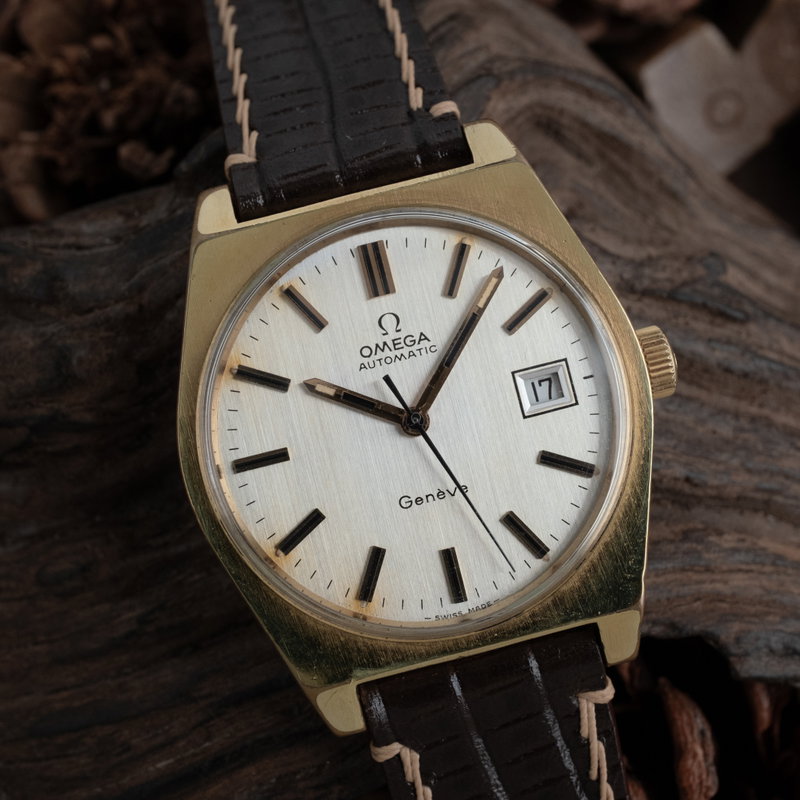
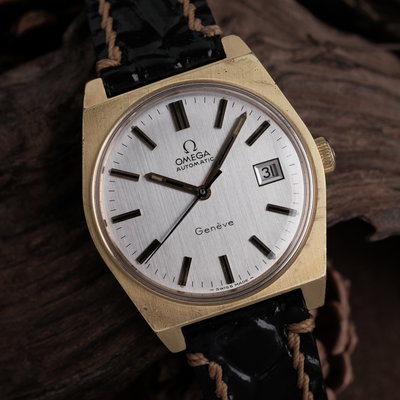
Other 1660118 examples we auctioned
More Omega references
Related pages
Frequently asked questions
Ready to hunt for your own?
More than 100 vintage watches go under the hammer every week.