Omega Seamaster 166010 SP / 168024 Buying Guide
Buy the cleanest silver sunburst dial and strongest 35 mm steel case, choosing Caliber 564 over 565 only when condition is otherwise equal.
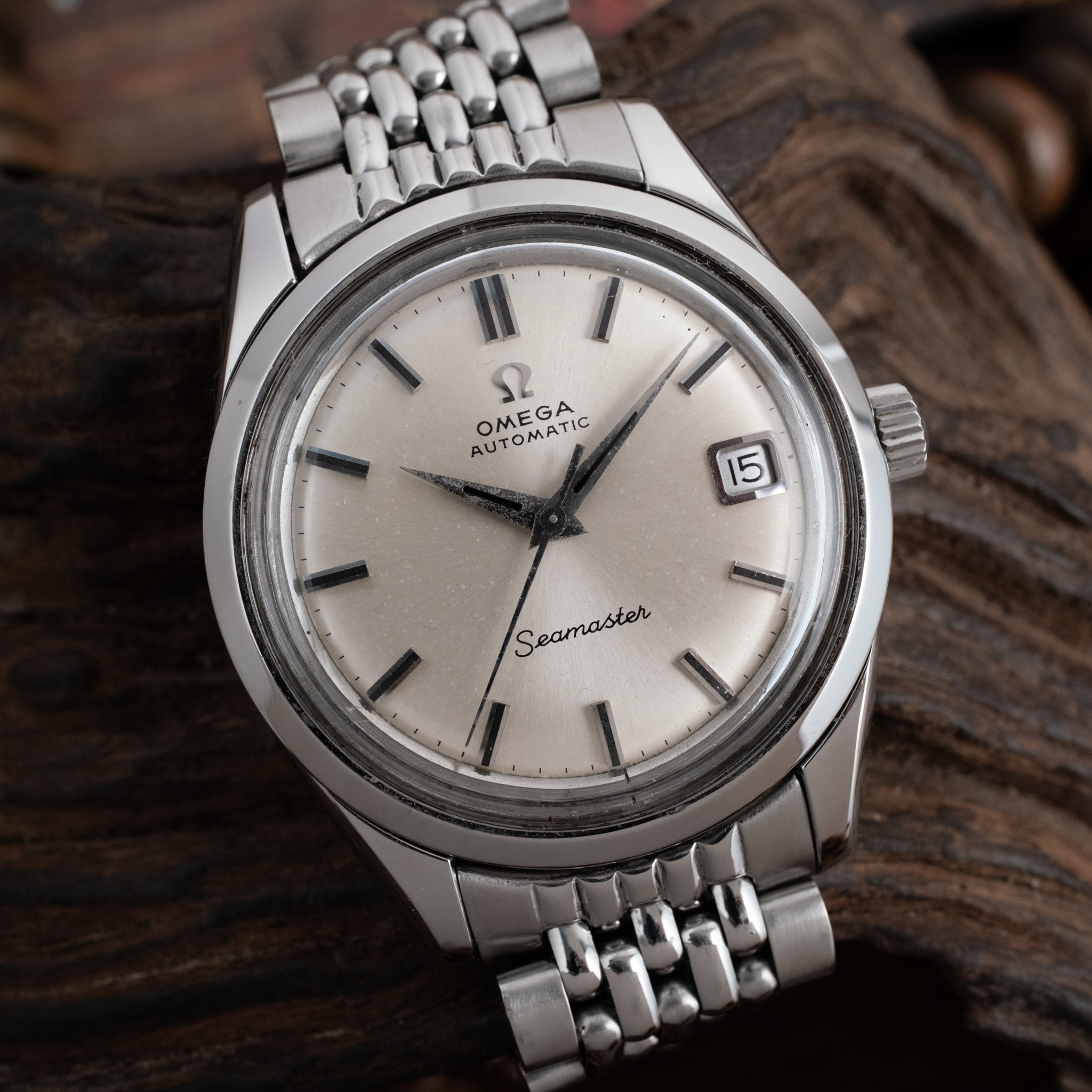
The Omega Seamaster 166010 SP / 168024 sits within a narrow 1966-1970 production span. It is a 35 mm stainless steel automatic with either Caliber 564 or 565, both with 24 jewels, and its restrained scale makes condition more important than visual impact.
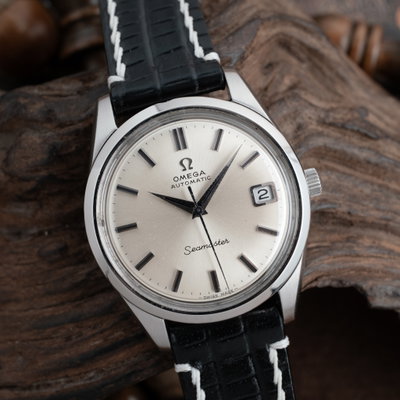
A used Omega Seamaster 166010 SP / 168024 should be judged first by its silver sunburst dial, then by the steel case and hippocampus medallion. Applied indices and dauphine hands can carry black inserts, while a signed beads of rice bracelet is a documented configuration rather than an aftermarket embellishment.
Reference
166010 SP / 168024
Known production span
1966-1970
Case diameter
35 mm excluding the crown
Case material
Stainless steel
| Movement options | Omega Caliber 564 or Caliber 565 automatic |
| Jewel count | 24 jewels |
| Dial configuration | Silver sunburst with applied faceted or baton indices |
| Hand style | Dauphine hands, including examples with black inserts |
| Caseback detail | Hippocampus medallion |
| Documented bracelet | Signed beads of rice bracelet |
What it was built for
The Seamaster combines a compact stainless steel case with an automatic movement and a legible silver sunburst dial. Caliber 564 is chronometer-certified, while Caliber 565 is also correct for the reference. The certification gives the 564 a clear technical distinction, but it does not compensate for a refinished dial, softened case or mismatched parts.
At 35 mm excluding the crown, the case wears compactly and leaves the dial furniture to do most of the visual work. Applied faceted indices and dauphine hands catch light, while their black inserts sharpen contrast against silver. The beads of rice bracelet gives the watch more presence across the wrist than a strap without changing the restrained character of the case.
Where the value sits
Dial condition creates the widest spread. Clean silver sunburst surfaces survive, but other dials show distributed spotting, and that difference is visible before movement specification matters. A redial costs more than hand oxidation or darkened lume combined, while a genuinely clean dial should not be called a service dial without evidence.
The main faults are specific: spotting across the dial, oxidation on the dauphine hands, heavily darkened lume and case lines softened by polishing. Relief on the hippocampus medallion also matters because lost definition cannot be returned by routine service. Even patina is acceptable; concentrated moisture damage or fresh printing over an aged surface is not.
A signed beads of rice bracelet adds value when its condition supports the watch rather than disguising a tired case. Stretch and poor fit reduce that premium. Between a Caliber 564 example with a compromised dial and a Caliber 565 example with crisp printing, strong sunburst finish and defined case lines, take the 565.
Dating and serials
The established production span for the Omega Seamaster 166010 SP / 168024 is 1966-1970. Omega serial estimates remain approximate, with a tolerance of about 1-3 years, so a single year should not be presented as exact without supporting documentation.
Both Caliber 564 and Caliber 565 occur in the reference, but the caliber alone does not establish a precise production year. The service history of an undocumented watch remains unknown, and without paperwork it is safer to describe only the movement, case, dial and serial relationship visible in the watch.
Dating this watch
| Serial range / caliber | Year | Note |
|---|---|---|
| 1,000,000 | 1902 | approximate, ±1-3 years |
| 2,000,000 | 1908 | approximate, ±1-3 years |
| 3,000,000 | 1912 | approximate, ±1-3 years |
| 4,000,000 | 1916 | approximate, ±1-3 years |
| 5,000,000 | 1923 | approximate, ±1-3 years |
| 6,000,000 | 1925 | approximate, ±1-3 years |
| 7,000,000 | 1929 | approximate, ±1-3 years |
| 8,000,000 | 1935 | approximate, ±1-3 years |
| 9,000,000 | 1939 | approximate, ±1-3 years |
| 10,000,000 | 1944 | approximate, ±1-3 years |
| 11,000,000 | 1947 | approximate, ±1-3 years |
| 12,000,000 | 1950 | approximate, ±1-3 years |
| 13,000,000 | 1952 | approximate, ±1-3 years |
| 14,000,000 | 1954 | approximate, ±1-3 years |
| 15,000,000 | 1956 | approximate, ±1-3 years |
| 16,000,000 | 1958 | approximate, ±1-3 years |
| 17,000,000 | 1960 | approximate, ±1-3 years |
| 18,000,000 | 1961 | approximate, ±1-3 years |
| 19,000,000 | 1962 | approximate, ±1-3 years |
| 20,000,000 | 1963 | approximate, ±1-3 years |
| 21,000,000 | 1964 | approximate, ±1-3 years |
| 22,000,000 | 1965 | approximate, ±1-3 years |
| 24,000,000 | 1966 | approximate, ±1-3 years |
| 25,000,000 | 1967 | approximate, ±1-3 years |
| 26,000,000 | 1968 | approximate, ±1-3 years |
| 28,000,000 | 1969 | approximate, ±1-3 years |
| 31,000,000 | 1970 | approximate, ±1-3 years |
| 32,000,000 | 1971 | approximate, ±1-3 years |
| 33,000,000 | 1972 | approximate, ±1-3 years |
| 35,000,000 | 1973 | approximate, ±1-3 years |
| 37,000,000 | 1974 | approximate, ±1-3 years |
| 39,000,000 | 1975 | approximate, ±1-3 years |
| 40,000,000 | 1976 | approximate, ±1-3 years |
| 41,000,000 | 1977 | approximate, ±1-3 years |
| 42,000,000 | 1978 | approximate, ±1-3 years |
| 43,000,000 | 1979 | approximate, ±1-3 years |
| 44,000,000 | 1980 | approximate, ±1-3 years |
| 45,000,000 | 1982 | approximate, ±1-3 years |
| 46,000,000 | 1984 | approximate, ±1-3 years |
| 47,000,000 | 1985 | approximate, ±1-3 years |
| 48,000,000 | 1986 | approximate, ±1-3 years |
| 49,000,000 | 1988 | approximate, ±1-3 years |
| 50,000,000 | 1990 | approximate, ±1-3 years |
| 53,000,000 | 1993 | approximate, ±1-3 years |
| 54,000,000 | 1995 | approximate, ±1-3 years |
| 56,000,000 | 1996 | approximate, ±1-3 years |
| 58,000,000 | 1998 | approximate, ±1-3 years |
| 60,000,000 | 2000 | approximate, ±1-3 years |
Dating data comes from our decoder tables; treat years as approximate.
What to check before you buy
- Dial print and furniture: The correct handled configuration is a silver sunburst dial with an applied Omega logo and applied faceted or baton indices. Printed text should remain crisp, and fresh printing over an aged surface is a redial warning.
- Hands and inserts: Dauphine hands belong with the reference, including examples carrying black inserts that correspond with black-insert indices. Oxidation and spotting can be genuine age, but matching colour alone does not prove originality.
- Caseback medallion: The stainless steel caseback carries a hippocampus medallion. Defined relief supports better case preservation, while a weak or blurred medallion can indicate wear or polishing and should be assessed with the case lines.
- Movement specification: The reference occurs with automatic Caliber 564 or Caliber 565, each with 24 jewels. Caliber 564 is the chronometer-certified option, but either movement must form a coherent watch rather than a married or franken assembly.
- Bracelet configuration: A signed beads of rice bracelet is period-correct for documented examples of this reference. Bracelet stretch and poor fit reduce its value, and the bracelet should never be used to excuse a compromised dial or softened case.
Other 166.010 SP / 168.024 examples we auctioned
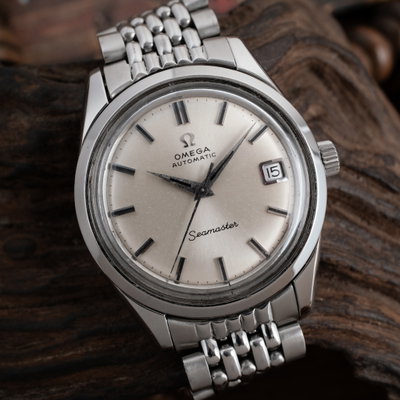
Omega · Seamaster · 166.010 SP / 168.024
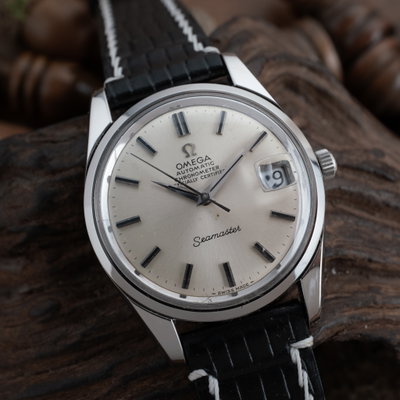
Omega · Seamaster · 166010 SP / 168024
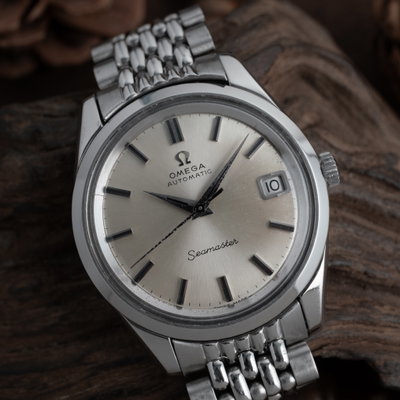
Omega · Seamaster · 166.010 SP / 168.024 · 1966
Omega · Seamaster · 166.010 SP / 168.024 · 1970
More Omega references
Related pages
Frequently asked questions
Ready to hunt for your own?
More than 100 vintage watches go under the hammer every week.