Omega De Ville 166 051 - A 1970s Tonneau Dress Watch
Buy the Omega De Ville 166 051 for its clean silver dial and well-defined tonneau case, but accept neither a redial nor softened case geometry.
We auction more than 100 vintage watches a week.
Get first access: new Omega 166 051 drops and alerts before auctions end.
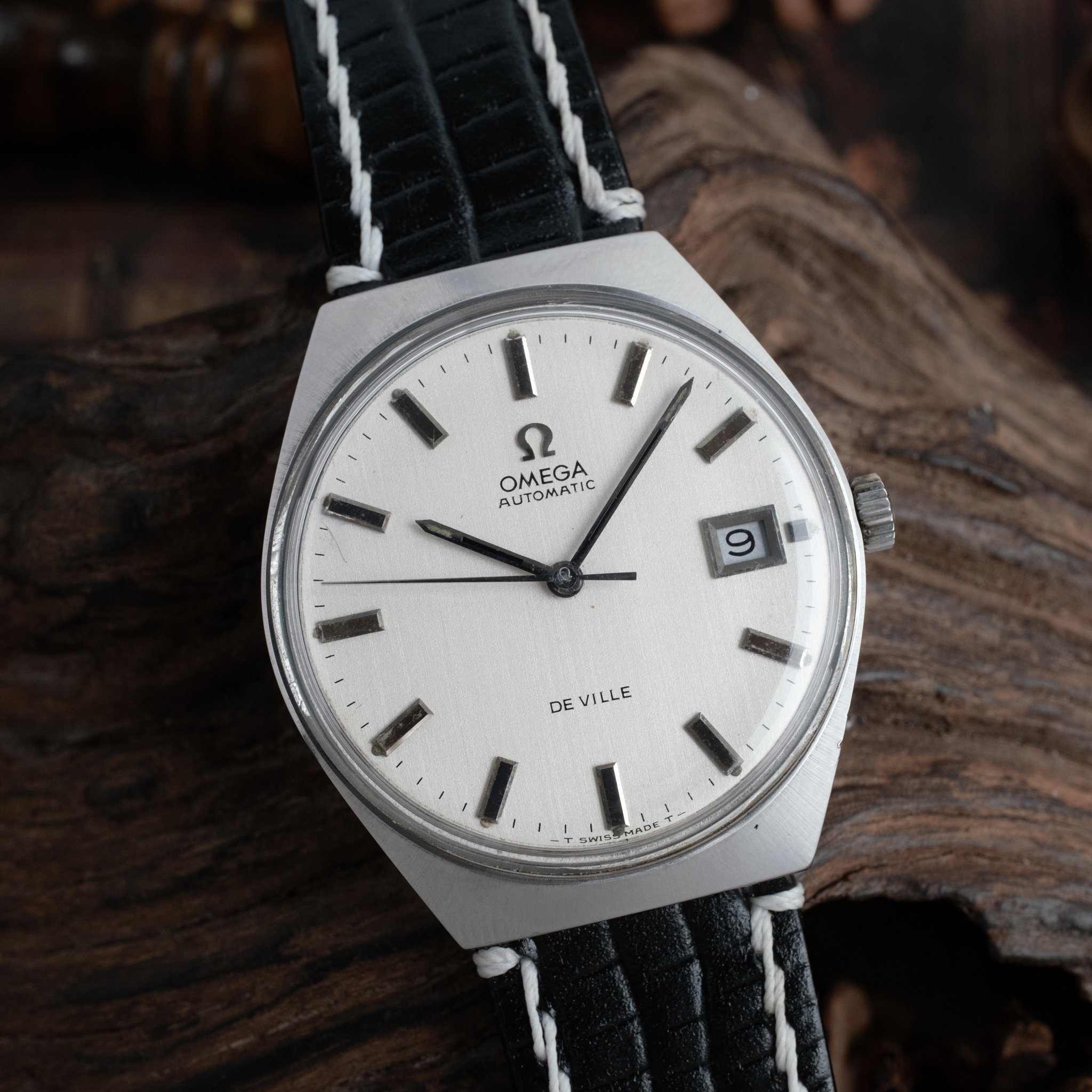
Browse 42 live Omega auctionsThe Omega De Ville 166 051 is a 1970s automatic dress watch built around a stainless steel tonneau case and a restrained silver dial. At 34 mm excluding the crown, it wears as a compact shaped watch rather than as a small round watch, with the broad case top supplying much of its visual presence.
The strongest examples combine a clean vertically brushed silver dial, intact black inserts in the applied indices and firm transitions between the brushed upper case and polished flanks. Those elements matter more than superficial scratches. A refinished dial removes the texture and printing that carry much of the watch's value, while heavy polishing permanently weakens the tonneau profile.
Reference
166 051
Model
De Ville
Production period
1970s
Case size
34 mm excluding the crown
| Case material | Stainless steel |
| Case shape | Tonneau |
| Movement | Automatic; calibre 1002 documented on a handled example |
| Dial | Silver with brushed finishing and applied black-accented indices |
| Display | Central seconds and date at 3 o'clock |
| Crystal | Signed acrylic documented on handled examples |
What it was built for
The 166 051 belongs to the 1970s dress-watch side of the De Ville range. Its automatic movement, central seconds and date window at 3 o'clock make it practical for regular wear, while the silver dial and baton furniture keep the design formal. This is not a sports case pretending to be discreet - the tonneau outline and brushed upper surface are the design.
A signed acrylic crystal is documented on handled examples. Acrylic will collect light marks, but replacement or polishing is less consequential than damage to the dial beneath it. The watch to want has a clear crystal, clean dial and case edges that still separate the brushed top from the polished sides.
Where the value sits
The dial sets the spread. A vertically brushed silver surface without spotting or moisture damage deserves a premium over a redial, especially when the printed text, date aperture and black-accented furniture remain coherent. Descriptions also use sunburst for one handled dial, so terminology alone cannot settle originality - the actual finish and printing must agree with the watch.
Case preservation comes next. Well-defined tonneau edges and surviving directional brushing support the intended geometry; rounded transitions and a uniformly bright surface point to polishing. Between a cosmetically clean polished case and a scratched case with stronger lines, take the stronger case. Superficial wear can remain honest, but lost metal cannot be returned.
Dating and serials
The reference belongs to the 1970s in the examples handled, but the movement serial provides the more useful dating boundary. The table below is approximate within 1-3 years, so it should support a broader judgement rather than overrule the dial, case and movement configuration.
Calibre 1002 is documented in an example of the 166 051, but the available evidence does not establish that every watch under this reference used it. Without the movement serial and a clear view of the calibre marking, a narrower production date would be speculation.
Dating this watch
| Serial range / caliber | Year | Note |
|---|---|---|
| 1000000 | 1895 | approximate, ±1-3 years |
| 2000000 | 1902 | approximate, ±1-3 years |
| 3000000 | 1908 | approximate, ±1-3 years |
| 4000000 | 1912 | approximate, ±1-3 years |
| 5000000 | 1916 | approximate, ±1-3 years |
| 6000000 | 1923 | approximate, ±1-3 years |
| 7000000 | 1929 | approximate, ±1-3 years |
| 8000000 | 1935 | approximate, ±1-3 years |
| 9000000 | 1939 | approximate, ±1-3 years |
| 10000000 | 1944 | approximate, ±1-3 years |
| 11000000 | 1947 | approximate, ±1-3 years |
| 12000000 | 1950 | approximate, ±1-3 years |
| 13500000 | 1952 | approximate, ±1-3 years |
| 14000000 | 1954 | approximate, ±1-3 years |
| 15000000 | 1956 | approximate, ±1-3 years |
| 16000000 | 1958 | approximate, ±1-3 years |
| 17000000 | 1960 | approximate, ±1-3 years |
| 18000000 | 1961 | approximate, ±1-3 years |
| 19000000 | 1962 | approximate, ±1-3 years |
| 20000000 | 1963 | approximate, ±1-3 years |
| 21000000 | 1964 | approximate, ±1-3 years |
| 22000000 | 1965 | approximate, ±1-3 years |
| 23000000 | 1966 | approximate, ±1-3 years |
| 25000000 | 1967 | approximate, ±1-3 years |
| 26000000 | 1968 | approximate, ±1-3 years |
| 28000000 | 1969 | approximate, ±1-3 years |
| 29000000 | 1970 | approximate, ±1-3 years |
| 33000000 | 1971 | approximate, ±1-3 years |
| 34000000 | 1972 | approximate, ±1-3 years |
| 36000000 | 1973 | approximate, ±1-3 years |
| 38000000 | 1974 | approximate, ±1-3 years |
| 39000000 | 1975 | approximate, ±1-3 years |
| 40000000 | 1977 | approximate, ±1-3 years |
| 41000000 | 1978 | approximate, ±1-3 years |
| 42000000 | 1979 | approximate, ±1-3 years |
| 44000000 | 1980 | approximate, ±1-3 years |
| 45000000 | 1982 | approximate, ±1-3 years |
| 46000000 | 1984 | approximate, ±1-3 years |
| 48000000 | 1985 | approximate, ±1-3 years |
| 49000000 | 1986 | approximate, ±1-3 years |
| 51000000 | 1989 | approximate, ±1-3 years |
| 53000000 | 1991 | approximate, ±1-3 years |
| 54000000 | 1993 | approximate, ±1-3 years |
| 55000000 | 1995 | approximate, ±1-3 years |
Dating data comes from our decoder tables; treat years as approximate.
What to check before you buy
- Dial finish and furniture: The silver surface should retain a coherent vertical brushed or documented sunburst effect, with clean printing, a date aperture at 3 o'clock and applied indices carrying black inserts. Flat paint or disturbed printing indicates a redial.
- Tonneau case finishing: The stainless steel case should preserve distinct brushed upper surfaces and polished flanks, separated by defined edges. Rounded transitions, missing directional brushing or a uniformly polished top indicate material removed during refinishing.
- Hands and luminous material: Stick hands with black inserts are documented, as are tritium plots at the base of the hour markers. Oxidation can be genuine age damage, but mismatched inserts, fresh luminous material or inconsistent ageing require scrutiny for relume or replacement.
- Movement identity: An automatic calibre 1002 is documented in the 166 051. Confirm the calibre marking and compare the movement serial with the approximate Omega table, while recognising that the present evidence does not establish calibre 1002 as universal.
Other 166 051 examples we auctioned
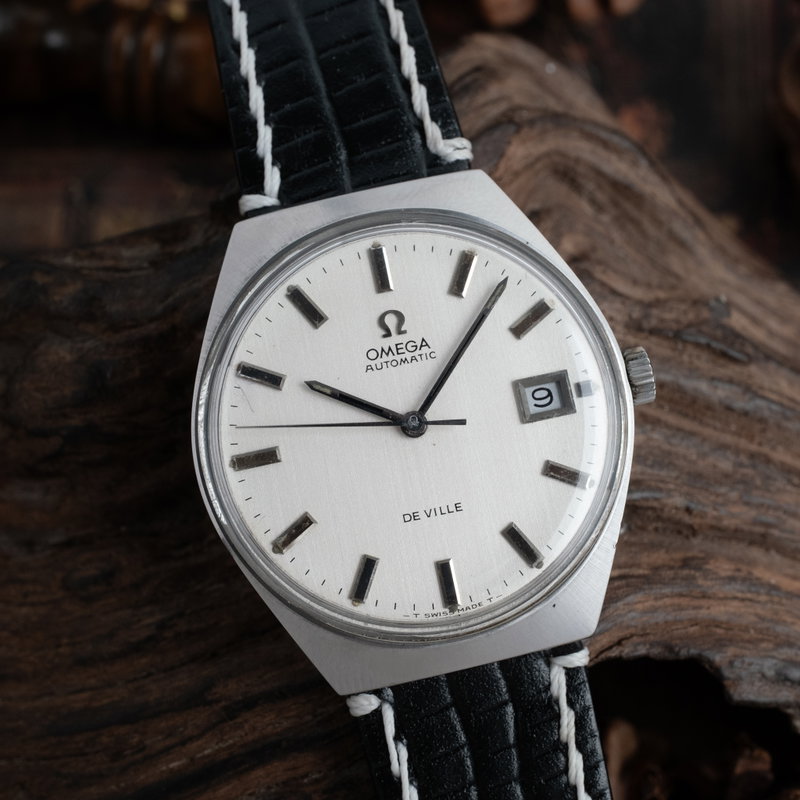
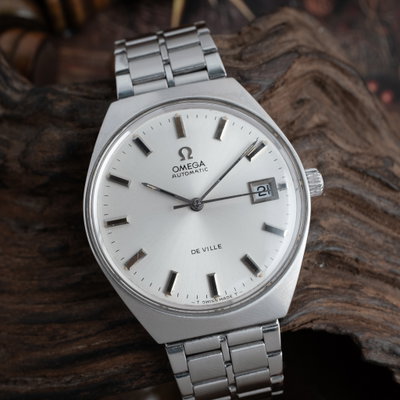
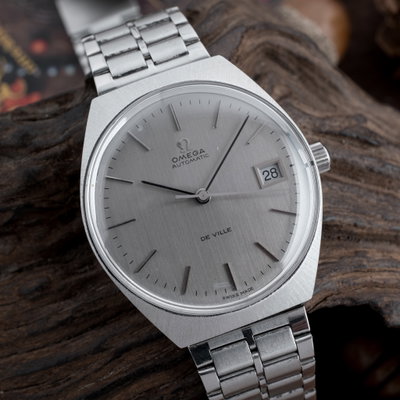
3 Omega 166 051 auctioned
More Omega references
Related pages
Frequently asked questions
Ready to hunt for your own?
More than 100 vintage watches go under the hammer every week.