Omega Genève 162.0010: the early-1970s cushion-case reference
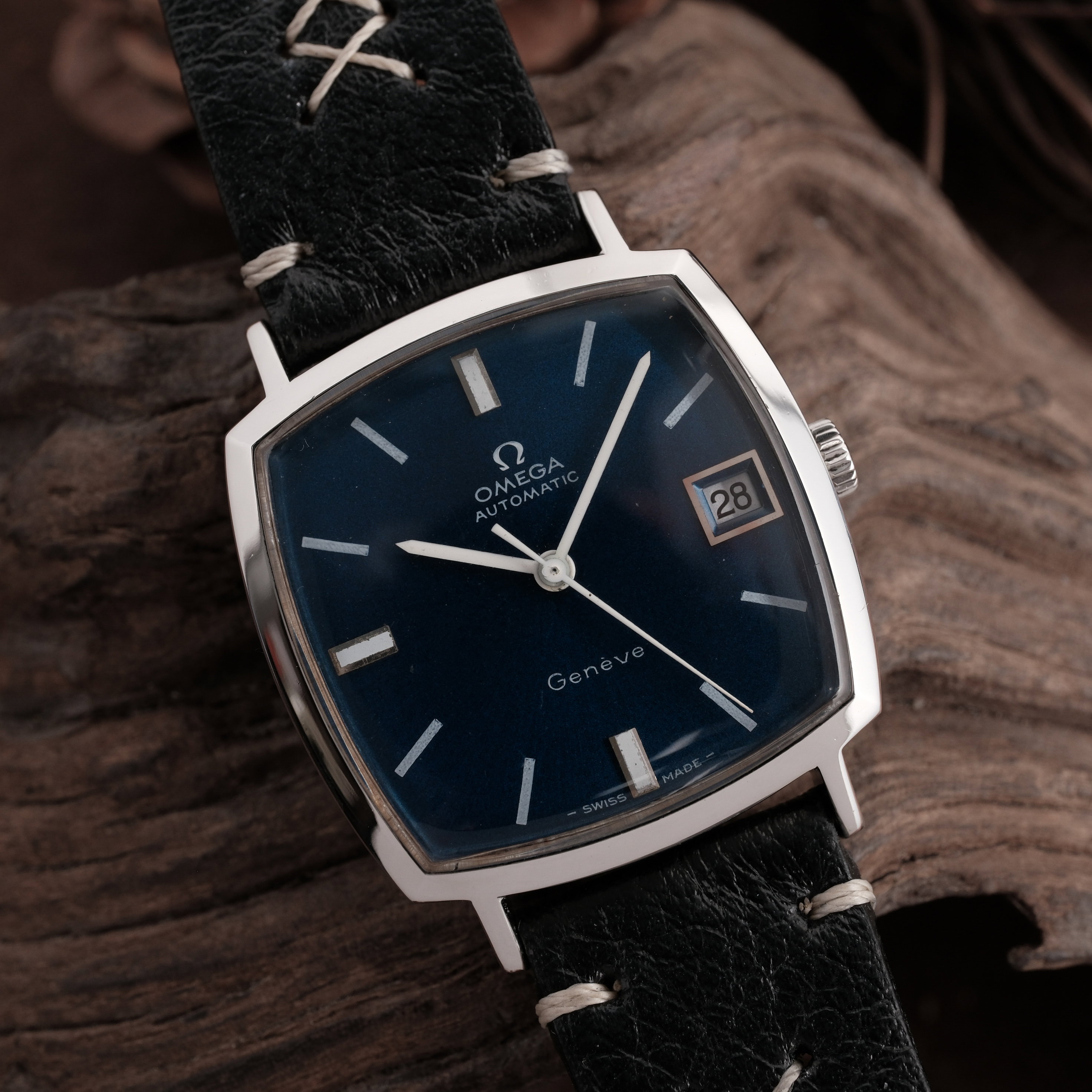
Omega Genève reference 162.0010 is an early-1970s automatic cushion-case dress watch, best bought in steel with a clean sunburst dial.
We auction more than 100 vintage watches a week.
Get first access: new Omega 162.0010 drops and alerts before auctions end.
Browse 60 live Omega auctionsThe Omega Genève 162.0010 makes its case through shape rather than size. Its square cushion profile belongs unmistakably to 1971-1972, while the automatic Caliber 565 keeps it from being merely a period design exercise.
Steel is the safer version to buy. The gold-plated alternative has a 20-micron outer layer and a stainless steel caseback, so wear-through at the case edges matters in a way it never does on steel. Across both materials, the sunburst dial carries more value than a small difference between the 31 mm and 32 mm measurements seen without the crown.
Brand
Omega
Model
Genève
Reference
162.0010
Production years
1971-1972
| Movement | Automatic Omega Caliber 565 |
| Jewels | 24 |
| Case size | 31 mm or 32 mm, excluding the crown |
| Case materials | Stainless steel or 20-micron gold plate with stainless steel caseback |
| Dial options handled | Blue, silver or champagne sunburst |
| Case form | Square cushion |
The model landscape
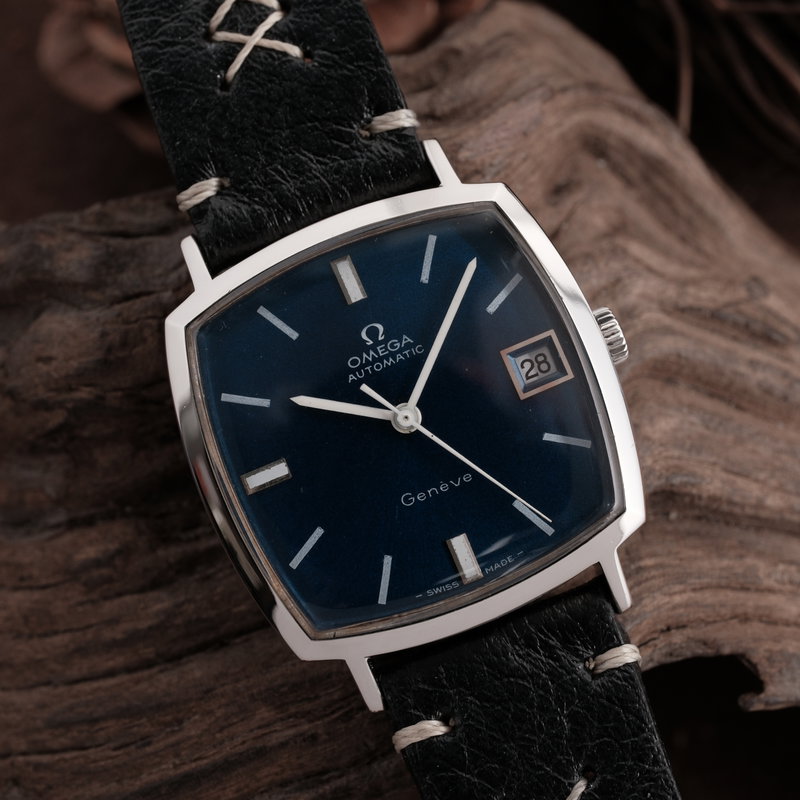
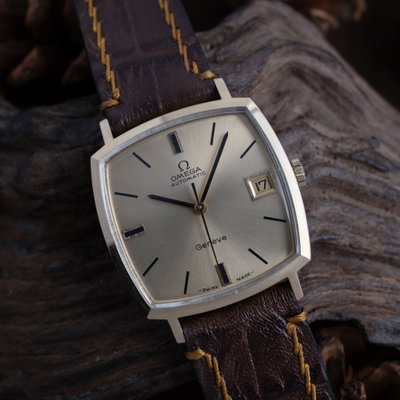
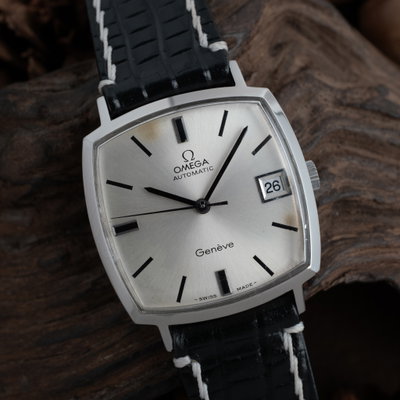
Reference 162.0010 divides first by case material, then by dial. Stainless steel examples occur with blue or silver sunburst dials, while the gold-plated case is paired with a champagne sunburst dial and gold-tone applied indices with black inlays. The steel blue dial uses applied silver-tone indices; the steel silver dial uses applied black indices.
The blue steel version is where the reference makes the strongest argument. It keeps the cushion case visually crisp, avoids the permanent wear risk of plating and gives the sunburst finish the greatest colour contrast. Against a spotted silver dial or a polished gold-plated case at the same level, take the clean blue steel watch.
Value sits chiefly in the dial, followed by the definition of the cushion case. A clean sunburst surface commands the premium because spotting cannot be serviced away, while a redial removes the factory finish entirely. Caliber 565 is common to the examples handled, so it supports the purchase rather than separating one dial version from another.
On the wrist
At 31 mm to 32 mm excluding the crown, the 162.0010 wears smaller than its square outline initially suggests. The cushion case spreads its visual weight into four corners, giving it more presence than a round watch of the same nominal width without turning it into a large watch.
The applied baton indices keep the blue, silver and champagne sunburst dials legible as the finish changes under light. Its proportions suit a dress cuff, but the geometric case reads more decisively 1970s than a conventional round Genève. If you expect modern wrist coverage, this reference will feel compact. If you want a small automatic with a distinct period shape, that compactness is the point.
What goes wrong
Dial damage is the costliest fault. Silver sunburst examples can show visible spotting and staining, and refinishing replaces the original metallic surface with a redial that loses more value than mechanical servicing costs. A genuine service dial is different from a redial, but neither should be described as the watch's original dial.
Gold-plated cases bring a second irreversible problem: once the 20-micron layer wears through at the corners or lugs, routine service cannot restore it. Repeated polishing also softens the square cushion outline and rounds the case transitions. On steel, surface marks are preferable to mushy edges because the original geometry still reads.
Caliber 565 should be judged on present operation and documented work, not a seller's unsupported service claim. The service history is unknown unless paperwork establishes it, and without documentation it is safer not to speculate. Between a clean-dial steel example with defined case lines and a shinier watch with spotting or softened edges, buy the former.
Dating this watch
| Serial range / caliber | Year | Note |
|---|---|---|
| 1000000 | 1902 | approximate, ±1-3 years |
| 2000000 | 1908 | approximate, ±1-3 years |
| 3000000 | 1912 | approximate, ±1-3 years |
| 4000000 | 1916 | approximate, ±1-3 years |
| 5000000 | 1923 | approximate, ±1-3 years |
| 6000000 | 1925 | approximate, ±1-3 years |
| 7000000 | 1929 | approximate, ±1-3 years |
| 8000000 | 1935 | approximate, ±1-3 years |
| 9000000 | 1939 | approximate, ±1-3 years |
| 10000000 | 1944 | approximate, ±1-3 years |
| 11000000 | 1947 | approximate, ±1-3 years |
| 12000000 | 1950 | approximate, ±1-3 years |
| 13000000 | 1952 | approximate, ±1-3 years |
| 14000000 | 1954 | approximate, ±1-3 years |
| 15000000 | 1956 | approximate, ±1-3 years |
| 16000000 | 1958 | approximate, ±1-3 years |
| 17000000 | 1960 | approximate, ±1-3 years |
| 18000000 | 1961 | approximate, ±1-3 years |
| 19000000 | 1962 | approximate, ±1-3 years |
| 20000000 | 1963 | approximate, ±1-3 years |
| 21000000 | 1964 | approximate, ±1-3 years |
| 22000000 | 1965 | approximate, ±1-3 years |
| 24000000 | 1966 | approximate, ±1-3 years |
| 25000000 | 1967 | approximate, ±1-3 years |
| 26000000 | 1968 | approximate, ±1-3 years |
| 28000000 | 1969 | approximate, ±1-3 years |
| 31000000 | 1970 | approximate, ±1-3 years |
| 32000000 | 1971 | approximate, ±1-3 years |
| 33000000 | 1972 | approximate, ±1-3 years |
| 35000000 | 1973 | approximate, ±1-3 years |
| 37000000 | 1974 | approximate, ±1-3 years |
| 39000000 | 1975 | approximate, ±1-3 years |
| 40000000 | 1976 | approximate, ±1-3 years |
| 41000000 | 1977 | approximate, ±1-3 years |
| 42000000 | 1978 | approximate, ±1-3 years |
| 43000000 | 1979 | approximate, ±1-3 years |
| 44000000 | 1980 | approximate, ±1-3 years |
| 45000000 | 1982 | approximate, ±1-3 years |
| 46000000 | 1984 | approximate, ±1-3 years |
| 47000000 | 1985 | approximate, ±1-3 years |
| 48000000 | 1986 | approximate, ±1-3 years |
| 49000000 | 1988 | approximate, ±1-3 years |
| 50000000 | 1990 | approximate, ±1-3 years |
| 53000000 | 1993 | approximate, ±1-3 years |
| 54000000 | 1995 | approximate, ±1-3 years |
| 56000000 | 1996 | approximate, ±1-3 years |
| 58000000 | 1998 | approximate, ±1-3 years |
| 60000000 | 2000 | approximate, ±1-3 years |
Dating data comes from our decoder tables; treat years as approximate.
What to check before you buy
- Dial configuration: A blue sunburst dial should carry applied silver-tone indices, a silver sunburst dial applied black indices, and the champagne version gold-tone applied indices with black inlays.
- Case and back: Reference 162.0010 uses a square cushion case. Known material pairings are stainless steel throughout or 20-micron gold plate with a stainless steel caseback.
- Movement: The movement should be the automatic Omega Caliber 565 with 24 jewels. A different caliber creates a mismatch and may indicate a married or franken watch rather than a complete factory configuration.
- Dial surface: Sunburst grain should remain coherent across the dial. Visible spotting is damage, while flat or newly applied printing can indicate a redial rather than an original or genuine service dial.
- Case geometry: The cushion outline should retain defined transitions and square visual weight at the corners. Soft edges or uneven transitions point to polishing, which permanently changes this reference's defining shape.
Other 162.0010 examples we auctioned
4 Omega 162.0010 auctioned
More Omega references
Related pages
Frequently asked questions
Ready to hunt for your own?
More than 100 vintage watches go under the hammer every week.