Omega De Ville 151.0039 - What to Know Before Buying
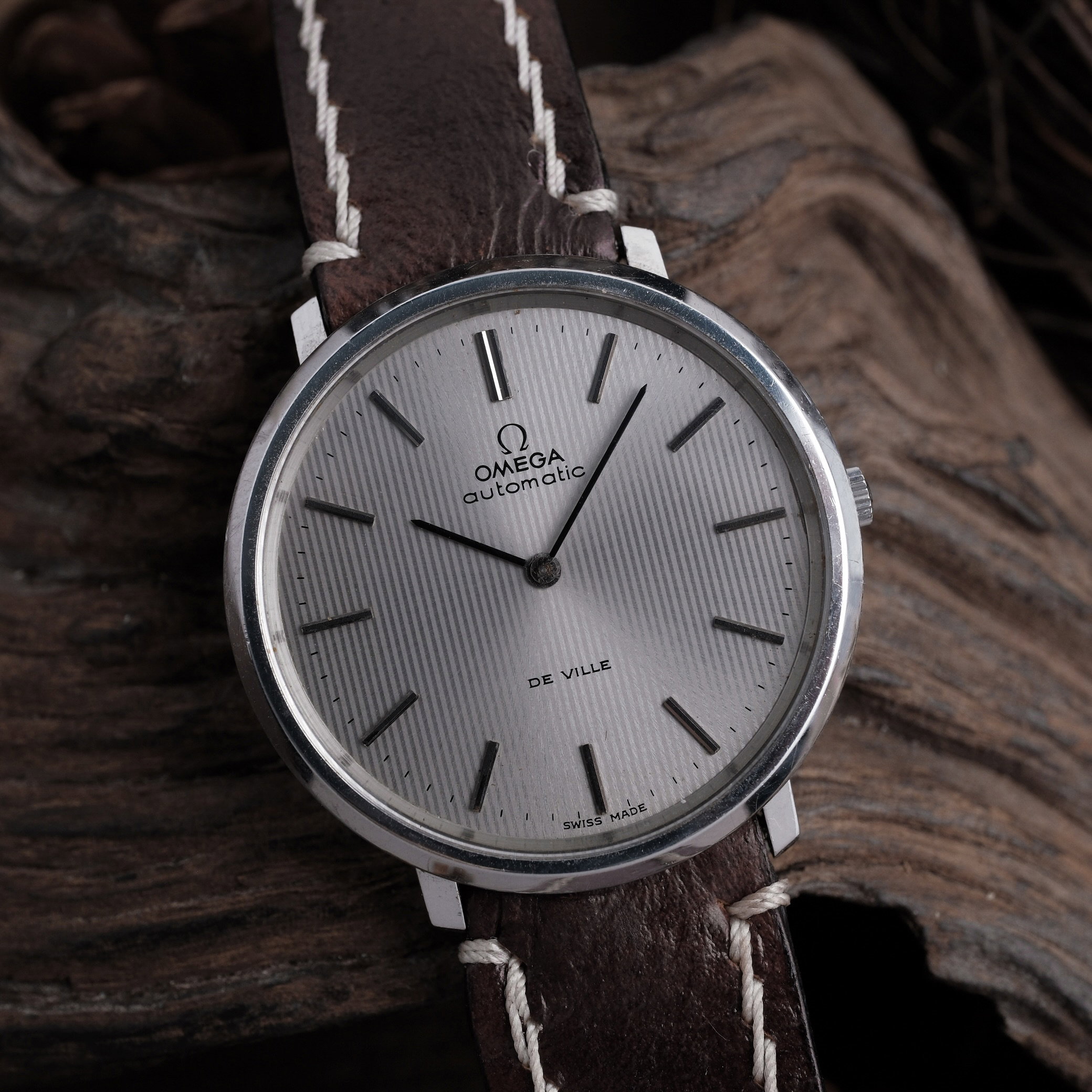
The Omega De Ville 151.0039 is a slim 36 mm steel dress watch whose value depends chiefly on an honest vertically textured dial and the correct caliber 711.
We auction more than 100 vintage watches a week.
Get first access: new Omega 151.0039 drops and alerts before auctions end.
Browse 66 live Omega auctionsThe Omega De Ville 151.0039 makes its case through proportion rather than complication. Its 36 mm stainless steel case, two-hand layout and automatic caliber 711 create a slim dress watch that belongs under a cuff, not beside a sports bezel. The reference runs across 1968-1974 in the watches handled, placing it firmly between late-1960s restraint and early-1970s dial design.
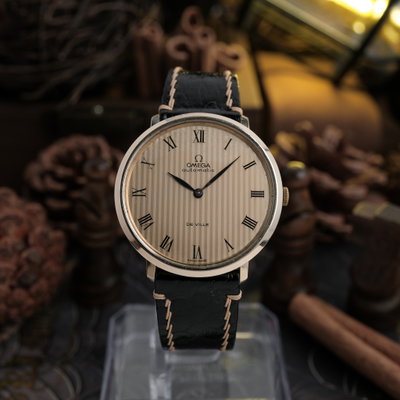
The version to want has an honest silver dial with its vertical texture intact. Applied black indices appear on some watches, while others use printed Roman numerals; both are established configurations, so the decision turns on dial condition rather than numeral style. A refinished dial costs more in lost value than a replaced crystal or crown, and heavy spotting remains damage even when the printing is still legible.
Reference
151.0039
Model
De Ville
Known production years
1968-1974
Case diameter
36 mm excluding the crown
| Case material | Stainless steel |
| Movement | Omega caliber 711 |
| Winding | Automatic |
| Display | Two hands, no date |
| Dial configurations | Vertical silver finish with applied black indices or printed black Roman numerals |
What it was built for
The De Ville 151.0039 was built as an automatic dress watch with no date display competing for space. Caliber 711 allowed a restrained case profile, and the black hands provide practical contrast against the silver dial. That simplicity matters in use: the watch reads quickly, slips beneath a shirt cuff and avoids the visual weight of a thicker automatic.
At 36 mm excluding the crown, the case has enough dial area for the vertical finish to remain visible without turning the watch into a modern oversized dress piece. The dark stick or leaf-style hands seen on handled examples give the dial a stronger graphic character than plain polished hands would. Buy it for tailoring, evening wear and quieter everyday use, not for water exposure.
Where the value sits
Most of the value sits in the dial. Clean vertically brushed examples retain an even silver surface and crisp printing, while damaged ones can carry widespread spotting, staining or concentrated marks around 6 o'clock. Patina describes even, attractive ageing; broad surface degradation does not become patina merely because it is old. Between a polished case with a clean dial and a sharper case with a redial, take the clean honest dial.
Roman-numeral and applied-index dials are both legitimate choices within 151.0039, but the available evidence does not establish a production hierarchy or a defensible rarity premium between them. Condition creates the clearer spread. A factory service dial is genuine but replaced, a redial has been refinished, and a franken combines parts that did not leave the factory together. Those distinctions should remain explicit.
What goes wrong
Dial damage is the first financial risk: silver surfaces can develop spotting, stains and widespread degradation even when the text remains readable. Cases also lose definition when repeated polishing softens the lugs, and a replacement crown may erase a useful period detail. Scratched crystals are less consequential because they are consumable, but cracks or distortion can make an otherwise strong dial difficult to judge.
Caliber 711 can be running while still lacking a documented service history. Rate readings from individual watches vary and cannot substitute for a receipt, inspection and measured performance, so without documentation the service history is unknown. The correct movement family matters because a different caliber would make the watch franken or married, depending on whether the mismatch involves other components or the case and movement specifically.
Dating this watch
| Serial range / caliber | Year | Note |
|---|---|---|
| 26000000 | 1968 | approximate, ±1-3 years |
| 28000000 | 1969 | approximate, ±1-3 years |
| 31000000 | 1970 | approximate, ±1-3 years |
| 32000000 | 1971 | approximate, ±1-3 years |
| 33000000 | 1972 | approximate, ±1-3 years |
| 35000000 | 1973 | approximate, ±1-3 years |
| 37000000 | 1974 | approximate, ±1-3 years |
Dating data comes from our decoder tables; treat years as approximate.
What to check before you buy
- Dial finish and printing: The silver dial should retain a clearly vertical brushed or linear texture, with crisp Omega and De Ville printing. A flat finish, lost texture or unevenly reapplied text points toward a redial rather than honest ageing.
- Numerals and hands: Applied black indices with dark stick hands and printed black Roman numerals with dark leaf-style hands are both known. Mixed furniture deserves caution because period-correct parts are not proof that the watch left the factory in that combination.
- Case and crown: The case should measure 36 mm excluding the crown and be stainless steel. Judge polishing through softened lug edges rather than claims of being unpolished, and treat a signed Omega crown as supportive rather than conclusive because crowns are consumable.
- Movement: The movement should be Omega automatic caliber 711. A different caliber is a material mismatch, while correct movement identification alone cannot prove that the case and movement originally left the factory together.
Other 151.0039 examples we auctioned
11 Omega 151.0039 auctioned
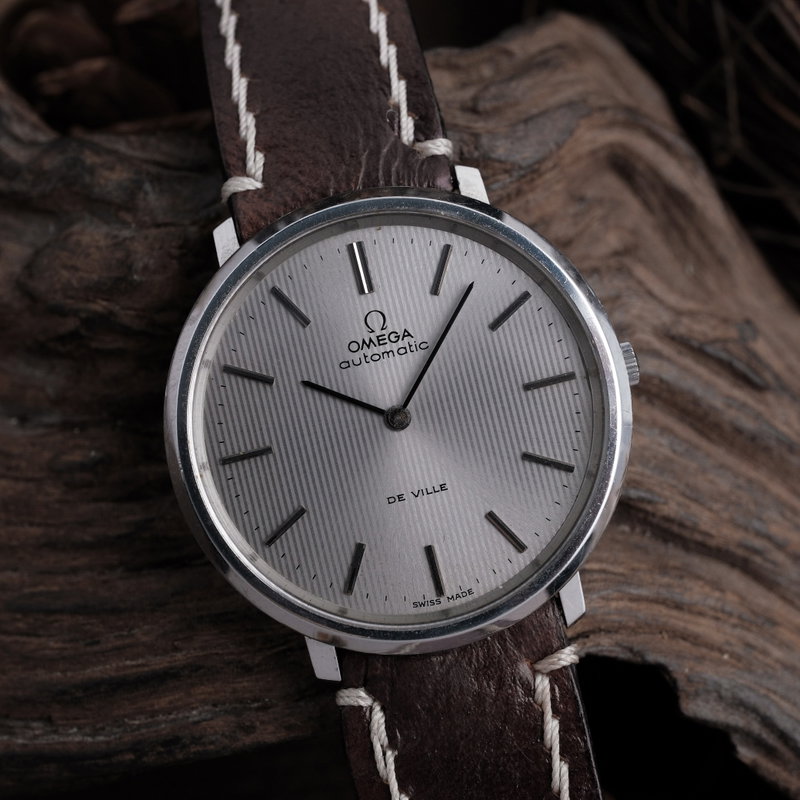
Omega · De Ville · 151.0039 · 1972
Omega · De Ville · 151.0039 · 1968
Omega · De Ville · 151.0039 · 1968
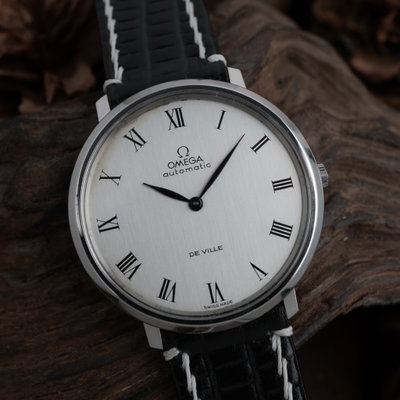
Omega · De Ville · 151.0039 · 1972
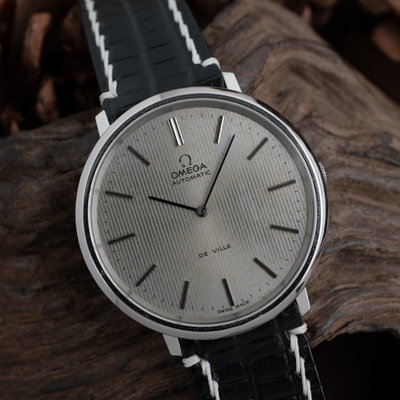
Omega · De Ville · 1510039 · 1968
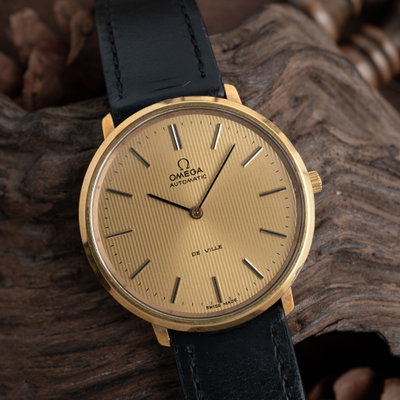
Omega · De Ville · 151.0039 · 1968
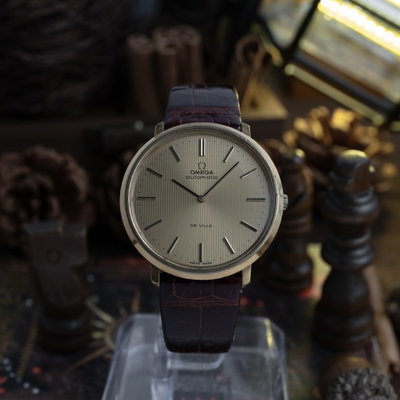
Omega · De Ville · 151.0039 · 1972
Omega · De Ville · 151.0039 · 1968
More Omega references
Related pages
Frequently asked questions
Ready to hunt for your own?
More than 100 vintage watches go under the hammer every week.