Rado Voyager 11814/1: What to Know Before Buying
Buy the Rado Voyager 11814/1 for its clean silver dial and sharp cushion case, choosing those over strong timing paired with heavy spotting.
Live now
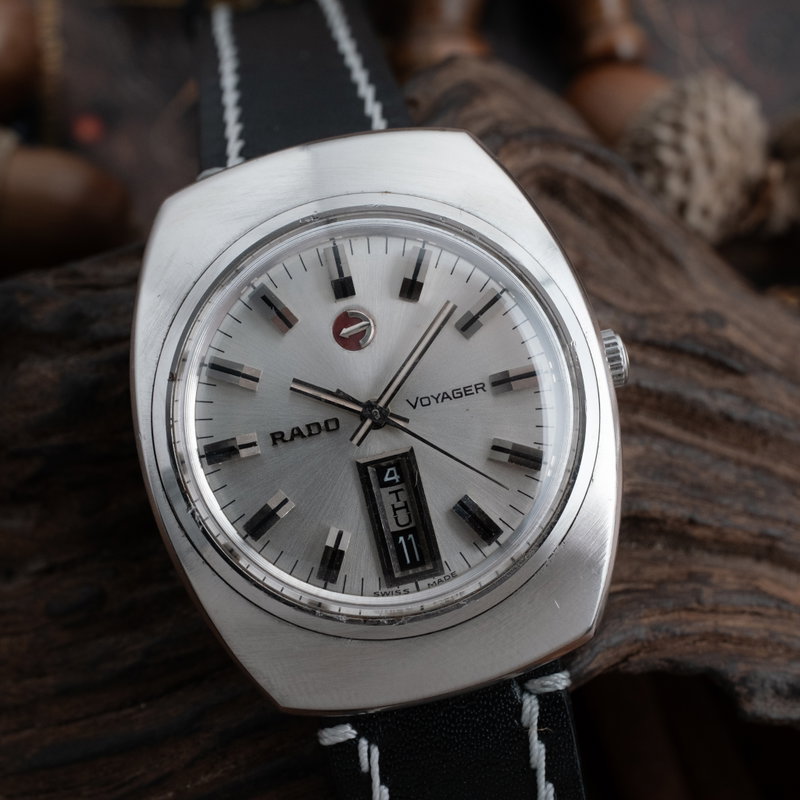
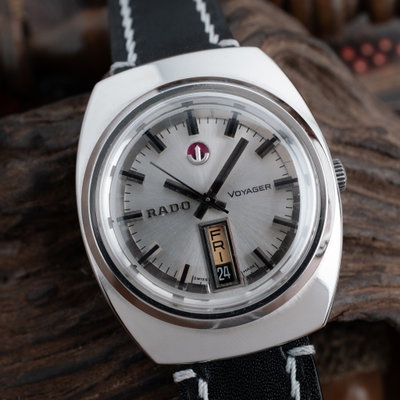
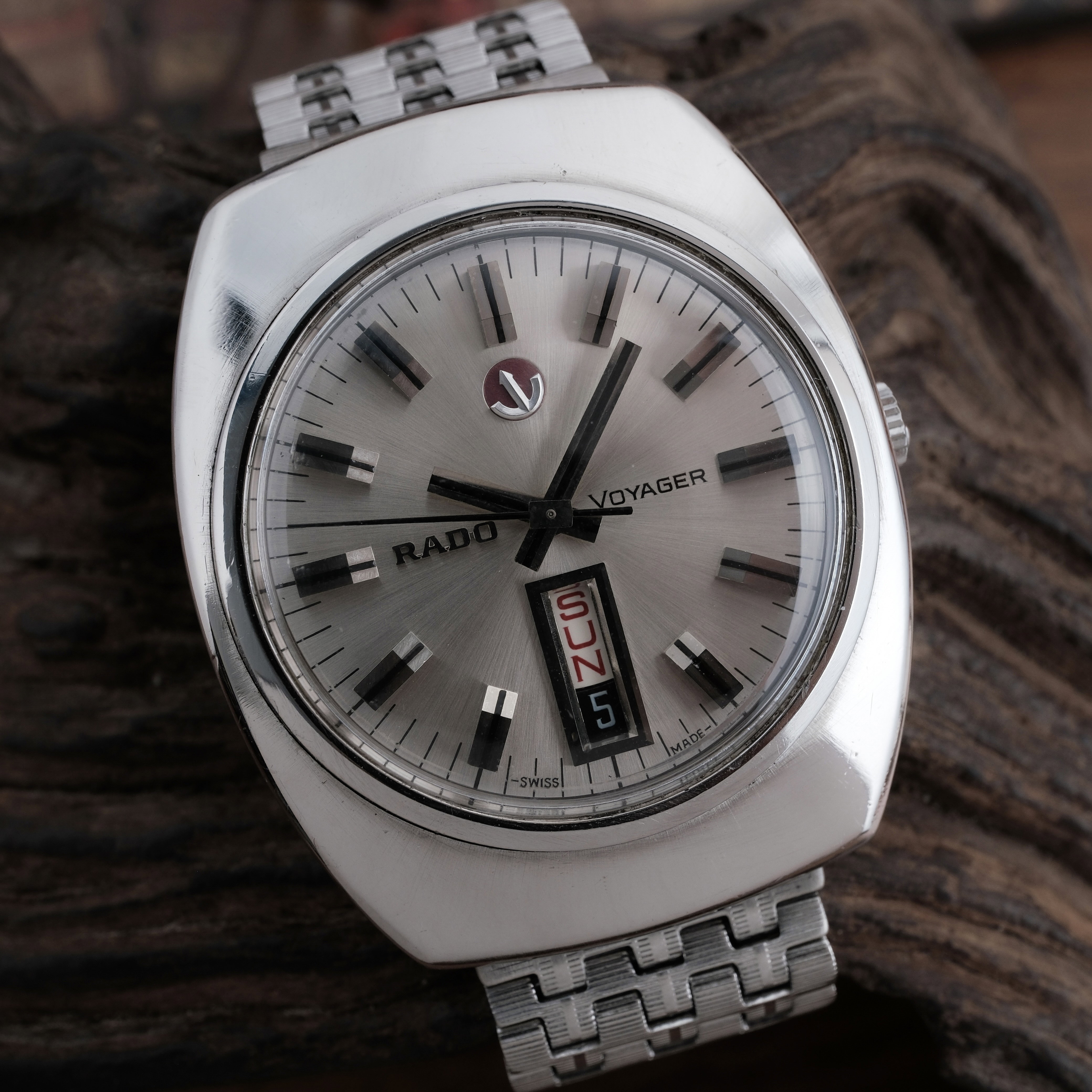
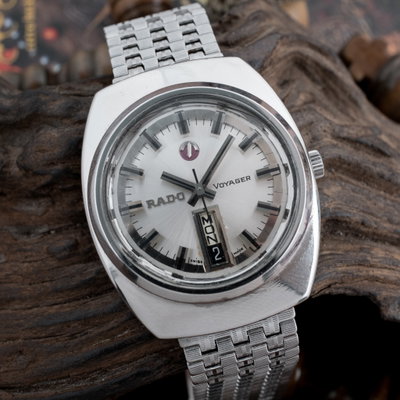
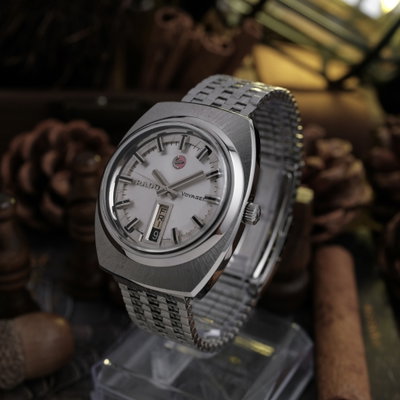
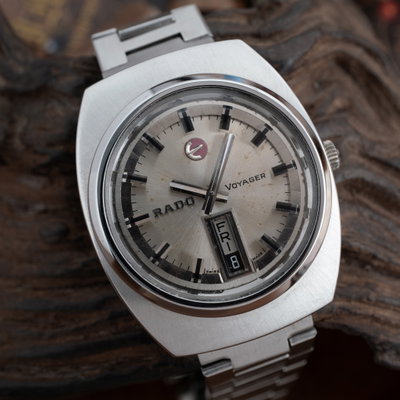
The Voyager 11814/1 puts its English day and date in a vertical aperture at 6 o'clock, rather than beside the crown. That arrangement leaves the silver dial symmetrical and makes this 1970s Rado immediately identifiable without relying on the signature. Applied indices with black inserts, striped baton hands and the rotating anchor complete the face.
The choice is less straightforward beneath the dial. Watches we have handled carried signed 25-jewel automatic calibers 2789 and 2798, while stainless steel cases measured 35 or 36 mm without the crown. The clean silver sunburst examples are the ones to want. Heavy spotting changes the dial far more than a small difference in measured case width or daily rate.
Reference
11814/1
Model
Voyager
Production period
1970s
Case size
35 or 36 mm, excluding the crown
| Case material | Stainless steel |
| Movement | Automatic caliber 2789 or 2798 |
| Jewel count | 25 jewels |
| Dial | Silver sunburst or vertically brushed silver |
| Calendar | Vertical day-date display at 6 o'clock |
| Bracelet | Signed brick-link bracelet on documented examples |
The model landscape
Voyager 11814/1 dials split most clearly by surface and preservation. Cleaner examples have a silver sunburst finish, while another has a vertically brushed silver surface with spotting across the dial. Both retain the vertical day-date at 6 o'clock, applied indices and anchor logo, but the spotted dial belongs in a different value bracket because the damage dominates the face.
Movement markings need equal precision. Caliber 2789 occurs repeatedly, but caliber 2798 also appears in this reference, each described as an automatic with 25 jewels. That evidence does not establish whether both were factory configurations throughout production. Without supporting documentation, the movement must be judged against the individual watch rather than forcing every 11814/1 into one caliber specification.
On the wrist
The stainless steel case measures 35 or 36 mm excluding the crown, depending on the example. Its cushion or tonneau outline carries more visual width than the dial opening alone suggests, while the 6 o'clock calendar keeps the face balanced. The black inserts in the applied markers and matching stripes in the baton hands provide the contrast on a silver surface.
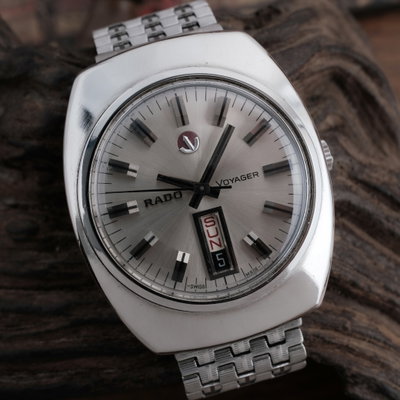
A signed brick-link bracelet gives the Voyager its strongest period-correct presentation and continues the case's broad geometry around the wrist. Bracelet stretch, missing links or poor end-link fit will affect wear more than the one-millimetre case variation. Against an otherwise equal watch on a replacement strap, the complete signed bracelet deserves the premium.
What goes wrong
Heavy spotting across the silver dial is the most expensive fault visible in the handled examples, and it should be priced as damage rather than patina. Hand oxidation can also interrupt the clean black-striped design. A refinished dial is worse than either: the vertical calendar layout, applied furniture and sunburst or brushed surface make inaccurate work conspicuous, while a genuine service dial would require separate identification.
Case wear deserves a second pass after the dial decision. Polishing softens the cushion geometry and lug transitions, bracelet stretch loosens the brick-link structure, and a replacement crown can break the coherent period appearance. Timing results have ranged from single-digit daily gains to gains above 30 seconds per day, but those readings are snapshots rather than service records. The service history is unknown unless documentation accompanies the individual watch.
What to check before you buy
- Dial architecture: The silver dial should place the day and date vertically at 6 o'clock, with applied indices carrying black inserts. The baton hands use matching black central stripes, and the Rado anchor sits below 12 o'clock.
- Movement marking: A signed 25-jewel automatic movement is documented with caliber 2789 and caliber 2798 in reference 11814/1. A different marking needs explanation, but the available evidence does not justify declaring only one of these two calibers correct.
- Case and bracelet: The stainless steel case measures 35 or 36 mm without the crown and uses a cushion or tonneau form. Sharp transitions support preserved geometry, while soft edges indicate polishing; signed brick-link bracelets should fit the case without conspicuous gaps.
- Redial and franken signs: A redial may lose the correct vertical calendar relationship, sunburst or vertical-brushed surface, and alignment of the applied furniture. A franken watch combines individually genuine parts that did not ship together, so caliber, dial and case must be assessed as one configuration.
Other 11814/1 examples we auctioned
6 Rado 11814/1 auctioned
We auction more than 100 vintage watches a week.
Get first access: new Rado 11814/1 drops and alerts before auctions end.
More Rado references
Related pages
Frequently asked questions
Ready to hunt for your own?
More than 100 vintage watches go under the hammer every week.