Rado 343942: The Configurations Worth Buying
Buy a Rado 343942 for its coherent 1960s configuration, prioritising an honest sunburst dial and sound case over any model name attached to it.
We auction more than 100 vintage watches a week.
Get first access: new Rado 343942 drops and alerts before auctions end.
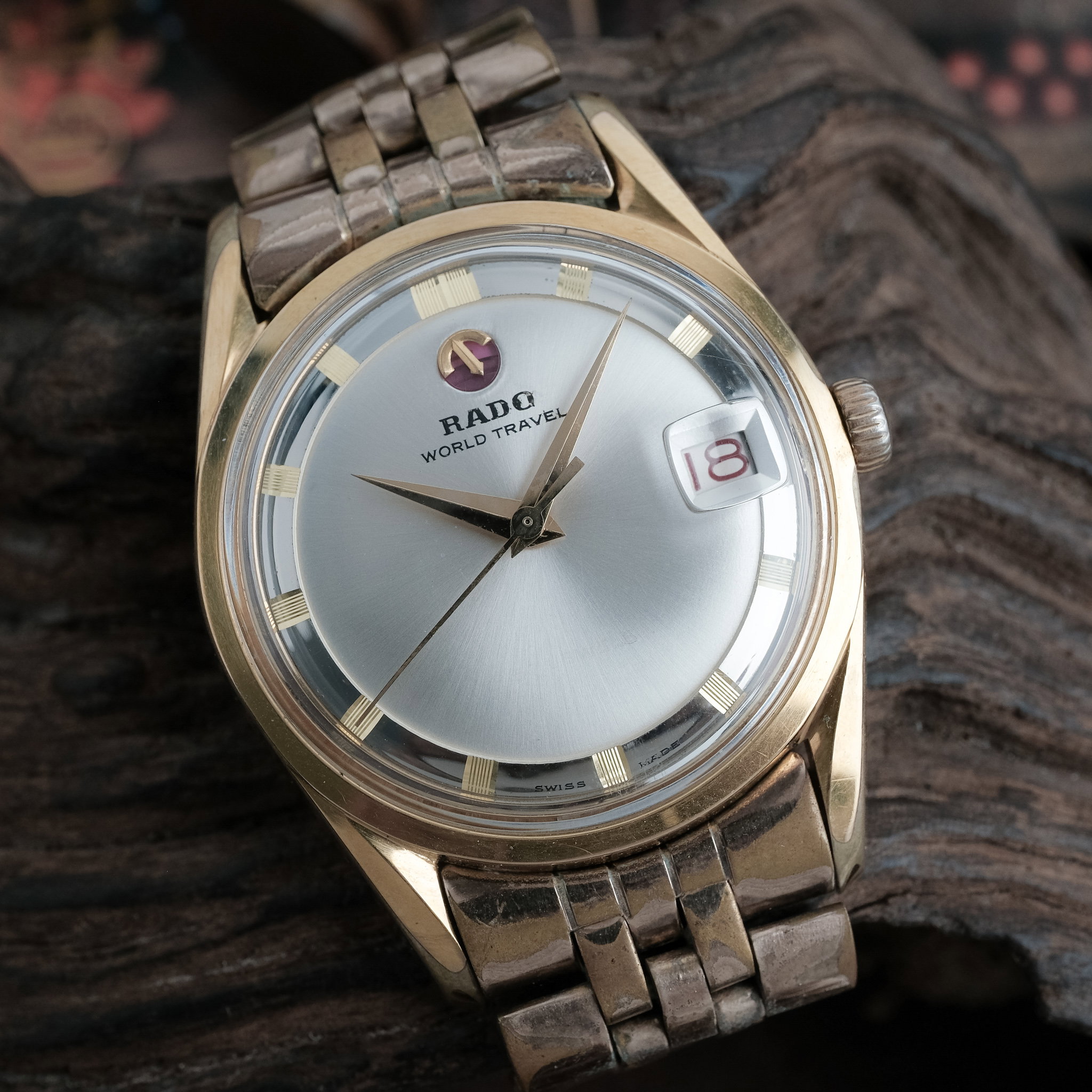
Browse 14 live Rado auctionsReference 343942 does not resolve into one tidy configuration. Alongside the World Travel and Golden Horse names visible here, watches carrying this number have been described as Daymaster, Starliner and Green Horse, with different movements, case metals and calendar layouts. The reference number alone therefore cannot settle model identity.
The known spread runs from a 35 mm gold-plated manual-wind watch with caliber AS 1702 to 36 mm automatic examples, including stainless steel. Silver and champagne sunburst dials both occur, as do date and day-date displays. For a vintage Rado 343942, coherence between the dial, movement, case and complication matters more than the name used in a listing.
Reference
343942
Production period handled
1960s, including an example dated circa 1965
Case diameter
35 mm or 36 mm, excluding the crown
Case construction
Stainless steel, or gold-plated with stainless steel caseback
| Movement types | Manual wind and automatic |
| Named caliber | AS 1702 manual wind |
| Jewel counts | 21 jewels for the AS 1702 example; 30 jewels for automatic examples |
| Dial finishes | Silver sunburst or champagne sunburst |
| Calendar layouts | Date at three or day display at six |
| Caseback motif | Seahorse or twin seahorse on described examples |
What it was built for
The Rado 343942 belongs to the 1960s dress-watch format: a broad sunburst dial, applied faceted markers and a case measuring either 35 or 36 mm without the crown. Gold-plated examples pair their warm cases with stainless steel backs, while at least one handled automatic configuration uses a stainless steel case. The restrained diameter and open dial make the reference formal rather than sporty.
Its mechanical identity is unusually broad. One 35 mm example uses the manual-wind AS 1702 with 21 jewels and adjustment to three positions, while automatic examples use 30-jewel movements. Calendar execution also changes: a framed date at three can carry red numerals, while the Daymaster configuration places its day display at six. Those differences materially affect both appearance and maintenance.
Where the value sits
The dial carries the largest share of value because the silver and champagne sunburst finishes expose spotting, refinishing and uneven cleaning immediately. Fine spotting is already present on known examples, so an evenly aged original dial should outrank a brighter redial. Applied faceted markers and the anchor at twelve need to belong convincingly to the same dial rather than merely looking period-correct.
Case material creates the next meaningful spread. Stainless steel avoids the permanent wear-through that affects gold plating at lug tips and case edges, while a plated case can still be worth buying when the coating remains continuous and the dial is strong. Softened case lines, replacement crowns and stretched beads-of-rice bracelets reduce the premium. A clean model name cannot compensate for mismatched components.
Where to start
At equal dial quality, the 36 mm stainless steel automatic is the easiest version to own because there is no plating to wear through. It also gives the broad silver sunburst dial enough visual space without leaving the proportions of a 1960s dress watch. Choose it against a polished gold-plated example with exposed base metal, even when the plated watch carries a more appealing model name.
The 35 mm AS 1702 version is the sharper alternative when manual winding, a framed date and red numerals are the attraction. Its movement specification is unusually clear, but the gold-plated case makes edge wear decisive. Across either choice, buy the most coherent used Rado 343942 rather than paying a premium for Daymaster, Starliner or Green Horse wording that the reference alone cannot verify.
What to check before you buy
- Dial print and furniture: Known dials are silver or champagne sunburst with applied faceted markers and an anchor at twelve. Flat paint, damaged printing around the calendar aperture or furniture that does not sit cleanly can indicate a redial or parts assembly.
- Movement and calendar agreement: A manual-wind example uses caliber AS 1702 with 21 jewels and a date at three, while automatic versions include 30-jewel movements and can use other calendar layouts. A movement unable to drive the displayed complication is a clear franken warning.
- Caseback and case construction: Gold-plated examples use a stainless steel back, and described backs carry seahorse imagery. Stainless steel automatic cases also occur. A seahorse alone proves little, so its execution must be judged alongside the correct case material and movement type.
- Crown evidence: The handled evidence does not establish one crown specification for every 343942 configuration. Treat a signed crown as period-correct at most unless its fit and construction agree with the case; it cannot establish originality by itself.
- Movement finishing and markings: For the manual version, confirm the AS 1702 identity, 21-jewel marking and three-position adjustment rather than relying on caseback wording. The available evidence does not establish bridge decoration or rotor details for every automatic configuration.
- Redial and franken risk: The wide spread of model names makes parts coherence critical. A Daymaster dial on a movement without the matching day mechanism, mixed metal furniture or a newly printed model name can indicate a redial, while incompatible case and movement parts indicate a franken watch.
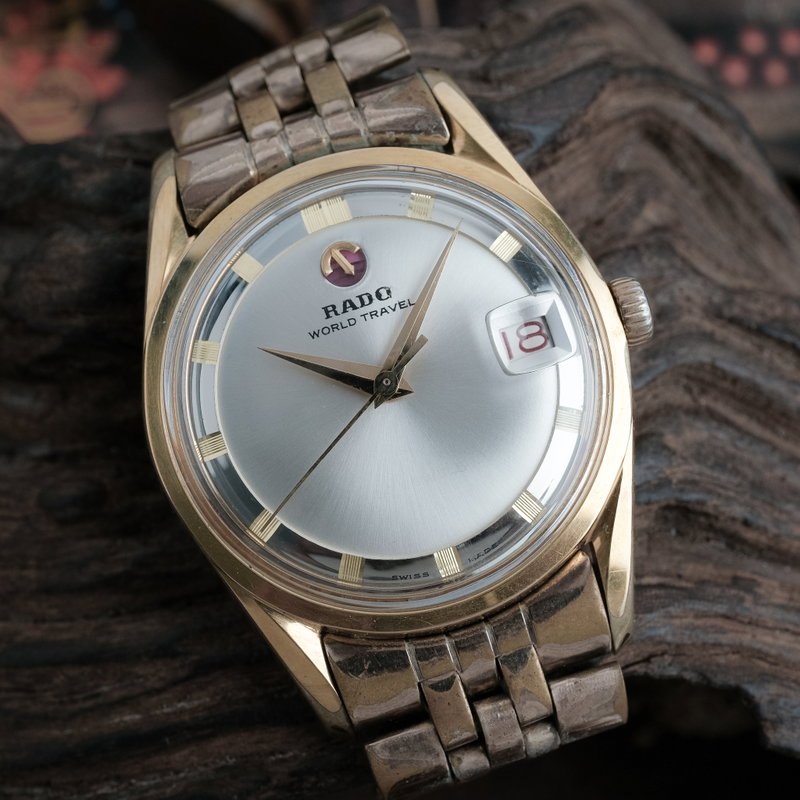
Other 343942 examples we auctioned
10 Rado 343942 auctioned
More Rado references
Related pages
Frequently asked questions
Ready to hunt for your own?
More than 100 vintage watches go under the hammer every week.